

 Preview
 Send
Send Share
Share
 Details

 Download
 Similars
 X-Ray
X-Ray Diaporama
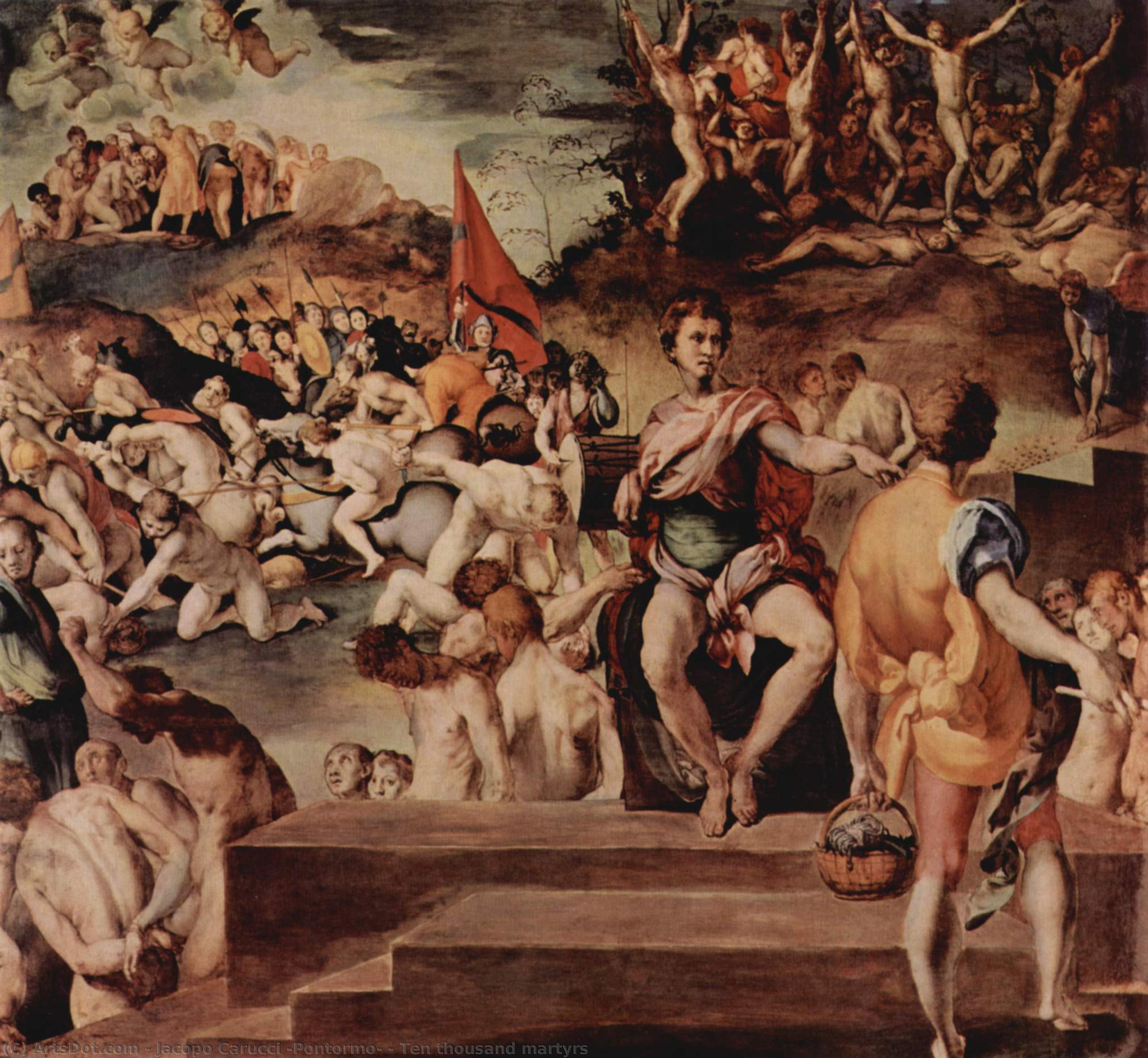
Ten thousand martyrs
 Oil On Canvas
- WallArt
- Mannerist Expression
 1529
1529 65.0 x 73.0 cm
 Galleria degli Uffizi
 Read More
Purchase a high-resolution, enhanced digital image, far superior to the online preview.
Each file is meticulously prepared by our in-house specialists using advanced tools and expert manual retouching. We ensure every image has exceptional clarity, precise color accuracy, and fine detail.
The final file is delivered via email within 72 hours, optimized for immediate use in professional, editorial, and print environments. This is the same quality trusted by top-tier design studios, publishers, and galleries.
Digital Image
Download a high-resolution file for personal display, printing, and creative projects. ( Buy Print Buy Hand Made Painting)
Included in Every Digital Image Order
Expert Digital Delivery, Guaranteed
When you choose ArtsDot.com, you're not just getting an image - you're receiving a professionally enhanced digital artwork, crafted with precision and backed by a satisfaction guarantee. Here's everything that comes with your order, automatically:

Fast Email Delivery
Your high-resolution digital image file will be emailed to you within 72 hours of ordering - ready for immediate use.

AI-Enhanced Digital File
Your artwork is professionally optimized using advanced AI tools and manual editing, ensuring maximum detail, clarity, and color accuracy.

Free Lifetime Re-Delivery
Accidentally deleted or lost your file? No worries - we'll resend it to you anytime, free of charge.

No Import Fees - Ever
Enjoy your artwork instantly with zero customs, duties, or delivery fees - digital downloads are always tax-free.

Color Accuracy Guarantee
We ensure your digital image reflects the original colors as closely as possible using professional tools and color management.

60-Day Satisfaction Guarantee
If you're not satisfied with your digital image, we'll revise it or refund 100% within 60 days - no questions asked.

100% Money-Back Guarantee
Not satisfied? Get a full refund within 60 days of receiving your digital file - no questions asked.

Bulk Order Discounts
Buy 3 images, save 10% - Buy 5, save 15% - Buy 10+, save 20%. Great for creative projects, galleries, and agencies.
Collectible Description
The Harrowing Vision: Jacopo Pontormo’s “Ten Thousand Martyrs”
Jacopo Pontormo's "Ten Thousand Martyrs," painted in 1529, is not merely a depiction of historical suffering; it’s a visceral plunge into the heart of religious trauma and defiant resistance. This monumental fresco, now rendered in exquisite detail as a hand-painted reproduction by ArtsDot.com, captures a pivotal moment from early Christian history – the brutal execution of ten thousand soldiers who had converted to Christianity during the reign of Emperor Decius. Far removed from the idealized serenity often associated with Renaissance art, Pontormo’s masterpiece confronts us with an unsettling realism and a profound sense of human drama.
The scene unfolds outdoors, against a backdrop of a brooding sky and a distant, almost mournful hill. At the center stands a single figure – a martyr, identifiable by his flag held aloft in a gesture of unwavering defiance. This isn’t a heroic portrait; he is stripped bare, exposed to the elements and the impending violence. Around him, a vast crowd watches with varying expressions: some filled with horrified pity, others with detached curiosity, and a few with a chilling anticipation of the bloodshed to come. The inclusion of horses amongst the onlookers adds an element of primal chaos, reflecting the brutal nature of the event.
A Bridge Between Styles: Pontormo’s Mannerist Innovation
Born in Pontorme, Tuscany, around 1494, Jacopo Pontormo was a pivotal figure bridging the High Renaissance and the burgeoning Baroque era. Trained under the tutelage of masters like Domenico del Pollaiuolo and Michelangelo Buonarroti – artists known for their anatomical precision and sculptural forms – Pontormo deliberately pushed beyond these established conventions. He embraced emotional intensity and psychological complexity, prioritizing expressive distortion and unsettling perspectives over classical harmony and balance. This is most evident in “Ten Thousand Martyrs,” where figures are elongated, faces contorted with anguish, and spatial relationships deliberately skewed to heighten the dramatic effect.
Pontormo’s use of color is equally striking. He employs a palette dominated by somber browns, deep reds, and muted blues – colors that evoke both the darkness of death and the resilience of faith. The vibrant flag held by the martyr provides a crucial focal point, a symbol of hope and resistance against the overwhelming force of imperial power. The painting’s dynamism is further enhanced through his masterful manipulation of light and shadow, creating an atmosphere of palpable tension and impending doom.
Symbolism and Historical Context
The story depicted in “Ten Thousand Martyrs” draws upon a medieval legend – the tale of Roman soldiers who, after embracing Christianity, were crucified on Mount Ararat. While the historical accuracy of this event is debated, it served as a potent symbol of unwavering faith in the face of persecution. Pontormo’s painting powerfully conveys the emotional weight of this narrative, transforming a potentially dry historical account into a deeply moving meditation on sacrifice and endurance.
The flag itself holds significant symbolic weight. It represents not just individual defiance but also the collective spirit of resistance against tyranny. It's a visual declaration that even in the face of certain death, faith and conviction remain unyielding. The scene resonates with broader themes of religious persecution throughout history, offering a timeless reminder of the human cost of intolerance.
A Reproduction for the Soul
ArtsDot.com’s hand-painted reproduction captures the essence of Pontormo's original masterpiece with breathtaking fidelity. Every detail – from the tormented expressions on the faces to the dramatic lighting and unsettling spatial arrangements – is meticulously recreated, allowing you to experience the painting’s emotional power firsthand. This isn’t simply a print; it’s an immersive encounter with one of the most compelling works of the Italian Renaissance. Whether displayed in a grand salon or a smaller study, this reproduction will undoubtedly serve as a poignant reminder of human resilience and the enduring power of faith.
Explore the full detail and artistry of “Ten Thousand Martyrs” at https://en.ArtsDot.com/en/art/jacopo-carucci-ten-thousand-martyrs-dewjfc-en/ and bring this extraordinary work of art into your home.
Related Artworks
Artist Biography
The Melancholy Visionary: The Life and Legacy of Jacopo Pontormo
Jacopo Carucci, known to history by the evocative moniker Pontormo, was an artist whose brush captured the very essence of transition. Born in the small Tuscan village of Pontorme around 1494, his early life was marked by a profound sense of solitude and melancholy, qualities that would later infuse his canvases with an unparalleled psychological depth. As a young apprentice in Florence, he moved through a world of shifting artistic paradigms, eventually emerging as a central figure of the Florentine Mannerist movement. Unlike the masters of the High Renaissance who sought perfection through balance and mathematical harmony, Pontormo looked inward, seeking to express the turbulent, often unsettling complexities of the human soul. His formative years were shaped by the shadows of giants. Under the tutelage of Domenico del Pollaiuolo and the monumental influence of Michelangelo Buonarroti, he mastered the anatomical precision required of a Renaissance master, yet he possessed an irrepressible urge to distort that very reality for emotional effect. He drew inspiration not only from the sculptural weight of Michelangelo but also from the intricate, emotive engravings of Albrecht Dürer. This unique synthesis of Italian form and Northern European expressive detail allowed him to pioneer a style where figures seemed to lose their tether to gravity, drifting through ambiguous, dreamlike spaces.The Architecture of Mannerism: Style and Innovation
To witness a Pontormo painting is to enter a realm where the familiar laws of physics and perspective are suspended. His work represents a deliberate departure from the serene, perspectival regularity of his predecessors. In masterpieces such as his "Visitation" or the haunting "Deposition," one observes the hallmarks of his revolutionary Mannerist aesthetic: elongated limbs, twining and unnatural poses, and a palette of vibrant, almost acidic colors that clash and shimmer with an otherworldly light. He replaced the stable, triangular compositions of the Renaissance with swirling, crowded arrangements that evoke a sense of restless energy and spiritual unrest. The technical brilliance of Pontormo lay in his ability to use color and form as psychological tools. His figures often appear to float within uncertain environments, unhampered by weight, creating a sense of profound instability. This was not mere artifice; it was a deliberate attempt to convey the spiritual anxieties of an era caught between the certainties of the Renaissance and the looming drama of the Baroque. Whether through the dramatic light in his "Supper at Emmaus" or the stark, emotive intensity found in his studies of Christ, Pontormo utilized every brushstroke to explore themes of grief, devotion, and the divine.A Lasting Impression on Art History
The historical significance of Jacopo Pontormo cannot be overstated. He served as a vital bridge, translating the classical ideals of the 15th century into the expressive, theatrical language that would define much of the 16th-century art. His influence rippled through the Florentine School, shaping the works of successors like Bronzino and ensuring that the tension between beauty and artifice remained a central dialogue in European painting. His oeuvre remains a testament to the power of individual vision over tradition. Through his portraits, such as the regal "Cosimo I de' Medici," and his deeply symbolic religious works, he demonstrated that art could be more than a mirror of reality; it could be a window into the subconscious. Though his life was often shadowed by personal sorrow, the brilliance of his color and the complexity of his compositions continue to captivate, inviting every viewer to lose themselves in the beautiful, distorted, and deeply human world of the Florentine master.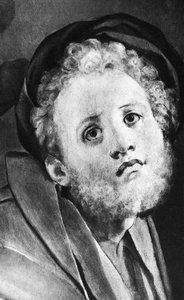
jacopo carucci
1494 - 1557 , Italy
Quick Facts
- Artistic Movement Or Style: Mannerism
- Artists Or Movements Influenced By This Artist:
- Michelangelo
- Rosso Fiorentino
- Artists Who Influenced This Artist:
- Leonardo da Vinci
- Andrea del Sarto
- Date Of Birth: 1494
- Full Name: Jacopo Pontormo
- Nationality: Italian
- Notable Artworks:
- Visitation
- Deposition
- Halberdier
- Place Of Birth: Pontorme, Italy

