 Preview
 Send
Send Share
Share
 Details

 Download
 Similars
 X-Ray
X-Ray Diaporama
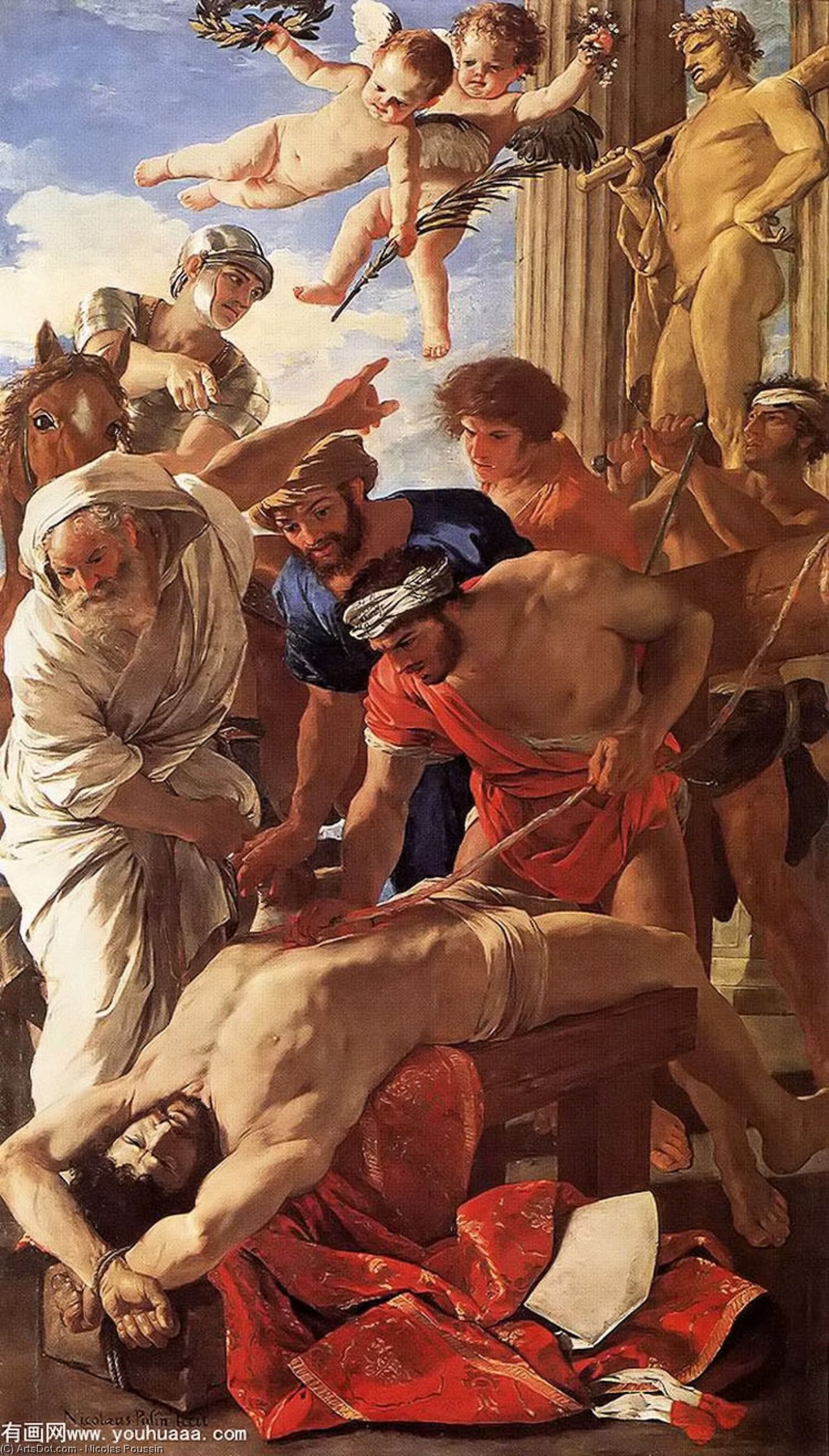
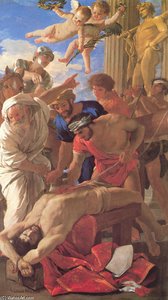
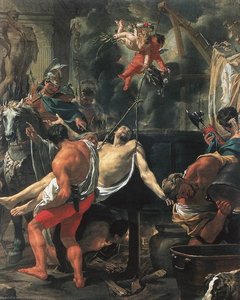
The Martyrdom of St Erasmus
 Oil On Canvas
- WallArt
- Baroque
 1628
1628- Renaissance
 320.0 x 186.0 cm
 Pinacoteca
 Read More
Hand Made Oil Reproduction
Hand-painted oil on canvas in your size and frame, made to order by our artists. ( Buy Print Buy Image)




P118B $10

P118H $10

P118W $10

P438Z $10

P508JH $12

P508YH $12

P805H $10

P805Z $10

P919BZ $10

P919G $10

P919XJ $10

P959ZH $10

P968JZ $12

W106C $8

W218G $10

W218JH $8

W218Y $10

W307PJ $10

W316G $10

W316PJ $8

W316Y $10

W398PJ $8

W4111J $10

W500HY $15

W500JH $15

W692G $12

W849H $8

W940BG $15

W953PJ $8




Pick from our preset sizes that match the artwork's original proportions.

You may enter your own dimensions to fit a specific frame or space. If your selected size does not match the original image's proportions, we will either crop the artwork or extend the painting with additional hand-painted elements. A digital mockup will be sent for your approval before production begins.
Please note that the on-screen preview does not reflect the actual cropping or extension. Only the mockup will accurately show the final composition.
While custom sizes are available, we recommend selecting a dimension from the predefined list to preserve the original proportions.
After order, ArtsDot.com team will email client for instructions and provide a mockup preview
Worldwide Delivery () in 3/4 weeks instead of standard 5 weeks. (16 August). No compromise on quality.

Free Worldwide Express Shipping

High-Quality Linen Canvas

Full Shipping Insurance

Customs Tax Refund Guarantee

True Color Matching Guarantee

60-Day Return Policy (Defects Only)

100% Money-Back Guarantee

Bulk Discount Offer
 Glass option is only available in size under 110 CM

The Martyrdom of St Erasmus
Reproduction Medium
Reproduction Size
-


Total Price
$ 263
Artwork Description
The Martyrdom of St Erasmus: A Testament to Faith and Dramatic Intensity
Nicolas Poussin’s “Martyrdom of St Erasmus,” painted in 1628, is more than just a depiction of a historical event; it's a profound meditation on faith, suffering, and the enduring power of human spirit. Currently residing within the hallowed halls of the Pinacoteca Vaticana, this oil-on-canvas masterpiece transcends its religious subject matter to become a timeless exploration of dramatic composition and emotional resonance. Measuring a substantial 320 x 186 cm, the painting immediately commands attention with its scale and meticulously rendered details – a testament to Poussin’s mastery of classical techniques blended seamlessly with Baroque intensity.
At first glance, the scene unfolds with arresting immediacy. St Erasmus himself lies prone on the ground, his posture conveying both vulnerability and an almost serene acceptance of his fate. The figures surrounding him are not merely witnesses; they are participants in a tableau of grief, compassion, and quiet contemplation. Kneeling supplicants offer their prayers, while others stand in somber reverence, their faces etched with sorrow. Two horses – one positioned on the left, another subtly placed towards the upper right corner – add an element of dynamism and perhaps even symbolic weight to the composition, hinting at the tumultuous nature of faith and the unpredictable forces of destiny.
Poussin’s genius lies not simply in his ability to recreate a scene but in his masterful manipulation of light and shadow. A diffused, almost ethereal glow permeates the canvas, casting long, dramatic shadows that heighten the sense of tragedy and underscore the solemnity of the occasion. The artist employs a technique known as *chiaroscuro*, skillfully contrasting areas of intense illumination with deep darkness to draw the viewer’s eye to key elements within the composition – particularly St Erasmus himself and the instrument of his demise: a gleaming knife lying near his body, a stark reminder of the brutal reality of martyrdom. The careful arrangement of figures, their gestures and expressions meticulously rendered, creates a powerful sense of spatial depth and invites the viewer into the heart of the drama.
A Classical Foundation Rooted in Baroque Intensity
Poussin’s artistic lineage is deeply intertwined with both classical ideals and the burgeoning Baroque style. Trained initially in Paris, he quickly gravitated towards the Roman art scene, immersing himself in the works of Raphael and other Renaissance masters. However, Poussin wasn't content to simply replicate the past; he skillfully integrated classical principles – particularly a focus on linear perspective, balanced composition, and idealized forms – with the heightened emotionalism and dramatic intensity characteristic of Baroque painting. “The Martyrdom of St Erasmus” exemplifies this synthesis perfectly: it’s a work that feels both deeply rooted in tradition and strikingly modern in its expressive power.
The historical context surrounding the painting is equally significant. The martyrdom of St Erasmus, a bishop from Formia who died during the persecutions of Diocletian in the 4th century, provided Poussin with a compelling narrative for exploring themes of faith, sacrifice, and resistance against tyranny. Erasmus’s story resonated deeply within the Counter-Reformation era, when the Catholic Church sought to reaffirm its authority and inspire devotion through powerful visual representations of religious narratives. The painting was originally displayed in St. Peter's Basilica, Rome – a location that underscored its importance as a devotional image for pilgrims and worshippers.
Symbolism and Emotional Resonance
Beyond its historical context, “The Martyrdom of St Erasmus” is rich in symbolic meaning. The kneeling figures represent the collective sorrow and supplication of the Christian community, while the standing individuals embody a range of emotions – from grief to quiet contemplation to unwavering faith. The horses, often associated with power and nobility, can be interpreted as symbols of both earthly authority and divine intervention. The knife itself is a potent symbol of violence and sacrifice, but also of purification and redemption.
Perhaps most powerfully, the painting evokes a profound sense of empathy for St Erasmus’s plight. His expression – a mixture of resignation and serenity – suggests that he has found peace in accepting his fate. The overall effect is deeply moving, prompting viewers to reflect on their own beliefs, values, and experiences of suffering and loss. Poussin's ability to capture such intense emotion through carefully controlled composition and masterful use of light and shadow remains a testament to his artistic genius.
Preserving a Masterpiece: Reproduction and Legacy
The story of “The Martyrdom of St Erasmus” is not just one of artistic creation but also of preservation. Like countless works of art throughout history, this painting faced the threat of destruction or neglect. Its eventual relocation to the Vatican Pinacoteca underscores the importance of safeguarding cultural heritage for future generations. ArtsDot offers meticulously crafted oil painting reproductions that allow art lovers worldwide to experience the beauty and power of Poussin’s masterpiece in their own homes.
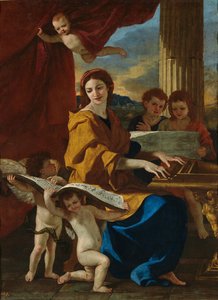
For those interested in exploring more of Nicolas Poussin's oeuvre, we encourage you to view “St. Cecilia” /art/list/?Filter=D2T4X7-Nicolas-Poussin-St-Cecilia) and delve into the extensive resources available on ArtsDot.com, including articles from Wikipedia and detailed information about the artist’s life and work. You can also explore related works by Poussin through links provided below:
- The Martyrdom of Saint Erasmus (Poussin)
- The Martyrdom of St Erasmus by Nicolas Poussin
- St. Cecilia by Nicolas Poussin
- Crypt of Saint Erasmus
Related Artworks
Artist Biography
A Life Steeped in Classical Reverie
Nicolas Poussin, a name synonymous with the grandeur of French Baroque painting, was nonetheless a soul deeply rooted in Italian soil for much of his artistic life. Born in Le Havre, Normandy, in June 1594, his early years remain somewhat veiled in mystery, yet they undoubtedly laid the foundation for a career that would become pivotal in shaping the classical tradition within French art. Though he briefly studied in Paris during the early 1610s, absorbing influences from lesser-known artists of the time, it was his journey to Rome in 1624 that truly ignited his artistic destiny. This wasn’t merely a geographical relocation; it was an immersion into the heart of antiquity, a pilgrimage to the very source of inspiration that would define his aesthetic vision. Poussin's initial forays into painting were marked by a sensuous quality reminiscent of Venetian masters like Titian, yet even in these early works, a nascent sense of order and intellectual rigor began to emerge—a foreshadowing of the style he would so masterfully refine.
The Roman Years: Forging a Classical Ideal
Rome proved to be more than just a studio for Poussin; it became his intellectual crucible. He found himself amidst a vibrant circle of scholars, archaeologists, and fellow artists, notably Cassiano dal Pozzo, whose profound understanding of classical antiquity profoundly influenced the artist’s approach. Dal Pozzo's dedication to meticulously documenting ancient remains instilled in Poussin a deep respect for historical accuracy and a desire to imbue his paintings with a sense of timelessness. This period saw Poussin move away from the flamboyant exuberance of some of his contemporaries, instead embracing a style characterized by clarity, balance, and a deliberate emphasis on linear composition. He meticulously studied Raphael’s works, absorbing their harmonious arrangements and graceful forms, while simultaneously drawing inspiration from ancient sculptures and literary sources like Ovid's *Metamorphoses*. His paintings began to populate with figures drawn from classical history and mythology, rendered not as mere decorative elements but as embodiments of moral virtues and philosophical ideals.
Themes of History, Myth, and the Sacred
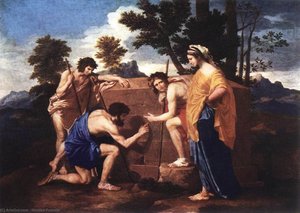
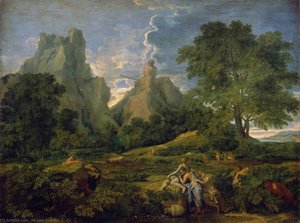
Poussin’s artistic output was remarkably diverse, yet consistently unified by his commitment to these core principles. He frequently depicted scenes from ancient history—the tragic fate of Germanicus, for example—imbued with a sense of stoic dignity and moral weight. His mythological paintings weren't simply retellings of familiar tales; they were explorations of human nature, often laden with allegorical meaning. The *Arcadia* series, particularly the iconic *Et in Arcadia ego*, became emblematic of his philosophical depth, prompting contemplation on mortality and the enduring power of memory. Beyond history and myth, Poussin also turned to religious subjects, most notably in *The Seven Sacraments*—a monumental undertaking that showcased both his theological understanding and compositional prowess. Even within these sacred scenes, however, he maintained a classical restraint, avoiding excessive emotionalism in favor of a serene and dignified presentation. Later in his career, expansive landscapes became increasingly prominent, blending realism with idealized forms to create vistas that evoked a sense of harmony and tranquility.
A Lasting Legacy: Shaping French Art
Despite spending the majority of his career abroad, Nicolas Poussin’s influence on French art was immense. He briefly returned to Paris in 1640 at the behest of Cardinal Richelieu, appointed as First Painter to the King, but found himself stifled by the demands and intrigues of court life. He soon returned to Rome, where he continued to paint until his death in 1665. His dedication to classical principles helped establish a standard for artistic training and practice within France, influencing generations of artists who followed. He became a leading figure in the Académie Royale de Peinture et de Sculpture, solidifying his position as a cornerstone of French Classicism. Artists like Jacques-Louis David and Paul Cézanne openly acknowledged their debt to Poussin’s rigorous approach and intellectual depth. His legacy extends far beyond mere stylistic imitation; it represents a commitment to order, clarity, and the enduring power of classical ideals—a testament to an artist who sought not simply to depict the world but to elevate it through the lens of reason and beauty.
- Notable Works: *The Death of Germanicus*, *The Seven Sacraments Series*, *A Roman Road*, *Orion Blinded Searching for the Sun*, *The Seasons*.
- Key Characteristics: Classical Composition, Linearity, Historical and Mythological Themes, Serene Landscapes.
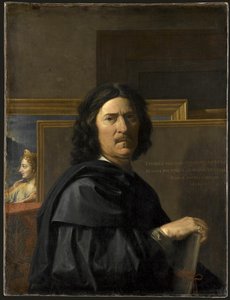
Nicolas Poussin
1594 - 1665 , France
Quick Facts
- Artistic Movement Or Style: Baroque, Classicism
- Artists Or Movements Influenced By This Artist:
- Jacques-Louis David
- Paul Cézanne
- Artists Who Influenced This Artist:
- Raphael
- Titian
- Date Of Birth: 1594
- Date Of Death: 1665
- Full Name: Nicolas Poussin
- Nationality: French
- Notable Artworks:
- The Death of Germanicus
- Seven Sacraments Series
- A Roman Road
- Orion Blinded
- The Seasons
- Place Of Birth: Le Havre, France
Related Articles
El Greco's Masterpieces: Explore 25 Iconic Paintings & Spiritual Visions | ArtsDot
Journey through El Greco's 25 most iconic paintings! Explore the spiritual depth & dramatic beauty of this Spanish Renaissance master. Discover art history, techniques & find museum-quality reproductions for your home at ArtsDot.com.

The Enduring Power of Painting: A Historical & Contemporary Exploration of Form and Emotion
Explore the rich history & enduring techniques of oil painting with ArtsDot. Discover masterpieces, learn about art collecting, and find authentic handmade reproductions crafted by skilled artists.

Oil on Canvas: A Historical & Technical Exploration of a Timeless Artistic Medium
Explore the rich history & enduring techniques of oil painting on canvas. Discover the science behind its longevity, conservation practices, and contemporary relevance. Expert insights for art enthusiasts.

Baroque Drama: Bringing Opulence & Emotion into Contemporary Interiors
Explore the opulent world of Baroque interior design! Discover key elements, modern applications & how to bring dramatic elegance into your home with 's authentic reproductions.

The Enduring Legacy of Oil on Canvas: Technique, History & Aesthetic Impact
Explore the rich history & techniques of oil painting – from Renaissance masters to Impressionism. Discover pigments, layering methods, and why this timeless medium endures. Expert insights for artists & art enthusiasts.