

 Preview
 Send
Send Share
Share
 Details

 Download
 Similars
 X-Ray
X-Ray Diaporama
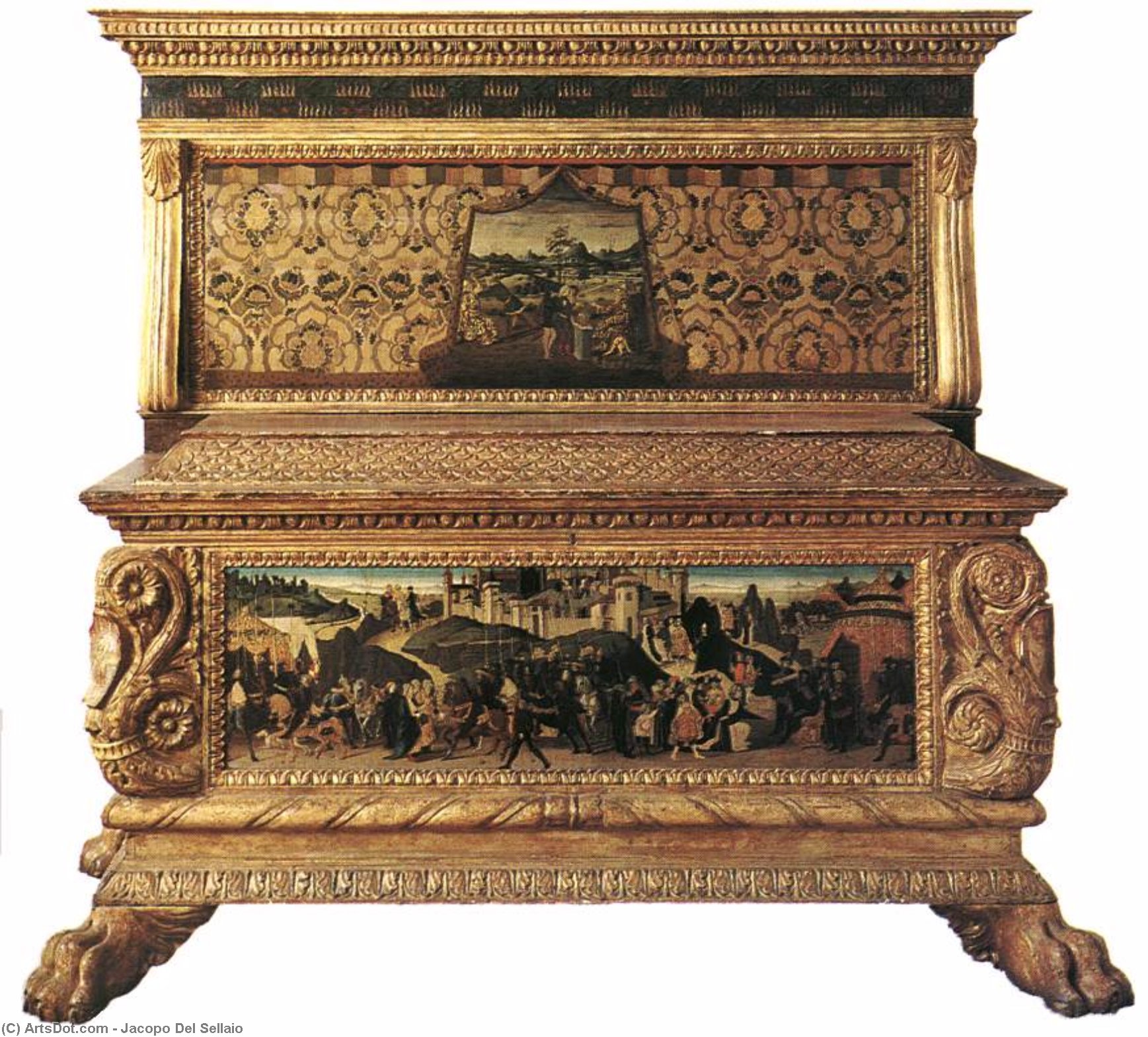
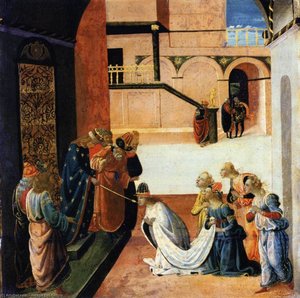
The Nerli Cassone


 Read More
Purchase a high-resolution, enhanced digital image, far superior to the online preview.
Each file is meticulously prepared by our in-house specialists using advanced tools and expert manual retouching. We ensure every image has exceptional clarity, precise color accuracy, and fine detail.
The final file is delivered via email within 72 hours, optimized for immediate use in professional, editorial, and print environments. This is the same quality trusted by top-tier design studios, publishers, and galleries.
Digital Image
Download a high-resolution file for personal display, printing, and creative projects. ( Buy Print Buy Hand Made Painting)
Included in Every Digital Image Order
Expert Digital Delivery, Guaranteed
When you choose ArtsDot.com, you're not just getting an image - you're receiving a professionally enhanced digital artwork, crafted with precision and backed by a satisfaction guarantee. Here's everything that comes with your order, automatically:

Fast Email Delivery
Your high-resolution digital image file will be emailed to you within 72 hours of ordering - ready for immediate use.

AI-Enhanced Digital File
Your artwork is professionally optimized using advanced AI tools and manual editing, ensuring maximum detail, clarity, and color accuracy.

Free Lifetime Re-Delivery
Accidentally deleted or lost your file? No worries - we'll resend it to you anytime, free of charge.

No Import Fees - Ever
Enjoy your artwork instantly with zero customs, duties, or delivery fees - digital downloads are always tax-free.

Color Accuracy Guarantee
We ensure your digital image reflects the original colors as closely as possible using professional tools and color management.

60-Day Satisfaction Guarantee
If you're not satisfied with your digital image, we'll revise it or refund 100% within 60 days - no questions asked.

100% Money-Back Guarantee
Not satisfied? Get a full refund within 60 days of receiving your digital file - no questions asked.

Bulk Order Discounts
Buy 3 images, save 10% - Buy 5, save 15% - Buy 10+, save 20%. Great for creative projects, galleries, and agencies.
Collectible Description
The Nerli Cassone: A Florentine Wedding’s Echoes in Wood and Gold
The Nerli Cassone, crafted around 1472 by the masterful Jacopo del Sellaio, stands as a remarkable testament to the opulent artistry of early Renaissance Florence. More than simply a marriage chest—a “cassone”—it is a meticulously constructed narrative, a frozen moment capturing the vibrant energy and social significance of a Florentine wedding. This extraordinary piece, now housed in the Courtauld Institute Galleries in London, offers a rare glimpse into the lives of the wealthy elite and their elaborate celebrations, revealing not just decorative prowess but also profound symbolic meaning.
The chest itself is a marvel of carpentry and painting. Constructed primarily from richly-grained wood, it’s a substantial object, designed to dominate a room and announce the union with undeniable grandeur. The exterior is adorned with intricate carvings—a testament to the skill of Zanobi di Domenico, the carpenter who brought Sellaio's vision to life. These aren’t merely decorative flourishes; they subtly frame the painted panels that form the chest’s back, creating a cohesive and immersive visual experience. The use of gold leaf, particularly in outlining figures and highlighting details, further elevates the piece, imbuing it with an aura of wealth and prestige – a crucial element within Florentine society at the time.
A Story Told Through Scenes: Myth, History, and Allegory
Sellaio’s genius lies not just in his technical skill but in his ability to transform a functional object into a complex visual narrative. The back panels of the Nerli Cassone depict a series of interconnected scenes drawn from classical mythology and Roman history, interwoven with elements of Florentine civic pride. The most prominent scene portrays Cupid and Psyche, a timeless tale of love overcoming obstacles – a potent metaphor for the challenges and joys of marriage itself. Adjacent to this is a depiction of Esther and Ahasuerus, another mythological pairing that speaks to themes of power, diplomacy, and ultimately, marital harmony.
However, Sellaio doesn’t simply rely on these established narratives. He subtly incorporates elements of Florentine identity. The coats of arms of the Morelli and Nerli families are prominently displayed, anchoring the mythological scenes within a specific social context. The inclusion of figures in Florentine attire further reinforces this connection, suggesting that the chest is not merely a decorative object but also a symbol of the couple’s status and lineage. These interwoven stories create a rich tapestry of meaning, inviting viewers to contemplate the complexities of love, power, and identity.
The Painter's Hand: Technique and Style
Jacopo del Sellaio’s style is characterized by a remarkable balance between elegance and realism. His figures possess a dignified grace, rendered with careful attention to detail – particularly in their drapery and facial expressions. The use of tempera paint on wood allows for rich colors and subtle gradations of tone, creating a sense of depth and luminosity. Sellaio’s technique is notably influenced by Botticelli, evident in the flowing lines and idealized forms of his figures, yet he possesses a distinct individuality, imbuing his work with a quiet intensity.
The application of gold leaf is particularly noteworthy. It's not simply used for decorative effect; it’s strategically employed to highlight key elements within the scenes, drawing the viewer’s eye and emphasizing the importance of specific figures or events. The meticulous detail in the rendering of fabrics—the shimmering silks, the heavy velvets—demonstrates Sellaio’s mastery of texture and his keen understanding of the luxurious materials that adorned Florentine interiors.
A Window into Renaissance Life
The Nerli Cassone offers a captivating window into the world of 15th-century Florence. It reveals not only the artistic sophistication of the era but also the social customs, values, and beliefs of its elite citizens. The chest’s elaborate decoration reflects the importance placed on marriage as a cornerstone of society—a union that was both a personal commitment and a strategic alliance. The sheer scale and opulence of the piece underscore the wealth and status of the families involved, while the carefully chosen scenes provide insights into their cultural interests and aspirations.
Today, the Nerli Cassone remains a prized possession of the Courtauld Institute Galleries, serving as a powerful reminder of the enduring legacy of Jacopo del Sellaio and his remarkable contribution to the art of the Renaissance. Its intricate details and evocative imagery continue to captivate viewers, offering a glimpse into a bygone era of beauty, artistry, and social significance.
Related Artworks
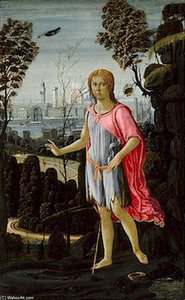
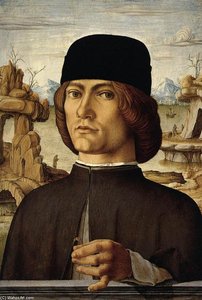
Artist Biography
A Florentine Artisan of Grace: The World of Jacopo del Sellaio
Jacopo del Sellaio, a name perhaps less immediately recognized than those of his celebrated contemporaries like Botticelli or Ghirlandaio, nevertheless occupies a vital and enchanting niche within the vibrant tapestry of 15th-century Florentine art. Born in Florence around 1442, Jacopo emerged during a period of extraordinary artistic ferment, a time when the Renaissance was blossoming into full flower. While details surrounding his earliest training remain somewhat elusive, it is known that he entered the world of painting and by 1473 had established a collaborative studio with Filippo di Giuliano – a partnership suggesting a shared dedication to craft and a reciprocal exchange of artistic knowledge. This early association speaks volumes about Jacopo’s ambition and willingness to learn within the dynamic environment of Florentine workshops, where skills were honed through practice and observation. His father was a saddlemaker—hence the nickname “Sellaio,” meaning ‘saddle maker’—a trade that perhaps instilled in him an appreciation for meticulous detail and refined craftsmanship, qualities that would become hallmarks of his artistic style.Cassoni and Devotional Panels: A Synthesis of Skill
Jacopo del Sellaio's artistic output was remarkably diverse, yet he is particularly renowned for his exquisitely decorated *cassoni*, or wedding chests. These weren’t merely functional objects; they were potent symbols of status, family heritage, and the hopes invested in a new union. His most celebrated example, “The Story of Cupid and Psyche,” commissioned for a 15th-century Florentine marriage, is a testament to his narrative skill and delicate artistry. The panels unfold the ancient Roman tale with grace and sensitivity, showcasing Jacopo’s ability to imbue mythological subjects with emotional resonance. Beyond these grand commissions, he also excelled in creating smaller devotional panels featuring saints like Saint Jerome and Saint John the Baptist, works that catered to the growing demand for personal piety among private patrons. These intimate pieces reveal a refined sensibility and an attention to detail that elevates them beyond simple religious iconography. The “Nerli Cassone,” created in collaboration with Zanobi di Domenico and Biagio d'Antonio in 1472, further demonstrates his collaborative spirit and ability to seamlessly integrate his artistic vision within a team effort. His panel "The Banquet of Ahasuerus," part of a larger series, reveals a mastery of complex compositions and narrative storytelling.Echoes of Masters: Influences and Artistic Development
To understand Jacopo del Sellaio’s art is to recognize the subtle yet profound influences that shaped his style. The lyrical grace and elegant figure drawing characteristic of Sandro Botticelli are clearly discernible in many of his compositions, particularly those depicting mythological scenes. He absorbed Botticelli's ability to create figures imbued with a sense of ethereal beauty and emotional depth. Simultaneously, Jacopo drew inspiration from Domenico Ghirlandaio’s realistic portrayals of figures and meticulous attention to detail—a grounding influence that prevented his work from becoming overly stylized or mannered. This synthesis of influences allowed him to develop a distinctive voice, blending traditional techniques with the emerging artistic trends of the Renaissance. He wasn't simply imitating; he was absorbing, adapting, and ultimately transforming these influences into something uniquely his own.A Legacy Within the Florentine Renaissance
Jacopo del Sellaio’s historical significance lies not in achieving superstar status but in representing a crucial segment of the artistic landscape of 15th-century Florence. He embodies the generation of skilled artisans who skillfully balanced tradition with innovation, contributing to the rich and multifaceted character of Florentine art. His work provides invaluable insight into the decorative arts—the *cassoni* being prime examples—and the private devotional practices that flourished during this period. While he may not have garnered the same level of fame as some of his more celebrated peers, his contributions to both cassone painting and religious art are undeniably noteworthy. He passed away in Florence in 1493, leaving behind a legacy of beautifully crafted artworks that continue to captivate and inspire those who encounter them today. His son, Arcangelo di Jacopo del Sellaio, continued the family tradition as a painter, further cementing their place within the artistic heritage of Florence.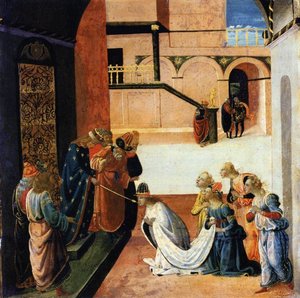
Jacopo del Sellaio
1442 - 1493 , Italy
Quick Facts
- Artistic Movement Or Style: Early Renaissance
- Artists Who Influenced This Artist:
- Botticelli
- Ghirlandaio
- Filippino Lippi
- Date Of Birth: 1442
- Date Of Death: 1493
- Full Name: Jacopo del Sellaio
- Nationality: Italian
- Notable Artworks:
- Story of Cupid & Psyche
- The Nerli Cassone
- Banquet of Ahasuerus
- Saint Jerome
- Saint John the Baptist
- Place Of Birth: Florence, Italy

