 Preview
 Send
Send Share
Share
 Details

 Download
 Similars
 X-Ray
X-Ray Diaporama
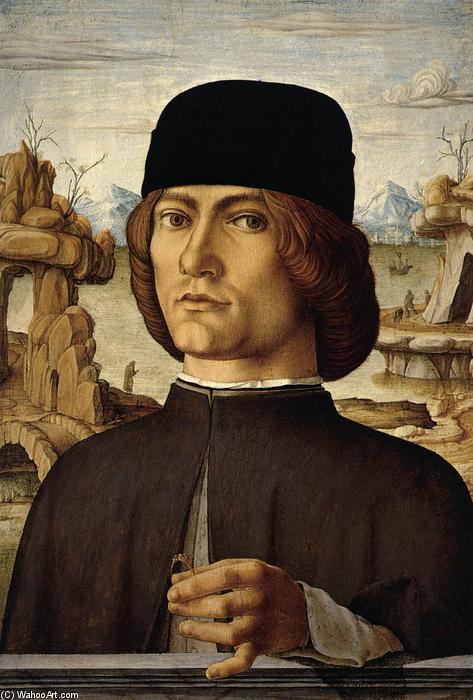
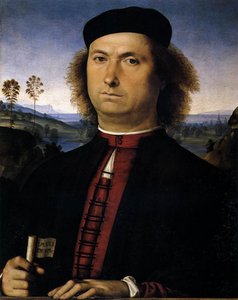
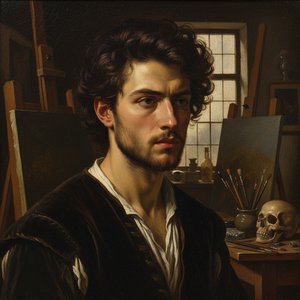
Portrait of a Man
 Oil On Panel
- Early Renaissance
 1472
1472 39.0 x 28.0 cm
 Museo Thyssen-Bornemisza
 Read More
Hand Made Oil Reproduction
Hand-painted oil on canvas in your size and frame, made to order by our artists. ( Buy Print Buy Image)




P118B $10

P118H $10

P118W $10

P438Z $10

P508JH $12

P508YH $12

P805H $10

P805Z $10

P919BZ $10

P919G $10

P919XJ $10

P959ZH $10

P968JZ $12

W106C $8

W218G $10

W218JH $8

W218Y $10

W307PJ $10

W316G $10

W316PJ $8

W316Y $10

W398PJ $8

W4111J $10

W500HY $15

W500JH $15

W692G $12

W849H $8

W940BG $15

W953PJ $8




Pick from our preset sizes that match the artwork's original proportions.

You may enter your own dimensions to fit a specific frame or space. If your selected size does not match the original image's proportions, we will either crop the artwork or extend the painting with additional hand-painted elements. A digital mockup will be sent for your approval before production begins.
Please note that the on-screen preview does not reflect the actual cropping or extension. Only the mockup will accurately show the final composition.
While custom sizes are available, we recommend selecting a dimension from the predefined list to preserve the original proportions.
After order, ArtsDot.com team will email client for instructions and provide a mockup preview
Worldwide Delivery () in 3/4 weeks instead of standard 5 weeks. (17 August). No compromise on quality.

Free Worldwide Express Shipping

High-Quality Linen Canvas

Full Shipping Insurance

Customs Tax Refund Guarantee

True Color Matching Guarantee

60-Day Return Policy (Defects Only)

100% Money-Back Guarantee

Bulk Discount Offer
 Glass option is only available in size under 110 CM

Portrait of a Man
Reproduction Medium
Reproduction Size
-


Total Price
$ 263
Artwork Description
A Portrait of Renaissance Dignity: Francesco del Cossa’s “Portrait of a Man”
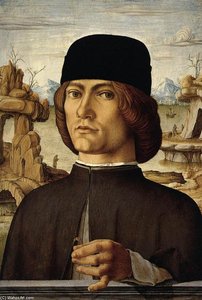
Within the hallowed halls of the Museo Thyssen-Bornemisza in Madrid resides a painting that transcends mere representation, offering instead a glimpse into the soul of 15th-century Italy – Francesco del Cossa's "Portrait of a Man." Completed around 1472, this oil on panel work is more than just a likeness; it’s a carefully constructed tableau of status, contemplation, and the burgeoning humanist ideals that defined the era. The painting immediately draws the eye with its subject’s dignified bearing – a man of evident wealth and authority, rendered in a style both strikingly realistic and subtly imbued with the artistic sensibilities of the early Renaissance.
Del Cossa, a pivotal figure within the Ferrarese school, masterfully employs techniques honed during his travels throughout Italy. The composition is meticulously balanced: the subject occupies a significant portion of the canvas, yet the landscape backdrop—a rugged vista punctuated by rocks and what appears to be a distant river—provides crucial depth and context. Notice how the artist utilizes atmospheric perspective; the details in the foreground are sharply defined, while the background gradually softens, creating an illusion of vastness and distance. This masterful use of spatial recession anchors the figure within a believable world.
The Language of Dress and Symbolism
A closer examination reveals a wealth of symbolic detail woven into the subject’s attire. The man's dark robe, trimmed with a high collar, speaks to his elevated social standing – perhaps a nobleman or even a cleric, given the style prevalent during that period. Crucially, he wears a ring on his finger, a potent symbol of commitment and status. The diamond setting, though small, hints at considerable wealth and signifies an engagement or perhaps even a marriage already underway. The careful rendering of the fabric’s folds and textures—the subtle sheen of velvet, the weight of the cloak—demonstrates Del Cossa's technical prowess and his ability to capture the tactile qualities of materials.
The man’s expression is particularly noteworthy. It isn’t a boisterous smile or an overtly joyful countenance; instead, he presents a face of quiet contemplation – a thoughtful gaze directed towards the viewer that invites introspection. This restraint, characteristic of Renaissance portraiture, suggests a man of considerable intellect and perhaps even melancholy. The slight furrow in his brow adds to this impression, hinting at inner complexities.
A Window into the 15th Century
"Portrait of a Man" is more than just an artistic achievement; it’s a valuable historical document. The painting reflects the cultural values and social hierarchies of 1472 Ferrara. The subject's clothing, his bearing, and even the landscape background offer clues about his profession, status, and likely worldview. It’s a snapshot of a society grappling with emerging humanist ideals – a renewed interest in classical learning, human potential, and individual expression—while still firmly rooted in medieval traditions.
The choice of oil on panel as the medium is significant. Oil paints allowed for greater detail, richer colors, and a smoother finish than tempera or fresco, making them ideal for capturing the nuances of portraiture. The durability of this technique ensured that the painting would endure for centuries to come.
Reproductions: Bringing Renaissance Beauty Home
For art enthusiasts seeking to experience the timeless beauty of “Portrait of a Man” without the constraints of museum visits, meticulously crafted reproductions are now available at ArtsDot.com. These hand-painted replicas capture not only the visual likeness but also the emotional depth and artistic subtleties of the original masterpiece. Each reproduction is created by skilled artisans using traditional techniques, ensuring that it faithfully reflects Del Cossa’s vision. Whether adorning a grand salon or a cozy study, these reproductions offer a stunning way to bring a piece of Renaissance history into your home.
To delve deeper into the life and work of Francesco del Cossa, we encourage you to explore resources such as Wikipedia (Wikipedia) for biographical details and further artistic insights. The Museo Thyssen-Bornemisza’s website (Museo Thyssen-Bornemisza) provides valuable information about the painting itself, including its history and provenance.
Related Artworks
Artist Biography
Francesco del Cossa: A Renaissance Master of Ferrara
Francesco del Cossa (c. 1436 – 1477) was a pivotal Italian Renaissance painter associated with the Ferrarese school. Born in Ferrara, Italy, he remains an intriguing figure whose life and career are somewhat shrouded in historical detail, yet his artistic contributions, particularly his frescoes, stand as testaments to his skill and innovative approach within the burgeoning Renaissance style.
Early Life and Training
Del Cossa was the son of a stonemason, Cristofano del Cossa, who also worked as an artist. Little is definitively known about Francesco’s early artistic training, but it's believed he assisted his father in painting decorations for the chapel of the Bishop's Palace in Ferrara around 1456. This early exposure to artistic practice undoubtedly shaped his initial development. He appears to have travelled outside of Ferrara during his late twenties or early thirties, gaining experience and potentially encountering new artistic influences.
Major Works and Artistic Style
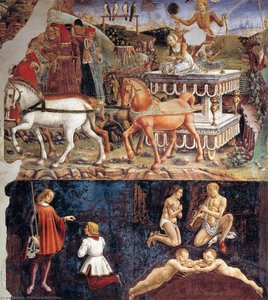
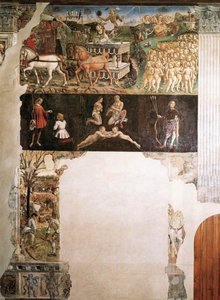
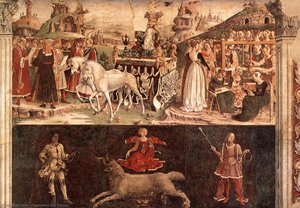
Del Cossa is primarily celebrated for his fresco cycles, most notably those adorning the Palazzo Schifanoia, a summer palace just outside the city gates of Ferrara. In collaboration with Cosimo Tura, he contributed to elaborate allegorical decorations depicting zodiacal signs and months of the year. Specific frescoes attributed to del Cossa include the "Allegory of May – Triumph of Apollo," notable for its striking depiction of a multitude of naked toddlers arranged in a visually arresting formation, and the “Allegory of April,” which features an early representation of the Three Graces, predating Botticelli’s famous version. These frescoes demonstrate his mastery of perspective, detail, and narrative storytelling.
- Palazzo Schifanoia Frescoes: Zodiacal allegories showcasing a blend of classical mythology and Renaissance realism.
- Allegory of May – Triumph of Apollo: Renowned for its unique portrayal of numerous naked children.
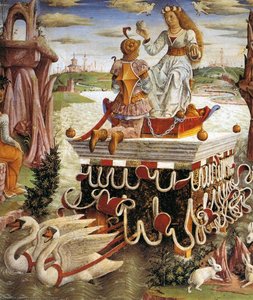
- Allegory of April: Features an early depiction of the Three Graces, demonstrating his understanding of classical themes.
Beyond the Palazzo Schifanoia, del Cossa produced other significant works:
- Virgin and Child with Two Saints (Bologna)
- Portrait of Alberto de' Catanei (Bologna)
- Fresco of Madonna del Baracano (Bologna), depicting the Virgin Mary and Child with portraits of Giovanni Bentivoglio and Maria Vinziguerra.
- Stained glass window at San Giovanni in Monte, Bologna (signed).
Development and Influences
Del Cossa’s style reflects a blend of influences characteristic of the Ferrarese Renaissance. While rooted in earlier Gothic traditions, his work demonstrates an increasing engagement with classical forms and humanist ideals. His attention to detail, particularly in depicting fabrics and textures, reveals a keen observational skill. The influence of early Netherlandish painting can also be detected in his meticulous rendering of details. His brief but impactful period in Bologna under the patronage of the Bentivoglio family further refined his style, leading to some of his most celebrated portraits.
Historical Significance
Francesco del Cossa’s legacy rests on his contributions to Ferrarese Renaissance art and his unique artistic vision. Though his career was relatively short, he left behind a body of work that showcases the dynamism and innovation of the period. His frescoes at Palazzo Schifanoia are invaluable documents of 15th-century courtly life and artistic patronage. His depictions of classical themes, such as the Three Graces, demonstrate an early engagement with humanist ideals. Del Cossa’s recent recognition in Ali Smith's novel "How to Be Both" and his connection to a Google Earth treasure hunt have further brought attention to this often-overlooked Renaissance master.
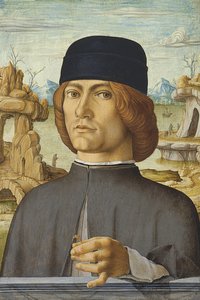
Francesco del Cossa
1436 - 1477 , Italy
Quick Facts
- Artistic Movement Or Style: Italian Renaissance
- Artists Or Movements Influenced By This Artist: ['Leonardo Scaletti']
- Date Of Birth: 1436
- Date Of Death: 1477
- Full Name: Francesco del Cossa
- Nationality: Italian
- Notable Artworks:
- Allegory of May
- Allegory of April
- Portrait of a Man
- Madonna with the Child
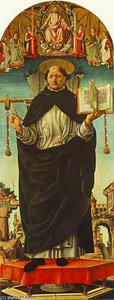
- St. Vincent Ferrer
- Place Of Birth (City And Country): Ferrara, Italy
Related Articles
Cecco del Caravaggio: Rediscovering the Shadowy Genius of Francesco Buoneri
Explore the captivating world of Cecco del Caravaggio (Francesco Buoneri), a pivotal Baroque artist. Discover his dramatic realism, mysterious life, and lasting legacy with ArtsDot's expert analysis.

The Enduring Legacy of Oil on Canvas: Technique, History & Aesthetic Impact
Explore the rich history & techniques of oil painting – from Renaissance masters to Impressionism. Discover pigments, layering methods, and why this timeless medium endures. Expert insights for artists & art enthusiasts.

Oil on Canvas: A Historical & Technical Exploration of a Timeless Artistic Medium
Explore the rich history & enduring techniques of oil painting on canvas. Discover the science behind its longevity, conservation practices, and contemporary relevance. Expert insights for art enthusiasts.

The Enduring Power of Painting: A Historical & Contemporary Exploration of Form and Emotion
Explore the rich history & enduring techniques of oil painting with ArtsDot. Discover masterpieces, learn about art collecting, and find authentic handmade reproductions crafted by skilled artists.

The Enduring Legacy of Oil on Canvas: Technique, History & Contemporary Practice
Explore the rich history & enduring techniques of oil painting on canvas. Discover the science behind its longevity, conservation practices, and contemporary relevance. Expert insights for art enthusiasts.