 Preview
 Send
Send Share
Share
 Details

 Download
 Similars
 X-Ray
X-Ray Diaporama
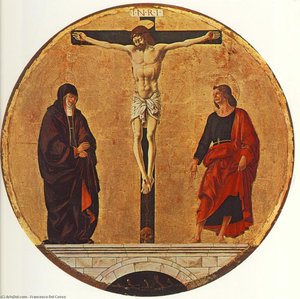
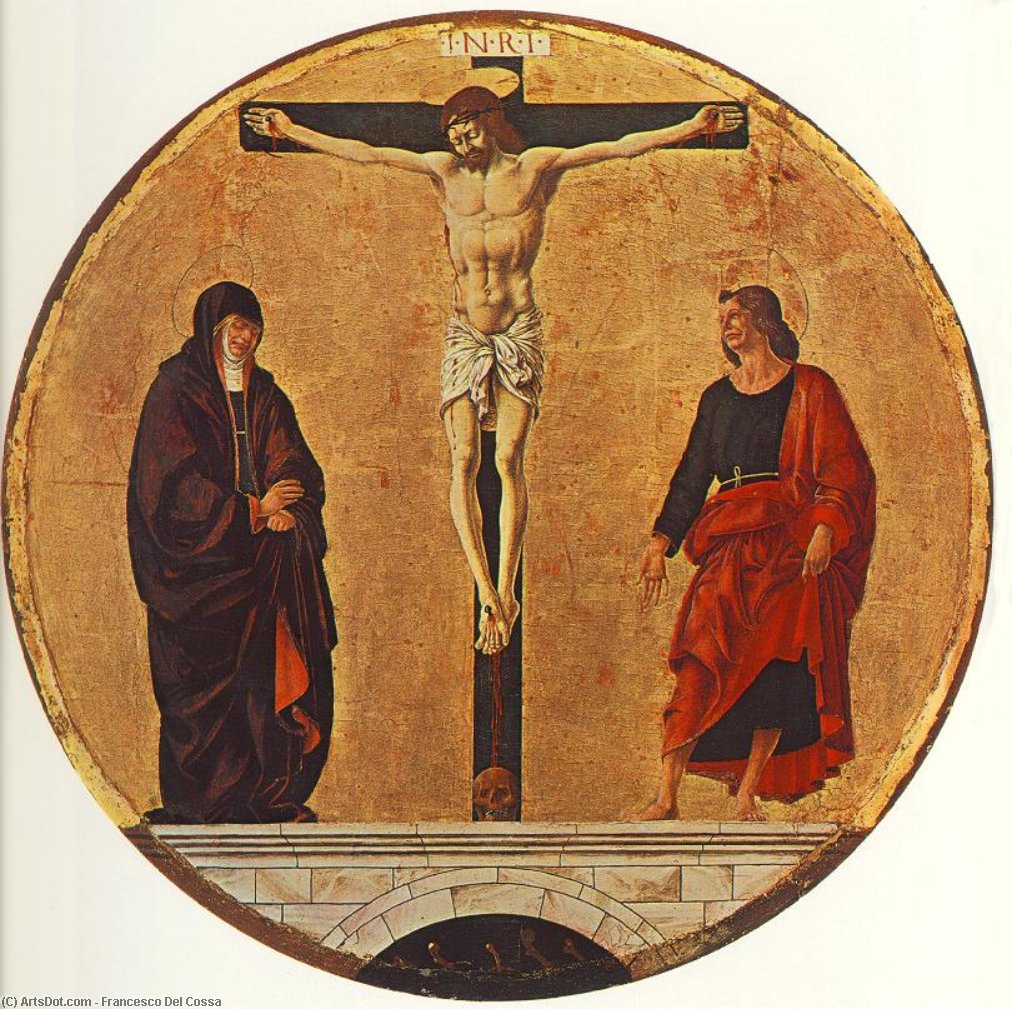
Griffoni Polyptych: The Crucifixion
 Oil On Canvas
- WallArt
- Renaissance Early Renaissance
 1473
1473 63.0 x 63.0 cm
 National Gallery of Art
 Read More
Hand Made Oil Reproduction
Hand-painted oil on canvas in your size and frame, made to order by our artists. ( Buy Print Buy Image)




P118B $10

P118H $10

P118W $10

P438Z $10

P508JH $12

P508YH $12

P805H $10

P805Z $10

P919BZ $10

P919G $10

P919XJ $10

P959ZH $10

P968JZ $12

W106C $8

W218G $10

W218JH $8

W218Y $10

W307PJ $10

W316G $10

W316PJ $8

W316Y $10

W398PJ $8

W4111J $10

W500HY $15

W500JH $15

W692G $12

W849H $8

W940BG $15

W953PJ $8




Pick from our preset sizes that match the artwork's original proportions.

You may enter your own dimensions to fit a specific frame or space. If your selected size does not match the original image's proportions, we will either crop the artwork or extend the painting with additional hand-painted elements. A digital mockup will be sent for your approval before production begins.
Please note that the on-screen preview does not reflect the actual cropping or extension. Only the mockup will accurately show the final composition.
While custom sizes are available, we recommend selecting a dimension from the predefined list to preserve the original proportions.
After order, ArtsDot.com team will email client for instructions and provide a mockup preview
Worldwide Delivery () in 3/4 weeks instead of standard 5 weeks. (17 August). No compromise on quality.

Free Worldwide Express Shipping

High-Quality Linen Canvas

Full Shipping Insurance

Customs Tax Refund Guarantee

True Color Matching Guarantee

60-Day Return Policy (Defects Only)

100% Money-Back Guarantee

Bulk Discount Offer
 Glass option is only available in size under 110 CM

Griffoni Polyptych: The Crucifixion
Reproduction Medium
Reproduction Size
-


Total Price
$ 263
Artwork Description
The Griffoni Polyptych: A Ferrarese Masterpiece of Suffering and Grace
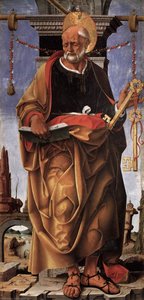
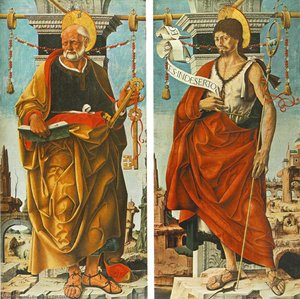
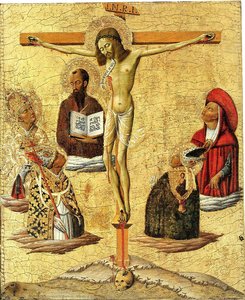
The Griffoni Polyptych, specifically its arresting depiction of “The Crucifixion,” stands as a poignant testament to the artistic prowess of Francesco del Cossa during the late 15th century. Painted in 1473 for the wealthy Florentine family of Floriano Griffoni, this altarpiece transcends mere religious iconography; it’s a deeply felt meditation on sacrifice, grief, and the enduring power of faith. Delivered to the church of San Petronio in Bologna, its subsequent journey through private collections speaks volumes about its lasting appeal – a quality rooted not just in technical skill but in an emotional resonance that continues to captivate viewers centuries later.
Cossa’s style is firmly embedded within the Ferrarese school, a movement characterized by a rich palette, meticulous detail, and a dramatic use of light and shadow. He skillfully employs tempera on panel, a technique favored for its luminosity and ability to capture subtle gradations of color – qualities particularly evident in the drapery and the flesh tones of Christ and his tormentors. The composition is carefully balanced, drawing the eye towards the central figure of Jesus, yet simultaneously incorporating elements that create a sense of unease and drama. Notice how the figures are not simply arranged; they’re placed within a meticulously rendered architectural setting – a stark contrast to the more ethereal depictions common in earlier religious art.
A Study in Contrasts: Figures and Space
The painting is immediately striking for its masterful use of contrasting elements. The foreground, dominated by the figures of the Roman soldiers and onlookers, is rendered with a palpable sense of urgency and brutality. Their faces are etched with sorrow and disbelief, reflecting the horror of the event unfolding before them. Del Cossa’s attention to detail extends even to the smallest gestures – the clenched fists, the averted gazes, the expressions of anguish – conveying a profound understanding of human emotion. Juxtaposed against this is the serene suffering of Christ himself, presented with an almost sculptural quality. His body, draped in flowing robes, appears both vulnerable and powerfully dignified.
The architectural setting further enhances this contrast. The rough-hewn stone walls and simple furnishings of the Roman scene stand in stark opposition to the more refined details of the background – a suggestion of a distant landscape hinting at the broader context of Christ’s sacrifice. This spatial arrangement isn't merely decorative; it serves to underscore the thematic tension between earthly suffering and divine grace.
Symbolism and Emotional Impact
Beyond its technical brilliance, the Griffoni Polyptych is rich in symbolic meaning. The presence of the onlookers – a diverse group representing various social classes – underscores the universality of Christ’s sacrifice. The soldiers, armed with spears and swords, represent the forces of opposition, while the women weeping symbolize compassion and grief. The positioning of these figures creates a dynamic narrative, inviting viewers to contemplate the events leading up to and following the crucifixion.
Perhaps most powerfully, the painting evokes a profound sense of empathy. Christ’s suffering is not presented as a distant theological abstraction but as a deeply human experience – one that resonates with our own capacity for pain and loss. The artist's skillful rendering of his physical agony, combined with the expressions of sorrow on the faces of those around him, creates an emotional impact that transcends time and culture. It’s a scene designed to provoke reflection, not just admiration.
A Legacy of Beauty and Emotion
The Griffoni Polyptych remains a remarkable achievement in Renaissance art, showcasing Del Cossa's mastery of tempera technique and his profound understanding of human emotion. Its journey through history—from its original commission to its current presence in collections around the world—testifies to its enduring value as both an artistic masterpiece and a powerful expression of faith. Reproductions offer a chance to experience this emotional depth, allowing viewers to connect with the scene's timeless themes of sacrifice, suffering, and redemption.
Related Artworks
Artist Biography
Francesco del Cossa: A Renaissance Master of Ferrara
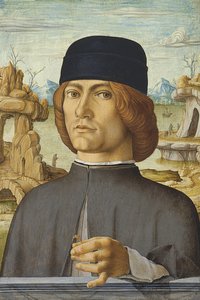
Francesco del Cossa (c. 1436 – 1477) was a pivotal Italian Renaissance painter associated with the Ferrarese school. Born in Ferrara, Italy, he remains an intriguing figure whose life and career are somewhat shrouded in historical detail, yet his artistic contributions, particularly his frescoes, stand as testaments to his skill and innovative approach within the burgeoning Renaissance style.
Early Life and Training
Del Cossa was the son of a stonemason, Cristofano del Cossa, who also worked as an artist. Little is definitively known about Francesco’s early artistic training, but it's believed he assisted his father in painting decorations for the chapel of the Bishop's Palace in Ferrara around 1456. This early exposure to artistic practice undoubtedly shaped his initial development. He appears to have travelled outside of Ferrara during his late twenties or early thirties, gaining experience and potentially encountering new artistic influences.
Major Works and Artistic Style
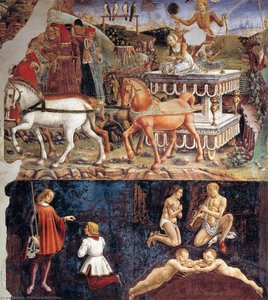
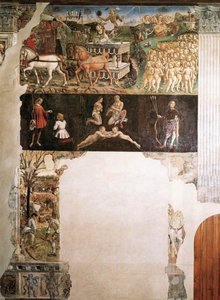
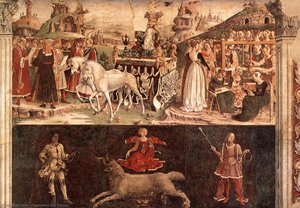
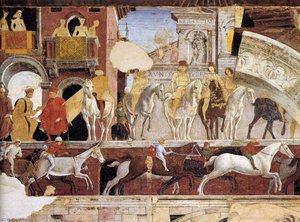
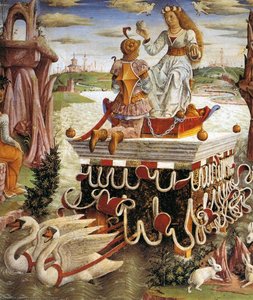
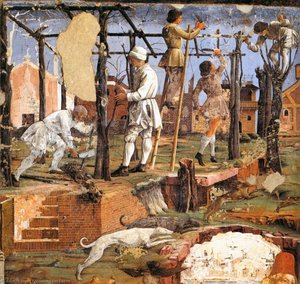
Del Cossa is primarily celebrated for his fresco cycles, most notably those adorning the Palazzo Schifanoia, a summer palace just outside the city gates of Ferrara. In collaboration with Cosimo Tura, he contributed to elaborate allegorical decorations depicting zodiacal signs and months of the year. Specific frescoes attributed to del Cossa include the "Allegory of May – Triumph of Apollo," notable for its striking depiction of a multitude of naked toddlers arranged in a visually arresting formation, and the “Allegory of April,” which features an early representation of the Three Graces, predating Botticelli’s famous version. These frescoes demonstrate his mastery of perspective, detail, and narrative storytelling.
- Palazzo Schifanoia Frescoes: Zodiacal allegories showcasing a blend of classical mythology and Renaissance realism.
- Allegory of May – Triumph of Apollo: Renowned for its unique portrayal of numerous naked children.
- Allegory of April: Features an early depiction of the Three Graces, demonstrating his understanding of classical themes.
Beyond the Palazzo Schifanoia, del Cossa produced other significant works:
- Virgin and Child with Two Saints (Bologna)
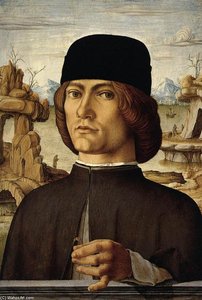
- Portrait of Alberto de' Catanei (Bologna)
- Fresco of Madonna del Baracano (Bologna), depicting the Virgin Mary and Child with portraits of Giovanni Bentivoglio and Maria Vinziguerra.
- Stained glass window at San Giovanni in Monte, Bologna (signed).
Development and Influences
Del Cossa’s style reflects a blend of influences characteristic of the Ferrarese Renaissance. While rooted in earlier Gothic traditions, his work demonstrates an increasing engagement with classical forms and humanist ideals. His attention to detail, particularly in depicting fabrics and textures, reveals a keen observational skill. The influence of early Netherlandish painting can also be detected in his meticulous rendering of details. His brief but impactful period in Bologna under the patronage of the Bentivoglio family further refined his style, leading to some of his most celebrated portraits.
Historical Significance
Francesco del Cossa’s legacy rests on his contributions to Ferrarese Renaissance art and his unique artistic vision. Though his career was relatively short, he left behind a body of work that showcases the dynamism and innovation of the period. His frescoes at Palazzo Schifanoia are invaluable documents of 15th-century courtly life and artistic patronage. His depictions of classical themes, such as the Three Graces, demonstrate an early engagement with humanist ideals. Del Cossa’s recent recognition in Ali Smith's novel "How to Be Both" and his connection to a Google Earth treasure hunt have further brought attention to this often-overlooked Renaissance master.
Francesco del Cossa
1436 - 1477 , Italy
Quick Facts
- Artistic Movement Or Style: Italian Renaissance
- Artists Or Movements Influenced By This Artist: ['Leonardo Scaletti']
- Date Of Birth: 1436
- Date Of Death: 1477
- Full Name: Francesco del Cossa
- Nationality: Italian
- Notable Artworks:
- Allegory of May
- Allegory of April
- Portrait of a Man
- Madonna with the Child
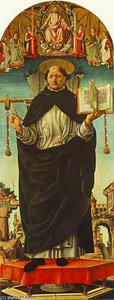
- St. Vincent Ferrer
- Place Of Birth (City And Country): Ferrara, Italy
Related Articles
Andrea del Sarto: Florentine Grace, Technical Mastery & Artistic Ambition
Explore the life & art of Andrea del Sarto, a Florentine Renaissance master renowned for harmonious compositions & technical brilliance. Discover his frescoes, portraits, and lasting influence on art history.
Cecco del Caravaggio: Rediscovering the Shadowy Genius of Francesco Buoneri
Explore the captivating world of Cecco del Caravaggio (Francesco Buoneri), a pivotal Baroque artist. Discover his dramatic realism, mysterious life, and lasting legacy with ArtsDot's expert analysis.
Sacred Narratives on Canvas: Exploring Religious Painting Through History
Explore the rich history of religious painting with ArtsDot.com! Discover iconic artworks, symbolism & techniques from antiquity to the Renaissance. Enhance your art appreciation today.
Sacred Narratives Embodied: A Comprehensive Exploration of Religious Iconography in Art History
Explore the rich history of religious iconography in art! Discover symbolism, movements & masterpieces from Byzantine to Renaissance periods. Expert insights for collectors and enthusiasts at ArtsDot.
Sacred Narratives on Canvas: Exploring Religious Scenes & Their Enduring Influence
Explore the rich history of religious art from Giotto to the Renaissance masters with ArtsDot. Discover symbolism, techniques & enduring legacies. Museum-quality reproductions available.