 Preview
 Send
Send Share
Share
 Details

 Download
 Similars
 X-Ray
X-Ray Diaporama
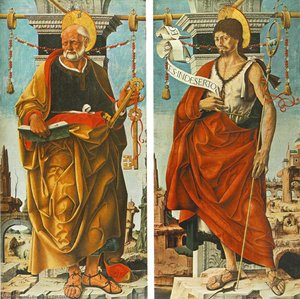
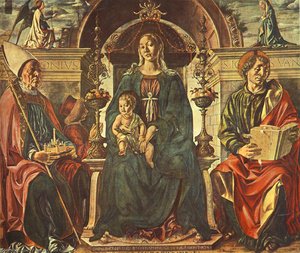
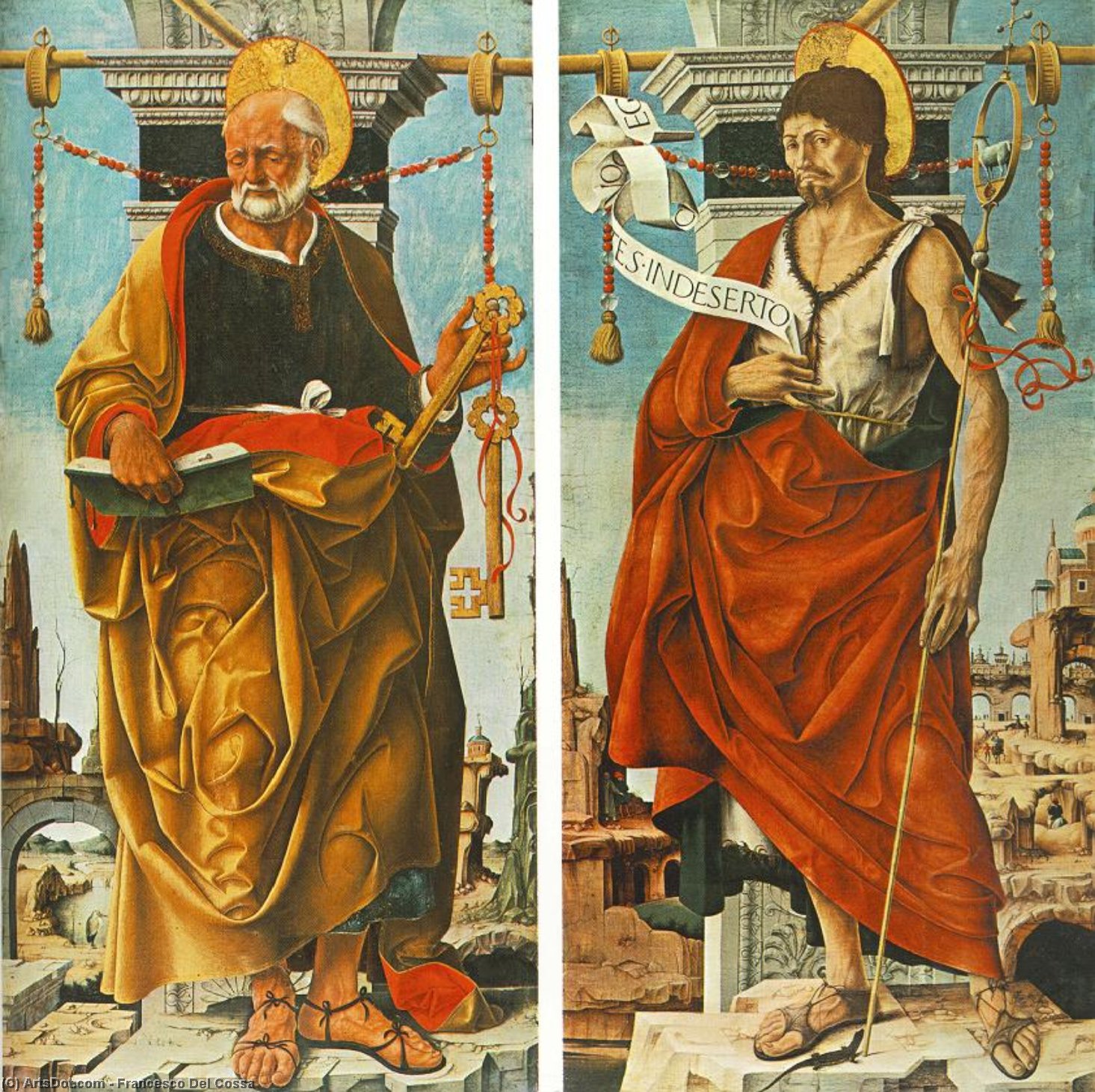
Griffoni Polyptych: St Peter and St John the Baptist
 Oil On Canvas
- WallArt
- Renaissance Ferrarese School
 1473
1473 112.0 x 55.0 cm
 Pinacoteca di Brera
 Read More
Hand Made Oil Reproduction
Hand-painted oil on canvas in your size and frame, made to order by our artists. ( Buy Print Buy Image)




P118B $10

P118H $10

P118W $10

P438Z $10

P508JH $12

P508YH $12

P805H $10

P805Z $10

P919BZ $10

P919G $10

P919XJ $10

P959ZH $10

P968JZ $12

W106C $8

W218G $10

W218JH $8

W218Y $10

W307PJ $10

W316G $10

W316PJ $8

W316Y $10

W398PJ $8

W4111J $10

W500HY $15

W500JH $15

W692G $12

W849H $8

W940BG $15

W953PJ $8




Pick from our preset sizes that match the artwork's original proportions.

You may enter your own dimensions to fit a specific frame or space. If your selected size does not match the original image's proportions, we will either crop the artwork or extend the painting with additional hand-painted elements. A digital mockup will be sent for your approval before production begins.
Please note that the on-screen preview does not reflect the actual cropping or extension. Only the mockup will accurately show the final composition.
While custom sizes are available, we recommend selecting a dimension from the predefined list to preserve the original proportions.
After order, ArtsDot.com team will email client for instructions and provide a mockup preview
Worldwide Delivery () in 3/4 weeks instead of standard 5 weeks. (17 August). No compromise on quality.

Free Worldwide Express Shipping

High-Quality Linen Canvas

Full Shipping Insurance

Customs Tax Refund Guarantee

True Color Matching Guarantee

60-Day Return Policy (Defects Only)

100% Money-Back Guarantee

Bulk Discount Offer
 Glass option is only available in size under 110 CM

Griffoni Polyptych: St Peter and St John the Baptist
Reproduction Medium
Reproduction Size
-


Total Price
$ 263
Artwork Description
The Griffoni Polyptych: A Renaissance Dialogue of Faith and Power
Francesco del Cossa’s “Griffoni Polyptych: St Peter and St John the Baptist,” painted in 1473, is more than just a religious depiction; it's a meticulously crafted tableau brimming with symbolism and reflecting the complex political and spiritual landscape of Renaissance Ferrara. This monumental work, measuring 112 x 55 cm, offers a captivating glimpse into the artistic prowess of a master painter whose career tragically ended far too early. The polyptych format – meaning multiple panels joined together – was popular at the time, allowing for a narrative to unfold across several surfaces, and here, del Cossa masterfully utilizes this structure to present a profound meditation on faith, authority, and the relationship between earthly power and divine grace.
The painting itself depicts St. Peter and St. John the Baptist in an intimate conversation, set against a backdrop of imposing pillars that evoke both Roman grandeur and the burgeoning civic pride of Ferrara. The figures are rendered with remarkable realism, showcasing del Cossa’s skill in capturing human anatomy and expression. Note the subtle details – the folds of their robes, the texture of their skin, the contemplative gaze of each saint. The use of tempera on panel is evident in the rich colors and luminous quality of the paint, a technique favored by artists of the Ferrarese school for its durability and ability to create vibrant hues.
A Study in Contrasting Figures
Del Cossa deliberately contrasts the two figures. St. Peter, depicted on the left, embodies earthly authority and leadership. He is older, his face etched with experience, holding a book – a symbol of law, governance, and divine revelation as interpreted by humanity. His posture suggests a weighty responsibility, a constant reminder of the burdens of leadership. In stark contrast, St. John the Baptist, positioned on the right, radiates youthful energy and spiritual intensity. He is depicted in a dynamic pose, gesturing towards the heavens, embodying the call to repentance and the promise of salvation. The younger age reflects his role as a herald of Christ’s arrival, a figure preparing the way for divine grace.
The presence of the griffons – stylized eagle-lion hybrids – flanking the polyptych is particularly significant. Griffons were emblems of the Este family, the powerful rulers of Ferrara at the time. Their inclusion subtly reinforces the connection between religious authority and secular power, suggesting that faith and governance are inextricably linked within the city’s political structure. The griffons aren't merely decorative; they act as silent guardians, overseeing the scene and reminding viewers of the dynasty’s patronage.
Renaissance Symbolism and Artistic Technique
Beyond the immediate depiction of the saints, “Griffoni Polyptych” is rich in Renaissance symbolism. The books held by each figure represent not just religious texts but also the accumulated wisdom and legal traditions that shape human understanding. The clock in the upper left corner subtly introduces a temporal element, reminding us of the fleeting nature of earthly life and the urgency to seek salvation. Del Cossa’s masterful use of perspective creates a sense of depth and realism, drawing the viewer into the scene and inviting contemplation.
Furthermore, del Cossa's style demonstrates a sophisticated understanding of color theory and composition. The warm hues of red and gold dominate the palette, evoking feelings of piety and majesty. The balanced arrangement of figures and elements creates visual harmony, while the subtle use of light and shadow adds drama and depth to the scene. His work is considered part of the Ferrarese school, known for its vibrant colors, detailed realism, and innovative approach to perspective.
A Timeless Masterpiece – A Reproduction Worth Admiring
“Griffoni Polyptych: St Peter and St John the Baptist” remains a powerful testament to the artistic achievements of the Renaissance. Today, high-quality reproductions offer an accessible way to experience this extraordinary work of art. Whether displayed in a private collection or incorporated into a grand interior design scheme, a faithful reproduction captures not only the visual beauty but also the profound symbolism and historical context of this remarkable painting. It’s a piece that speaks volumes about faith, power, and the enduring legacy of Francesco del Cossa.
Related Artworks

Artist Biography
Francesco del Cossa: A Renaissance Master of Ferrara
Francesco del Cossa (c. 1436 – 1477) was a pivotal Italian Renaissance painter associated with the Ferrarese school. Born in Ferrara, Italy, he remains an intriguing figure whose life and career are somewhat shrouded in historical detail, yet his artistic contributions, particularly his frescoes, stand as testaments to his skill and innovative approach within the burgeoning Renaissance style.
Early Life and Training
Del Cossa was the son of a stonemason, Cristofano del Cossa, who also worked as an artist. Little is definitively known about Francesco’s early artistic training, but it's believed he assisted his father in painting decorations for the chapel of the Bishop's Palace in Ferrara around 1456. This early exposure to artistic practice undoubtedly shaped his initial development. He appears to have travelled outside of Ferrara during his late twenties or early thirties, gaining experience and potentially encountering new artistic influences.
Major Works and Artistic Style
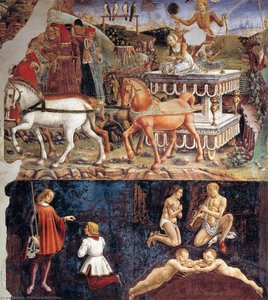
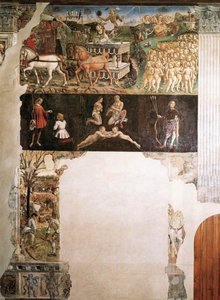
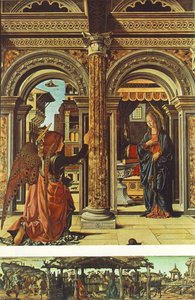
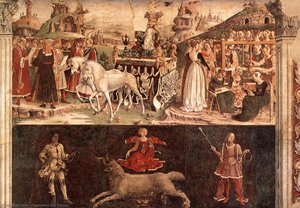
Del Cossa is primarily celebrated for his fresco cycles, most notably those adorning the Palazzo Schifanoia, a summer palace just outside the city gates of Ferrara. In collaboration with Cosimo Tura, he contributed to elaborate allegorical decorations depicting zodiacal signs and months of the year. Specific frescoes attributed to del Cossa include the "Allegory of May – Triumph of Apollo," notable for its striking depiction of a multitude of naked toddlers arranged in a visually arresting formation, and the “Allegory of April,” which features an early representation of the Three Graces, predating Botticelli’s famous version. These frescoes demonstrate his mastery of perspective, detail, and narrative storytelling.
- Palazzo Schifanoia Frescoes: Zodiacal allegories showcasing a blend of classical mythology and Renaissance realism.
- Allegory of May – Triumph of Apollo: Renowned for its unique portrayal of numerous naked children.
- Allegory of April: Features an early depiction of the Three Graces, demonstrating his understanding of classical themes.
Beyond the Palazzo Schifanoia, del Cossa produced other significant works:
- Virgin and Child with Two Saints (Bologna)
- Portrait of Alberto de' Catanei (Bologna)
- Fresco of Madonna del Baracano (Bologna), depicting the Virgin Mary and Child with portraits of Giovanni Bentivoglio and Maria Vinziguerra.
- Stained glass window at San Giovanni in Monte, Bologna (signed).
Development and Influences
Del Cossa’s style reflects a blend of influences characteristic of the Ferrarese Renaissance. While rooted in earlier Gothic traditions, his work demonstrates an increasing engagement with classical forms and humanist ideals. His attention to detail, particularly in depicting fabrics and textures, reveals a keen observational skill. The influence of early Netherlandish painting can also be detected in his meticulous rendering of details. His brief but impactful period in Bologna under the patronage of the Bentivoglio family further refined his style, leading to some of his most celebrated portraits.
Historical Significance
Francesco del Cossa’s legacy rests on his contributions to Ferrarese Renaissance art and his unique artistic vision. Though his career was relatively short, he left behind a body of work that showcases the dynamism and innovation of the period. His frescoes at Palazzo Schifanoia are invaluable documents of 15th-century courtly life and artistic patronage. His depictions of classical themes, such as the Three Graces, demonstrate an early engagement with humanist ideals. Del Cossa’s recent recognition in Ali Smith's novel "How to Be Both" and his connection to a Google Earth treasure hunt have further brought attention to this often-overlooked Renaissance master.
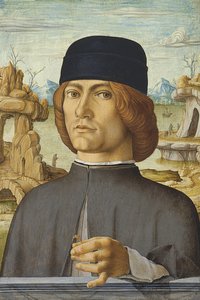
Francesco del Cossa
1436 - 1477 , Italy
Quick Facts
- Artistic Movement Or Style: Italian Renaissance
- Artists Or Movements Influenced By This Artist: ['Leonardo Scaletti']
- Date Of Birth: 1436
- Date Of Death: 1477
- Full Name: Francesco del Cossa
- Nationality: Italian
- Notable Artworks:
- Allegory of May
- Allegory of April
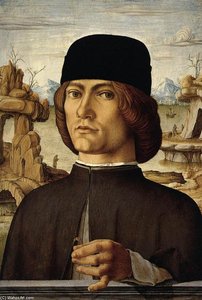
- Portrait of a Man
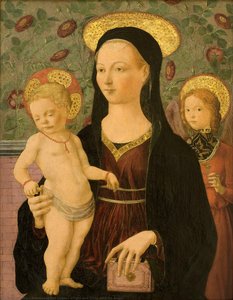
- Madonna with the Child
- St. Vincent Ferrer
- Place Of Birth (City And Country): Ferrara, Italy
Related Articles

Cecco del Caravaggio: Rediscovering the Shadowy Genius of Francesco Buoneri
Explore the captivating world of Cecco del Caravaggio (Francesco Buoneri), a pivotal Baroque artist. Discover his dramatic realism, mysterious life, and lasting legacy with ArtsDot's expert analysis.
Prado Masterpieces: Explore 25 Iconic Artworks & Bring Spanish Beauty Home
Journey through 25 Prado Museum masterpieces! Explore Velázquez, Goya & El Greco's iconic Spanish art. Discover the stories behind these timeless paintings and find museum-quality reproductions for your home at ArtsDot.com.
El Greco's Masterpieces: Explore 25 Iconic Paintings & Spiritual Visions | ArtsDot
Journey through El Greco's 25 most iconic paintings! Explore the spiritual depth & dramatic beauty of this Spanish Renaissance master. Discover art history, techniques & find museum-quality reproductions for your home at ArtsDot.com.
Andrea del Sarto: Florentine Grace, Technical Mastery & Artistic Ambition
Explore the life & art of Andrea del Sarto, a Florentine Renaissance master renowned for harmonious compositions & technical brilliance. Discover his frescoes, portraits, and lasting influence on art history.
Giotto's Masterpieces: 25 Renaissance Artworks for Your Home | ArtsDot
Explore 25 breathtaking artworks by Giotto di Bondone, a Renaissance master. Discover the stories behind iconic frescoes & paintings like the Scrovegni Chapel cycle. Find museum-quality Giotto reproductions and elevate your home decor with ArtsDot.com.