 Preview
 Send
Send Share
Share
 Details

 Download
 Similars
 X-Ray
X-Ray Diaporama
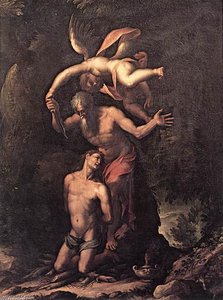
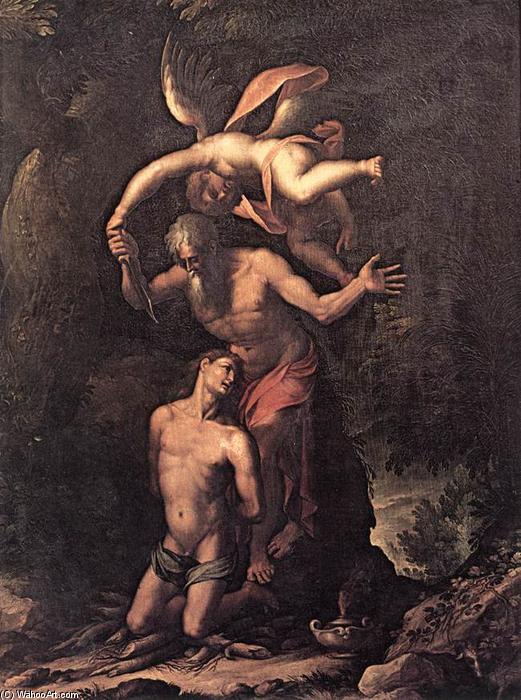
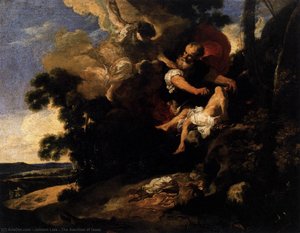
Sacrifice of Isaac
 Oil
Oil- WallArt
- Baroque Period
 1596
1596 51.0 x 37.0 cm
 Galleria degli Uffizi
 Read More
Hand Made Oil Reproduction
Hand-painted oil on canvas in your size and frame, made to order by our artists. ( Buy Print Buy Image)




P118B $10

P118H $10

P118W $10

P438Z $10

P508JH $12

P508YH $12

P805H $10

P805Z $10

P919BZ $10

P919G $10

P919XJ $10

P959ZH $10

P968JZ $12

W106C $8

W218G $10

W218JH $8

W218Y $10

W307PJ $10

W316G $10

W316PJ $8

W316Y $10

W398PJ $8

W4111J $10

W500HY $15

W500JH $15

W692G $12

W849H $8

W940BG $15

W953PJ $8




Pick from our preset sizes that match the artwork's original proportions.

You may enter your own dimensions to fit a specific frame or space. If your selected size does not match the original image's proportions, we will either crop the artwork or extend the painting with additional hand-painted elements. A digital mockup will be sent for your approval before production begins.
Please note that the on-screen preview does not reflect the actual cropping or extension. Only the mockup will accurately show the final composition.
While custom sizes are available, we recommend selecting a dimension from the predefined list to preserve the original proportions.
After order, ArtsDot.com team will email client for instructions and provide a mockup preview
Worldwide Delivery () in 3/4 weeks instead of standard 5 weeks. (17 August). No compromise on quality.

Free Worldwide Express Shipping

High-Quality Linen Canvas

Full Shipping Insurance

Customs Tax Refund Guarantee

True Color Matching Guarantee

60-Day Return Policy (Defects Only)

100% Money-Back Guarantee

Bulk Discount Offer
 Glass option is only available in size under 110 CM

Sacrifice of Isaac
Reproduction Medium
Reproduction Size
-


Total Price
$ 263
Artwork Description
A Moment Frozen in Time: Jacopo Ligozzi’s ‘The Sacrifice of Isaac’
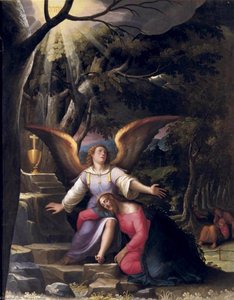
Jacopo Ligozzi's “The Sacrifice of Isaac,” painted in 1596 and now residing within the hallowed halls of the Galleria degli Uffizi, is more than just a depiction of a biblical narrative; it’s a profound exploration of faith, obedience, and the agonizing weight of divine command. This oil painting transcends its religious subject matter to become a timeless meditation on human morality and the unsettling intersection between personal responsibility and the dictates of a higher power. Ligozzi masterfully captures a pivotal moment – Abraham poised to fulfill God's decree, Isaac kneeling in resigned acceptance, and an angel intervening with a desperate plea for mercy – creating a scene brimming with dramatic tension and emotional complexity.
The painting’s stylistic roots firmly anchor it within the Florentine Mannerism of the late 16th century. Ligozzi, deeply influenced by the artistic tutelage of Giovanni Battista Buonarroti, eschews the overtly flamboyant gestures often associated with the period's exuberance. Instead, he favors a restrained palette dominated by earthy tones – ochres, browns, and muted reds – that lend the scene an atmosphere of somber gravity. The lighting is particularly striking; a dramatic chiaroscuro effect, characteristic of the Baroque era but subtly executed here, sculpts the figures with stark contrasts, emphasizing Abraham’s outstretched hand and Isaac's bowed head. This masterful use of light and shadow not only heightens the drama but also draws the viewer’s eye directly to the central figures, forcing a confrontation with their profound predicament.
Symbolism Woven into the Canvas
“The Sacrifice of Isaac” is rich in symbolic meaning, extending far beyond its immediate narrative. Abraham himself embodies the virtues of faith and obedience – his willingness to submit to God’s will, even at the cost of his son's life. However, Ligozzi doesn’t present this as a simple act of piety; rather, he subtly conveys Abraham’s internal struggle, evident in the tension etched on his face and the hesitant movement of his hand. Isaac, kneeling passively, represents innocence and vulnerability, highlighting the tragic nature of the event. Crucially, the angel, descending from the upper right corner, isn't merely a divine intervention; it symbolizes hope and mercy, offering a reprieve from an inevitable tragedy. The ram, poised to take Isaac’s place, becomes a potent symbol of substitution – a testament to God’s ultimate compassion and a reminder that sacrifice doesn’t always necessitate bloodshed.
A Window into the Artist's World
Jacopo Ligozzi was a unique figure in 16th-century Italy, celebrated not only for his paintings but also for his pioneering role in integrating art with scientific observation. Born in Verona and trained by Giovanni Battista Buonarroti, he possessed a meticulous eye for detail and an appreciation for the natural world – qualities that are vividly reflected in this painting. Ligozzi’s background as part of a family involved in silk production and tapestry weaving instilled within him a deep understanding of color and texture, contributing to the richness and depth of his palette. Furthermore, his later work focused heavily on botanical illustrations and depictions of fauna, suggesting a lifelong fascination with the intricacies of nature – a theme subtly echoed in the careful rendering of Isaac’s youthful features and the surrounding forest.
Bringing ‘The Sacrifice of Isaac’ Home: A Reproduction for the Soul
ArtsDot offers meticulously crafted hand-painted reproductions of Jacopo Ligozzi's “The Sacrifice of Isaac,” allowing you to experience this masterpiece in exquisite detail. Each reproduction is created by skilled artisans who painstakingly recreate Ligozzi’s nuanced techniques, capturing the painting’s dramatic lighting, subdued color palette, and profound emotional impact. Whether displayed in a grand salon or a quiet study, this reproduction serves as a powerful reminder of humanity's capacity for both faith and sorrow – a timeless work of art that continues to resonate with viewers centuries after its creation. Explore our collection at ArtsDot, or discover more about Ligozzi’s life and legacy on Wikipedia.
Related Artworks

Artist Biography
The Visionary Synthesis of Jacopo Ligozzi
In the vibrant, transformative era of late-Renaissance and Mannerist Italy, few figures embodied the intersection of aesthetic grace and empirical curiosity as profoundly as Jacopo Ligozzi. Born in Verona in 1547 to the respected artist Giovanni Ermano Ligozzi, Jacopo was immersed from birth in a world where craftsmanship and visual storytelling were paramount. His early life was shaped by the rigorous traditions of the artisan guilds, yet his spirit possessed an insatiable hunger for the wonders of the natural world. This dual passion—the disciplined technique of the painter and the observant eye of the naturalist—would eventually allow him to bridge the gap between art and science, earning him a legacy that transcends mere decoration.
Ligozzi’s artistic journey was significantly shaped by his time in Florence, where he studied under the legendary sculptor Giovanni Battista Buonarroti. This period of intense training within the Florentine Mannerist tradition instilled in him a mastery of form, light, and dramatic composition. However, Ligozzi was never content to remain solely within the confines of stylistic imitation. His ambitions led him toward the burgeoning scientific inquiries of his age. His invitation to the Habsburg court in Vienna served as a pivotal moment in his career; there, he presented exquisite drawings of botanical and zoological specimens that captivated the imperial gaze. These works were not merely beautiful illustrations but were early precursors to modern scientific documentation, demonstrating a level of precision that would later lead many to refer to him as the "Audubon of Florence."
A Master of the Medici Court and Natural Wonders
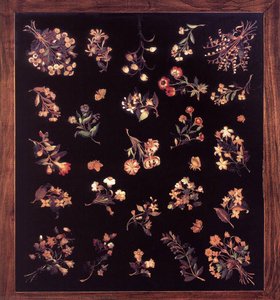
Upon settling in Florence, Ligozzi ascended to the highest echelons of the artistic community. Following the death of Giorgio Vasari in 1574, he assumed leadership of the Accademia e compagnia delle arti del disegno, a position that granted him immense influence over the direction of Florentine art. His career was inextricably linked to the powerful Medici dynasty, as he served successive Grand Dukes including Francesco I, Ferdinando I, and Cosimo II. This prestigious patronage allowed him to experiment with diverse media, from grand historical narratives to the delicate artistry of pietre dure design.
His body of work is characterized by a remarkable versatility that ranges from the deeply spiritual to the intensely biological:
- Biblical Narratives: In works such as his 1596 Sacrifice of Isaac, Ligozzi utilized the dramatic tension of the Baroque style to explore profound themes of faith and divine intervention, using light and shadow to heighten the emotional stakes of the biblical drama.
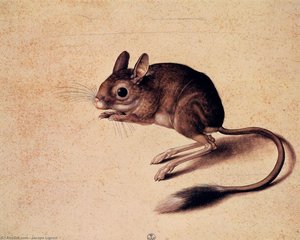
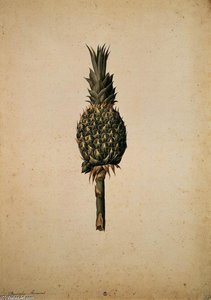
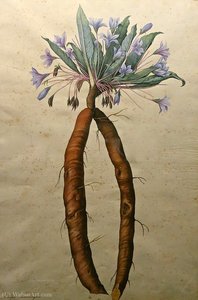
- Botanical Precision: His illustrations, such as the meticulous depiction of Agave americana, showcase a scientific rigor that captures the intricate textures and muted tones of the natural world, serving as vital records for botanists of his era.
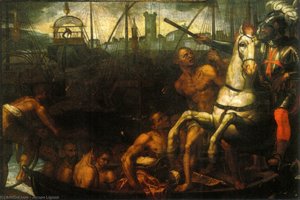
- Historical and Naval Drama: In pieces like the Return of the Cavalier of Santo Stefano from Lepanto, he demonstrated an ability to capture large-scale historical events with a sense of movement and cultural significance that resonated with the political climate of the time.
Legacy of the Florentine Naturalist
The historical significance of Jacopo Ligozzi lies in his refusal to see art and science as separate disciplines. While many of his contemporaries focused on the idealized human form or mythological allegories, Ligozzi looked toward the earth, the flora, and the fauna with a reverence that demanded accuracy. He transformed the canvas into a laboratory of observation, where every petal and every scale was rendered with an almost tactile reality.
By integrating the meticulousness of scientific illustration with the sophisticated language of Mannerism, Ligozzi helped pave the way for the natural history movements of subsequent centuries. His life remains a testament to the power of curiosity, proving that the artist's brush can be just as potent a tool for discovery as the scientist's lens. Today, his works stand as enduring monuments to a period when the pursuit of beauty and the pursuit of truth were one and the same.

Jacopo Ligozzi
1547 - 1627 , Italy
Quick Facts
- Artistic Movement Or Style: Late Renaissance & Mannerism
- Artists Or Movements Influenced By This Artist: ['Giorgio Vasari']
- Artists Who Influenced This Artist: ['Giovanni Ermano Ligozzi']
- Date Of Birth: 1547 Verona Italy
- Date Of Death: 1627
- Full Name: Jacopo Ligozzi
- Nationality: Italian
- Notable Artworks:
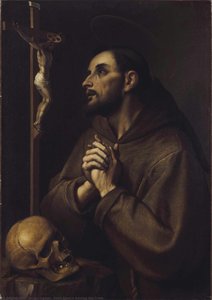
- St Francis Assisi Frescoes
- St Raymond Resuscitating Child Canvas
- Agave americana
- Place Of Birth: Verona Italy
Related Articles

Baroque Drama: Bringing Opulence & Emotion into Contemporary Interiors
Explore the opulent world of Baroque interior design! Discover key elements, modern applications & how to bring dramatic elegance into your home with 's authentic reproductions.

Baroque Masterpieces: 10 Paintings That Defined an Era |
Journey through the drama & grandeur of Baroque art! Explore 10 masterpieces by Caravaggio, Rembrandt, Rubens & more. Discover stunning oil paintings, rich colors & timeless stories. Find museum-quality reproductions at .

The Visceral Stage: Exploring Dramatic Narratives & Emotional Intensity in Baroque Art
Explore the dramatic world of Baroque art! Discover iconic masters like Caravaggio & Rembrandt, their techniques, and the movement's lasting impact. Expert insights for collectors & enthusiasts at ArtsDot.
Simon Vouet: A Baroque Master's Journey from Italian Influence to French Classicism
Explore the life & art of Simon Vouet, a pivotal French Baroque painter who introduced Italian styles to France. Discover his masterpieces and lasting influence on 17th-century art.

The Dramatic Flourish: Exploring the Baroque Movement's Enduring Legacy in Art History
Explore the dramatic world of Baroque art! Discover iconic artists like Caravaggio & Rubens, defining techniques, and its lasting impact on art history. Expert insights for collectors & enthusiasts at ArtsDot.