 Preview
 Send
Send Share
Share
 Details

 Download
 Similars
 X-Ray
X-Ray Diaporama
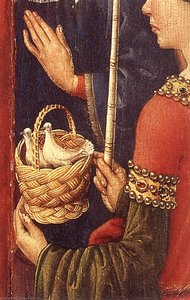
Altarpiece of the Virgin
 Oil On Canvas
- WallArt
- Renaissance Realism
 1433
1433 57.0 x 52.0 cm
 Staatliche Museen
 Read More
Hand Made Oil Reproduction
Hand-painted oil on canvas in your size and frame, made to order by our artists. ( Buy Print Buy Image)




P118B $10

P118H $10

P118W $10

P438Z $10

P508JH $12

P508YH $12

P805H $10

P805Z $10

P919BZ $10

P919G $10

P919XJ $10

P959ZH $10

P968JZ $12

W106C $8

W218G $10

W218JH $8

W218Y $10

W307PJ $10

W316G $10

W316PJ $8

W316Y $10

W398PJ $8

W4111J $10

W500HY $15

W500JH $15

W692G $12

W849H $8

W940BG $15

W953PJ $8




Pick from our preset sizes that match the artwork's original proportions.

You may enter your own dimensions to fit a specific frame or space. If your selected size does not match the original image's proportions, we will either crop the artwork or extend the painting with additional hand-painted elements. A digital mockup will be sent for your approval before production begins.
Please note that the on-screen preview does not reflect the actual cropping or extension. Only the mockup will accurately show the final composition.
While custom sizes are available, we recommend selecting a dimension from the predefined list to preserve the original proportions.
After order, ArtsDot.com team will email client for instructions and provide a mockup preview
Worldwide Delivery () in 3/4 weeks instead of standard 5 weeks. (17 August). No compromise on quality.

Free Worldwide Express Shipping

High-Quality Linen Canvas

Full Shipping Insurance

Customs Tax Refund Guarantee

True Color Matching Guarantee

60-Day Return Policy (Defects Only)

100% Money-Back Guarantee

Bulk Discount Offer
 Glass option is only available in size under 110 CM

Altarpiece of the Virgin
Reproduction Medium
Reproduction Size
-


Total Price
$ 263
Artwork Description
The Arras Altarpiece: A Symphony of Flemish Realism and Spiritual Reflection
The Arras Altarpiece, created between 1480 and 1508 by Jacques Daret and his collaborators, stands as a monumental achievement of Early Netherlandish painting—a testament to artistic innovation and the fervent piety of its era. Commissioned by the Immaculate Conception Brotherhood in Milan, this polyptych embodies the pinnacle of Flemish realism while simultaneously conveying profound theological symbolism.
- Subject Matter: The altarpiece depicts the Virgin Mary receiving the Archangel Gabriel announcing the Incarnation—a pivotal moment in Christian theology. This narrative was chosen to honor the dogma of Immaculate Conception, which proclaimed that Mary had been conceived without original sin, a controversial belief at the time.
- Style: Daret’s masterful execution aligns seamlessly with the stylistic principles championed by Robert Campin and Rogier van der Weyden—the “International Gothic” style. Characterized by meticulous detail, luminous color palettes, and subtly expressive figures, it eschews stylized conventions in favor of capturing human emotion and naturalism.
- Technique: Employing oil paint on wood panels, Daret achieved unparalleled textural richness and depth. The layering of glazes—a technique perfected during Campin’s workshop—created an ethereal glow that imbued the figures with palpable presence. Careful observation of anatomy and drapery rendered the human form with astonishing accuracy.
- Historical Context: Constructed amidst the burgeoning Renaissance in Italy, the Arras Altarpiece represents a crucial crossroads between medieval artistic traditions and emerging humanist ideals. It reflects the intellectual fervor surrounding the acceptance of papal dogma on Immaculate Conception—a symbol of divine grace and maternal purity.
The central panel, featuring Leonardo da Vinci’s iconic Virgin of the Rocks—now housed in London's National Gallery—is arguably the altarpiece’s most celebrated element. Its composition—inspired by Saint Bridget’s Revelations—captures a moment of serene contemplation as Mary receives Gabriel’s announcement. The luminous drapery and subtle modeling contribute to an atmosphere of otherworldly beauty, reflecting Leonardo’s mastery of sfumato—a technique that softens contours and blends colors to create an illusion of depth.
Beyond its artistic merits, the Arras Altarpiece serves as a poignant reminder of the spiritual convictions that shaped fifteenth-century Europe. Its meticulous depiction of biblical narrative underscores the importance of faith and devotion—themes that continue to resonate with audiences today. The altarpiece’s enduring legacy testifies to Daret's genius and his contribution to the artistic canon of the Renaissance.
Related Artworks








Artist Biography
Leon Battista Alberti: The Architect of Renaissance Thought
Leon Battista Alberti, born in Genoa in 1404 and passing away in Rome in 1472, stands as a towering figure in the transition from medieval to Renaissance thought. More than simply an architect, artist, or humanist scholar, he embodied the ideal of the “universal man”—a concept central to the burgeoning intellectual climate of his era. His profound impact on art theory and practice, coupled with his innovative contributions across numerous disciplines, cemented his legacy as a foundational figure in Western culture. Alberti’s life was one of relentless curiosity and an unyielding pursuit of knowledge, shaping not only his own work but also influencing generations of artists and thinkers to come.- Early Life and Education: Born into a wealthy Genoese merchant family, Alberti's upbringing instilled in him a deep appreciation for mathematics, logic, and the practical arts – skills crucial for managing a burgeoning trade empire. Despite his noble lineage, he was sent to Bologna to study law, a common path for young men of his social standing. However, it was during his time in Florence that Alberti’s true intellectual journey began. He immersed himself in the study of classical literature and philosophy, encountering the humanist ideals championed by figures like Petrarch and Boccaccio.
- Rome and Papal Patronage: Seeking a more stimulating environment for his studies, Alberti traveled to Rome in 1431, entering the service of the papal court under Pope Martin V. This period proved transformative, exposing him to the grandeur of ancient Roman ruins – a source of immense inspiration that would profoundly shape his architectural designs. He also took holy orders, becoming a priest and dedicating himself to the pursuit of knowledge within the Church’s intellectual sphere.
Architectural Innovation: Bridging Antiquity and Modernity
Alberti's architectural achievements are arguably his most enduring legacy. Rejecting the Gothic style prevalent at the time, he sought to revive the principles of classical Roman architecture, believing that these forms represented the pinnacle of aesthetic perfection. His treatise *De re aedificatoria* (On Architecture), published in 1452, became a seminal work, outlining his theories on proportion, harmony, and perspective – essentially providing a blueprint for Renaissance architecture.- Key Architectural Works: Alberti’s designs are characterized by their meticulous attention to detail, mathematical precision, and harmonious proportions. Notable examples of his architectural prowess include the Tempio Malatestiano in Rimini, a stunning example of early Renaissance design that seamlessly blends classical elements with innovative structural solutions; the Palazzo Rucellai in Florence, showcasing a refined façade based on Roman precedents; and the Basilica of Sant’Andrea in Mantua, a masterpiece of civic architecture.
- The Principles of Design: Alberti's architectural philosophy revolved around the concept of “proportion,” arguing that all elements within a building should be related to one another in a harmonious and balanced manner. He emphasized the importance of symmetry, order, and clarity – principles derived from his study of classical architecture and mathematical ratios.
Beyond Architecture: A Polymathic Mind
Alberti’s intellectual curiosity extended far beyond the realm of architecture. He was a prolific writer, producing treatises on painting (*De pictura*), sculpture (*De statua*), and cryptography. His work in mathematics demonstrated a deep understanding of geometry and perspective, contributing significantly to the development of these fields. Furthermore, he wrote extensively on languages, including Latin, Italian, Greek, and Hebrew, mastering their grammar and rhetoric with remarkable skill.- Cryptography and Renaissance Secrets: Alberti is widely considered the founder of modern cryptography, developing a complex cipher system that was used for centuries. His work in this area reveals a keen interest in secrecy and security – subjects that were increasingly relevant during the tumultuous political landscape of the Italian Renaissance.
- The “Universal Man” Ideal: Alberti’s diverse range of interests and accomplishments perfectly exemplified the humanist ideal of the “universal man”—an individual capable of excelling in multiple fields of knowledge and endeavor. This concept reflected a broader cultural shift during the Renaissance, emphasizing human potential and intellectual achievement.
Legacy and Influence: Shaping the Renaissance and Beyond
Leon Battista Alberti’s influence on art and architecture is immeasurable. His *De re aedificatoria* became a foundational text for generations of architects, shaping the course of Western architectural design. His theories on perspective revolutionized painting, influencing artists such as Leonardo da Vinci and Raphael. Moreover, his emphasis on humanism and intellectual curiosity helped to usher in a new era of artistic and philosophical inquiry.- Vasari’s Account: Alberti's life and work were documented by Giorgio Vasari in *Lives of the Most Excellent Painters, Sculptors, and Architects*, where he is portrayed as a pivotal figure in the transition from medieval to Renaissance art.
- Enduring Relevance: Even today, Alberti’s ideas continue to resonate with artists, architects, and scholars—a testament to his enduring legacy as one of the most influential figures in Western intellectual history. His pursuit of knowledge, combined with his artistic vision, serves as an inspiration for those who seek to understand and shape the world around them.
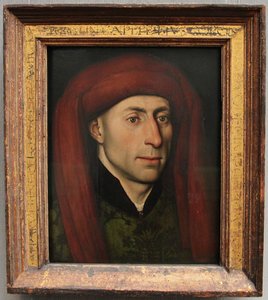
jacques daret
1404 - 1470 , Belgium
Quick Facts
- Artistic Movement Or Style: Renaissance Humanist
- Artists Or Movements Influenced By This Artist: ['Early Renaissance']
- Artists Who Influenced This Artist: ['Filippo Brunelleschi']
- Date Of Birth: Feb 14, 1404
- Date Of Death: Apr 25, 1472
- Full Name: Leon Battista Alberti
- Nationality: Italian
- Notable Artworks:
- Tempio Malatestiano
- Palazzo Rucellai
- Santa Maria Novella
- Basilica of Sant'Andrea
- Place Of Birth: Genoa, Italy
Related Articles
Leonardo da Vinci's Masterpieces: Explore 25 Iconic Artworks for Your Home | ArtsDot
Journey through Leonardo da Vinci's genius with our curated selection of 25 iconic artworks. Explore the stories behind Mona Lisa, The Last Supper & more Renaissance masterpieces. Find museum-quality art reproductions for your home at ArtsDot.com.

Jacob Henricus Maris: A Master of Dutch Atmospheric Realism & the Intimate Landscape
Explore the captivating world of Jacob Henricus Maris, a leading figure of the Dutch Hague School. Discover his atmospheric landscapes, signature brushstrokes & lasting influence on 19th-century art. Learn more at ArtsDot.
Uffizi's 25 Masterpieces: Renaissance Art & Timeless Decor Inspiration
Journey through the Uffizi Gallery's 25 most iconic Renaissance artworks! Explore Botticelli, Leonardo da Vinci & Michelangelo’s masterpieces. Find museum-quality art reproductions and curated decor ideas to bring timeless Italian beauty into your home. Discover all masterpieces on ArtsDot.com

Fra Angelico's Masterpieces: 25 Renaissance Paintings for Your Home | ArtsDot
Explore 25 breathtaking masterpieces by Fra Angelico, a Renaissance master. Discover the stories behind his iconic frescoes, Annunciations & religious art. Find museum-quality reproductions and elevate your home decor with ArtsDot.com.

Louvre Masterpieces: Explore the Top 25 Artworks for Your Home | ArtsDot
Journey through the Louvre's 25 most iconic artworks! Explore masterpieces by Leonardo da Vinci, Michelangelo & Delacroix. Discover art history, techniques & find museum-quality reproductions for your home at ArtsDot.com.