 Preview
 Send
Send Share
Share
 Details

 Download
 Similars
 X-Ray
X-Ray Diaporama
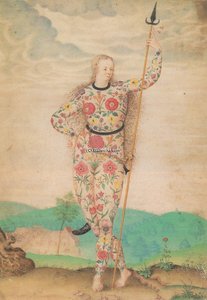
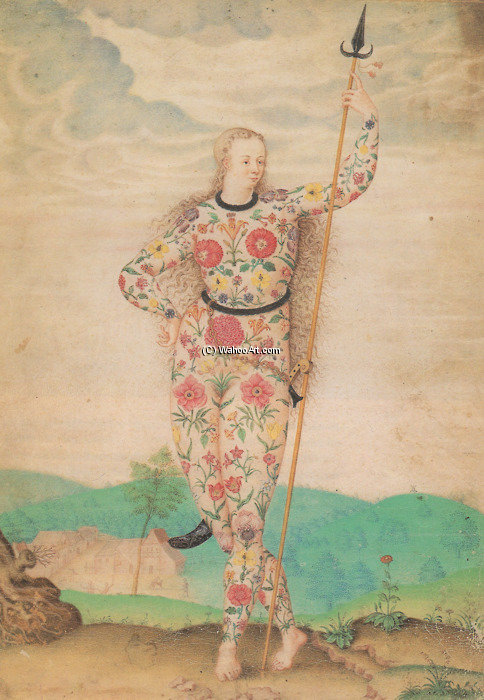
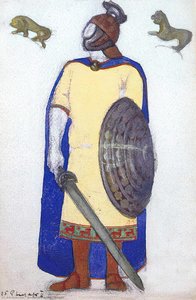
A Young Daughter Of The Picts

 Read More
Hand Made Oil Reproduction
Hand-painted oil on canvas in your size and frame, made to order by our artists. ( Buy Print Buy Image)




P118B $10

P118H $10

P118W $10

P438Z $10

P508JH $12

P508YH $12

P805H $10

P805Z $10

P919BZ $10

P919G $10

P919XJ $10

P959ZH $10

P968JZ $12

W106C $8

W218G $10

W218JH $8

W218Y $10

W307PJ $10

W316G $10

W316PJ $8

W316Y $10

W398PJ $8

W4111J $10

W500HY $15

W500JH $15

W692G $12

W849H $8

W940BG $15

W953PJ $8




Pick from our preset sizes that match the artwork's original proportions.

You may enter your own dimensions to fit a specific frame or space. If your selected size does not match the original image's proportions, we will either crop the artwork or extend the painting with additional hand-painted elements. A digital mockup will be sent for your approval before production begins.
Please note that the on-screen preview does not reflect the actual cropping or extension. Only the mockup will accurately show the final composition.
While custom sizes are available, we recommend selecting a dimension from the predefined list to preserve the original proportions.
After order, ArtsDot.com team will email client for instructions and provide a mockup preview
Worldwide Delivery () in 3/4 weeks instead of standard 5 weeks. (25 August). No compromise on quality.

Free Worldwide Express Shipping

High-Quality Linen Canvas

Full Shipping Insurance

Customs Tax Refund Guarantee

True Color Matching Guarantee

60-Day Return Policy (Defects Only)

100% Money-Back Guarantee

Bulk Discount Offer
 Glass option is only available in size under 110 CM

A Young Daughter Of The Picts
Reproduction Medium
Reproduction Size
-


Total Price
$ 263
Related Artworks
Artist Biography
A Life Etched in the New World
Jacques Le Moyne de Morgues, born around 1533 in the French port town of Dieppe, remains a figure shrouded in intriguing mystery—a testament to a life lived on the precipice of exploration and cultural collision. While his early years remain largely undocumented, it’s reasonable to assume he received artistic training within the vibrant milieu of his hometown, a center for both cartography and illumination. The precise nature of this education is unknown, but it undoubtedly laid the foundation for the meticulous detail and observational skill that would define his later work. Though speculation suggests possible service at the court of Charles IX, concrete evidence remains elusive; Le Moyne’s true emergence onto the historical stage began with a perilous journey across the Atlantic in 1564.Fort Caroline and the Timucua
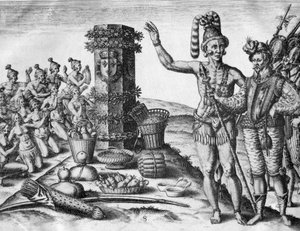
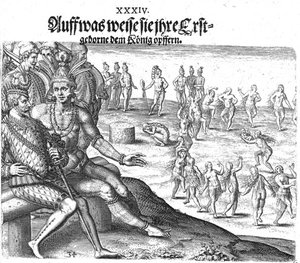
Le Moyne joined Jean Ribault and René Laudonnière on an ambitious expedition to establish a Huguenot settlement in northern Florida, ultimately founding Fort Caroline near present-day Jacksonville. This venture was not merely a colonial undertaking; it was a bold attempt to secure a foothold for France in the New World—and Le Moyne became its visual chronicler. He wasn’t simply documenting landscapes and flora; he was capturing an entire way of life, meticulously rendering the customs, rituals, and physical appearance of the Timucua people who inhabited the region. His paintings, executed with Calvinist restraint yet imbued with a remarkable sensitivity, offer invaluable glimpses into a culture on the brink of profound transformation. The artistic style Le Moyne employed during this period reflects both his training and the unique context of his surroundings—a blend of European precision and an attempt to faithfully represent the unfamiliar world before him. However, it’s crucial to acknowledge that these depictions weren't created in a vacuum; they were filtered through a European lens, raising questions about their objectivity and potential biases.The Legacy Through De Bry’s Engravings
Ironically, Le Moyne’s enduring fame rests not on his original paintings—many of which remained relatively unknown for centuries—but on the engravings produced by Theodor de Bry, a Dutch publisher who acquired Le Moyne's watercolors after the failed colony. De Bry, though never having set foot in America himself, meticulously reproduced Le Moyne’s work, disseminating these images throughout Europe and shaping perceptions of the New World for generations to come. While De Bry’s engravings are not exact copies—he often embellished or altered details—they served as a crucial conduit for Le Moyne's artistic vision, bringing the Timucua people and the landscapes of Florida to a wider audience. This process also introduced a layer of interpretation and potential distortion, highlighting the complex relationship between artist, publisher, and public perception. The impact of these engravings was immense, influencing everything from cartography and ethnography to popular imagination and colonial policy.Rediscovery and Historical Significance
For centuries, Le Moyne remained a footnote in historical accounts—a talented but obscure illustrator associated with Laudonnière’s failed colony. It wasn't until 1922 that Spencer Savage, a librarian at the Linnean Society, unearthed a small volume containing fifty-nine of Le Moyne’s original watercolors, purchased by the Victoria and Albert Museum decades earlier solely for its fine binding. This discovery sparked renewed interest in Le Moyne’s work, revealing an artist of exceptional skill and sensitivity. Subsequent attributions of other drawings and watercolors further solidified his position as a significant figure in early American art. Today, Jacques Le Moyne de Morgues is recognized not only as a cartographer and explorer but also as a pioneering ethnographer—a visual historian who captured a fleeting moment in time before the irreversible impact of colonization. His work continues to fascinate and challenge us, prompting critical reflection on the complexities of cultural exchange, artistic representation, and the enduring legacy of exploration. His paintings are not simply historical documents; they are windows into a lost world—a testament to the power of art to preserve memory and provoke dialogue across centuries.Influences and Artistic Development
Pinpointing Le Moyne’s direct artistic influences remains challenging due to the scarcity of documented works from his early career. However, it's likely he drew inspiration from the traditions of French manuscript illumination—known for its intricate detail and vibrant colors—as well as the burgeoning field of cartography prevalent in Dieppe during the 16th century. His time at court, if indeed he served there, may have exposed him to other artistic styles and techniques. The expedition itself proved to be a pivotal influence. Forced to observe and record unfamiliar flora, fauna, and human cultures, Le Moyne developed a unique visual language—a blend of European precision and an attempt to capture the essence of the New World. His work demonstrates a keen eye for detail, a sensitivity to anatomical form, and a willingness to experiment with new subject matter. While his paintings are often described as “Calvinist” in style—restrained and devoid of overt emotional expression—they nonetheless possess a quiet dignity and respect for the Timucua people he depicted. The collaboration with Theodor de Bry, though indirect, also shaped Le Moyne’s legacy, transforming his watercolors into widely disseminated engravings that influenced perceptions of America for generations to come.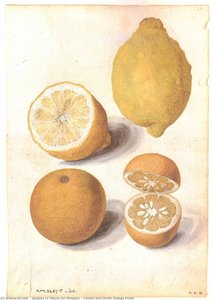
jacques le moyne de morgues
1533 - 1588
Quick Facts
- Artistic Movement Or Style: Cartography, Exploration
- Artists Or Movements Influenced By This Artist: ['De Bry']
- Artists Who Influenced This Artist: ['Ribault']
- Date Of Birth: c. 1533
- Date Of Death: 1588
- Full Name: Jacques Le Moyne de Morgues
- Nationality: French
- Notable Artworks:
- Timucua Indian village
- Arrival of Spanish
- Place Of Birth: Dieppe, France
Related Articles
Jacques Barraband: A Botanical Legacy – Art, Science, and the Pursuit of Floral Precision
Explore the exquisite botanical illustrations of Jacques Barraband (1767-1809). Discover his stunningly accurate bird paintings, commissioned by Napoleon, and learn about his lasting legacy in art & science. Shop museum-quality reproductions at ArtsDot.
Henri Le Sidaner: Evoking Atmosphere & Intimacy in Post-Impressionist Landscapes
Discover the evocative world of Henri Le Sidaner, a master of Intimist painting. Explore his tranquil landscapes & atmospheric interiors – a celebration of light and intimacy. Learn about his life, style, and lasting legacy.
Vigée Le Brun: Portraiture, Patronage & Feminine Identity in 18th-Century France
Explore the life & art of Louise Élisabeth Vigée Le Brun, Marie Antoinette’s renowned portraitist. Discover her Rococo style, self-portraits, and influence on 18th-century French painting. A deep dive into patronage & feminine identity.
Charles Le Brun: Master of French Baroque Classicism & His Enduring Legacy
Explore the life & art of Charles Le Brun, master of French Baroque Classicism. Discover his royal commissions, influence on Versailles, and enduring legacy through detailed analysis & stunning artworks.

Blooming Beauty: A Newlywed’s Guide to Transforming Your First Home with Stunning Floral Art
Transform your first home with the romantic elegance of floral art. ArtsDot.com offers exquisite, hand-painted oil reproductions and custom wedding portraits designed to turn your milestones into masterpieces. Discover timeless beauty for your new chapter today.