

 Preview
 Send
Send Share
Share
 Details

 Download
 Similars
 X-Ray
X-Ray Diaporama
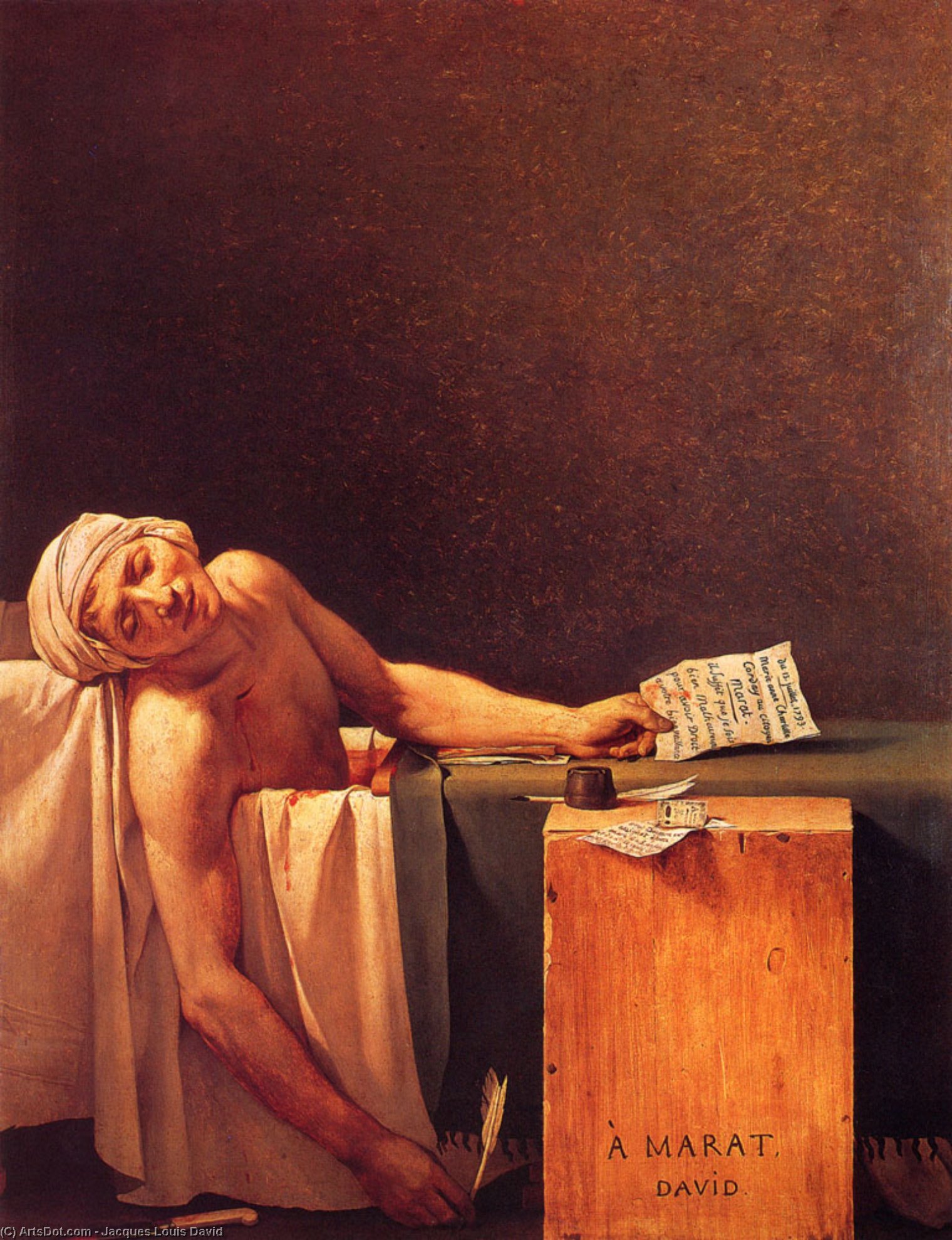
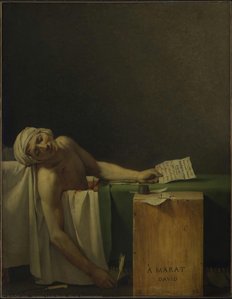
the death of marat


 Read More
Purchase a high-resolution, enhanced digital image, far superior to the online preview.
Each file is meticulously prepared by our in-house specialists using advanced tools and expert manual retouching. We ensure every image has exceptional clarity, precise color accuracy, and fine detail.
The final file is delivered via email within 72 hours, optimized for immediate use in professional, editorial, and print environments. This is the same quality trusted by top-tier design studios, publishers, and galleries.
Digital Image
Download a high-resolution file for personal display, printing, and creative projects. ( Buy Print Buy Hand Made Painting)
Included in Every Digital Image Order
Expert Digital Delivery, Guaranteed
When you choose ArtsDot.com, you're not just getting an image - you're receiving a professionally enhanced digital artwork, crafted with precision and backed by a satisfaction guarantee. Here's everything that comes with your order, automatically:

Fast Email Delivery
Your high-resolution digital image file will be emailed to you within 72 hours of ordering - ready for immediate use.

AI-Enhanced Digital File
Your artwork is professionally optimized using advanced AI tools and manual editing, ensuring maximum detail, clarity, and color accuracy.

Free Lifetime Re-Delivery
Accidentally deleted or lost your file? No worries - we'll resend it to you anytime, free of charge.

No Import Fees - Ever
Enjoy your artwork instantly with zero customs, duties, or delivery fees - digital downloads are always tax-free.

Color Accuracy Guarantee
We ensure your digital image reflects the original colors as closely as possible using professional tools and color management.

60-Day Satisfaction Guarantee
If you're not satisfied with your digital image, we'll revise it or refund 100% within 60 days - no questions asked.

100% Money-Back Guarantee
Not satisfied? Get a full refund within 60 days of receiving your digital file - no questions asked.

Bulk Order Discounts
Buy 3 images, save 10% - Buy 5, save 15% - Buy 10+, save 20%. Great for creative projects, galleries, and agencies.
Collectible Description
A Testament to Revolutionary Trauma: Jacques-Louis David’s *The Death of Marat*
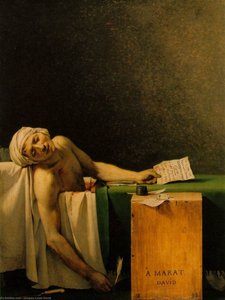
Jacques-Louis David's The Death of Marat is not merely a painting; it’s a visceral embodiment of the French Revolution’s brutal realities. Completed in 1793, just months after Jean-Paul Marat’s assassination – a pivotal moment that plunged Paris into further chaos – this iconic work transcends simple historical record to become a profound meditation on loss, betrayal, and the corrosive effects of political extremism. David, then at the height of his Neoclassical powers, deliberately eschewed the opulent grandeur favored by earlier generations, opting instead for a stark, almost journalistic depiction that immediately confronts the viewer with the horror of Marat’s demise.
- Subject Matter: The painting portrays Marat, the radical journalist and politician who spearheaded the Montagnard faction during the revolution, lying dead in his bath. The composition is relentlessly focused on the body – a deliberate choice by David to elevate Marat from a mere political figure to a martyr of the revolution.
- Style & Technique: Executed in the Neoclassical style, the work showcases David’s mastery of light and shadow, employing a dramatic chiaroscuro effect that intensifies the emotional impact. The meticulous detail with which he renders Marat's skin, the blood pooling on the floor, and the scattered papers contributes to an unsettling realism, a hallmark of the Neoclassical movement’s commitment to accuracy and moral clarity.
Historical Context: A Nation in Crisis
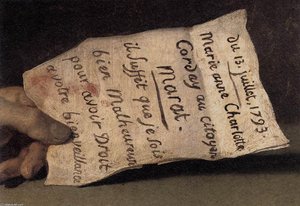
The painting emerged during one of the most turbulent periods in French history. The Reign of Terror was well underway, marked by widespread executions and political purges. Marat's assassination ignited a frenzy of suspicion and violence, fueling the revolution’s descent into paranoia. David, a staunch supporter of Robespierre and the Committee of Public Safety, created this image as a powerful piece of propaganda – intended to solidify Marat’s legacy as a revolutionary hero and to incite further fervor amongst the populace. The inclusion of the letter that Marat is writing in the painting adds another layer of complexity, suggesting his final act was one of dedication to his cause.
- Neoclassicism's Moral Purpose: David’s work exemplifies Neoclassicism’s core tenets – a return to classical ideals of order, reason, and morality. The deliberate simplicity of the composition, the idealized portrayal of Marat’s body, and the emphasis on historical accuracy were all designed to evoke a sense of civic virtue and inspire patriotic fervor.
- Propaganda & Political Messaging: Beyond its artistic merit, *The Death of Marat* functioned as a crucial piece of political propaganda, shaping public perception of the revolution and solidifying Robespierre’s control.
Symbolism and Emotional Resonance
Beyond its immediate historical context, the painting is laden with symbolic meaning. The blood staining the bathwater represents not only Marat's violent death but also the bloodshed that was consuming France. The letter clutched in his hand symbolizes his unwavering commitment to revolutionary ideals even in his final moments. The carefully arranged objects – the quill, the inkwell, the sheet music – suggest a life dedicated to intellectual and political engagement. The overall effect is profoundly unsettling; David forces the viewer to confront the brutal reality of death and the tragic consequences of ideological conflict.
- Color Palette: The predominantly dark palette—deep browns, blues, and reds—contributes significantly to the painting’s somber mood. The strategic use of red emphasizes the violence and loss, while the cooler tones evoke a sense of grief and despair.
- Compositional Focus: David's tight cropping, focusing solely on Marat's body, intensifies the emotional impact and creates a feeling of claustrophobia, mirroring the suffocating atmosphere of revolutionary Paris.
A Masterpiece of Dramatic Intensity
*The Death of Marat* remains one of David’s most celebrated works and a cornerstone of Western art history. Its raw emotion, technical brilliance, and profound historical significance continue to captivate audiences today. A hand-painted reproduction offers an unparalleled opportunity to experience the power and intensity of this iconic image in exquisite detail, bringing a crucial moment in revolutionary history into your home or studio.
Related Artworks
Artist Biography
A Brushstroke Across Revolution: The Life and Art of Jacques-Louis David
Jacques-Louis David, born in Paris in 1748, was more than just a painter; he was a visual chronicler of an era defined by upheaval, idealism, and the relentless pursuit of new orders. His life mirrored the dramatic shifts unfolding across France – from the waning opulence of the Rococo to the austere clarity of Neoclassicism, and ultimately, through the tumultuous years of revolution and Napoleonic glory. A childhood marked by the early loss of his father and a facial impediment that initially hindered his speech seemed only to sharpen his observational skills and fuel an unwavering dedication to artistic mastery. Though initially apprenticed to François Boucher, David quickly found himself drawn to the more morally resonant work of Joseph-Marie Vien, whose emphasis on history painting and classical subjects resonated with a burgeoning sense of purpose within the young artist. His early attempts to win the prestigious Prix de Rome were fraught with frustration, yet these repeated setbacks only intensified his resolve, forging a relentless perfectionism that would characterize his entire career.The Birth of Neoclassical Drama
David’s artistic evolution wasn't merely a stylistic shift; it was a philosophical statement. He rejected the frivolous ornamentation and playful themes of the Rococo, embracing instead the clarity, order, and moral seriousness inherent in classical antiquity. This commitment was profoundly influenced by archaeological discoveries at Pompeii and Herculaneum, which unveiled a world of Roman art and architecture previously lost to time. His breakthrough came with “Oath of the Horatii” (1784), a painting that transcended mere artistic skill to become an emblem of civic virtue and patriotic sacrifice. The stark composition, dramatic lighting, and precise draftsmanship were revolutionary, signaling a decisive break from the past. It wasn’t simply *what* he painted but *how* – a deliberate construction designed to evoke powerful emotional responses and inspire contemplation on themes of duty, honor, and self-sacrifice. This work didn't just announce a new style; it foreshadowed the ideological currents that would soon sweep across France.Revolution and Remembrance: Art as Political Weapon
As the French Revolution erupted in 1789, David was not merely an observer but an active participant. A fervent supporter of the revolutionary cause and a close associate of Maximilien Robespierre, he saw art as a powerful tool for shaping public opinion and immortalizing the ideals of the new republic. His paintings during this period became potent symbols of revolutionary martyrdom and republican fervor. Perhaps his most iconic work from this era is “The Death of Marat” (1793), a hauntingly realistic depiction of the assassinated journalist, transformed into a secular saint. The painting’s stark simplicity – the pale body, the makeshift desk, the poignant letter clutched in Marat's hand – elevates the scene to a level of profound emotional resonance. David served on the Committee of Public Safety during the Reign of Terror, even signing Robespierre’s death warrant, demonstrating his deep entanglement with the political machinations of the time.From Revolution to Empire: Serving Napoleon
The fall of Robespierre marked another turning point in David's career. With remarkable adaptability, he navigated the shifting political landscape and aligned himself with Napoleon Bonaparte, becoming the First Consul’s official court painter. This new patronage ushered in a period of grand-scale commissions designed to glorify Napoleon’s victories and achievements. “Napoleon Crossing the Alps” (1801-1805) is perhaps the most famous example – a masterful piece of propaganda that presents Napoleon as a heroic, almost mythical figure conquering both nature and adversity. “The Coronation of Napoleon” (1807), an immense canvas capturing the opulence and grandeur of the imperial ceremony, further cemented David’s position as the preeminent artist of the Napoleonic era. During this time, his palette subtly shifted, incorporating warmer Venetian colors while maintaining the precision and clarity that defined his style.Exile, Legacy, and Enduring Influence
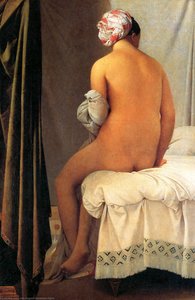
The Bourbon Restoration in 1814 brought renewed peril for David, whose association with the fallen Napoleon made him a target of persecution. He chose exile in Brussels in 1816, where he continued to paint and teach until his death on December 29, 1825. Even in exile, his influence remained profound. He trained numerous pupils, including Jean-Auguste-Dominique Ingres, who would become one of the most important neoclassical painters of the 19th century. David’s emphasis on draftsmanship, composition, and historical accuracy left an indelible mark on French art. His legacy extends beyond mere imitation; his expressive distortions of form and space even foreshadowed the innovations of later artists like Henri Matisse and Pablo Picasso. Jacques-Louis David was not simply a painter of his time; he *defined* it, capturing its spirit of revolution, ambition, and enduring ideals on canvas for generations to come.- Major Achievements: Established Neoclassicism as the dominant style in French painting.
- Historical Significance: Created iconic images that captured the spirit of the French Revolution and the Napoleonic era.
- Influence: Trained a generation of influential artists who carried on his legacy.
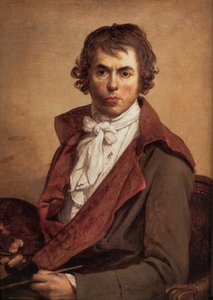
Jacques-Louis David
1748 - 1800 , France
Quick Facts
- Artistic Movement Or Style: Neoclassicism
- Artists Or Movements Influenced By This Artist:
- Jean-Auguste-Dominique Ingres
- Henri Matisse
- Pablo Picasso
- Artists Who Influenced This Artist:
- Joseph-Marie Vien
- Raphael Mengs
- Date Of Birth: August 30, 1748
- Date Of Death: December 29, 1825
- Full Name: Jacques-Louis David
- Nationality: French
- Notable Artworks:
- Oath of the Horatii
- The Death of Marat
- Napoleon Crossing Alps
- Place Of Birth: Paris, France

