 Preview
 Send
Send Share
Share
 Details

 Download
 Similars
 X-Ray
X-Ray Diaporama
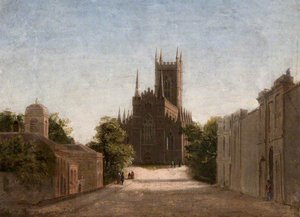
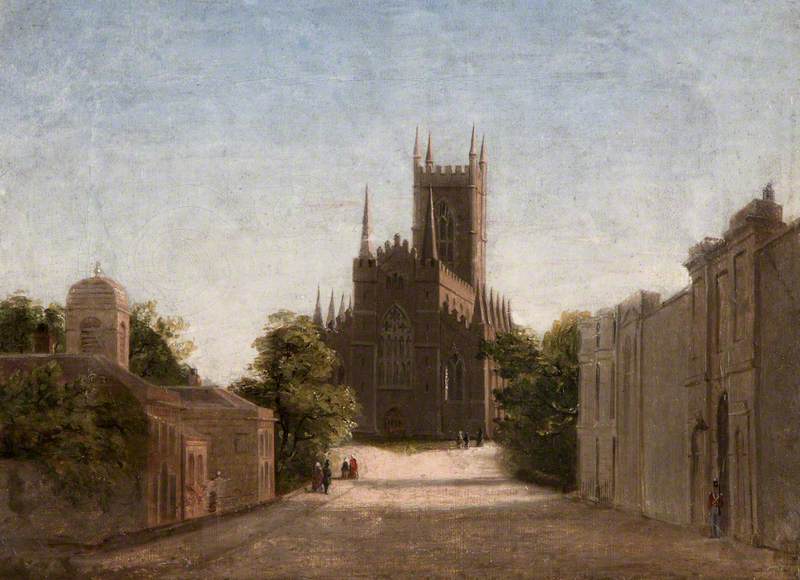
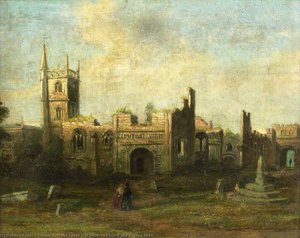
View of the Cathedral and Mall, Downpatrick
 1850
1850 23.0 x 31.0 cm
 Read More
Giclée / Art Print
Museum-quality giclée or canvas print with fast production and flexible finish options. ( Buy Hand Made Painting Buy Image)




































Pick from our preset sizes that match the artwork's original proportions.

You may enter your own dimensions to fit a specific frame or space. If your selected size does not match the original image's proportions, we will either crop the artwork or extend the image with a mirrored or solid-fill edge. A digital mockup will be sent for your approval before production begins.
Please note that the on-screen preview does not reflect the actual cropping or extension. Only the mockup will accurately show the final composition.
While custom sizes are available, we recommend selecting a dimension from the predefined list to preserve the original proportions.
Worldwide Delivery () in 2 weeks instead of standard 4/5 weeks. (23 August)

Free Worldwide Express Shipping

High-Quality Linen Canvas

Full Shipping Insurance

Customs Tax Refund Guarantee

True Color Matching Guarantee

60-Day Return Policy (Defects Only)

100% Money-Back Guarantee

Bulk Discount Offer
 Glass option is only available in size under 110 CM

View of the Cathedral and Mall, Downpatrick
Giclée / Art Print
Reproduction Size
-


Total Price
$ 63
Related Artworks





Artist Biography
A Brush with the South: The Life and Art of James Glen Wilson
James Glen Wilson, a name resonating with quiet power in the world of contemporary representational painting, is an artist deeply rooted in the landscapes and narratives of the American South. Born and still residing within its embrace, Wilson’s work isn't merely *of* the South; it *is* the South – imbued with its history, its light, its melancholic beauty, and a profound sense of place. While he gained initial recognition for his evocative depictions of Belfast Harbour in Northern Ireland, a period that significantly shaped his technical skills, Wilson’s artistic journey has always been guided by an intrinsic connection to his Southern heritage. He wasn't raised with the intention of becoming a professional artist; rather, art blossomed organically from a childhood spent observing and absorbing the world around him. His early life was steeped in the traditions of storytelling and visual culture, fostered by a family that appreciated craftsmanship and the power of imagery. This foundation proved crucial when he later pursued formal training, allowing him to approach technique not as an end in itself but as a means to convey deeper emotional truths. He honed his skills through dedicated study, mastering the nuances of light and shadow, composition, and color theory – elements that would become hallmarks of his distinctive style.From Belfast Harbour to Southern Shores: A Developing Style
Wilson’s time painting the bustling scenes of Belfast Harbour was a pivotal chapter in his artistic development. Commissioned work there demanded precision and an ability to capture the energy of a working port, forcing him to refine his observational skills and develop a remarkable facility with oil paint. The grey skies and industrial architecture presented a stark contrast to the lush landscapes he would later embrace, yet this period instilled within him a discipline and technical mastery that proved invaluable. Upon returning to the South, Wilson began to translate these hard-won skills to subjects closer to his heart. He wasn’t interested in simply replicating Southern scenery; instead, he sought to capture its *spirit* – the weight of history, the quiet dignity of rural life, and the subtle beauty often overlooked. His palette softened, embracing warmer tones and a more atmospheric approach. The influence of American Impressionism is palpable, particularly in his handling of light and color, but Wilson’s work transcends mere stylistic imitation. He infuses his paintings with a narrative quality, hinting at stories unfolding beyond the canvas.Themes of Memory, Place, and Southern Identity
- The Weight of History: Wilson's paintings often allude to the complex history of the South, not through explicit depictions of historical events but through subtle visual cues – abandoned structures, weathered landscapes, and portraits that seem to carry the weight of generations.
- Rural Life and Tradition: He finds beauty in the everyday lives of Southern people, portraying them with respect and dignity. His subjects are often engaged in traditional crafts or activities, reflecting a deep connection to the land.
- The Power of Place: Wilson’s work is deeply rooted in specific locations within the South, capturing their unique character and atmosphere. He doesn't merely paint landscapes; he paints *memories* of places.
- Atmospheric Realism: His paintings are characterized by a remarkable sense of realism, but it’s not a cold or clinical realism. Instead, Wilson imbues his work with an emotional depth and atmospheric quality that draws the viewer in.