 Preview
 Send
Send Share
Share
 Details

 Download
 Similars
 X-Ray
X-Ray Diaporama
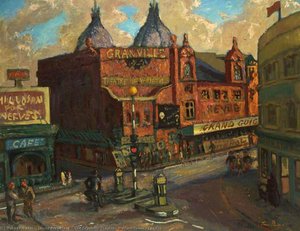
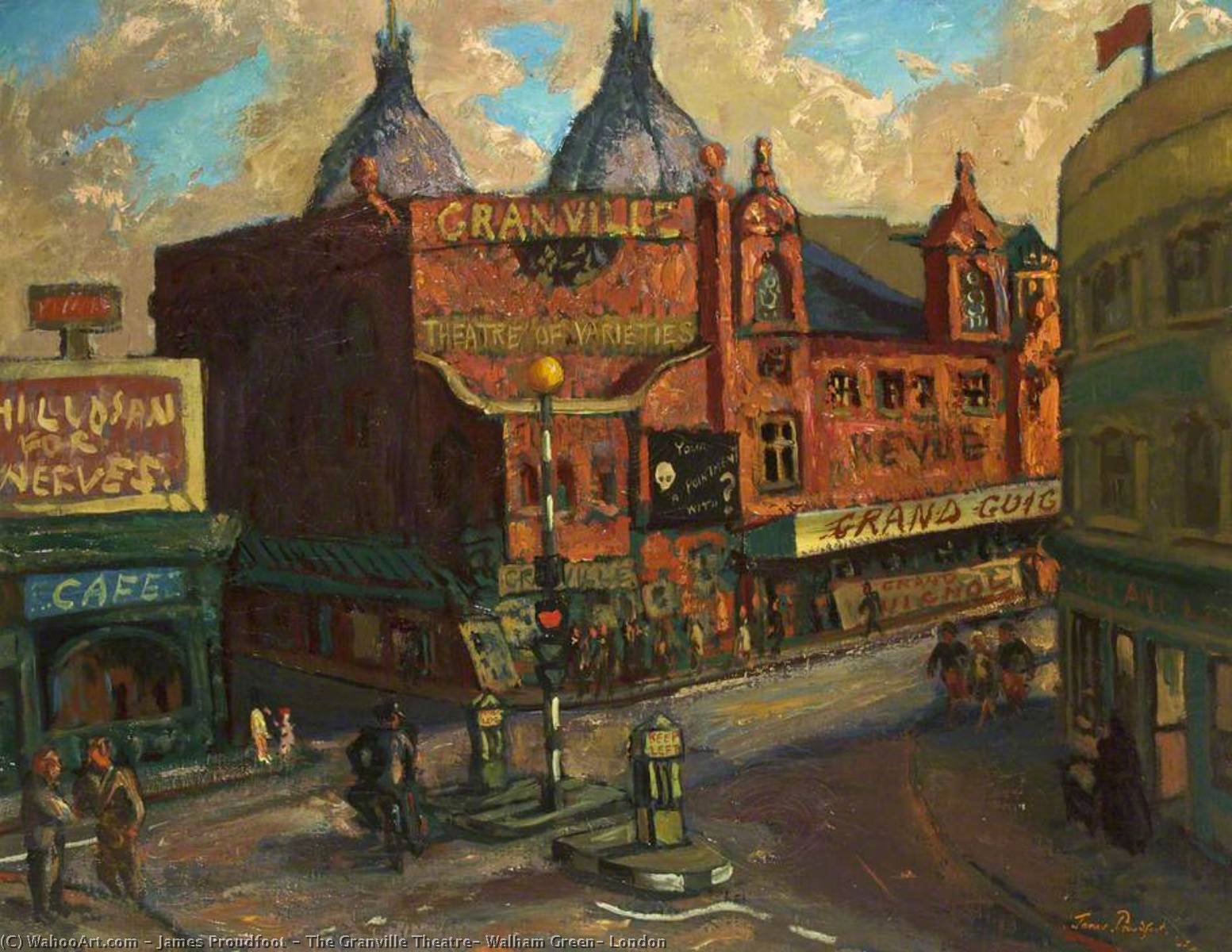
The Granville Theatre, Walham Green, London
 Impressionism
 1945
1945 70.0 x 91.0 cm
 University of Bristol Theatre Collection
 Read More
Giclée / Art Print
Museum-quality giclée or canvas print with fast production and flexible finish options. ( Buy Hand Made Painting Buy Image)




































Pick from our preset sizes that match the artwork's original proportions.

You may enter your own dimensions to fit a specific frame or space. If your selected size does not match the original image's proportions, we will either crop the artwork or extend the image with a mirrored or solid-fill edge. A digital mockup will be sent for your approval before production begins.
Please note that the on-screen preview does not reflect the actual cropping or extension. Only the mockup will accurately show the final composition.
While custom sizes are available, we recommend selecting a dimension from the predefined list to preserve the original proportions.
Worldwide Delivery () in 2 weeks instead of standard 4/5 weeks. (2 September)

Free Worldwide Express Shipping

High-Quality Linen Canvas

Full Shipping Insurance

Customs Tax Refund Guarantee

True Color Matching Guarantee

60-Day Return Policy (Defects Only)

100% Money-Back Guarantee

Bulk Discount Offer
 Glass option is only available in size under 110 CM

The Granville Theatre, Walham Green, London
Giclée / Art Print
Reproduction Size
-


Total Price
$ 63
Related Artworks
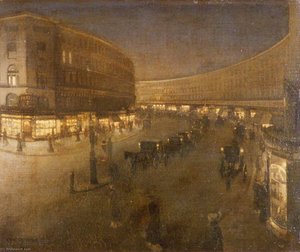
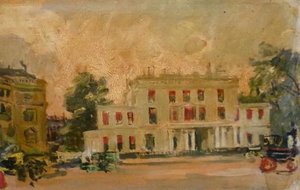
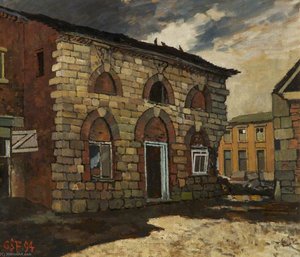
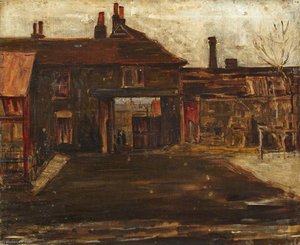
Artist Biography
James Proudfoot: Bridging Cultures Through Vision
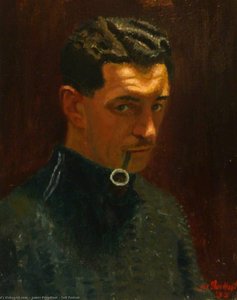
Born in the historic heart of Perth, Scotland, on March 3, 1908, James Proudfoot emerged as a painter of profound sensitivity and cross-cultural depth. His journey from the Scottish Highlands to the vibrant, bustling art scene of mid-2century London is a testament to a life dedicated to capturing the nuances of the human spirit. While his roots were firmly planted in British soil, his artistic gaze was perpetually drawn toward the horizon, seeking a synthesis between Western European sensibilities and the delicate aesthetics of the East. This unique duality allowed him to become one of Britain’s most distinctive voices, creating works that functioned as silent dialogues between disparate worlds.
Proudfoot's formal education provided the rigorous foundation necessary for his later stylistic explorations. After attending Perth Academy, he moved toward the prestigious institutions of London, studying at the Heatherley School of Fine Art and Goldsmiths, University of London. It was during these formative years that his fascination with Oriental art began to take root. He became deeply enamored with the principles of Japanese ukiyo-e prints, meticulously studying their mastery of compositional balance, tonal harmony, and the expressive power of a single, deliberate brushstroke. This dedication to Eastern aesthetics would eventually become the cornerstone of his mature style, informing how he approached both the intimacy of portraiture and the vastness of landscape.
A Life in London: Portraits and Presence
In 1937, Proudfoot established himself in London, a move that would define the most productive era of his career. His presence in the capital was marked by a growing reputation as a portrait painter of exceptional psychological depth. He possessed a rare ability to look beyond the surface of his subjects, capturing not just a likeness, but a window into their character. This skill attracted a diverse range of patrons, including many prominent actors from the London stage and screen. His connection to the theatrical world was further solidified through his marriage in 1945 to the actress Ellen Pollock, a relationship that shared a mutual passion for the arts.
His mastery of the medium was perhaps most evident in his ability to manipulate light and shadow to convey complex emotions. Whether painting a pensive figure or a vibrant street scene, Proudfoot utilized bold colors and expressive brushwork to breathe life into his canvases. His work often reflected the atmospheric tension of the era, blending meticulous observation with an imaginative, almost dreamlike interpretation of reality. Notable works from this period include:
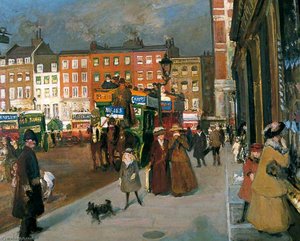
- The Granville Theatre (1945): An impressionistic oil painting that captures the kinetic energy and rich colors of a London street scene.
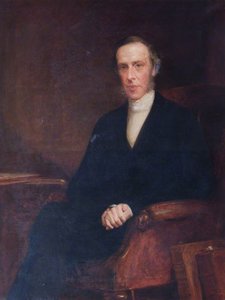
- Dark Girl (1935): A captivating early work showcasing his skillful use of color and a focus on the subject's mysterious, pensive expression.
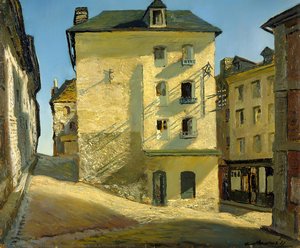
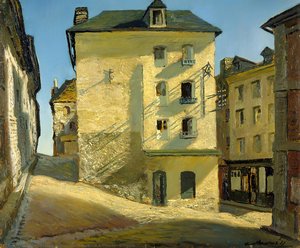
- Sun on a House, Dieppe (1937): A serene representation of a French village that highlights his ability to capture light and architectural charm.
Legacy and Artistic Significance
Beyond the confines of portraiture, Proudfoot’s landscapes were equally ambitious, serving as a canvas for his profound engagement with Asian artistic principles. He often employed techniques reminiscent of Chinese ink wash paintings, seeking to evoke the spiritual essence of a landscape rather than merely its physical topography. This pursuit of a "universal" aesthetic—one that transcended national boundaries—is what grants his work such enduring historical significance. He did not merely paint subjects; he sought to foster an appreciation for cultural interconnectedness through the medium of oil and canvas.
Though he passed away in London on July 15, 1971, the legacy of James Proudfoot remains preserved in esteemed collections, including the University of Bristol Theatre Collection and the Perth Museum and Art Gallery. His life's work stands as a beautiful bridge between the traditions of the West and the philosophies of the East, reminding us that art is a language capable of uniting even the most distant cultures. Through his eyes, we continue to see a world where light, shadow, and spirit converge in perfect, evocative harmony.
james proudfoot
1908 - 1971
Quick Facts
- Artistic Movement Or Style: British Portrait Painter
- Artists Or Movements Influenced By This Artist: ['British Art']
- Artists Who Influenced This Artist: ['Ellen Pollock']
- Date Of Birth: March 3, 1908
- Full Name: James Proudfoot
- Nationality: Scottish
- Notable Artworks:
- The Gardener
- Portrait of Ellen Pollock
- Place Of Birth: Perth, Scotland, UK
Related Articles

Sir Alfred Munnings' Masterpieces: 25 Paintings That Define Equine Art | ArtsDot
Explore 25 iconic Sir Alfred Munnings paintings! Discover the beauty of British Impressionism, equine art & rural England. Find museum-quality reproductions and elevate your home decor with ArtsDot. Explore the full collection online.
Whistler's Masterpieces: Explore 25 Iconic Paintings & Aesthetic Art for Your Home
Journey through 25 iconic James Abbott McNeill Whistler paintings! Explore his masterpieces of Aestheticism, from 'Nocturne in Black and Gold' to captivating portraits. Find museum-quality art reproductions & elevate your home decor with ArtsDot.com. Discover the full collection online.

The Enduring Legacy of Oil on Canvas: Technique, History & Aesthetic Impact
Explore the rich history & techniques of oil painting – from Renaissance masters to Impressionism. Discover pigments, layering methods, and why this timeless medium endures. Expert insights for artists & art enthusiasts.

Oil on Canvas: A Historical & Technical Exploration of a Timeless Artistic Medium
Explore the rich history & enduring techniques of oil painting on canvas. Discover the science behind its longevity, conservation practices, and contemporary relevance. Expert insights for art enthusiasts.

The Enduring Power of Painting: A Historical & Contemporary Exploration of Form and Emotion
Explore the rich history & enduring techniques of oil painting with ArtsDot. Discover masterpieces, learn about art collecting, and find authentic handmade reproductions crafted by skilled artists.