 Preview
 Send
Send Share
Share
 Details

 Download
 Similars
 X-Ray
X-Ray Diaporama
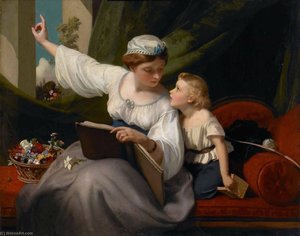
The Fairy Tale
 Oil On Canvas
- WallArt
- Victorian Portraiture
 1870
1870- 19th Century
 61.0 x 76.0 cm
 Walker Art Gallery
 Read More
Hand Made Oil Reproduction
Hand-painted oil on canvas in your size and frame, made to order by our artists. ( Buy Print Buy Image)




P118B $10

P118H $10

P118W $10

P438Z $10

P508JH $12

P508YH $12

P805H $10

P805Z $10

P919BZ $10

P919G $10

P919XJ $10

P959ZH $10

P968JZ $12

W106C $8

W218G $10

W218JH $8

W218Y $10

W307PJ $10

W316G $10

W316PJ $8

W316Y $10

W398PJ $8

W4111J $10

W500HY $15

W500JH $15

W692G $12

W849H $8

W940BG $15

W953PJ $8




Pick from our preset sizes that match the artwork's original proportions.

You may enter your own dimensions to fit a specific frame or space. If your selected size does not match the original image's proportions, we will either crop the artwork or extend the painting with additional hand-painted elements. A digital mockup will be sent for your approval before production begins.
Please note that the on-screen preview does not reflect the actual cropping or extension. Only the mockup will accurately show the final composition.
While custom sizes are available, we recommend selecting a dimension from the predefined list to preserve the original proportions.
After order, ArtsDot.com team will email client for instructions and provide a mockup preview
Worldwide Delivery () in 3/4 weeks instead of standard 5 weeks. (16 August). No compromise on quality.

Free Worldwide Express Shipping

High-Quality Linen Canvas

Full Shipping Insurance

Customs Tax Refund Guarantee

True Color Matching Guarantee

60-Day Return Policy (Defects Only)

100% Money-Back Guarantee

Bulk Discount Offer
 Glass option is only available in size under 110 CM

The Fairy Tale
Reproduction Medium
Reproduction Size
-


Total Price
$ 263
Artwork Description
James Sant’s “The Fairy Tale”: A Victorian Portrait of Innocence
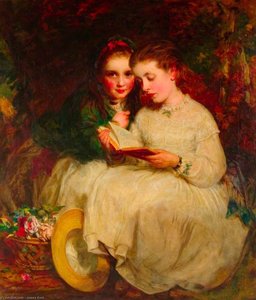
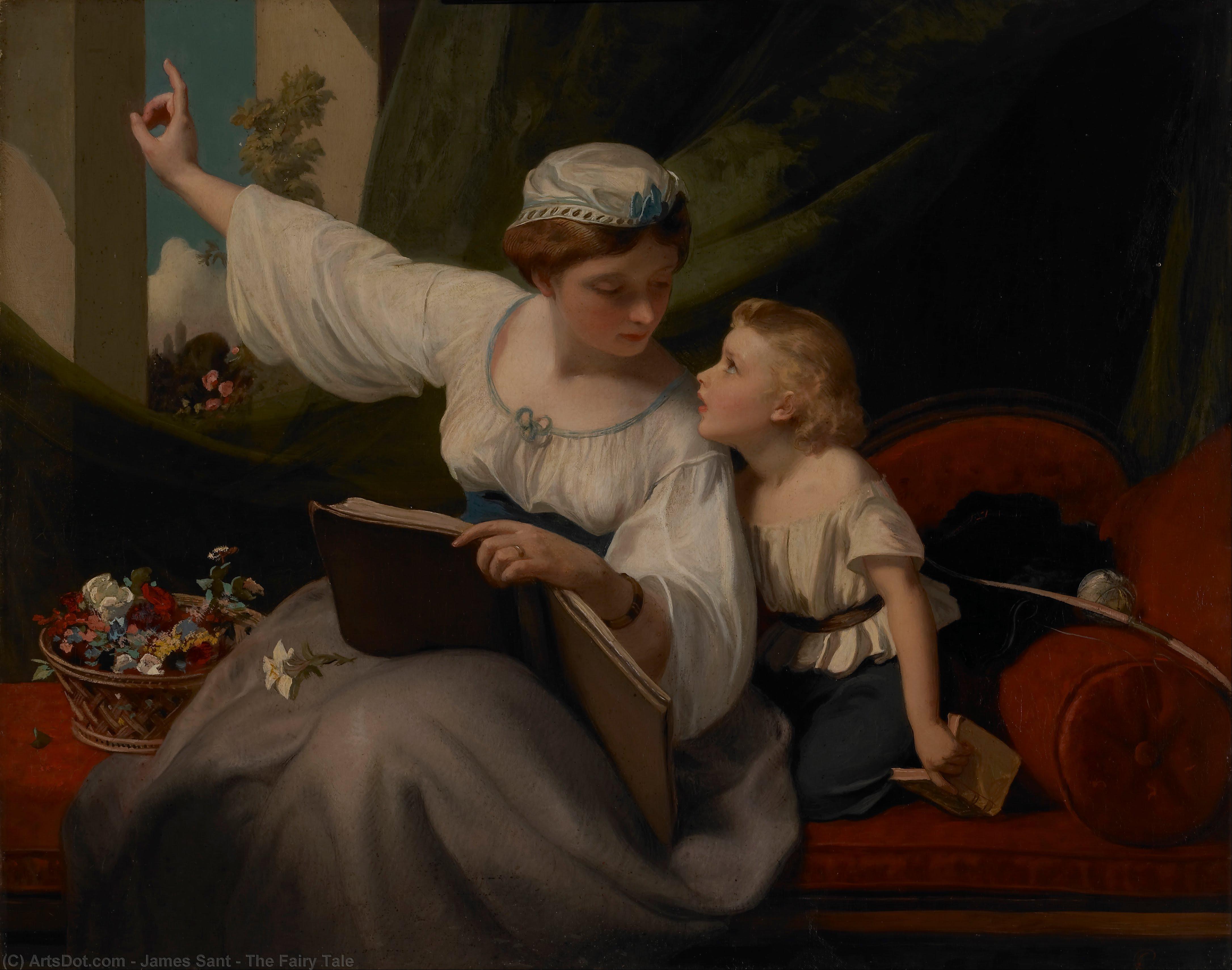
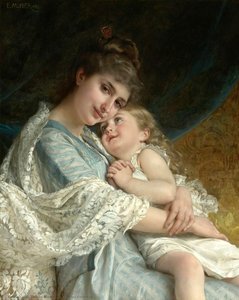
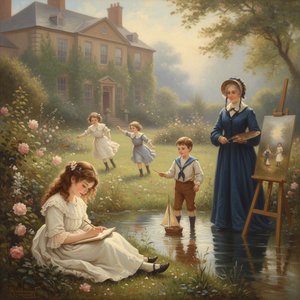
James Sant's "The Fairy Tale," painted in 1870 and measuring 61 x 76 cm, offers a poignant glimpse into the heart of Victorian domestic life. This intimate portrait captures a mother and child engaged in a quiet moment of connection – a scene rendered with remarkable sensitivity and technical skill by one of Britain’s most celebrated artists of childhood, earning him the moniker “The Emperor of Children.” Sant's work transcends mere representation; it is imbued with a profound understanding of human emotion and a masterful ability to evoke a sense of nostalgia that continues to resonate with viewers today. The painting’s subdued palette – dominated by warm browns, creams, and touches of muted red – contributes significantly to its serene and contemplative atmosphere.
A Masterful Exercise in Watercolor and Oil Technique
- Watercolor Foundation: Sant's early training under John Varley and Augustus Wall Callcott instilled a deep appreciation for watercolor’s delicate qualities. This influence is subtly evident in the painting’s luminous washes, particularly in the rendering of the woman’s skin tones and the soft shadows cast by the furniture.
- Oil Painting Refinement: While initially proficient in watercolor, Sant transitioned to oil painting around the age of twenty, allowing him greater control over color saturation and layering techniques. The rich textures achieved through his brushwork – particularly noticeable in the couch upholstery and the scattered books – demonstrate this mastery.
- Compositional Harmony: The carefully constructed composition—the woman seated centrally with the child attentively observing her—creates a sense of balanced intimacy, drawing the viewer into the scene’s quiet narrative.
Symbolism and Victorian Domesticity
“The Fairy Tale” is not simply a portrait; it's a carefully constructed tableau reflecting the values and aspirations of Victorian society. The woman, reading to her child, embodies the idealized role of motherhood – nurturing, instructive, and a guardian of innocence. The presence of books symbolizes education and cultural refinement, crucial elements within the Victorian emphasis on domestic virtue. The scattered books themselves suggest a space dedicated to learning and storytelling, reinforcing the importance of family values. The carefully arranged objects—the vases, bowl, and furniture—contribute to a sense of ordered comfort and prosperity, hallmarks of the middle-class home.
James Sant: A Victorian Icon
Born in Croydon in 1820, James Sant’s career spanned nearly seven decades, during which he produced over 300 paintings. His work was exhibited at the Royal Academy and other prestigious venues, earning him considerable acclaim. Sant's artistic legacy rests on his ability to capture the fleeting expressions of children – a skill that cemented his reputation as “The Emperor of Children.” His portraits are not merely likenesses; they are windows into the souls of young subjects, imbued with an unparalleled sense of tenderness and authenticity. Sant’s enduring popularity speaks to the timeless appeal of his work—a testament to his artistic genius and his profound understanding of human emotion.
Related Artworks
Artist Biography
The Emperor of Children: The Life and Legacy of James Sant
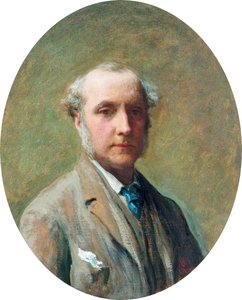
James Sant (1820–1916) stands as a towering figure in Victorian portraiture, celebrated for his unparalleled ability to capture the essence of childhood and imbue his canvases with profound symbolic meaning. Born in Croydon, Surrey, England, on April 23rd, 1820, Sant’s artistic journey began under the tutelage of luminaries like John Varley and Augustus Wall Callcott. This early training established a foundation rooted in delicate watercolor technique—a skill he honed diligently before transitioning to the richer, more robust medium of oil painting at the age of twenty. His formative years were spent studying at the Royal Academy Schools, where he absorbed the stylistic precepts that would define his distinctive oeuvre and prepare him for a lifetime of prestigious commissions.
Sant’s artistic lineage extended beyond formal instruction; he was brother to Sarah Sant, another accomplished artist, suggesting a familial dedication to creative pursuits. His personal life was equally intertwined with intellectual and botanical interests, having married Elizabeth Thomson in 1851, the daughter of Dr. R.M.M. Thomson. This connection to the natural world likely informed the lush, atmospheric landscapes that often served as backdrops for his more intimate portraits. His early success arrived swiftly with “The Infant Samuel” (1853), an evocative depiction of motherhood that resonated deeply with audiences and garnered considerable acclaim through engravings, effectively establishing Sant as one of the foremost painters of his era.
Mastery of Innocence and Symbolism
Throughout his prolific career, Sant’s reputation soared, fueled by commissions from prominent families and bolstered by frequent exhibitions at prestigious venues like the Grosvenor Gallery and the Royal Academy. He tirelessly produced nearly three hundred canvases for exhibition at the academy, demonstrating an unwavering commitment to his craft. His work was never merely about replicating appearances; rather, Sant possessed a remarkable sensitivity to capturing inner emotions and conveying complex ideas through visual imagery. He became a master of the symbolism of childhood, using the purity of young subjects to explore themes of innocence, imagination, and the passage of time.
In masterpieces such as “The Fairy Tale”, Sant masterfully portrays childhood innocence alongside artistic contemplation. These works often capture a harmonious blend of nature and imagination, where tender mother-child moments are enriched by symbolic details and a rich, vibrant color palette. Similarly, in pieces like “The Infant Timothy,” he utilizes the portrait format to invite viewers into a world of historical significance and quiet emotion. His ability to weave narrative depth into a single frame allowed him to transcend simple portraiture, turning each canvas into a window through which the Victorian era could view its own ideals of domesticity and virtue.
Historical Significance and Artistic Triumph
The enduring impact of James Sant lies in his role as an official portraitist to Queen Victoria and his esteemed status as a member of the Royal Academy. His work serves as a vital visual record of the Victorian spirit, capturing the era's preoccupation with sentimentality, family structure, and the romanticization of the natural world. Even as art movements shifted toward more modern interpretations in the late 19th century, Sant’s dedication to the classical traditions of portraiture ensured his place among the most influential artists of his time.
To reflect on the breadth of his contributions, one might consider these defining elements of his career:
- Technical Evolution: The seamless transition from delicate watercolor foundations to commanding oil compositions.
- Thematic Depth: The use of childhood as a vessel for exploring complex human emotions and societal values.
- Institutional Recognition: A prolific exhibition record at the Royal Academy, cementing his status within the British art establishment.
- Narrative Artistry: The ability to blend landscape and portraiture to create "storytelling" canvases that resonate with timelessness.
James Sant passed away in 1916, leaving behind a legacy that continues to enchant art lovers. His paintings remain much more than mere historical artifacts; they are evocative journeys into the heart of the Victorian imagination, preserved through his masterful use of light, color, and soul.
James Sant
1820 - 1916 , United Kingdom
Quick Facts
- Artistic Movement Or Style: Victorian Romanticism
- Artists Or Movements Influenced By This Artist: ['French Impressionists']
- Artists Who Influenced This Artist:
- John Varley
- Augustus Wall Callcott
- Date Of Birth: 1820-04-23
- Date Of Death: 1916
- Full Name: James Sant
- Nationality: British
- Notable Artworks:
- Rosalind
- Portrait of the Russell Sisters
- Study Of Two Girls
- Place Of Birth: Croydon, United Kingdom
Related Articles
Whistler's Masterpieces: Explore 25 Iconic Paintings & Aesthetic Art for Your Home
Journey through 25 iconic James Abbott McNeill Whistler paintings! Explore his masterpieces of Aestheticism, from 'Nocturne in Black and Gold' to captivating portraits. Find museum-quality art reproductions & elevate your home decor with ArtsDot.com. Discover the full collection online.
James Sant: Capturing Victorian Childhood & the Evolving Landscape of British Genre Painting
Explore the life & art of James Sant (1820-1916), renowned Victorian portraitist to Queen Victoria. Discover his captivating depictions of childhood, landscapes, and aristocratic society. Learn about his legacy & find fine art reproductions.

Sir Alfred Munnings' Masterpieces: 25 Paintings That Define Equine Art | ArtsDot
Explore 25 iconic Sir Alfred Munnings paintings! Discover the beauty of British Impressionism, equine art & rural England. Find museum-quality reproductions and elevate your home decor with ArtsDot. Explore the full collection online.

Giclée Prints: Archival Quality & Aesthetic Nuances for the Discerning Collector
Explore the world of giclée prints with ArtsDot. Learn about archival quality, aesthetic nuances & investment potential. Expert guidance for discerning art collectors seeking museum-quality reproductions and lasting value.

The Enduring Legacy of Fine Art Prints: Technique, History & Aesthetic Impact
Explore the rich history & techniques of fine art prints. Discover investment potential, assess authenticity, and learn how to preserve your collection with expert guidance. Trusted insights for discerning collectors.