

 Preview
 Send
Send Share
Share
 Details

 Download
 Similars
 X-Ray
X-Ray Diaporama
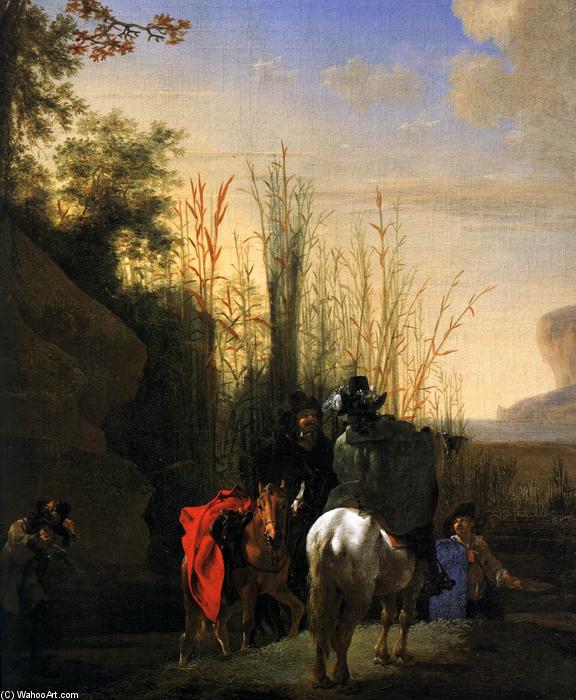
Coastal Scene with Resting Riders (detail)


 Read More
Purchase a high-resolution, enhanced digital image, far superior to the online preview.
Each file is meticulously prepared by our in-house specialists using advanced tools and expert manual retouching. We ensure every image has exceptional clarity, precise color accuracy, and fine detail.
The final file is delivered via email within 72 hours, optimized for immediate use in professional, editorial, and print environments. This is the same quality trusted by top-tier design studios, publishers, and galleries.
Digital Image
Download a high-resolution file for personal display, printing, and creative projects. ( Buy Print Buy Hand Made Painting)
Included in Every Digital Image Order
Expert Digital Delivery, Guaranteed
When you choose ArtsDot.com, you're not just getting an image - you're receiving a professionally enhanced digital artwork, crafted with precision and backed by a satisfaction guarantee. Here's everything that comes with your order, automatically:

Fast Email Delivery
Your high-resolution digital image file will be emailed to you within 72 hours of ordering - ready for immediate use.

AI-Enhanced Digital File
Your artwork is professionally optimized using advanced AI tools and manual editing, ensuring maximum detail, clarity, and color accuracy.

Free Lifetime Re-Delivery
Accidentally deleted or lost your file? No worries - we'll resend it to you anytime, free of charge.

No Import Fees - Ever
Enjoy your artwork instantly with zero customs, duties, or delivery fees - digital downloads are always tax-free.

Color Accuracy Guarantee
We ensure your digital image reflects the original colors as closely as possible using professional tools and color management.

60-Day Satisfaction Guarantee
If you're not satisfied with your digital image, we'll revise it or refund 100% within 60 days - no questions asked.

100% Money-Back Guarantee
Not satisfied? Get a full refund within 60 days of receiving your digital file - no questions asked.

Bulk Order Discounts
Buy 3 images, save 10% - Buy 5, save 15% - Buy 10+, save 20%. Great for creative projects, galleries, and agencies.
Collectible Description
A Moment Frozen in Dawn Light: Exploring Jan Asselijn’s “Coastal Scene with Resting Riders”
The Academy of Fine Arts Vienna holds a treasure – Jan Asselijn’s “Coastal Scene with Resting Riders,” painted in 1652. More than just a depiction of horses and grass, this artwork embodies the spirit of its time, reflecting the burgeoning fascination with landscape painting during the Dutch Golden Age and hinting at deeper philosophical considerations concerning humanity's relationship with nature. Examining its stylistic choices, technical prowess, and symbolic resonance offers a window into the artistic sensibilities of seventeenth-century Europe.The Style & Technique: Atmospheric Impressionism Before Its Time
Asselijn’s approach to landscape painting distinguishes itself from earlier conventions. Rather than striving for precise topographical accuracy – a hallmark of Flemish masters – he prioritizes capturing the mood and atmosphere of the coastal environment. This is achieved through masterful use of chiaroscuro, employing subtle gradations of light and shadow to sculpt the forms of the horses and riders against the backdrop of dawn or dusk. The artist’s brushstrokes are loose and expressive, conveying movement and texture without resorting to meticulous detail. Unlike Impressionists who would emerge decades later, Asselijn anticipates a shift toward prioritizing feeling over representation, foreshadowing the Romantic movement's emphasis on emotion and imagination. The canvas itself is treated with considerable care; oil paint was favored for its ability to blend seamlessly and create luminous effects – a technique that lends an ethereal quality to the scene.Historical Context: Huguenot Influence & The Pursuit of Ideal Beauty
“Coastal Scene with Resting Riders” originates from a period marked by significant religious upheaval in Europe. Jean Asselin, born into a Huguenot family fleeing persecution, arrived in Amsterdam during a time when Dutch artists were actively engaging with Italian Renaissance ideals. This exposure profoundly impacted artistic practice, fostering a desire for beauty rooted in classical principles – specifically the concept of ‘Venus’s Garden,’ popularized by Pietro Testa and Giorgio Vasari. The painting reflects this influence through its idealized portrayal of horses and riders, representing not merely animals but also noble virtues like courage and serenity. Furthermore, it speaks to the broader humanist preoccupation with observing and appreciating the natural world as a source of moral inspiration.Symbolism: Horses as Embodiments of Virtue & Tranquility
The choice of horses is deliberate, imbued with symbolic significance beyond their mere appearance. Traditionally associated with nobility, strength, and divine grace, they represent virtues considered essential for achieving spiritual enlightenment. The three riders – each draped in distinctive colors – further amplify this symbolism. Red signifies courage and passion, blue embodies piety and contemplation, while black symbolizes humility and introspection. Their postures convey a sense of repose and camaraderie, suggesting that true nobility lies not only in physical prowess but also in inner harmony. The gentle swaying of the grass underscores the painting’s overarching theme: the restorative power of nature and its capacity to inspire tranquility amidst turbulent times.Emotional Impact: A Vision of Harmonious Existence
“Coastal Scene with Resting Riders” transcends mere visual representation; it aspires to evoke an emotional response in the viewer. The soft dawn light casts a serene glow upon the landscape, fostering a feeling of peace and contemplation. Asselijn’s masterful use of color contributes to this effect, creating a harmonious palette that balances warmth and coolness. More importantly, the painting invites us to consider humanity's place within the grand scheme of existence – reminding us that beauty can be found in simplicity and that true fulfillment resides in aligning oneself with the rhythms of the natural world. It remains a testament to Asselijn’s artistic vision and a captivating glimpse into the intellectual and aesthetic landscape of seventeenth-century Holland.Related Artworks

Artist Biography
A Life Forged in Landscape: The World of Jan Asselijn
Born Jean Asselin in the French port city of Dieppe around 1610, Jan Asselijn’s journey was one shaped by religious upheaval and artistic exploration. His family, Huguenots fleeing persecution, relocated to Amsterdam in 1621, a vibrant hub of commerce and burgeoning artistic talent during the Dutch Golden Age. This relocation proved pivotal, immersing young Jean into a world where landscape painting was rapidly evolving beyond traditional depictions toward more atmospheric and emotionally resonant scenes. He initially trained with Jan Martszen the Younger, honing his skills in battle pieces before discovering his true calling – capturing the beauty and drama of both natural landscapes and animal life. Asselijn’s early exposure to the Dutch light and expansive skies would become a defining characteristic of his work, though it was a sojourn to Italy that truly solidified his artistic vision.The Italianate Embrace & The Bentvueghels
Like many ambitious Northern European painters of the era, Asselijn sought refinement in Italy, likely arriving sometime after 1635. It was there he fully embraced the *Italianate* style – a genre characterized by sun-drenched vistas, classical ruins, and pastoral scenes imbued with a sense of romanticism. He joined the ranks of the *Bentvueghels*, a colorful society of Dutch and Flemish artists working in Rome. These “Birds of a Feather” were known for their unconventional behavior, satirical nicknames, and dedication to painting directly from life – rejecting the constraints of studio work. Within this boisterous community, Asselijn earned the moniker "Krabbetje" (little crab) due to a physical disability affecting his hand, yet he thrived creatively. He absorbed the influence of artists like Pieter van Laer (Bamboccio), whose depictions of Roman peasant life and landscapes resonated deeply with Asselijn’s own developing style. This period was crucial in shaping his ability to convey atmosphere, light, and a sense of narrative within his compositions.Mastering Light & Symbolism: Key Works
Asselijn returned to Amsterdam with a refined technique and a distinctive voice. His paintings are characterized by a clarity of execution and a masterful handling of light – qualities that quickly gained him recognition. While he produced historical and battle scenes, it was his landscapes and animal paintings that truly set him apart. The Threatened Swan, painted in the 1640s, remains his most celebrated work. More than just a depiction of avian defense, this painting became a powerful symbol of Dutch national resistance against external threats. The fiercely protective swan, aggressively warding off intruders near its nest, resonated with contemporary anxieties and was even interpreted as an allegory for Johan de Witt, a prominent Dutch statesman. Intriguingly, later owners added symbolic inscriptions to the canvas – “Holland” on one of the eggs and “Enemy of the state” beside the menacing dog – further cementing its political undertones. Other notable works include Cavalry Attack at Sunset, showcasing his earlier training in battle scenes with dramatic flair, and depictions of rural life like Drovers with Cattle under an Arch of the Colosseum in Rome, which beautifully blend Italianate landscapes with animal studies. The Breach of the Saint Anthony’s Dike near Amsterdam demonstrates his ability to capture a moment of national crisis, reflecting the ever-present threat of water and the ingenuity required for Dutch land reclamation.Influence & Legacy: A Lasting Impression
Jan Asselijn's impact extended beyond his own prolific output. He was admired by contemporaries like Rembrandt, who even created etchings of the artist at work – though notably, these etchings obscure Asselijn’s hands, perhaps a sensitive acknowledgement of his physical challenge. He also served as a mentor to Frederik de Moucheron, another prominent Dutch landscape painter who further popularized the Italianate style. Asselijn's innovative approach to light and atmosphere influenced a generation of artists, paving the way for greater naturalism and emotional depth in landscape painting. His works are now held in prestigious collections such as the Rijksmuseum in Amsterdam, ensuring his legacy endures as a significant figure within the Dutch Golden Age. He died relatively young, in 1652, but left behind a body of work that continues to captivate viewers with its beauty, drama, and subtle layers of meaning.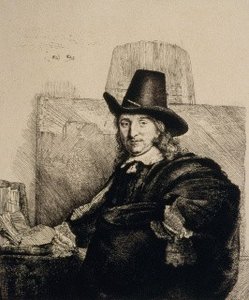
Jan Asselijn
1610 - 1652 , France
Quick Facts
- Artistic Movement Or Style: Italianate landscape
- Artists Or Movements Influenced By This Artist: ['Frederick de Moucheron']
- Artists Who Influenced This Artist:
- Esaias van de Velde
- Bamboccio
- Rembrandt
- Date Of Birth: 1610
- Date Of Death: 1652
- Full Name: Jan Asselijn
- Nationality: Dutch
- Notable Artworks:
- The Threatened Swan
- Hangout in Italy
- Cavalry Charge at Sunset
- Place Of Birth: Dieppe, France

