 Preview
 Send
Send Share
Share
 Details

 Download
 Similars
 X-Ray
X-Ray Diaporama
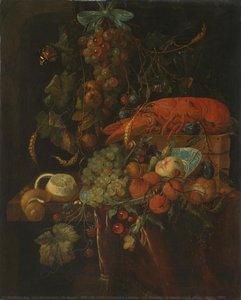
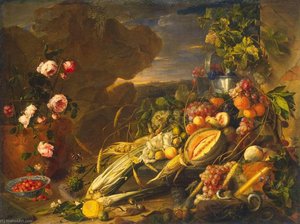
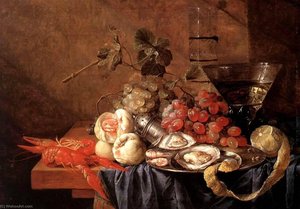
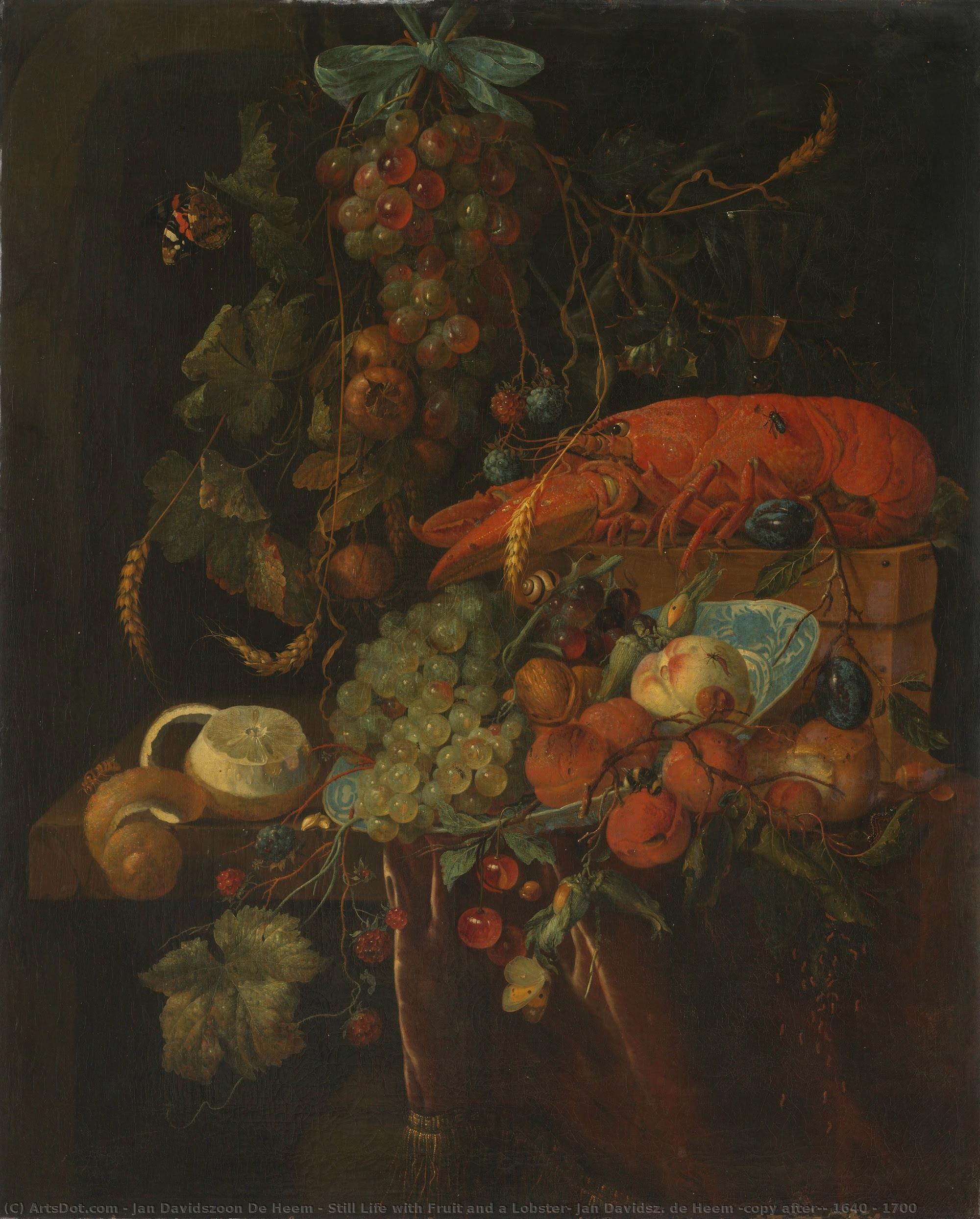
Still Life with Fruit and a Lobster, Jan Davidsz. de Heem (copy after), 1640 - 1700
 1700
1700 70.0 x 59.0 cm
 Read More
Hand Made Oil Reproduction
Hand-painted oil on canvas in your size and frame, made to order by our artists. ( Buy Print Buy Image)




































Pick from our preset sizes that match the artwork's original proportions.

You may enter your own dimensions to fit a specific frame or space. If your selected size does not match the original image's proportions, we will either crop the artwork or extend the painting with additional hand-painted elements. A digital mockup will be sent for your approval before production begins.
Please note that the on-screen preview does not reflect the actual cropping or extension. Only the mockup will accurately show the final composition.
While custom sizes are available, we recommend selecting a dimension from the predefined list to preserve the original proportions.
After order, ArtsDot.com team will email client for instructions and provide a mockup preview
Worldwide Delivery () in 3/4 weeks instead of standard 5 weeks. (23 August). No compromise on quality.

Free Worldwide Express Shipping

High-Quality Linen Canvas

Full Shipping Insurance

Customs Tax Refund Guarantee

True Color Matching Guarantee

60-Day Return Policy (Defects Only)

100% Money-Back Guarantee

Bulk Discount Offer
 Glass option is only available in size under 110 CM

Still Life with Fruit and a Lobster, Jan Davidsz. de Heem (copy after), 1640 - 1700
Reproduction Medium
Reproduction Size
-


Total Price
$ 263
Artwork Description
Related Artworks






Artist Biography
The Master of Opulence: The Life and Legacy of Jan Davidszoon de Heem
In the golden age of the seventeenth century, few artists possessed the ability to transform a simple arrangement of objects into a profound sensory experience quite like Jan Davidszoon de Heem. Born Johannes van Antwerpen in Utrecht around 1606, de Heem emerged as a titan of the Dutch Baroque, a painter whose brushwork could breathe life into the most delicate petal and lend a succulent weight to a ripening peach. His journey began under the watchful eye of his father, David de Heem the Elder, a respected painter who provided the foundational lessons in perspective and meticulous observation that would become the hallmarks of Jan's mature style. This early training was further enriched by his time in Leiden, where he studied the dramatic interplay of light and shadow—the chiaroscuro—under David Bailly, an influence that would later allow him to imbue his still lifes with a theatrical, almost breathing, vitality.
As de Heem’s reputation blossomed, so too did his geographical horizons. His move to Antwerp around 1635 or 1636 marked a pivotal transition from the Dutch tradition toward the more exuberant Flemish Baroque style. Joining the prestigious Guild of Saint Luke, he became a central figure in the bustling artistic community of the Southern Netherlands. It was here that his work began to achieve its most celebrated form: the "orchestration of visual feasts." De Heem did not merely paint objects; he composed them. His canvases became grand stages where silver chalices, exotic shells, and overflowing clusters of grapes were arranged with a calculated, breathtaking complexity that spoke to the wealth and global reach of the era.
A Symphony of Texture and Symbolism
To gaze upon a de Heem masterpiece is to enter a world of tactile wonder. His technique was characterized by an almost obsessive attention to detail, a quality that elevated the still life genre from mere decoration to high art. He possessed a singular ability to manipulate oil paint to mimic the diverse textures of the natural world—the velvety fuzz of a peach, the cold glint of polished silver, the translucent fragility of a dragonfly's wing, and the heavy, dew-drenched petals of a tulip. This mastery of naturalism ensured that his works were not only visually stunning but also deeply immersive.
Beyond the surface beauty, however, lay a deeper, more contemplative layer of meaning. De Heem was a master of the Vanitas theme, a popular motif in Baroque art that served as a poignant reminder of the transience of life and the inevability of death. Within his lush arrangements, one might find subtle symbols of decay: a bruised fruit, a wilting flower, or an overturned goblet. These elements acted as a spiritual counterpoint to the material opulence on display, inviting the viewer to reflect on the fleeting nature of earthly pleasures. This duality—the celebration of life's abundance paired with a somber meditation on mortality—is what gives his work such enduring emotional resonance.
Historical Significance and Artistic Influence
The impact of Jan Davidszoon de Heem extends far beyond his own lifetime. He was the progenitor of a lineage of still-life specialists, influencing not only his sons, such as Cornelis and Jan Janszoon de Heem, but also an entire generation of European painters. His ability to blend the meticulous precision of the Dutch tradition with the dramatic, emotive energy of the Flemish style created a new standard for the genre. His works became highly sought after by the most prestigious collectors in Europe, finding homes in royal galleries and grand estates, where they served as symbols of both taste and intellectual depth.
Today, de Heem’s legacy is preserved in the world's most esteemed institutions, from the State Hermitage Museum to the Mauritshuis. His paintings remain vital touchstones for understanding the cultural complexities of the seventeenth century—a period defined by scientific discovery, global trade, and profound religious shifts. Through his unparalleled ability to capture the ephemeral beauty of the natural world, Jan Davidszoon de Heem ensured that the fleeting moments of a summer harvest would remain eternally vibrant, frozen in a state of magnificent, everlasting bloom.
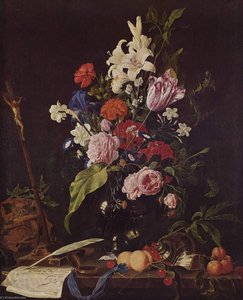
jan davidszoon de heem
1606 - 1684
Quick Facts
- Artistic Movement Or Style: Dutch Baroque
- Artists Or Movements Influenced By This Artist: ['Jacob Marrel']
- Artists Who Influenced This Artist:
- David de Heem (father)
- Balthasar van der Ast
- Date Of Birth: 1606
- Date Of Death: 1684
- Full Name: Jan Davidszoon de Heem
- Nationality: Dutch
- Notable Artworks:
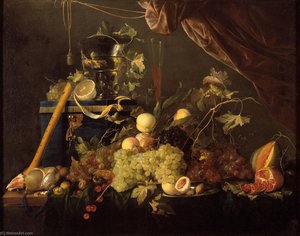
- Still Life: A Banqueting Scene
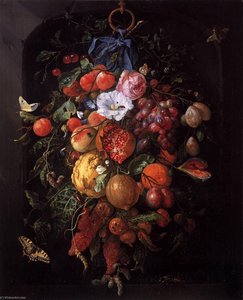
- Festoon of Fruit and Flowers
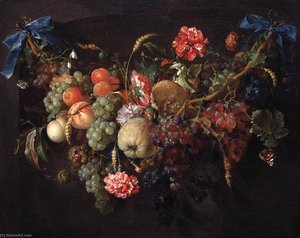
- Garland with fruits
- Place Of Birth: Utrecht, Netherlands