 Preview
 Send
Send Share
Share
 Details

 Download
 Similars
 X-Ray
X-Ray Diaporama
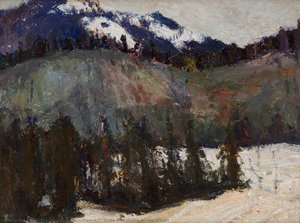
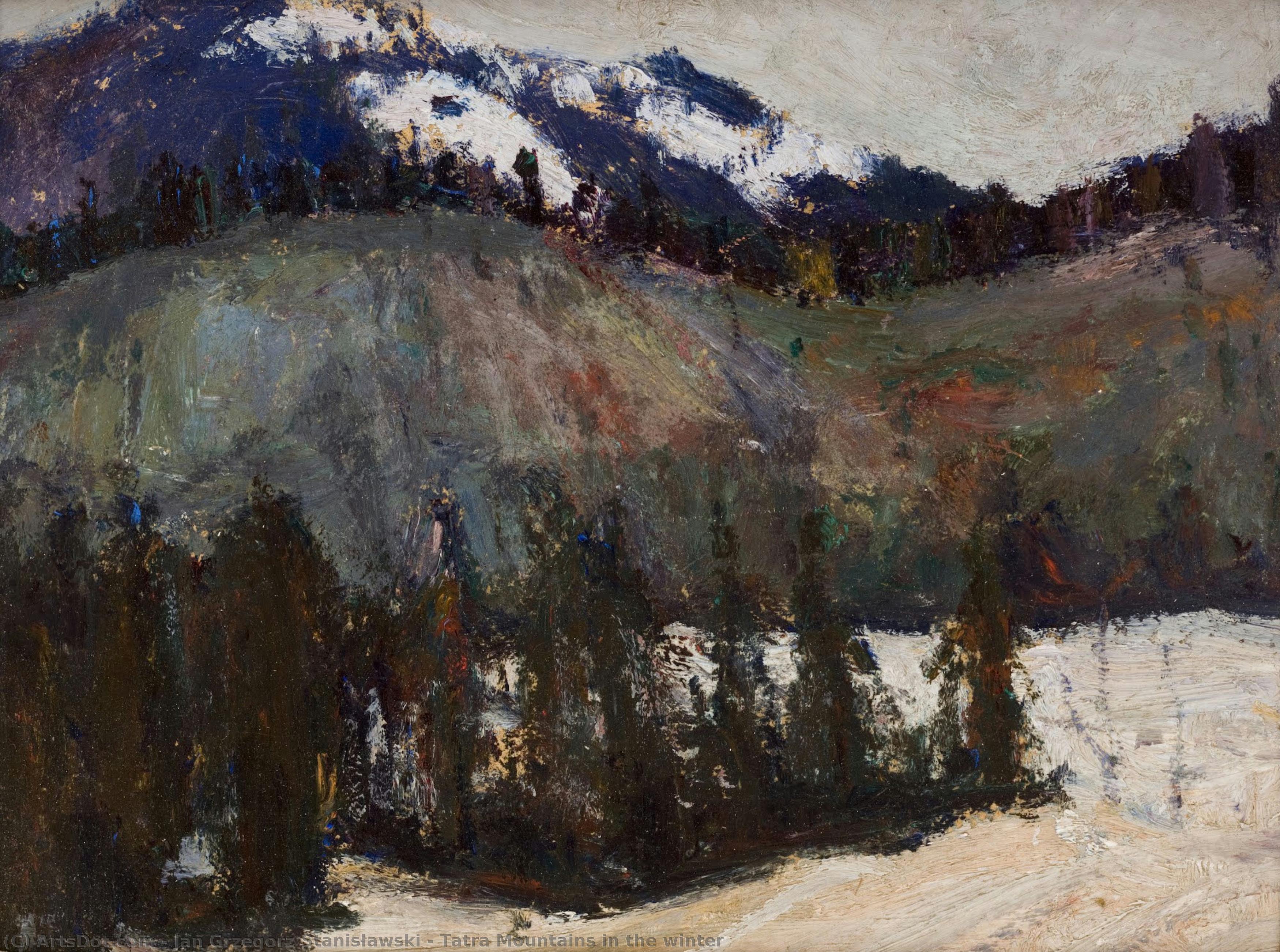
Tatra Mountains in the winter


 Read More
Hand Made Oil Reproduction
Hand-painted oil on canvas in your size and frame, made to order by our artists. ( Buy Print Buy Image)




P118B $10

P118H $10

P118W $10

P438Z $10

P508JH $12

P508YH $12

P805H $10

P805Z $10

P919BZ $10

P919G $10

P919XJ $10

P959ZH $10

P968JZ $12

W106C $8

W218G $10

W218JH $8

W218Y $10

W307PJ $10

W316G $10

W316PJ $8

W316Y $10

W398PJ $8

W4111J $10

W500HY $15

W500JH $15

W692G $12

W849H $8

W940BG $15

W953PJ $8




Pick from our preset sizes that match the artwork's original proportions.

You may enter your own dimensions to fit a specific frame or space. If your selected size does not match the original image's proportions, we will either crop the artwork or extend the painting with additional hand-painted elements. A digital mockup will be sent for your approval before production begins.
Please note that the on-screen preview does not reflect the actual cropping or extension. Only the mockup will accurately show the final composition.
While custom sizes are available, we recommend selecting a dimension from the predefined list to preserve the original proportions.
After order, ArtsDot.com team will email client for instructions and provide a mockup preview
Worldwide Delivery () in 3/4 weeks instead of standard 5 weeks. (23 August). No compromise on quality.

Free Worldwide Express Shipping

High-Quality Linen Canvas

Full Shipping Insurance

Customs Tax Refund Guarantee

True Color Matching Guarantee

60-Day Return Policy (Defects Only)

100% Money-Back Guarantee

Bulk Discount Offer
 Glass option is only available in size under 110 CM

Tatra Mountains in the winter
Reproduction Medium
Reproduction Size
-


Total Price
$ 263
Artwork Description
A Frozen Symphony in Oil
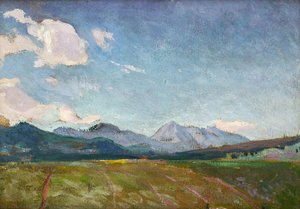
In the quiet, biting chill of 1891, Jan Grzegorz Stanisławski captured a moment of profound stillness that continues to resonate with anyone who has ever stood before the majesty of the high peaks. Tatra Mountains in the winter is not merely a landscape; it is an evocative meditation on the purity of nature. The painting presents a breathtaking vista where the rugged, snow-laden summits of the Tatra range pierce a soft sky, their jagged edges softened by a thick, crystalline mantle of white. Below these giants, a serene body of water rests like a mirror, reflecting the muted light of a winter afternoon, while scattered trees cling to the landscape, providing much-needed texture and life to an otherwise monochromatic world. The composition draws the eye upward, from the tranquil depths of the valley to the formidable heights of the mountains, creating a sense of scale that is both humbling and awe-inspiring.
The technique employed by Stanisławski reveals his deep connection to the burgeoning Impressionist movement that was sweeping through Europe during his time in Paris. Using oil on board, the artist masterfully manipulates light and shadow to simulate the heavy, damp texture of fresh snowfall and the hard, icy surfaces of the mountain crags. There is a deliberate, rhythmic quality to his brushwork; it is precise enough to define the skeletal structure of the winter trees yet fluid enough to allow the atmosphere to bleed into the landscape. This delicate balance between scientific observation—a remnant of his mathematical training—and pure aesthetic emotion allows the viewer to almost feel the crisp, thin air and hear the muffled silence that only a heavy snowfall can produce.
Historical Resonance and Artistic Legacy
To understand this piece is to understand the soul of Polish landscape painting at the turn of the century. As a pioneer of Polish Impressionism, Stanisławski was part of a generation of artists seeking to define a national identity through the depiction of their native terrain. The Tatra Mountains hold a sacred place in Polish culture, representing strength, endurance, and an untamed spirit. By capturing this specific seasonal transformation, Stanisław and his contemporaries were able to elevate local scenery into the realm of universal fine art. This painting serves as a window into the late 19th-century fascination with the sublime—the concept of finding beauty in the overwhelming and sometimes terrifying power of the natural world.
For the discerning collector or interior designer, this reproduction offers more than just a decorative element; it provides an emotional anchor for a room. The cool palette of whites, blues, and earthy tones makes it an ideal centerpiece for spaces designed around themes of tranquility, sophistication, and modern minimalism. Whether placed in a sunlit gallery or a cozy, dimly lit study, the artwork brings with it a sense of timelessness. It invites contemplation, offering a momentary escape into a world where time is frozen by the frost, making it a profound addition to any curated collection of fine art reproductions.
Related Artworks
Artist Biography
The Soul of the Polish Landscape: The Life of Jan Stanisławski
Jan Grzegorz Stanisławski stands as a pivotal figure in the burgeoning landscape art scene of Poland at the turn of the century, a master who breathed life into the very atmosphere of his homeland. Born in 1860 in Velsk, Russia, his path to artistic greatness was unexpectedly paved by a foundation in mathematics. This early intellectual rigor provided him with a unique lens through which to view the world, allowing him to approach the canvas with a precise understanding of structure and light, even as he surrendered himself to the fluid emotions of painting. His decisive embrace of art was fueled by formative encounters with masters such as Wojciech Gerson and Charles Emile Auguste Durand, mentors who helped transform his scientific observation into a profound aesthetic sensibility.
His formal education began at the Warsaw School of Fine Arts under the guidance of Gerson, a celebrated figure whose influence instilled in Stanisławski a deep reverence for capturing the true essence of nature. Seeking to expand his horizons beyond the borders of Poland, he pursued studies at the Imperial Technical Institute in St Petersburg and later immersed himself in the vibrant, revolutionary artistic currents of Paris. It was in the heart of France that he encountered the shimmering light of Impressionism and the flowing, organic lines of Art Nouveau. These international experiences equipped him with an invaluable toolkit, allowing him to translate fleeting visual impressions into enduring works of art that resonated with both modern innovation and classical beauty.
A Mastery of Light and Atmosphere
The canvases of Stanisławski pulsate with a rhythmic vitality, reflecting a masterful command of Impressionist principles while subtly weaving in the delicate ornamentation characteristic of Art Nouveau. His oeuvre is dominated by landscapes that do more than merely represent terrain; they evoke a sense of place through the manipulation of color and atmosphere. He possessed a singular ability to render the misty valleys of the Tatra Mountains, bathing them in golden sunlight or shrouding them in the soft, melancholic hues of twilight. His palette favored harmonious blends of colors, prioritizing atmospheric perspective to create a sense of depth that draws the viewer into a world of tranquility and wonder.
Beyond the grand vistas, Stanisławski found profound beauty in the intimate details of the natural world. His still lifes and smaller-scale studies demonstrate a meticulous attention to detail, where every petal and shadow contributes to a larger narrative of existence. The recurring motifs of his work—panoramic alpine scenery, sun-drenched meadows, and quiet, contemplative corners of nature—serve as a testament to his devotion to the landscape as a living, breathing entity. His technique, echoing the stylistic innovations of Durand, allowed him to capture the ephemeral quality of light, making the static medium of oil paint feel as transient and moving as a passing breeze.
Legacy and Historical Significance
The historical significance of Jan Stanisławski extends far beyond his individual technical achievements; he was a cornerstone of the Polish modernist movement. As a leading figure in influential art groups such as Sztuka, he helped foster a collective identity for Polish artists, bridging the gap between local traditions and the broader European avant-garde. His work provided a visual language for a nation seeking to define its cultural essence during a period of profound political and social change.
Today, Stanisławski is remembered not just as a painter of landscapes, but as a pioneer who redefined the boundaries of Polish Impressionism. His ability to blend scientific precision with emotive expression remains a hallmark of his greatness. The enduring legacy of his work can be seen in:
- The development of Polish Modernism: His role in shaping the aesthetic direction of the turn-of-the-century art scene.
- Innovation in Landscape Painting: The introduction of atmospheric, light-focused techniques to the Polish tradition.
- Cultural Leadership: His involvement in the Sztuka society, which promoted high artistic standards and international dialogue.
Through his eyes, the mountains were not merely stone and snow, but vessels of light and spirit, ensuring that his vision of the Polish landscape remains eternally vibrant in the annals of art history.
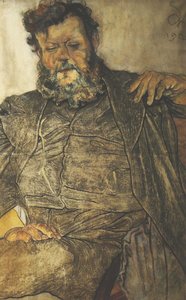
jan grzegorz stanisławski
1860 - 1907 , Russia
Quick Facts
- Artistic Movement Or Style: Modernist Art; Impressionism & Art Nouveau
- Artists Or Movements Influenced By This Artist: ['Joseph Roos der Ältere']
- Artists Who Influenced This Artist: ['Wojciech Gerson']
- Date Of Birth: June 24, 1860
- Date Of Death: 1907
- Full Name: Jan Grzegorz Stanisławski
- Nationality: Polish
- Notable Artworks:
- Spring Landscape
- Landscape from the Tatra Mountains
- Grey Spring Day
- View towards Osobita (Zakopane)
- Place Of Birth: Velsk, Russia
Related Articles

Romantic Landscapes: 10 Masterpieces for Your Home | ArtsDot
Journey through 10 Romantic landscape masterpieces by Friedrich, Turner & Cole. Explore emotional art, sublime nature scenes & iconic 19th-century paintings. Find museum-quality reproductions for your home at ArtsDot.com – discover the full collection online!

Evocations of Place: A Historical Journey Through Landscape Art
Explore the rich history of landscape art with ArtsDot. Discover renowned artists, movements like Impressionism & Romanticism, and expert guidance for collecting timeless pieces. Find your perfect serene escape today!

John Constable's Masterpieces: Explore 25 Iconic Landscapes for Your Home
Journey through John Constable's 25 most celebrated landscapes. Explore Romanticism, Dedham Vale & his masterful use of light in iconic paintings like 'Hay Wain'. Find museum-quality art reproductions and elevate your home decor on ArtsDot.com.

Hokusai's Masterpieces: 25 Iconic Prints & Paintings for Art Lovers | ArtsDot
Journey through Katsushika Hokusai’s 25 most iconic artworks, including *The Great Wave*. Explore the ukiyo-e master's history, style & timeless Japanese woodblock prints. Find museum-quality reproductions for your home at ArtsDot.com.

Evocations of Place: A Historical Journey Through Landscape Art
Explore the rich history of landscape art with ArtsDot. Discover renowned artists, movements like Impressionism & tonalism, and expert guidance for collecting timeless pieces. Find your perfect serene escape today!