 Preview
 Send
Send Share
Share
 Details

 Download
 Similars
 X-Ray
X-Ray Diaporama
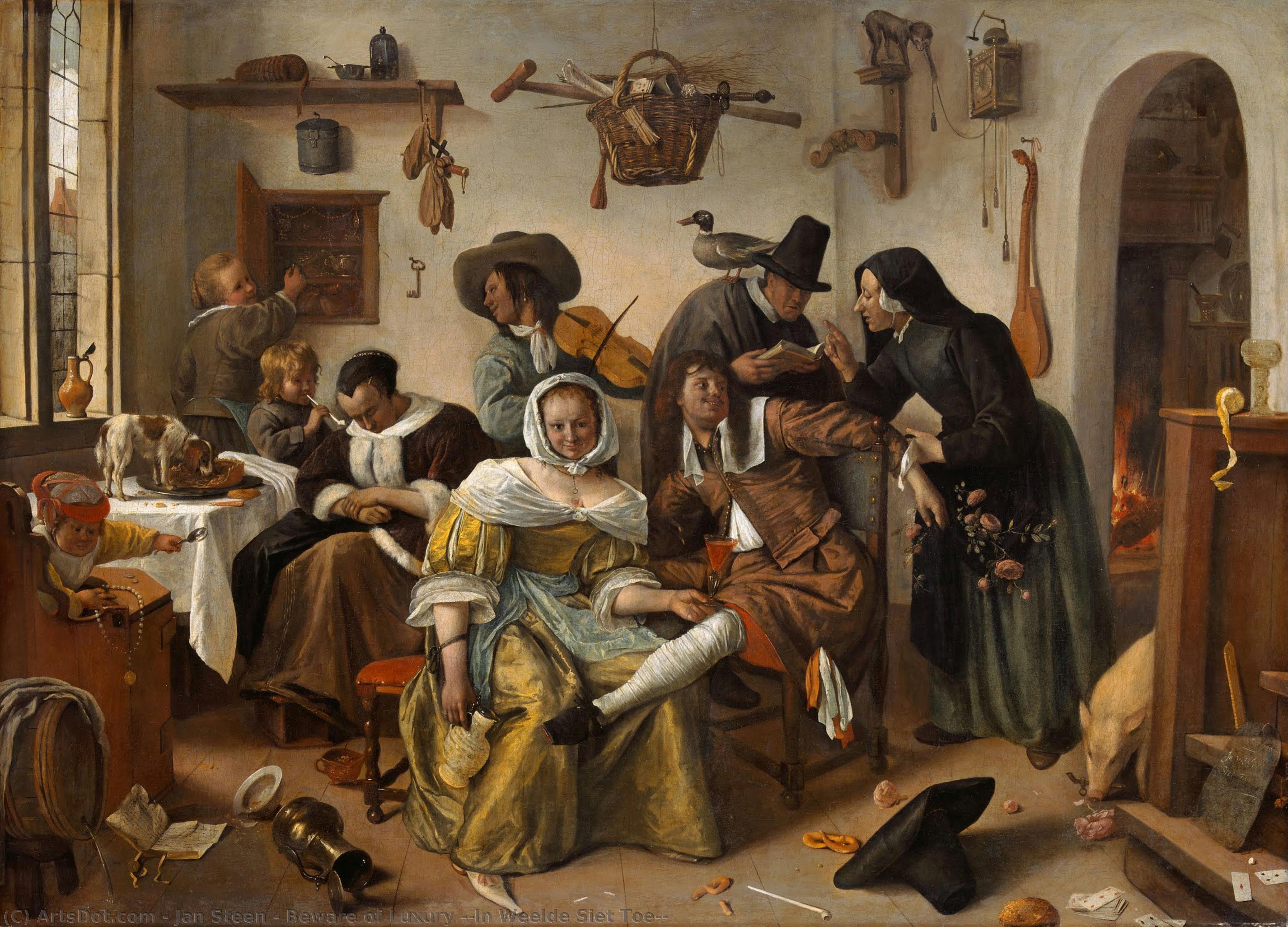
Beware of Luxury (“In Weelde Siet Toe”)
 Oil On Canvas
- WallArt
- Baroque
 1663
1663 1455.0 x 1050.0 cm
 Kunsthistorisches Museum
 Read More
Hand Made Oil Reproduction
Hand-painted oil on canvas in your size and frame, made to order by our artists. ( Buy Print Buy Image)




P118B $10

P118H $10

P118W $10

P438Z $10

P508JH $12

P508YH $12

P805H $10

P805Z $10

P919BZ $10

P919G $10

P919XJ $10

P959ZH $10

P968JZ $12

W106C $8

W218G $10

W218JH $8

W218Y $10

W307PJ $10

W316G $10

W316PJ $8

W316Y $10

W398PJ $8

W4111J $10

W500HY $15

W500JH $15

W692G $12

W849H $8

W940BG $15

W953PJ $8




Pick from our preset sizes that match the artwork's original proportions.

You may enter your own dimensions to fit a specific frame or space. If your selected size does not match the original image's proportions, we will either crop the artwork or extend the painting with additional hand-painted elements. A digital mockup will be sent for your approval before production begins.
Please note that the on-screen preview does not reflect the actual cropping or extension. Only the mockup will accurately show the final composition.
While custom sizes are available, we recommend selecting a dimension from the predefined list to preserve the original proportions.
After order, ArtsDot.com team will email client for instructions and provide a mockup preview
Worldwide Delivery () in 3/4 weeks instead of standard 5 weeks. (16 August). No compromise on quality.

Free Worldwide Express Shipping

High-Quality Linen Canvas

Full Shipping Insurance

Customs Tax Refund Guarantee

True Color Matching Guarantee

60-Day Return Policy (Defects Only)

100% Money-Back Guarantee

Bulk Discount Offer
 Glass option is only available in size under 110 CM

Beware of Luxury (“In Weelde Siet Toe”)
Reproduction Medium
Reproduction Size
-


Total Price
$ 263
Artwork Description
A Snapshot of Dutch Excess: Unpacking Jan Steen’s “Beware of Luxury”
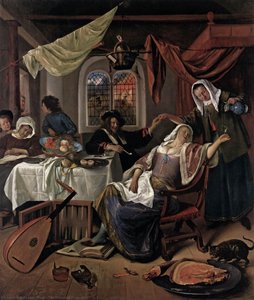
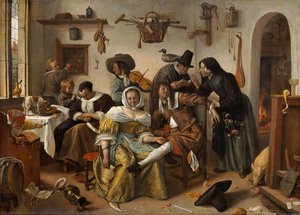
Jan Havickszoon Steen's "Beware of Luxury" ("In Weelde Siet Toe"), painted in 1663, isn’t merely a depiction of a chaotic household; it’s a vibrant, meticulously observed satire of Dutch society during the Golden Age. Steen, a master of capturing everyday life with startling psychological insight and a generous dose of humor, presents us with a scene brimming with activity – a seemingly endless parade of characters engaged in a delightful, yet subtly critical, display of indulgence. The painting’s immediate impact is one of controlled chaos, a carefully orchestrated tableau vivant that invites the viewer to ponder the consequences of unchecked pleasure.
The Scene: A Theatre of the Absurd
Steen arranges his figures within a richly detailed room, transforming it into a stage for a miniature drama. The composition is cleverly built around a triangular structure, with the elegantly dressed young woman at its apex – a symbol of alluring temptation and perhaps, a subtle critique of the pursuit of fleeting pleasures. Around her swirl a cast of characters: a slumbering lady of the house, a dog greedily devouring a meat pie, a child pilfering from a cabinet, a boy experimenting with a pipe, and a young man struggling to coax music from a violin. The inclusion of a Quaker, identifiable by the duck perched on his shoulder – a symbol of piety and moral guidance – adds another layer of complexity, highlighting the tension between worldly indulgence and spiritual reflection.
- The Prostitute: A provocative figure holding a brimming glass, her gesture both alluring and subtly mocking.
- The Nun (Beguine?): A watchful presence, delivering a stern admonishment to the man of the house.
- The Dog: Represents unchecked appetite and gluttony.
- The Child Thief: Symbolizes opportunity and the ease with which virtue can be abandoned.
Technique and Context: A Master’s Observation
Painted in oil on canvas, “Beware of Luxury” showcases Steen's remarkable ability to capture texture and detail. The rich fabrics, gleaming furniture, and the subtle play of light create a sense of immediacy and realism. Steen’s work reflects the artistic trends of the Dutch Golden Age, particularly the rise of genre painting – an interest in depicting scenes from everyday life with psychological depth. Born in Leiden in 1626 and dying in 1679, Steen's background as a brewer and tavern keeper likely informed his keen observation of human behavior and his ability to portray the nuances of social interaction. The title itself, “Die verkehrte Welt” (“The Topsy-Turvy World”), hints at the painting’s satirical intent – a commentary on the moral decay lurking beneath the veneer of prosperity.
Symbolism and Moral Warning
Beyond its comedic elements, "Beware of Luxury" carries a potent moral message. The hanging basket containing a sword and crutch serves as a stark reminder of the consequences awaiting those who succumb to excess. The painting’s enduring appeal lies in its ability to simultaneously entertain and provoke reflection. It's a timeless warning against the dangers of vanity, greed, and the pursuit of fleeting pleasures – a lesson rendered with Steen’s characteristic wit and masterful technique. The scene is not just a snapshot of a chaotic household; it’s an invitation to examine our own values and consider the wisdom embedded within this remarkable work of art.
Related Artworks
Artist Biography
A Master of the Human Comedy
Jan Havickszoon Steen, a name synonymous with the vibrant pulse of the Dutch Golden Age, possessed a rare ability to transform the mundane into the monumental. Born in Leiden around 1626 into a well-to-do Catholic family, Steen’s early life was steeped in the sensory richness of his father’s brewery and the bustling atmosphere of the Red Halberd tavern. This upbringing provided him with an intimate, lifelong window into the social fabric of the Netherlands, from the boisterous laughter of peasants to the structured domesticity of the middle class. While many of his contemporaries sought prestige through grand historical or mythological allegories, Steen found his calling in the much more relatable—and often much more chaotic—realities of everyday life.
His artistic journey was shaped by a diverse array of influences that allowed him to develop a style both technically rigorous and emotionally resonant. Though official records of his apprenticeship are elusive, contemporary accounts suggest he drew wisdom from masters such as Jan van Goyen, Nicolaas Knüpfer, and Adriaen van Ostade. These mentors provided the foundational skills in landscape and portraiture that Steen would eventually infuse with his own inimitable wit. He held a profound admiration for Frans Hals, whose loose, energetic brushwork and psychological vitality are echoed in Steen’s own ability to capture a fleeting moment of mischief or melancholy.
The Art of Narrative and Moral Nuance
To look upon a Jan Steen painting is to enter a stage where every character, every spilled glass of wine, and every discarded letter tells a story. He was a master of genre painting, a movement that flourished during the 17th century, yet he elevated it through a sophisticated use of chiaroscuro and symbolic storytelling. His canvases are rarely just depictions of scenes; they are complex tapestries of social commentary. In works such as The Doctor's Visit or Quack Doctor, Steen utilizes meticulous detail—the texture of a rustic sleeve, the glint of light on a ceramic jug—to ground his narratives in a palpable reality. Yet, beneath this surface realism lies a sharp, satirical edge.
Steen’s genius lay in his ability to use humor as a vehicle for moral instruction. He often depicted scenes of "disorder"—rowdy tavern gatherings, messy households, or boisterful celebrations—not merely to entertain, but to prompt reflection on the consequences of folly and excess. His paintings frequently serve as cautionary tales regarding piety and decorum, using the chaos of a Merry Party to mirror the potential chaos of an undisciplined soul. This duality—the ability to make the viewer laugh while simultaneously inviting them to contemplate virtue—is what distinguishes his oeuvre from the more straightforwardly observational works of his peers.
Legacy and the Evolution of Style
As Steen’s career progressed, his artistic vision underwent a subtle yet significant evolution. His earlier compositions often featured more grotesque or exaggerated figures, leaning heavily into the tradition of much rougher, peasant-focused genre scenes. However, as the tastes of the Dutch Republic shifted toward greater elegance and refinement, so too did his brush. In his later years, the figures in his paintings became more individualized and graceful, the color palettes grew more subtle, and his compositions achieved a newfound compositional poise. This transition reflects not only his personal growth as an artist but also the changing cultural landscape of the late 17th century.
The historical significance of Jan Steen cannot be overstated. He remains one of the most beloved figures of the Baroque era because he captured the very essence of humanity: our capacity for joy, our penchant for error, and our shared domestic struggles. His influence stretched far beyond the borders of Leiden, leaving an indelible mark on the development of European genre painting. Today, his works continue to captivate audiences worldwide, offering a timeless window into a period of unparalleled artistic achievement and reminding us that there is profound beauty and wisdom to be found in the most ordinary of moments.
jan havickszoon steen
1626 - 1679 , Netherlands
Quick Facts
- Artistic Movement Or Style: Dutch Golden Age Genre Painting
- Artists Or Movements Influenced By This Artist: Baroque Art
- Date Of Birth: Leiden, Netherlands (1626)
- Full Name: Jan Havickszoon Steen
- Nationality: Dutch
- Notable Artworks:
- John the Baptist Preaching
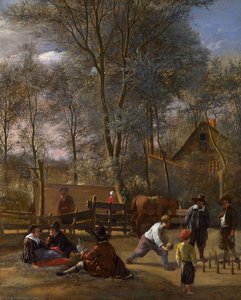
- Skittle Players outside an Inn
- The Severe Teacher
- Place Of Birth: Leiden
Related Articles
Jan Steen: A Master of Dutch Genre Painting & the Golden Age
Explore the life & art of Jan Steen, a leading Dutch Golden Age painter renowned for his humorous genre scenes & insightful social commentary. Discover his techniques, legacy, and collecting tips.

Dutch Masters: 10 Golden Age Paintings That Still Inspire |
Journey into the Dutch Golden Age! Explore 10 iconic paintings by Rembrandt, Vermeer & Hals. Discover the stories behind these Baroque masterpieces and find museum-quality art reproductions to elevate your home decor on .

Golden Age Reflections: Dutch Baroque Painting & Cultural Innovation
Explore the Dutch Golden Age of painting! Discover key artists like Vermeer & ter Borch, their innovative techniques, and the rich cultural context behind these Baroque masterpieces. Learn about collecting & appreciating this iconic art period.

Illuminating Innovation: Exploring the Dutch Golden Age of Painting
Explore the Dutch Golden Age of painting with ArtsDot. Discover Rembrandt, Vermeer & other Masters. Learn about key characteristics, iconic artworks, and lasting influence. Expert insights for collectors & enthusiasts.
Genre Painting: A Window into Daily Life & Societal Values of the Dutch Golden Age
Explore the captivating world of Dutch Golden Age genre painting! Discover realistic depictions of daily life, masterful artists like Ostade & Metsu, and hidden symbolism. Learn about this influential art movement with ArtsDot.