 Preview
 Send
Send Share
Share
 Details

 Download
 Similars
 X-Ray
X-Ray Diaporama
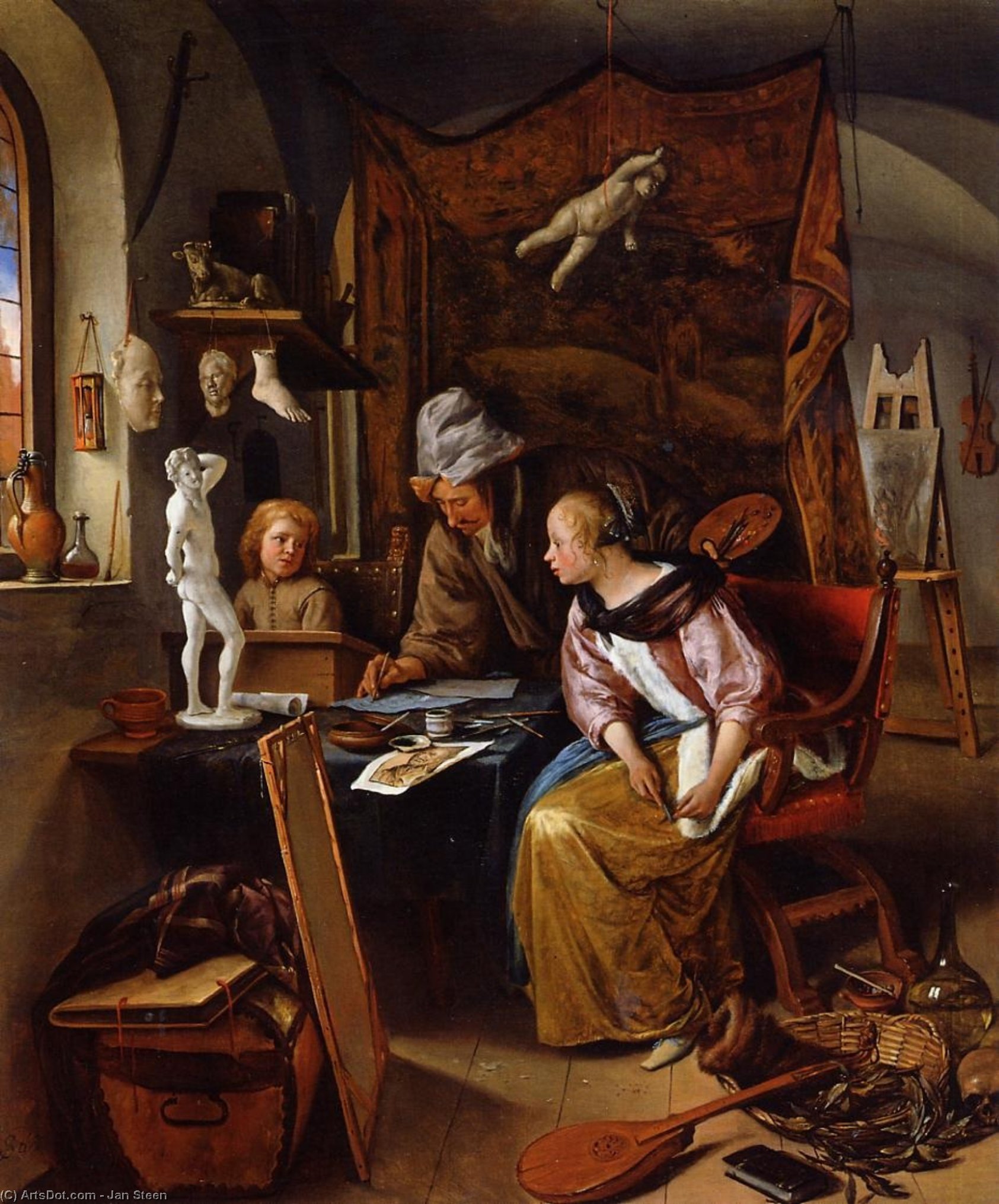
The Drawing Lesson


 Read More
Hand Made Oil Reproduction
Hand-painted oil on canvas in your size and frame, made to order by our artists. ( Buy Print Buy Image)




P118B $10

P118H $10

P118W $10

P438Z $10

P508JH $12

P508YH $12

P805H $10

P805Z $10

P919BZ $10

P919G $10

P919XJ $10

P959ZH $10

P968JZ $12

W106C $8

W218G $10

W218JH $8

W218Y $10

W307PJ $10

W316G $10

W316PJ $8

W316Y $10

W398PJ $8

W4111J $10

W500HY $15

W500JH $15

W692G $12

W849H $8

W940BG $15

W953PJ $8




Pick from our preset sizes that match the artwork's original proportions.

You may enter your own dimensions to fit a specific frame or space. If your selected size does not match the original image's proportions, we will either crop the artwork or extend the painting with additional hand-painted elements. A digital mockup will be sent for your approval before production begins.
Please note that the on-screen preview does not reflect the actual cropping or extension. Only the mockup will accurately show the final composition.
While custom sizes are available, we recommend selecting a dimension from the predefined list to preserve the original proportions.
After order, ArtsDot.com team will email client for instructions and provide a mockup preview
Worldwide Delivery () in 3/4 weeks instead of standard 5 weeks. (16 August). No compromise on quality.

Free Worldwide Express Shipping

High-Quality Linen Canvas

Full Shipping Insurance

Customs Tax Refund Guarantee

True Color Matching Guarantee

60-Day Return Policy (Defects Only)

100% Money-Back Guarantee

Bulk Discount Offer
 Glass option is only available in size under 110 CM

The Drawing Lesson
Reproduction Medium
Reproduction Size
-


Total Price
$ 263
Artwork Description
Jan Havickszoon Steen’s “The Drawing Lesson”: A Snapshot of Dutch Domesticity
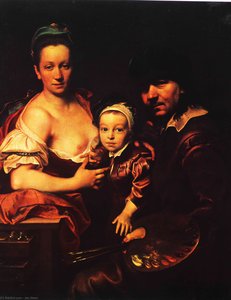
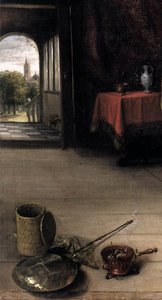
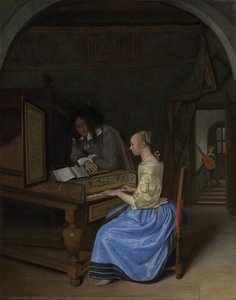
Steen's singular vision distinguished him from his contemporaries during the Dutch Golden Age, prioritizing the portrayal of everyday life—farmers’ families, tavern gatherings, schoolrooms—infused with psychological insight and subtly moral lessons. This distinctive approach cemented his reputation as one of the most original voices of his era and profoundly influenced Baroque art. Unlike many artists preoccupied with grand mythological narratives or historical portraits, Steen dedicated himself to capturing the vibrancy and humor inherent in ordinary human experience, a decision that speaks volumes about artistic priorities during this period. Born in Leiden, Netherlands, Steen’s formative years were marked by an apprenticeship under Hendrick Jacobsz. Stoffels, providing him with foundational skills but also exposing him to a stylistic tradition that would later inform his own distinctive style. However, Stoffels' influence wasn’t solely technical; it instilled a certain formality and grandeur—a contrast that Steen deliberately rejected in favor of a more approachable aesthetic. This conscious departure from convention is evident throughout his oeuvre, establishing him as an artist who championed authenticity and emotional resonance above all else. Steen’s technique was remarkably innovative for its time. He employed a method known as “grisaille,” translating to “grey” in French, which involved painting figures and objects in monochrome shades of grey—typically white underpaint overlaid with layers of grey pigment. This approach wasn't merely economical; it served a crucial artistic purpose: to heighten the drama and psychological depth of his scenes by stripping away distracting color palettes. The resulting tonal gradations created an illusion of volume and texture, mirroring the subtle nuances of human emotion and fostering a profound connection between the viewer and the depicted subjects. Consider “The Drawing Lesson,” where Steen’s masterful grisaille technique renders the faces of the father and son with astonishing realism—a testament to his ability to convey unspoken feelings through carefully calibrated shading. The painting's historical context illuminates its significance within the broader artistic landscape of the Baroque era. Emerging in the mid-17th century, Baroque art sought to evoke awe and emotion through grand scale, dramatic lighting, and opulent ornamentation. Steen’s focus on domestic interiors—a genre largely ignored by his peers—represented a deliberate challenge to prevailing stylistic conventions. He wasn't attempting to impress with spectacle; rather, he aimed to capture the quiet dignity of family life—a subject deemed worthy of artistic contemplation during a period characterized by intellectual ferment and religious upheaval. The inclusion of a violin underscores this cultural preoccupation, symbolizing musical expression as an integral component of human experience. Symbolically, “The Drawing Lesson” transcends its immediate depiction of a simple instructional moment. The father patiently guiding his son—a gesture of mentorship and familial affection—represents the transmission of knowledge and values across generations. Furthermore, the carefully arranged objects within the room—the bowl, vase, books—serve as visual metaphors for stability, learning, and artistic cultivation. Steen’s subtle use of symbolism elevates the painting beyond mere representation, transforming it into a meditation on human relationships and the pursuit of virtue. Ultimately, “The Drawing Lesson” resonates with viewers today because it speaks to universal themes of family, education, and compassion—values that endure across cultures and eras. Its understated elegance and psychological acuity capture the essence of human experience in its most poignant form, reminding us that beauty can be found not only in grand artistic achievements but also in the quiet moments of everyday life. Steen’s legacy rests on his unwavering commitment to portraying humanity with honesty and empathy—a distinction that secures his place as one of the Dutch Golden Age's foremost innovators and continues to inspire artists and collectors alike.Related Artworks
![Landscape With A Calm (un Tem[p]s Calme Et Serein) — Nicolas Poussin, Baroque](/media/artworks/images/thumbnails/d9/68/d968ff3e5b2b42448a527566ad3b4a37.jpg)
Artist Biography
A Master of the Human Comedy
Jan Havickszoon Steen, a name synonymous with the vibrant pulse of the Dutch Golden Age, possessed a rare ability to transform the mundane into the monumental. Born in Leiden around 1626 into a well-to-do Catholic family, Steen’s early life was steeped in the sensory richness of his father’s brewery and the bustling atmosphere of the Red Halberd tavern. This upbringing provided him with an intimate, lifelong window into the social fabric of the Netherlands, from the boisterous laughter of peasants to the structured domesticity of the middle class. While many of his contemporaries sought prestige through grand historical or mythological allegories, Steen found his calling in the much more relatable—and often much more chaotic—realities of everyday life.
His artistic journey was shaped by a diverse array of influences that allowed him to develop a style both technically rigorous and emotionally resonant. Though official records of his apprenticeship are elusive, contemporary accounts suggest he drew wisdom from masters such as Jan van Goyen, Nicolaas Knüpfer, and Adriaen van Ostade. These mentors provided the foundational skills in landscape and portraiture that Steen would eventually infuse with his own inimitable wit. He held a profound admiration for Frans Hals, whose loose, energetic brushwork and psychological vitality are echoed in Steen’s own ability to capture a fleeting moment of mischief or melancholy.
The Art of Narrative and Moral Nuance
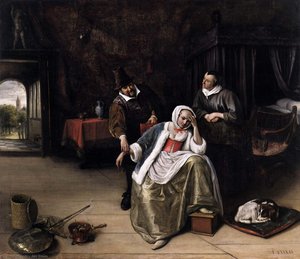
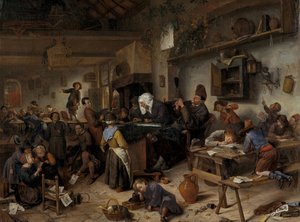
To look upon a Jan Steen painting is to enter a stage where every character, every spilled glass of wine, and every discarded letter tells a story. He was a master of genre painting, a movement that flourished during the 17th century, yet he elevated it through a sophisticated use of chiaroscuro and symbolic storytelling. His canvases are rarely just depictions of scenes; they are complex tapestries of social commentary. In works such as The Doctor's Visit or Quack Doctor, Steen utilizes meticulous detail—the texture of a rustic sleeve, the glint of light on a ceramic jug—to ground his narratives in a palpable reality. Yet, beneath this surface realism lies a sharp, satirical edge.
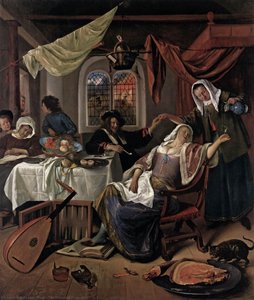
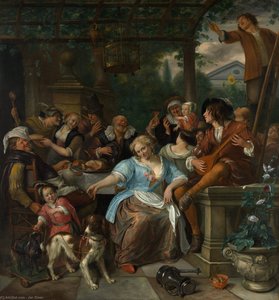
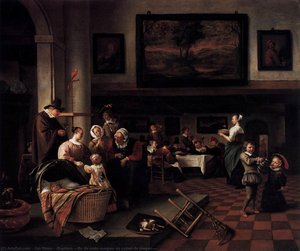
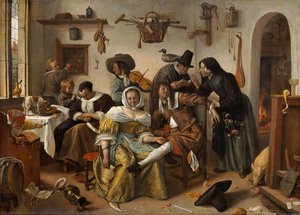
Steen’s genius lay in his ability to use humor as a vehicle for moral instruction. He often depicted scenes of "disorder"—rowdy tavern gatherings, messy households, or boisterful celebrations—not merely to entertain, but to prompt reflection on the consequences of folly and excess. His paintings frequently serve as cautionary tales regarding piety and decorum, using the chaos of a Merry Party to mirror the potential chaos of an undisciplined soul. This duality—the ability to make the viewer laugh while simultaneously inviting them to contemplate virtue—is what distinguishes his oeuvre from the more straightforwardly observational works of his peers.
Legacy and the Evolution of Style
As Steen’s career progressed, his artistic vision underwent a subtle yet significant evolution. His earlier compositions often featured more grotesque or exaggerated figures, leaning heavily into the tradition of much rougher, peasant-focused genre scenes. However, as the tastes of the Dutch Republic shifted toward greater elegance and refinement, so too did his brush. In his later years, the figures in his paintings became more individualized and graceful, the color palettes grew more subtle, and his compositions achieved a newfound compositional poise. This transition reflects not only his personal growth as an artist but also the changing cultural landscape of the late 17th century.
The historical significance of Jan Steen cannot be overstated. He remains one of the most beloved figures of the Baroque era because he captured the very essence of humanity: our capacity for joy, our penchant for error, and our shared domestic struggles. His influence stretched far beyond the borders of Leiden, leaving an indelible mark on the development of European genre painting. Today, his works continue to captivate audiences worldwide, offering a timeless window into a period of unparalleled artistic achievement and reminding us that there is profound beauty and wisdom to be found in the most ordinary of moments.
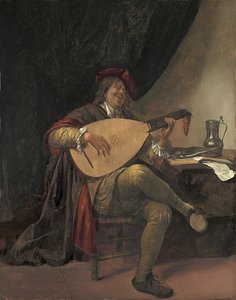
jan havickszoon steen
1626 - 1679 , Netherlands
Quick Facts
- Artistic Movement Or Style: Dutch Golden Age Genre Painting
- Artists Or Movements Influenced By This Artist: Baroque Art
- Date Of Birth: Leiden, Netherlands (1626)
- Full Name: Jan Havickszoon Steen
- Nationality: Dutch
- Notable Artworks:
- John the Baptist Preaching
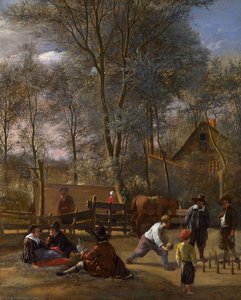
- Skittle Players outside an Inn
- The Severe Teacher
- Place Of Birth: Leiden