 Preview
 Send
Send Share
Share
 Details

 Download
 Similars
 X-Ray
X-Ray Diaporama
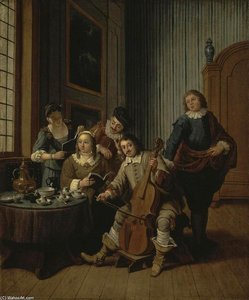
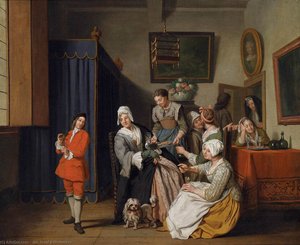
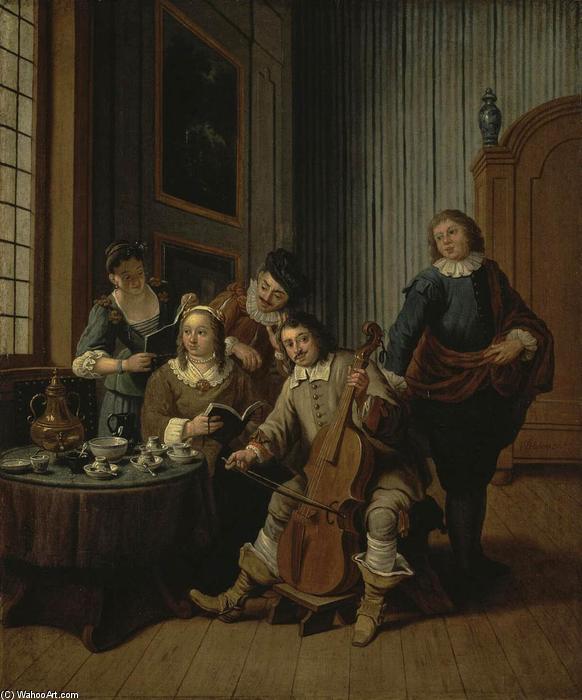
Lesson of Singing
 Oil On Canvas
- WallArt
- 18th-Century Genre Painting
 1750
1750 45.0 x 38.0 cm
 Hermitage Museum
 Read More
Hand Made Oil Reproduction
Hand-painted oil on canvas in your size and frame, made to order by our artists. ( Buy Print Buy Image)




P118B $10

P118H $10

P118W $10

P438Z $10

P508JH $12

P508YH $12

P805H $10

P805Z $10

P919BZ $10

P919G $10

P919XJ $10

P959ZH $10

P968JZ $12

W106C $8

W218G $10

W218JH $8

W218Y $10

W307PJ $10

W316G $10

W316PJ $8

W316Y $10

W398PJ $8

W4111J $10

W500HY $15

W500JH $15

W692G $12

W849H $8

W940BG $15

W953PJ $8




Pick from our preset sizes that match the artwork's original proportions.

You may enter your own dimensions to fit a specific frame or space. If your selected size does not match the original image's proportions, we will either crop the artwork or extend the painting with additional hand-painted elements. A digital mockup will be sent for your approval before production begins.
Please note that the on-screen preview does not reflect the actual cropping or extension. Only the mockup will accurately show the final composition.
While custom sizes are available, we recommend selecting a dimension from the predefined list to preserve the original proportions.
After order, ArtsDot.com team will email client for instructions and provide a mockup preview
Worldwide Delivery () in 3/4 weeks instead of standard 5 weeks. (20 August). No compromise on quality.

Free Worldwide Express Shipping

High-Quality Linen Canvas

Full Shipping Insurance

Customs Tax Refund Guarantee

True Color Matching Guarantee

60-Day Return Policy (Defects Only)

100% Money-Back Guarantee

Bulk Discount Offer
 Glass option is only available in size under 110 CM

Lesson of Singing
Reproduction Medium
Reproduction Size
-


Total Price
$ 338
Artwork Description
A Moment of Harmonious Learning: Jan Jozef II Horemans’ “Lesson of Singing”
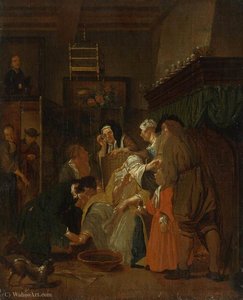
Within the hallowed halls of the Hermitage Museum in St. Petersburg, nestled amongst masterpieces spanning centuries of artistic endeavor, resides a deceptively simple yet profoundly resonant painting: Jan Jozef II Horemans' "Lesson of Singing," completed around 1750. More than just a depiction of a domestic scene, this oil on canvas offers a glimpse into the burgeoning culture of enlightenment, capturing an intimate tableau of learning, social grace, and the quiet joy of shared intellectual pursuit. The painting isn’t merely a record of a moment; it's a carefully constructed invitation to contemplate the values and aesthetics of 18th-century European society.
Horemans, a Belgian painter deeply rooted in the traditions of Flemish genre art, expertly navigated the evolving artistic landscape of his time. Trained initially as a portraitist, he ultimately embraced a broader scope, finding inspiration in the vibrant scenes of everyday life – a shift mirroring a wider trend amongst artists seeking to move beyond purely formal commissions. His style is immediately recognizable: an exquisite attention to detail combined with a masterful use of warm, inviting colors that imbue the scene with a palpable sense of comfort and refinement. The artist’s ability to capture subtle nuances of expression and texture speaks volumes about his technical skill and keen observational abilities.
The Composition: A Study in Light, Gesture, and Social Dynamics
The painting unfolds within a richly furnished room, bathed in the soft glow of diffused light emanating from an unseen window. The arrangement is meticulously balanced – a table dominates the center, surrounded by four figures engaged in various activities. At its head sits a woman, poised with a book open before her, seemingly either reading or preparing to sing; her posture suggests both instruction and participation. Three other individuals occupy the space around her: one leans forward attentively, another gestures gently, while a third appears lost in thought. These aren’t merely characters within a scene; they are carefully positioned elements contributing to a complex interplay of social dynamics.
Horemans masterfully employs linear perspective to create depth and spatial awareness. The furniture – tables, chairs, wardrobes – is rendered with precise detail, while the figures themselves possess a naturalism that avoids overly theatrical poses. Notice the subtle gestures, the fleeting expressions on their faces; these small details breathe life into the composition, suggesting an ongoing conversation or shared experience. The use of warm browns and creams in the room’s decor creates a sense of intimacy and domesticity, while touches of gold and blue add visual interest and highlight key elements within the scene.
Symbolism and Context: Music, Education, and Bourgeois Values
"Lesson of Singing" is not simply a portrait of a musical lesson; it’s a carefully constructed symbol reflecting the values of the 18th century. The cello, prominently displayed in the foreground, represents music – an integral part of aristocratic culture and a symbol of refinement and intellectual pursuit. The open book suggests education and learning, highlighting the importance placed on knowledge and cultivation within bourgeois society. The scene itself embodies the ideals of Enlightenment thought: reason, social harmony, and the celebration of human potential.
Considering the painting’s creation in 1750, it offers a valuable window into the social customs and artistic sensibilities of the era. The clothing, the furnishings, and the overall atmosphere reflect the wealth and sophistication of the upper class – a world where education, music, and refined conversation were highly valued pursuits. The meticulous detail with which Horemans depicts these elements speaks to his understanding of his patrons’ tastes and aspirations.
A Timeless Appeal: Reproduction and Artistic Legacy
“Lesson of Singing” remains a captivating work of art, its appeal extending far beyond the confines of the Hermitage Museum. Reproductions, such as those offered by ArtsDot.com, allow viewers to experience the painting’s beauty and nuance in their own homes, bringing a touch of 18th-century elegance and intellectual warmth to any space. The painting's enduring legacy lies not only in its technical brilliance but also in its ability to evoke a sense of quiet contemplation and shared humanity – a testament to Horemans’ skill as an artist and his insightful portrayal of the human experience.
Related Artworks

Artist Biography
Richard Wilson: Bridging the Divide Between Italian Grandeur and English Landscape
Richard Wilson (1714-1782), a pivotal figure in British art, stands as a bridge between the dramatic grandeur of Italian landscape painting and the burgeoning tradition of English landscape art. Born in Wrexham, North Wales, his early life offered little indication of the artistic heights he would eventually achieve. Initially apprenticed to a portrait painter, Wilson’s career took an unexpected turn during a sojourn in Italy in the 1750s – a period that fundamentally reshaped his artistic vision and established him as one of the most celebrated painters of his era. His journey exemplifies a crucial shift: moving from meticulously rendered portraits to capturing the evocative power of nature, a move mirrored by many artists seeking inspiration beyond the confines of England. Wilson’s Italian experience proved transformative. He immersed himself in the works of masters like Claude Lorrain and Nicolas Poussin, absorbing their techniques for depicting classical ruins, dramatic light effects, and idealized landscapes. Unlike the often-stiff formality of English portraiture, these Italian scenes were characterized by a looser brushwork, an emphasis on atmospheric perspective, and a profound engagement with the sublime – a concept central to Romanticism yet already present in Wilson’s work. He meticulously studied the ruins of ancient Rome, capturing their weathered beauty and integrating them into his compositions, creating a visual dialogue between antiquity and modernity. This fascination with classical subjects would remain a defining characteristic throughout his career. His early Italian works, such as *The Ruins of Pompey* (1758), demonstrate this influence vividly, showcasing a masterful command of light, color, and composition – elements he skillfully translated back to England. Upon returning to Britain in 1762, Wilson established himself as a leading landscape painter, quickly gaining recognition for his ability to evoke the emotional power of nature. He rejected the prevailing academic style, favoring a more expressive and dynamic approach. His paintings weren’t simply representations of scenery; they were carefully constructed narratives designed to elicit feelings of awe, tranquility, or even melancholy. Wilson's compositions often featured dramatic cloud formations, expansive vistas, and meticulously rendered details – elements that contributed to their captivating quality. He was particularly adept at capturing the effects of light on water, a skill honed during his time in Italy, and which he brought to bear on scenes of rivers, lakes, and coastlines. His work frequently incorporated classical motifs—ruins, temples, and mythological figures—creating a harmonious blend of ancient and modern themes. A key element of Wilson’s success was his membership in the newly formed Royal Academy in 1769. This prestigious institution provided him with a platform to exhibit his work and establish his reputation further. However, his later years were marked by ill health, which undoubtedly impacted his artistic output. Despite this decline, Wilson's legacy endured, profoundly influencing subsequent generations of landscape painters. Artists like J.M.W. Turner and John Constable acknowledged Wilson’s profound impact on their own work, recognizing in him a pioneering spirit and a deep understanding of the expressive potential of landscape. Turner, in particular, frequently referenced Wilson's techniques for capturing atmospheric effects and dramatic lighting. Wilson’s artistic development can be understood as a gradual evolution—a movement from portraiture to landscape, informed by his Italian sojourn and shaped by his engagement with classical art. He wasn’t merely copying Italian masters; he was synthesizing their influences into a distinctly British style, one that celebrated the beauty of the English countryside while retaining a deep appreciation for the grandeur of antiquity. His paintings remain powerful testaments to his artistic skill and his ability to capture the sublime—a quality that continues to resonate with viewers today. His work stands as a crucial link between the classical tradition and the rise of Romantic landscape painting, solidifying his place as one of Britain’s most important artists.Key Works and Notable Features
- The Ruins of Pompey (1758): This seminal work exemplifies Wilson's early Italian influence, showcasing a dramatic composition featuring ancient ruins bathed in golden light. It demonstrates his mastery of atmospheric perspective and his ability to evoke a sense of both grandeur and melancholy.
- The Vale of Elan (1768): A quintessential English landscape painting, capturing the beauty of the Cambrian Mountains with remarkable detail and a subtle use of color. It reflects Wilson’s growing confidence in depicting native British scenery.
- The Battle of Pictet (1773): This monumental work, commissioned for the Royal Academy, depicts the Swiss defeat of the French at the Battle of Pictet. While a historical subject, it showcases Wilson’s ability to create dramatic and emotionally charged landscapes – a hallmark of his style.
- The River Thames (1776): A later work that demonstrates Wilson's continued interest in classical motifs, featuring the river framed by ancient ruins. It highlights his evolving artistic sensibilities and his ability to synthesize different influences.
Legacy and Influence
Richard Wilson’s impact on British art is undeniable. He was a key figure in establishing landscape painting as a legitimate genre and profoundly influenced subsequent generations of artists. His emphasis on atmospheric perspective, dramatic lighting, and the expressive potential of nature paved the way for the Romantic movement. Artists like J.M.W. Turner and John Constable drew inspiration from his techniques and compositions, recognizing him as a pioneer in capturing the sublime beauty of the English countryside. Furthermore, Wilson’s work helped to shape the Royal Academy's approach to landscape painting, establishing it as one of the most important departments within the institution. His legacy continues to be celebrated today, with his paintings displayed in major museums and galleries around the world.
jan jozef ii horemans
1714 - 1790 , Belgium
Quick Facts
- Artistic Movement Or Style: Landscape painting
- Artists Or Movements Influenced By This Artist:
- Turner
- Constable
- Artists Who Influenced This Artist:
- Nicolas Poussin
- Claude Lorrain
- Date Of Birth: 1714
- Date Of Death: 1782
- Full Name: Richard Wilson
- Nationality: British
- Notable Artworks:
- The Destruction of the Armada
- The Battle of Monmouth
- Roman Camp
- The Ruins of Pompeii
- Place Of Birth: Welshpool, Wales
Related Articles

Dutch Masters: 10 Golden Age Paintings That Still Inspire |
Journey into the Dutch Golden Age! Explore 10 iconic paintings by Rembrandt, Vermeer & Hals. Discover the stories behind these Baroque masterpieces and find museum-quality art reproductions to elevate your home decor on .

Golden Age Reflections: Dutch Baroque Painting & Cultural Innovation
Explore the Dutch Golden Age of painting! Discover key artists like Vermeer & ter Borch, their innovative techniques, and the rich cultural context behind these Baroque masterpieces. Learn about collecting & appreciating this iconic art period.

Illuminating Innovation: Exploring the Dutch Golden Age of Painting
Explore the Dutch Golden Age of painting with ArtsDot. Discover Rembrandt, Vermeer & other Masters. Learn about key characteristics, iconic artworks, and lasting influence. Expert insights for collectors & enthusiasts.
Genre Painting: A Window into Daily Life & Societal Values of the Dutch Golden Age
Explore the captivating world of Dutch Golden Age genre painting! Discover realistic depictions of daily life, masterful artists like Ostade & Metsu, and hidden symbolism. Learn about this influential art movement with ArtsDot.
Illuminating Realism: Exploring the Dutch Golden Age of Painting (1600-1700)
Explore the Dutch Golden Age of painting (1600-1700) with ArtsDot. Discover Rembrandt, Vermeer & other masters. Learn about techniques, history & find museum-quality reproductions.