 Preview
 Send
Send Share
Share
 Details

 Download
 Similars
 X-Ray
X-Ray Diaporama
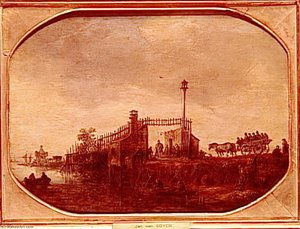
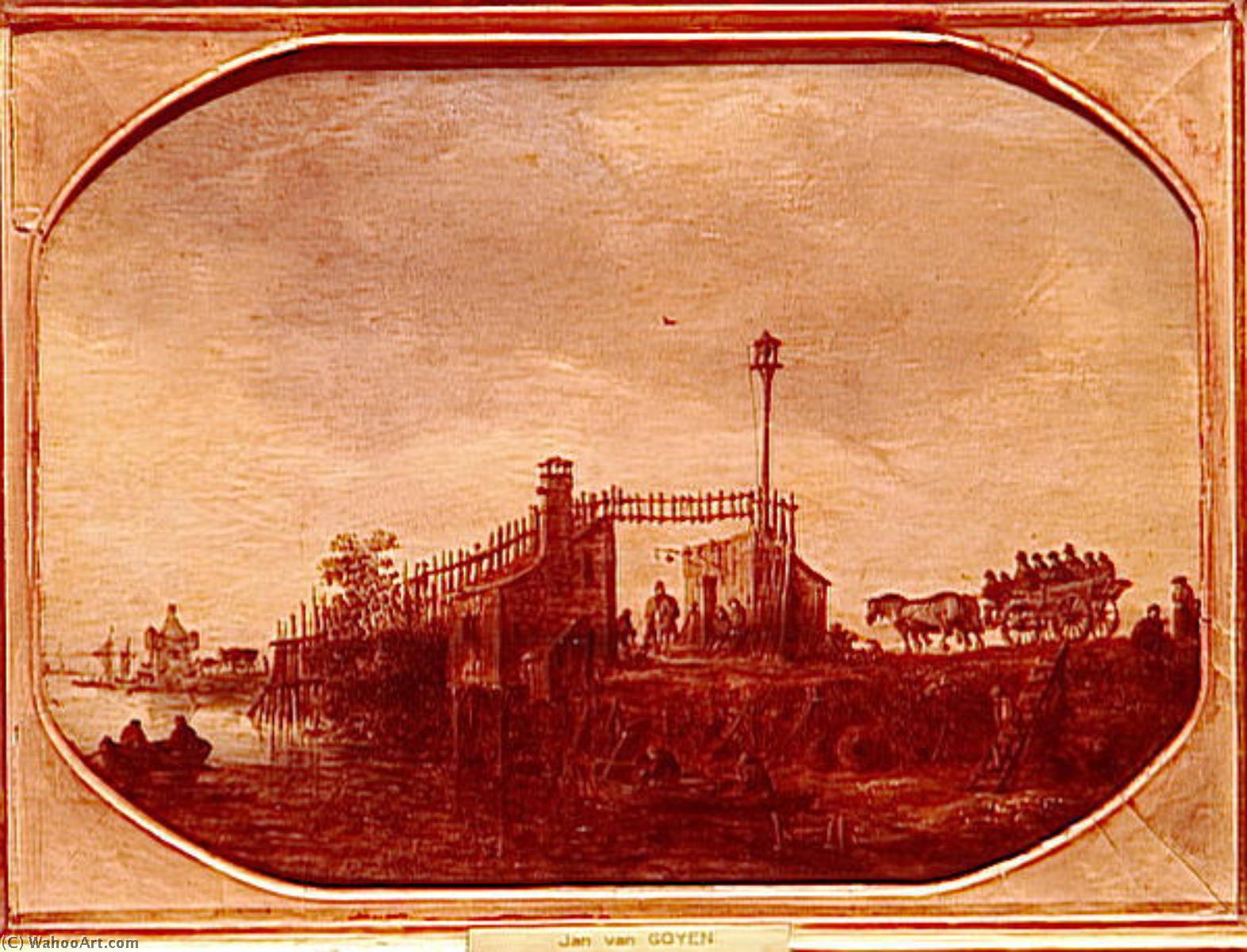
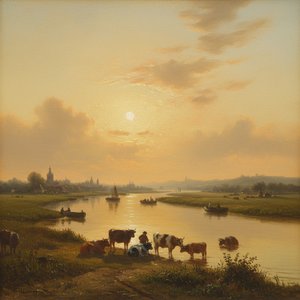
PAYSAGE AVEC CHARRETTE SUR UNE DIGUE


 Read More
Giclée / Art Print
Museum-quality giclée or canvas print with fast production and flexible finish options. ( Buy Hand Made Painting Buy Image)




P118B $10

P118H $10

P118W $10

P438Z $10

P508JH $12

P508YH $12

P805H $10

P805Z $10

P919BZ $10

P919G $10

P919XJ $10

P959ZH $10

P968JZ $12

W106C $8

W218G $10

W218JH $8

W218Y $10

W307PJ $10

W316G $10

W316PJ $8

W316Y $10

W398PJ $8

W4111J $10

W500HY $15

W500JH $15

W692G $12

W849H $8

W940BG $15

W953PJ $8




Pick from our preset sizes that match the artwork's original proportions.

You may enter your own dimensions to fit a specific frame or space. If your selected size does not match the original image's proportions, we will either crop the artwork or extend the image with a mirrored or solid-fill edge. A digital mockup will be sent for your approval before production begins.
Please note that the on-screen preview does not reflect the actual cropping or extension. Only the mockup will accurately show the final composition.
While custom sizes are available, we recommend selecting a dimension from the predefined list to preserve the original proportions.
Worldwide Delivery () in 2 weeks instead of standard 4/5 weeks. (25 August)

Free Worldwide Express Shipping

High-Quality Linen Canvas

Full Shipping Insurance

Customs Tax Refund Guarantee

True Color Matching Guarantee

60-Day Return Policy (Defects Only)

100% Money-Back Guarantee

Bulk Discount Offer
 Glass option is only available in size under 110 CM

PAYSAGE AVEC CHARRETTE SUR UNE DIGUE
Giclée / Art Print
Reproduction Size
-


Total Price
$ 63
Collectible Description
The Quiet Majesty of the Dutch Landscape
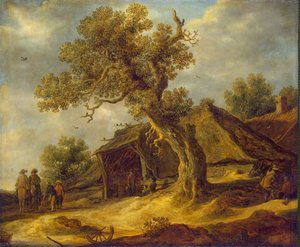
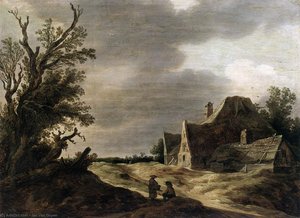
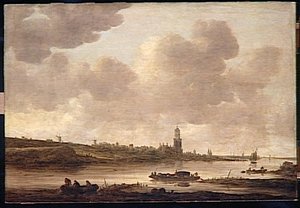
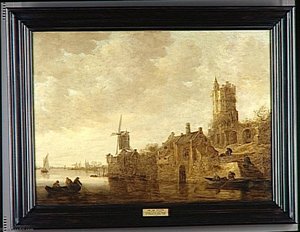
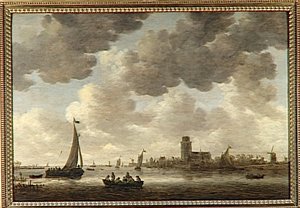
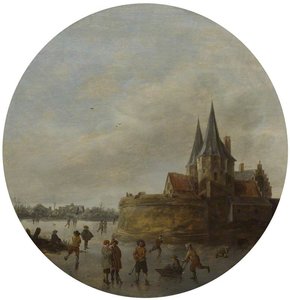
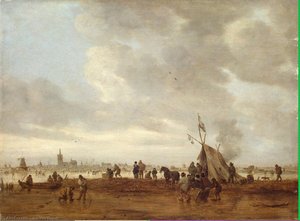
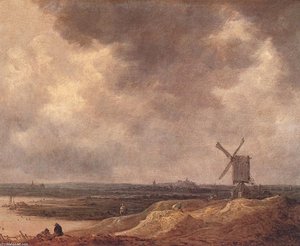
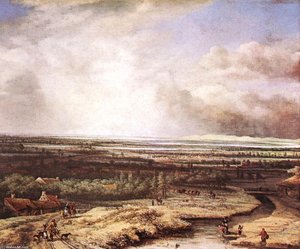
To gaze upon this depiction of a dike scene is to step directly into the hushed, contemplative heart of the Dutch Golden Age. It is not a landscape that shouts its grandeur; rather, it whispers tales of daily life, resilience, and the profound relationship between humanity and the meticulously managed natural world. The composition draws the eye along the sinuous line of the dike, an artery of earth cutting through the water and sky. This sense of horizontal expanse anchors the viewer in a moment of enduring stillness. The muted palette—a sophisticated blend of ochres, earthy browns, and soft, hazy greens—is immediately arresting, suggesting the patina of time itself upon the scene.
Mastery in Tonal Atmosphere
The technical brilliance here lies in its atmospheric handling. The artist, echoing the profound sensibilities of Jan Josephszoon van Goyen, eschews dramatic contrasts for a sublime subtlety. Notice how the background dissolves into a soft, ethereal haze; this is not merely poor visibility, but a deliberate artistic choice—an employment of atmospheric perspective that grants incredible depth to the seemingly flat plane. The light itself feels diffused, as if filtered through an overcast sky or the gentle veil of memory. This technique allows the forms—the distant buildings, the clustered figures near the cart—to emerge softly from the mist, giving weight and importance to every quiet detail without ever resorting to harsh definition.
A Reflection on Everyday Life and Symbolism
The subject matter itself speaks volumes about Dutch realism. The presence of the cart, the scattered figures going about their tasks, grounds the painting in the tangible reality of 17th-century Dutch existence. These are not heroic figures; they are people engaged in the rhythm of agricultural life along vital waterways. Symbolically, the dike itself represents human endeavor—the necessary boundary built by man to tame and coexist with nature's vast power. The overall mood is one of quiet contemplation, a gentle melancholy that speaks to the passage of time while simultaneously celebrating the enduring continuity of community.
Bringing the Dutch Soul Home
For the collector or designer seeking an artwork that elevates a space beyond mere decoration, this piece offers depth and narrative resonance. Reproducing such a work allows one to curate an atmosphere—a sanctuary reminiscent of quiet contemplation. The restrained color scheme ensures it will harmonize beautifully with sophisticated interior palettes, adding an immediate layer of historical gravitas. It is an invitation to pause, to breathe deeply, and to appreciate the enduring beauty found in the understated poetry of everyday life.
Related Artworks


Artist Biography
Jan Josephszoon van Goyen: A Life in Landscape
Early Life and Training
- Born on January 13, 1596, in Leiden, Netherlands, Jan Josephszoon van Goyen emerged as a pivotal figure in Dutch Golden Age painting.
- He initially apprenticed in Leiden before furthering his studies under Esaias van de Velde in Haarlem. This foundational training proved crucial to his artistic development.
Artistic Style and Development
- Van Goyen’s style is immediately recognizable for its simplicity, subtle tonal variations, and use of a limited palette – primarily grays, browns, and greens.
- He moved away from the more colorful and detailed landscapes popular at the time, pioneering a more realistic and atmospheric approach.
- His early works show influence from Van de Velde, but he quickly developed his own distinctive style focusing on capturing the essence of Dutch landscapes.
Prolific Output and Notable Works
- Van Goyen was an incredibly prolific artist, producing an estimated 1,200 paintings and over 1,000 drawings throughout his career.
- Notable works include: River Landscape with Windmill, a quintessential example of his tonal landscapes; and Fishermen by the Lakeshore, showcasing his ability to depict serene waterscapes.
- He frequently painted scenes of rivers, lakes, dunes, and expansive skies, capturing the unique character of the Dutch countryside.
Influences and Legacy
- While influenced by Van de Velde, Van Goyen’s work itself became highly influential.
- He directly impacted artists such as Jan Steen, who was one of his pupils.
- His emphasis on realism and atmospheric effects paved the way for later landscape painters.
Financial Struggles and Later Life
- Despite his artistic success, Van Goyen faced significant financial difficulties throughout his life.
- He engaged in various business ventures, including tulip speculation (during “Tulip Mania”) and real estate investments, but often found himself deeply in debt.
- At the time of his death on April 27, 1656, in The Hague, he was reportedly 18,000 guilders in debt.
Historical Significance
- Van Goyen’s work is considered a cornerstone of Dutch Golden Age painting and a significant contribution to the development of landscape art.
- He captured the spirit of 17th-century Holland, reflecting its growing prosperity and connection to the land.
- His innovative techniques and realistic depictions continue to inspire artists and captivate audiences today.
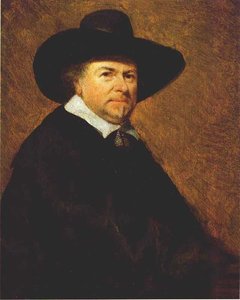
jan josephszoon van goyen
1596 - 1656 , Netherlands
Quick Facts
- Birth Date: January 13, 1596
- Birth Place: Leiden, Netherlands
- Death Date: April 27, 1656
- Influenced: Jan Steen
- Influenced By: Esaias van de Velde
- Movement: Dutch Golden Age painting
- Name: Jan Josephszoon van Goyen
- Nationality: Dutch
- Notable Works:
- River Landscape with Windmill
- Fishermen by the Lakeshore
Related Articles
Jan van Goyen: Master of Dutch Landscape & Atmospheric Perspective
Discover Jan van Goyen, the master of Dutch landscape painting. Explore his subtle technique, atmospheric realism & lasting influence on art history. Learn about this 17th-century pioneer at ArtsDot.

Dutch Masters: 10 Golden Age Paintings That Still Inspire |
Journey into the Dutch Golden Age! Explore 10 iconic paintings by Rembrandt, Vermeer & Hals. Discover the stories behind these Baroque masterpieces and find museum-quality art reproductions to elevate your home decor on .
Golden Light & Dutch Skies: Bringing the Magic of Dutch Golden Age Landscapes into Your Home
Transform your home with the breathtaking light of Dutch Golden Age landscapes. Discover how hand-painted oil reproductions of masterworks like Ruisdael and Vermeer bring timeless elegance, atmosphere, and soulful texture to modern interiors. Elevate your space with museum-quality art.

Rembrandt's Masterpieces: Explore 25 Iconic Paintings & Prints | ArtsDot
Journey through Rembrandt van Rijn's 25 most iconic paintings & etchings. Explore Dutch Golden Age masterpieces, dramatic chiaroscuro, and timeless portraits. Find museum-quality art reproductions to elevate your home decor on ArtsDot.com.
Aelbert Cuyp: Illuminating the Dutch Golden Age with Light & Landscape
Explore the luminous landscapes of Aelbert Cuyp, a master of the Dutch Golden Age. Discover his unique light, serene riverside scenes & lasting influence on art history. Learn more at ArtsDot.