 Preview
 Send
Send Share
Share
 Details

 Download
 Similars
 X-Ray
X-Ray Diaporama
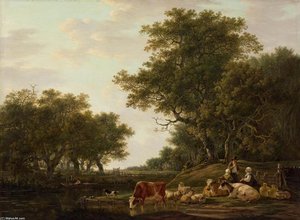
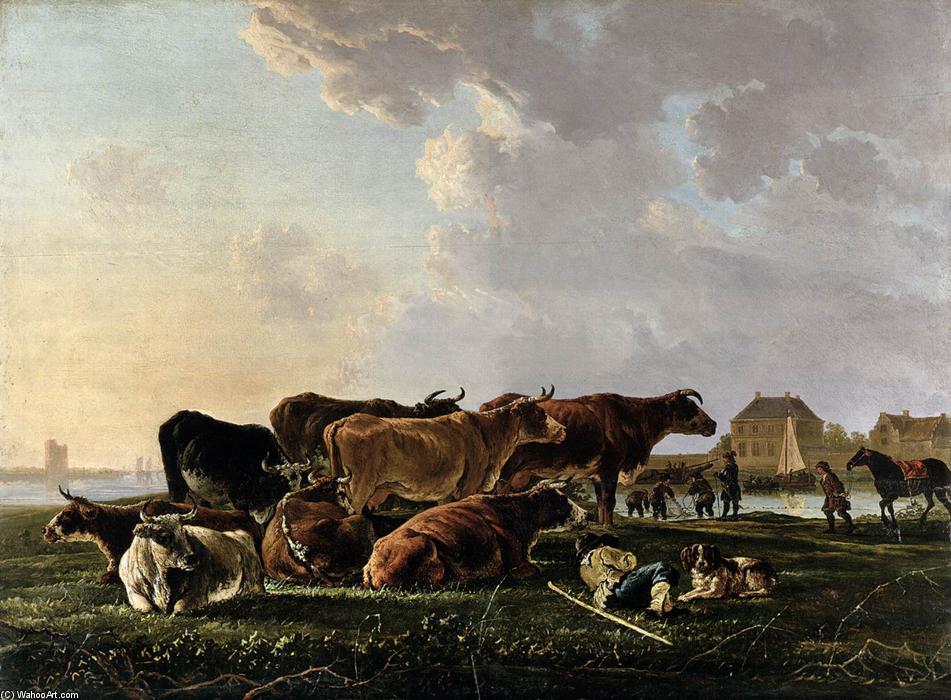
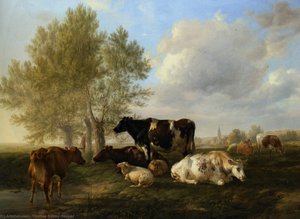
Landscape with Cattle
 Oil On Canvas
- WallArt
- Dutch Golden Age Landscape
 19th Century
 80.0 x 107.0 cm
 Metropolitan Museum of Art
 Read More
Hand Made Oil Reproduction
Hand-painted oil on canvas in your size and frame, made to order by our artists. ( Buy Print Buy Image)




P118B $10

P118H $10

P118W $10

P438Z $10

P508JH $12

P508YH $12

P805H $10

P805Z $10

P919BZ $10

P919G $10

P919XJ $10

P959ZH $10

P968JZ $12

W106C $8

W218G $10

W218JH $8

W218Y $10

W307PJ $10

W316G $10

W316PJ $8

W316Y $10

W398PJ $8

W4111J $10

W500HY $15

W500JH $15

W692G $12

W849H $8

W940BG $15

W953PJ $8




Pick from our preset sizes that match the artwork's original proportions.

You may enter your own dimensions to fit a specific frame or space. If your selected size does not match the original image's proportions, we will either crop the artwork or extend the painting with additional hand-painted elements. A digital mockup will be sent for your approval before production begins.
Please note that the on-screen preview does not reflect the actual cropping or extension. Only the mockup will accurately show the final composition.
While custom sizes are available, we recommend selecting a dimension from the predefined list to preserve the original proportions.
After order, ArtsDot.com team will email client for instructions and provide a mockup preview
Worldwide Delivery () in 3/4 weeks instead of standard 5 weeks. (16 August). No compromise on quality.

Free Worldwide Express Shipping

High-Quality Linen Canvas

Full Shipping Insurance

Customs Tax Refund Guarantee

True Color Matching Guarantee

60-Day Return Policy (Defects Only)

100% Money-Back Guarantee

Bulk Discount Offer
 Glass option is only available in size under 110 CM

Landscape with Cattle
Reproduction Medium
Reproduction Size
-


Total Price
$ 263
Artwork Description
Landscape with Cattle by Jacob van Strij
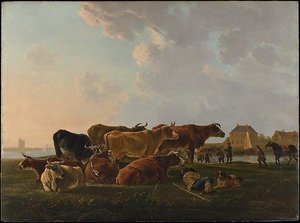
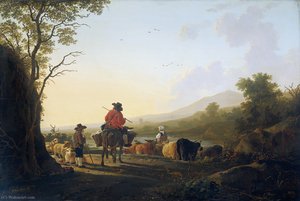
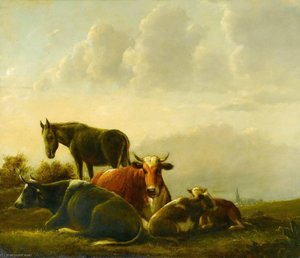
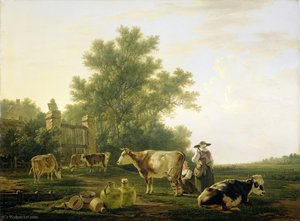
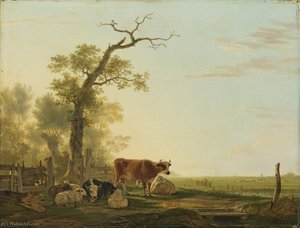
Jacob van Strij’s “Landscape with Cattle” stands as a quintessential example of Dutch Golden Age landscape painting, embodying the serene beauty and meticulous observation characteristic of this artistic period. Executed in 1785 – 1800, this oil on canvas measuring 80 x 107 cm captures a tranquil rural scene that transcends mere depiction; it’s an invitation to contemplate the harmony between humanity and nature.
Initially dismissed as a Cuyp attribution due to a misleading inscription on the lower right corner—a common occurrence during the time—scholarly research has definitively established Strij's authorship. Comparisons with signed works by Cuyp revealed subtle stylistic differences, bolstering the conviction that this painting represents an independent artistic endeavor.
Style and Technique: Echoes of Baroque Grandeur
Strij’s approach aligns closely with the Baroque tradition yet subtly diverges from its theatrical exuberance. Like many artists of his era, he drew inspiration from the monumental landscapes of Rembrandt and Cuyp, prioritizing atmospheric perspective and tonal modulation to convey depth and realism. However, Strij eschews the dramatic contrasts favored by Cuyp, opting for softer lighting that illuminates the scene with a diffused glow—a technique particularly adept at capturing the ethereal quality of winter mornings.
The artist’s meticulous attention to detail is evident in every brushstroke. The textured surface of the canvas reflects the materiality of the pigments themselves, demonstrating Strij's mastery of oil paint and his ability to render natural forms with remarkable accuracy. Particularly noteworthy are the depictions of the cattle—their fur meticulously brushed to convey a palpable sense of warmth and vitality—and the reflections shimmering on the river’s surface.
Historical Context: A Moment Frozen in Time
"Landscape with Cattle" reflects the broader cultural landscape of the Dutch Republic during the Enlightenment. The painting speaks to an idealized vision of rural life, mirroring the philosophical preoccupation with simplicity and contemplation prevalent at the time. Furthermore, it embodies the fascination for scientific observation—a hallmark of the era—as evidenced by the artist’s careful rendering of geological formations and plant species.
The inclusion of a village nestled along the riverbank adds another layer of significance to the composition. This depiction harkens back to earlier Baroque landscapes that celebrated the grandeur of aristocratic estates, subtly reminding viewers of the social hierarchy inherent in Dutch society. Yet, unlike those monumental works, “Landscape with Cattle” prioritizes intimacy and immediacy—a deliberate choice that underscores Strij’s artistic sensibility.
Symbolism and Emotional Impact
Beyond its aesthetic merits, "Landscape with Cattle" resonates on an emotional level. The tranquil atmosphere conveyed by the painting evokes feelings of peace and contentment—a balm for the anxieties of urban life during the Enlightenment. The presence of livestock symbolizes fertility and prosperity, reinforcing the pastoral ethos that underpinned Dutch artistic culture.
Ultimately, Jacob van Strij’s “Landscape with Cattle” remains a testament to the enduring power of landscape art to inspire contemplation and capture the sublime beauty of the natural world. Its meticulous execution and harmonious composition solidify its place as one of the most celebrated achievements of Dutch Golden Age painting.
Related Artworks
Artist Biography
The Master of Winter’s Embrace: The Life and Legacy of Jacob van Strij
In the quiet, frost-touched landscapes of the late eighteenth century, few artists captured the ephemeral beauty of the Dutch seasonal cycle as poignantly as Jacob van Strij. Born in the historic city of Dordrecht on October 2, 1756, Van Strij was a painter whose soul seemed inextricably linked to the atmospheric shifts of the Netherlands. He emerged from a lineage of artistic devotion, the son of Leendert van Strij, a respected painter and draftsman who provided his early education. This familial foundation, combined with the presence of his brother Abraham—a founding member of the prestigious Pictura Dordrecht drawing society—ensured that Jacob’s upbringing was steeped in the rigorous traditions of Dutch visual artistry.
His journey toward artistic maturity took him beyond the borders of his homeland to the vibrant academic atmosphere of Antwerp. Between 1774 and 1776, Van Strij attended the classes of Andries Cornelis Lens at the Academy of Fine Arts. It was during this formative period that his technical prowess began to coalesce with a profound sensitivity to light. Under the guidance of such mentors, he mastered the classical principles of composition and the delicate interplay of shadow, skills that would later allow him to breathe life into the frozen rivers and misty pastures that became his hallmark.
A Vision Rooted in the Golden Age
While Van Strij lived and worked during the transition from the late Baroque to the early Rococo era, his artistic heart remained anchored in the reverence of the Dutch Golden Age. He looked backward to the masters of the seventeenth century to find a way forward, drawing immense inspiration from the atmospheric perspective of Aelbert Cuyp and the dramatic chiaroscibility of Rembrandt van Rijn. This connection to the past is evident in his ability to manipulate light, using it not merely as an illumination of form, but as a vessel for emotion and seasonal mood.
His oeuvre is characterized by a remarkable versatility in subject matter, though he is most celebrated for specific genres that evoke a sense of timeless tranquility:
- Winter Landscapes: Perhaps his most enduring contribution, these works capture the stillness of a world blanketed in snow, where the biting cold is softened by the warmth of subtle, glowing light.
- Marine Paintings: Demonstrating a keen eye for the maritime heritage of the Netherlands, he rendered the movement of water and the majesty of vessels with great precision.
- Pastoral Scenes: His depictions of cattle, shepherds, and rural life reflect a deep respect for the rhythms of nature and the quiet dignity of the countryside.
Artistic Achievement and Historical Significance
Beyond his technical skill as a painter, printmaker, and draftsman, Jacob van Strij was regarded by his contemporaries as a man of great intellect and culture. He was a well-read individual who contributed to the intellectual life of Dordrecht, delivering lectures at the Teekengenootschap Pictura on the complexities of mythology and the enduring brilliance of the Old Masters. This duality—the meticulous observer of nature and the scholarly custodian of art history—allowed him to create works that were both visually captivating and intellectually grounded.
Though his life ended in 1815, Van Strij’s influence persists through the many collections that house his treasures, from the Dordrechts Museum to the Smithsonian American Art Museum. His ability to transform a simple landscape into a profound meditation on light and season ensures his place in the canon of Dutch art. He did not merely paint what he saw; he painted the feeling of the wind, the weight of the snow, and the enduring peace of the Dutch landscape, leaving behind a legacy that continues to evoke a sense of wonder in all who behold it.
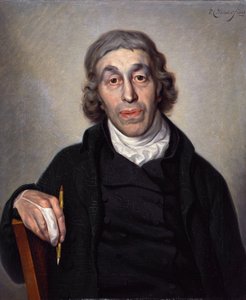
jacob van strij dordrecht
1756 - 1815 , Netherlands
Quick Facts
- Artistic Movement Or Style: Dutch Golden Age Landscape Painting
- Artists Or Movements Influenced By This Artist: ['17th-century landscape painters']
- Artists Who Influenced This Artist: ['Albert Cuyp']
- Date Of Birth: October 2, 1756
- Date Of Death: February 4, 1815
- Full Name: Jacob van Strij
- Nationality: Dutch
- Notable Artworks:
- Landscape with a Shepherd
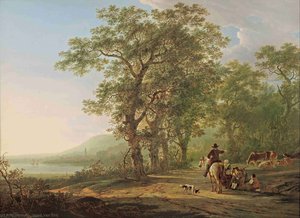
- Figures in a forest landscape
- Two Boeiers and a Cat under Sail
- Place Of Birth: Dordrecht, Netherlands
Related Articles
Van Gogh's Masterpieces: Explore 25 Iconic Paintings & Art for Your Home
Journey through Vincent van Gogh's 25 most iconic paintings! Explore 'Starry Night', 'Sunflowers,' and more—discover the stories, techniques & emotions behind these Post-Impressionist masterpieces. Find museum-quality art reproductions for your home at ArtsDot.com.

Dutch Masters: 10 Golden Age Paintings That Still Inspire |
Journey into the Dutch Golden Age! Explore 10 iconic paintings by Rembrandt, Vermeer & Hals. Discover the stories behind these Baroque masterpieces and find museum-quality art reproductions to elevate your home decor on .

Rembrandt's Masterpieces: Explore 25 Iconic Paintings & Prints | ArtsDot
Journey through Rembrandt van Rijn's 25 most iconic paintings & etchings. Explore Dutch Golden Age masterpieces, dramatic chiaroscuro, and timeless portraits. Find museum-quality art reproductions to elevate your home decor on ArtsDot.com.
Charles Leickert: Capturing the Dutch Golden Age Light – A Comprehensive Study of Technique, Context, and Legacy
Explore the captivating winter landscapes of Charles Leickert, a master of Dutch Golden Age light & atmosphere. Discover his techniques, symbolism, and lasting legacy – a comprehensive study for art enthusiasts and collectors.

Golden Age Reflections: Dutch Baroque Painting & Cultural Innovation
Explore the Dutch Golden Age of painting! Discover key artists like Vermeer & ter Borch, their innovative techniques, and the rich cultural context behind these Baroque masterpieces. Learn about collecting & appreciating this iconic art period.