

![The Battle Of Grunwald [tannenberg] — Jan Matejko](/media/artworks/images/full/4c/17/4c1769693cff4275bcc0f4aa121d78ba.Jpg)
 Preview
 Send
Send Share
Share
 Details

 Download
 Similars
 X-Ray
X-Ray Diaporama
The Battle of Grunwald [Tannenberg]
 Acrylic
- WallArt
- Romantic Historical Painting
 987.0 x 426.0 cm
 Warsaw National Museum
 Read More
Purchase a high-resolution, enhanced digital image, far superior to the online preview.
Each file is meticulously prepared by our in-house specialists using advanced tools and expert manual retouching. We ensure every image has exceptional clarity, precise color accuracy, and fine detail.
The final file is delivered via email within 72 hours, optimized for immediate use in professional, editorial, and print environments. This is the same quality trusted by top-tier design studios, publishers, and galleries.
Digital Image
Download a high-resolution file for personal display, printing, and creative projects. ( Buy Print Buy Hand Made Painting)
Included in Every Digital Image Order
Expert Digital Delivery, Guaranteed
When you choose ArtsDot.com, you're not just getting an image - you're receiving a professionally enhanced digital artwork, crafted with precision and backed by a satisfaction guarantee. Here's everything that comes with your order, automatically:

Fast Email Delivery
Your high-resolution digital image file will be emailed to you within 72 hours of ordering - ready for immediate use.

AI-Enhanced Digital File
Your artwork is professionally optimized using advanced AI tools and manual editing, ensuring maximum detail, clarity, and color accuracy.

Free Lifetime Re-Delivery
Accidentally deleted or lost your file? No worries - we'll resend it to you anytime, free of charge.

No Import Fees - Ever
Enjoy your artwork instantly with zero customs, duties, or delivery fees - digital downloads are always tax-free.

Color Accuracy Guarantee
We ensure your digital image reflects the original colors as closely as possible using professional tools and color management.

60-Day Satisfaction Guarantee
If you're not satisfied with your digital image, we'll revise it or refund 100% within 60 days - no questions asked.

100% Money-Back Guarantee
Not satisfied? Get a full refund within 60 days of receiving your digital file - no questions asked.

Bulk Order Discounts
Buy 3 images, save 10% - Buy 5, save 15% - Buy 10+, save 20%. Great for creative projects, galleries, and agencies.
Collectible Description
A Monumental Vision of Polish Triumph
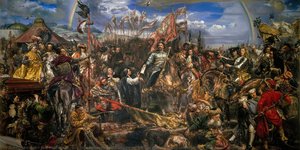
The Battle of Grunwald, painted by Jan Matejko in 1893, stands as arguably the most iconic depiction of Poland’s resurgence from obscurity—a testament to national pride and artistic ambition. Measuring an impressive 987 x 426 cm, this monumental canvas dominates the National Museum's collection and continues to captivate audiences with its visceral portrayal of a decisive victory against Teutonic aggression. More than just a historical record, Matejko’s masterpiece operates on multiple levels, weaving together narrative drama, symbolic representation, and masterful artistic technique.Historical Context: The Crusade Against Poland
The Battle of Grunwald (also known as Tannenberg) occurred in July 1410, marking the culmination of a protracted conflict between Poland and Prussia—the Teutonic Order. Driven by religious fervor and imperial ambition, the Order sought to subjugate Polish lands and dismantle the burgeoning Polish-Lithuanian Commonwealth. The victory at Grunwald represented not merely military triumph but also a reaffirmation of Poland’s spiritual fortitude and its ability to defend its sovereignty against formidable foes. Matejko consciously positioned his painting within this context, aiming to inspire confidence in Poland's future after decades of partition—a deliberate act of patriotic symbolism.Style and Technique: Academic Romanticism Elevated
Matejko adhered to the tenets of Academic Romanticism, a style characterized by grand scale, dramatic lighting, and meticulous detail. However, unlike many contemporaries, Matejko eschewed mere imitation; he infused his work with an emotional intensity that surpassed conventional artistic conventions. The artist employed oil paint on canvas—a technique demanding considerable skill and patience—to achieve unparalleled luminosity and textural richness. He meticulously researched historical accounts and consulted heraldic manuscripts to ensure accuracy in depicting costumes, weaponry, and architectural elements. The resulting image is replete with dynamic movement and palpable emotion, capturing the frenzied energy of battle with remarkable fidelity.Symbolism: Weapons of Faith and Divine Providence
The painting’s symbolism is layered and profound. Dominating the composition are two figures—Grand Master Ulrich von Jungingen and Lithuanian Grand Duke Witold—representing opposing forces locked in mortal combat. The spear aimed at Jungingen embodies the unwavering faith of Poland, symbolized by Saint Maurice's insignia presented to Boleslaus I the Brave during the Congress of Gniezno. This gesture underscores the importance of religious conviction in safeguarding national identity. Furthermore, Matejko’s masterful use of chiaroscuro—the dramatic interplay of light and shadow—heightens the emotional impact of the scene, conveying both terror and triumph with breathtaking precision. The densely packed composition draws viewers into the heart of the battlefield tumult, mirroring the artist's intention to evoke a sense of immediacy and visceral experience.Emotional Impact: A Legacy of Resilience
Ultimately, “The Battle of Grunwald” transcends its historical subject matter; it speaks to the enduring spirit of Poland—its capacity for courage, determination, and unwavering belief in its own destiny. Matejko’s depiction of human emotion—ranging from despair to exhilaration—resonates powerfully with viewers today, reminding us of the transformative power of art to inspire patriotism and celebrate national heritage. It remains a cornerstone of Polish artistic identity and continues to serve as an emblem of Poland's triumphant past and hopeful future.Related Artworks
Artist Biography
early life and education
jan alojzy matejko, a renowned polish painter, was born on june 24, 1838, in kraków, poland. his father, franciszek ksawery matejko, was a czech-born tutor and music teacher. jan's early life was marked by the kraków revolution of 1846 and the 1848 siege of kraków by the austrians, events that would later influence his artistic themes. matejko attended st. ann's high school but dropped out in 1851 due to poor grades. however, he showed exceptional talent for art from an early age. he studied at the school of fine arts in kraków from 1852 to 1858, specializing in historical painting under the tutelage of wojciech korneli stattler and władysław łuszczkiewicz.artistic career
matejko's first major work, tsars shuyski before zygmunt iii, was completed in 1853. he began exhibiting his historical paintings at the kraków society of friends of fine arts in 1855. notable works include:- rejtan (1866): a large oil on canvas painting depicting a pivotal moment in polish history.
- union of lublin (1869): a significant piece showcasing matejko's skill in capturing historical events.
- battle of grunwald (1878): a masterpiece that highlights his ability to convey the intensity of battle scenes.
museological contributions and legacy
matejko spent most of his life in kraków, eventually becoming a director at the jan matejko academy of fine arts, formerly known as the kraków academy of fine arts. his students included prominent painters such as maurycy gottlieb, jacek malczewski, józef mehoffer, and stanisław wyspiański. notable works available on ArtsDot:- jan matejko: varna (romanticism)
- jan matejko: still life (romanticism)
- jan matejko: the union of lublin (298 x 512 cm, romanticism, oil on canvas)
references:
discovering the masterpieces of muzeum narodowe krakow, poland (wikipedia.org)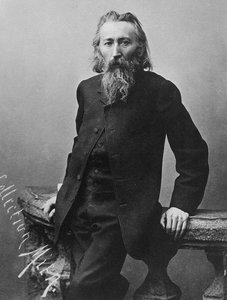
Jan Matejko
1838 - 1893 , Poland
Quick Facts
- Artistic Movement Or Style: Romanticism
- Artists Or Movements Influenced By This Artist: ['Maurycy Gottlieb']
- Artists Who Influenced This Artist:
- Wojciech Korneli Stattler
- Władysław Łuszczkiewicz
- Date Of Birth: June 24, 1838
- Date Of Death: November 1, 1893
- Full Name: Jan Alojzy Matejko
- Nationality: Polish
- Notable Artworks:
- Battle of Grunwald
- Union of Lublin
- Place Of Birth: Kraków, Poland

