

 Preview
 Send
Send Share
Share
 Details

 Download
 Similars
 X-Ray
X-Ray Diaporama
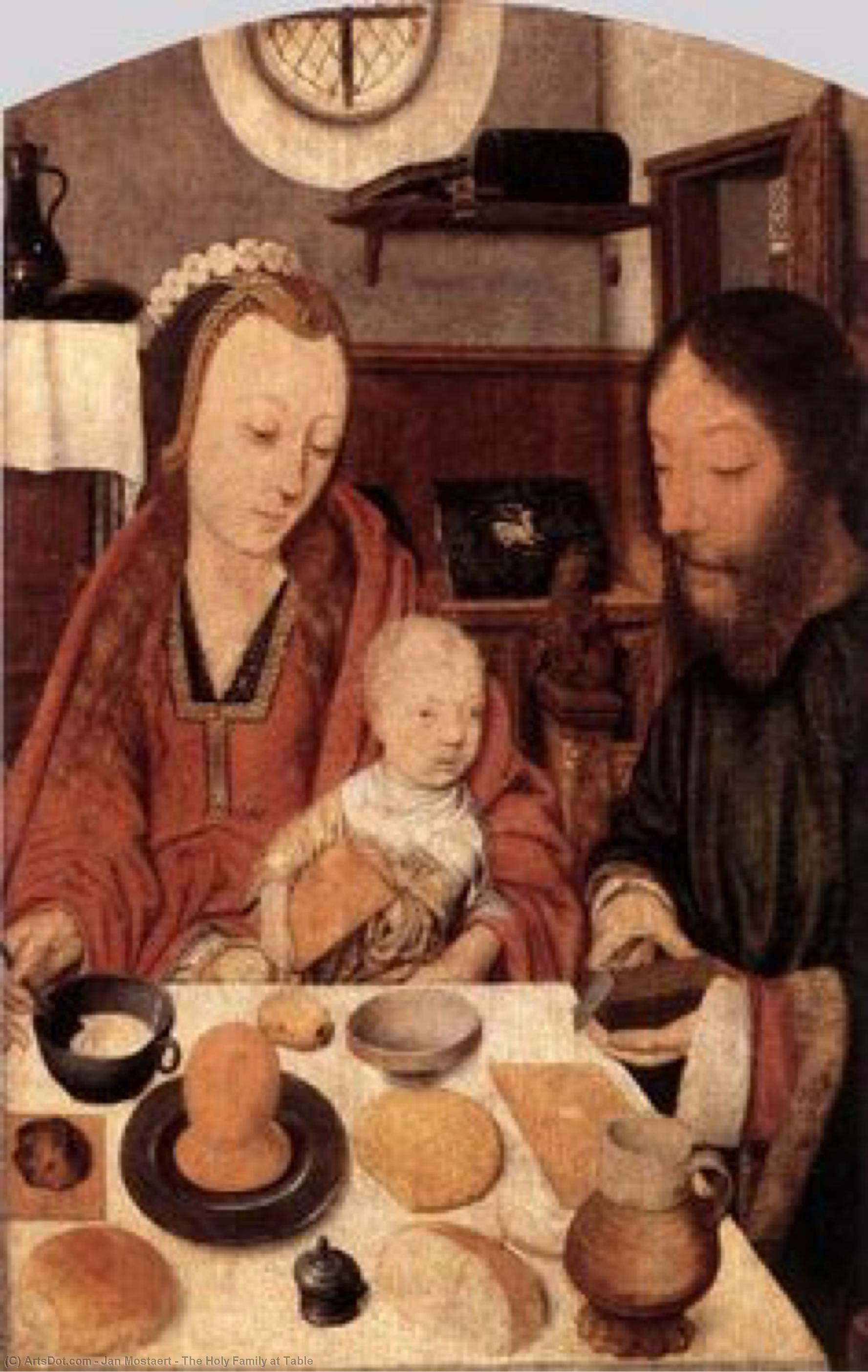
The Holy Family at Table
 Oil On Canvas
- WallArt
- Renaissance Transition
 1495
1495 37.0 x 23.0 cm
 Wallraf-Richartz-Museum
 Read More
Purchase a high-resolution, enhanced digital image, far superior to the online preview.
Each file is meticulously prepared by our in-house specialists using advanced tools and expert manual retouching. We ensure every image has exceptional clarity, precise color accuracy, and fine detail.
The final file is delivered via email within 72 hours, optimized for immediate use in professional, editorial, and print environments. This is the same quality trusted by top-tier design studios, publishers, and galleries.
Digital Image
Download a high-resolution file for personal display, printing, and creative projects. ( Buy Print Buy Hand Made Painting)
Included in Every Digital Image Order
Expert Digital Delivery, Guaranteed
When you choose ArtsDot.com, you're not just getting an image - you're receiving a professionally enhanced digital artwork, crafted with precision and backed by a satisfaction guarantee. Here's everything that comes with your order, automatically:

Fast Email Delivery
Your high-resolution digital image file will be emailed to you within 72 hours of ordering - ready for immediate use.

AI-Enhanced Digital File
Your artwork is professionally optimized using advanced AI tools and manual editing, ensuring maximum detail, clarity, and color accuracy.

Free Lifetime Re-Delivery
Accidentally deleted or lost your file? No worries - we'll resend it to you anytime, free of charge.

No Import Fees - Ever
Enjoy your artwork instantly with zero customs, duties, or delivery fees - digital downloads are always tax-free.

Color Accuracy Guarantee
We ensure your digital image reflects the original colors as closely as possible using professional tools and color management.

60-Day Satisfaction Guarantee
If you're not satisfied with your digital image, we'll revise it or refund 100% within 60 days - no questions asked.

100% Money-Back Guarantee
Not satisfied? Get a full refund within 60 days of receiving your digital file - no questions asked.

Bulk Order Discounts
Buy 3 images, save 10% - Buy 5, save 15% - Buy 10+, save 20%. Great for creative projects, galleries, and agencies.
Collectible Description
A Moment of Domestic Grace: Jan Mostaert’s “The Holy Family at Table”
Jan Mostaert's "The Holy Family at Table," painted around 1495-1500, isn’t merely a depiction of a biblical scene; it’s a carefully constructed tableau of domestic tranquility and spiritual resonance. This oil on panel painting, now residing in the Wallraf-Richartz Museum in Cologne, offers a rare glimpse into the heart of Renaissance family life – a world where faith and everyday existence intertwined seamlessly. Mostaert, a pivotal figure bridging the late medieval and early Renaissance artistic landscapes of the Netherlands, masterfully captures a scene both familiar and profoundly moving.
The composition immediately draws the eye to the central figures: Mary, Joseph, and the infant Jesus seated around a richly appointed table. The arrangement isn’t haphazard; it's deliberately balanced, radiating warmth and intimacy. Mary, rendered with a gentle dignity, gestures towards her son, while Joseph observes him with quiet affection. The inclusion of a dog nestled at their feet adds an element of domesticity, grounding the scene in the realities of family life – a subtle yet powerful reminder that even within the sacred narrative, the ordinary holds significance.
Renaissance Realism and Northern Detail
Mostaert’s style is characterized by a remarkable synthesis of influences. He inherited the meticulous detail and rich color palettes of his Haarlem predecessors, particularly Geertgen tot Sint Jans, while simultaneously embracing the burgeoning Renaissance interest in naturalism and perspective. Notice how he skillfully renders the textures of the fabrics – the folds of Mary's robe, the rough-hewn wooden table, the delicate sheen of the fruit – each element imbued with a tactile quality that invites the viewer to step into the scene. The use of oil paint allowed for subtle gradations of color and depth, something largely absent in earlier tempera techniques.
However, Mostaert’s work retains a distinctly Northern European sensibility. The lighting is diffused and atmospheric, creating a soft, almost dreamlike quality. There's a deliberate avoidance of dramatic contrasts; instead, he favors a harmonious blend of light and shadow that enhances the painting’s overall sense of serenity. The figures themselves are not idealized in the manner of Italian Renaissance portraits – they possess a certain earthiness, a palpable humanity that reflects the artist’s engagement with his local community.
Symbolism and Spiritual Resonance
Beyond its immediate visual appeal, “The Holy Family at Table” is rich in symbolic meaning. The table itself represents hospitality, nourishment, and the foundation of family life – a microcosm of God's own provision for humanity. The presence of bread and wine, symbols of the Eucharist, subtly reinforces the religious context of the scene. The dog, often associated with loyalty and fidelity, further underscores the themes of devotion and familial bonds.
Furthermore, the painting’s placement within the broader context of Renaissance art reveals a deeper spiritual purpose. During this period, artists increasingly sought to depict biblical narratives in ways that resonated with contemporary audiences – not as distant theological abstractions, but as relatable human experiences. Mostaert's work exemplifies this trend, offering viewers a poignant meditation on family, faith, and the enduring power of love.
A Timeless Masterpiece: Reproduction Possibilities
Reproductions of “The Holy Family at Table” offer an exceptional opportunity to bring this captivating artwork into your home or office. High-quality prints capture the painting’s nuanced details and atmospheric quality, allowing you to appreciate Mostaert's artistry from a new perspective. Consider framing options that complement the painting’s rich palette and evoke a sense of timeless elegance. This piece is more than just decoration; it’s an invitation to contemplate the beauty and grace of the human spirit.
Related Artworks
Artist Biography
A Dutch Master of Renaissance Transition
Jan Mostaert, a name resonating softly through the annals of 16th-century Dutch art, occupies a fascinating position as a bridge between the late medieval traditions and the burgeoning innovations of the Renaissance. Born around 1475 in Haarlem – though precise details remain elusive – he emerged during a period of significant artistic ferment within the Netherlands. While biographical accounts are often colored by the recollections of Karel van Mander, a later art historian whose reliability is debated, Mostaert’s impact on portraiture and religious painting is undeniable. He wasn't merely replicating existing styles; he was synthesizing them, absorbing influences from earlier Haarlem masters like Geertgen tot Sint Jans while simultaneously responding to the evolving tastes of his patrons, including Margaret of Austria, governor of the Habsburg Netherlands. His career unfolded against a backdrop of political and religious upheaval, yet he managed to establish himself as a respected figure within the Guild of St. Luke in Haarlem, serving multiple terms as deacon and demonstrating a consistent involvement in the artistic community.Early Training and Artistic Development
The formative years of Jan Mostaert’s artistic journey are somewhat shrouded in mystery. Karel van Mander suggests an apprenticeship under Jacob van Haarlem, potentially linking him to the anonymous Master of the Brunswick Diptych – a connection that would explain certain stylistic affinities evident in his early works. This initial training likely instilled within him a meticulous attention to detail and a reverence for traditional religious iconography. However, Mostaert wasn’t content with mere imitation. He possessed an innate ability to infuse his paintings with a quiet emotional depth, drawing inspiration from the refined style of Geertgen tot Sint Jans. This early influence is visible in the delicate rendering of figures and the thoughtful compositions that characterize his initial religious pieces. Around 1510-1516, a noticeable shift occurred within his artistic approach. His figures became more graceful, inhabiting landscapes bathed in brighter light, hinting at an increasing awareness of Italian Renaissance principles filtering into Northern European art. This period saw him developing a unique style, blending the meticulous detail of Netherlandish painting with a newfound sense of spatial depth and atmospheric perspective.Patronage and Courtly Commissions
A pivotal moment in Mostaert’s career arrived in 1518 with his appointment as “peintre d’honneur” (painter of honor) by Margaret of Austria. While the exact nature of his service at her court remains a subject of scholarly debate, it is clear that this association elevated his status and provided access to a more sophisticated clientele. He was tasked with producing both portraits and devotional images for Margaret and other members of the Dutch nobility, demonstrating an ability to capture not only physical likeness but also aristocratic bearing and social standing. Mostaert became adept at reproducing existing portraits based on models, skillfully adding touches that conveyed prestige and refinement – a testament to his understanding of courtly expectations. This patronage allowed him financial stability and artistic freedom, enabling him to explore new techniques and experiment with different subject matter. His involvement in guild affairs continued alongside these prestigious commissions, solidifying his position as a leading artist within Haarlem’s vibrant art scene.Landscapes, Portraits, and Lasting Legacy
Jan Mostaert's artistic output was remarkably diverse, encompassing religious scenes, portraits, and – perhaps most notably – innovative landscapes. His *Adoration of the Magi* exemplifies his refined brushwork and evolving landscape style, showcasing a delicate balance between detailed figures and expansive backgrounds. However, it is his *West Indies Landscape*, though unfinished according to Karel van Mander, that truly sets him apart. This ambitious work, depicting an exotic and imagined New World setting, reveals a fascination with exploration and the unknown – a reflection of the era’s burgeoning global consciousness. His portraits, often three-quarter length compositions featuring sitters posed elegantly on cushions, demonstrate his mastery of capturing both physical resemblance and psychological depth. The influence of Joachim Patinir's panoramic landscapes became increasingly apparent in works like *St. Christopher*, blurring the lines between traditional religious iconography and a more modern interest in naturalistic representation. Tragically, much of Mostaert’s oeuvre was lost during the Great Fire of Haarlem in 1576, and subsequent reattributions have further diminished the number of securely attributed works. Despite these losses, Jan Mostaert remains a significant figure in Dutch Renaissance art – a skilled craftsman whose paintings offer invaluable insights into the artistic currents and cultural sensibilities of his time. He stands as a testament to the enduring power of artistic innovation within a period of profound transformation.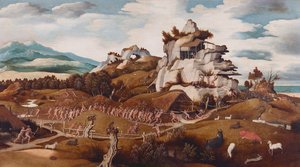
Jan Mostaert
1475 - 1555 , Spain
Quick Facts
- Artistic Movement Or Style: Dutch Renaissance
- Artists Who Influenced This Artist:
- Geertgen tot Sint Jans
- Joachim Patinir
- Date Of Birth: c. 1475
- Date Of Death: c. 1553/1555
- Full Name: Jan Mostaert
- Nationality: Dutch
- Notable Artworks:
- West Indies Landscape
- Adoration of the Magi
- St. Christopher
- Portrait of A. Coulster
- Place Of Birth: Haarlem, Netherlands

