 Preview
 Send
Send Share
Share
 Details

 Download
 Similars
 X-Ray
X-Ray Diaporama
Still-Life
 1660
1660 46.0 x 66.0 cm
 Read More
Giclée / Art Print
Museum-quality giclée or canvas print with fast production and flexible finish options. ( Buy Hand Made Painting Buy Image)




































Pick from our preset sizes that match the artwork's original proportions.

You may enter your own dimensions to fit a specific frame or space. If your selected size does not match the original image's proportions, we will either crop the artwork or extend the image with a mirrored or solid-fill edge. A digital mockup will be sent for your approval before production begins.
Please note that the on-screen preview does not reflect the actual cropping or extension. Only the mockup will accurately show the final composition.
While custom sizes are available, we recommend selecting a dimension from the predefined list to preserve the original proportions.
Worldwide Delivery () in 2 weeks instead of standard 4/5 weeks. (23 August)

Free Worldwide Express Shipping

High-Quality Linen Canvas

Full Shipping Insurance

Customs Tax Refund Guarantee

True Color Matching Guarantee

60-Day Return Policy (Defects Only)

100% Money-Back Guarantee

Bulk Discount Offer
 Glass option is only available in size under 110 CM

Still-Life
Giclée / Art Print
Reproduction Size
-


Total Price
$ 63
Collectible Description
The Painting: A Symphony of Colors and Textures
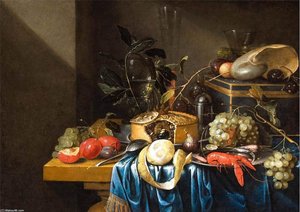
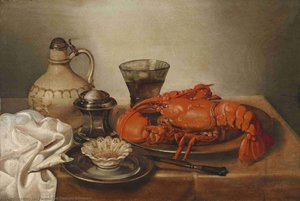
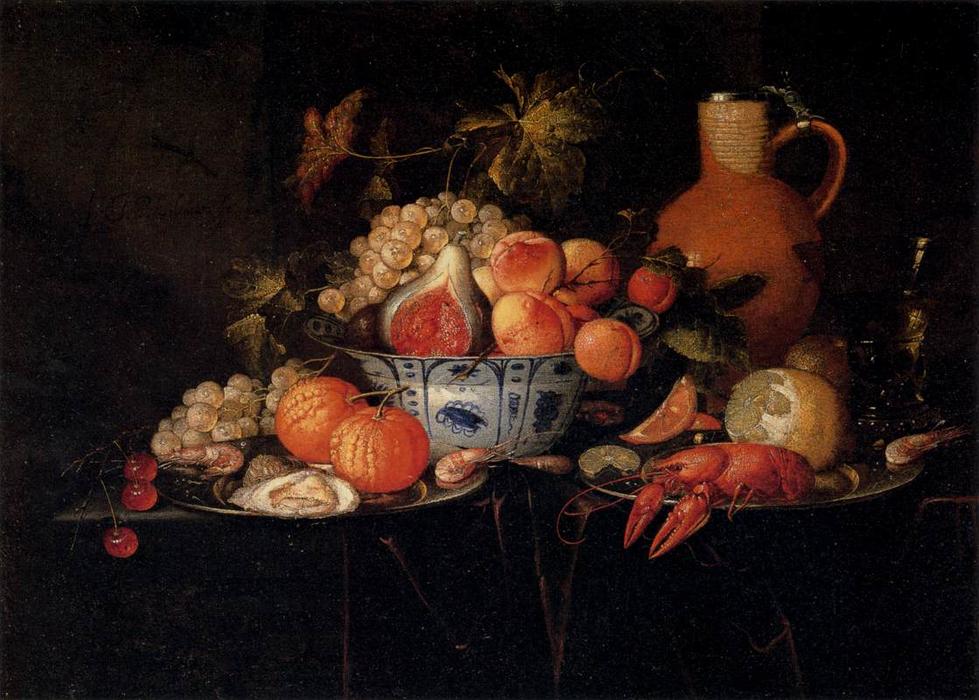
The Still-Life painting measures 46 x 66 cm and is executed in oil on canvas. It features a beautifully arranged still life setup, with a blue and white porcelain bowl filled with an assortment of fruits, including peaches, plums, and oranges. The vibrant colors of the fruits are juxtaposed against the cool tones of the bowl, creating a visually appealing contrast. To the right of the bowl, two red lobsters add a touch of luxury to the scene. Key Elements of the painting include:- The meticulous attention to detail in the depiction of the fruits and other objects
- The use of chiaroscuro to create a sense of depth and volume
- The arrangement of the objects, which creates a sense of balance and harmony
Artist and Museum
Jan Pauwel The Younger Gillemans was a prominent still-life painter of his time. His works can be found in various museums, including the Galleria Palatina in Italy, where this particular painting is housed. For more information on the artist and his works, visit /art/list/?Filter=8XZFJK-Jan-Pauwel-The-Younger-Gillemans-Still-Life. Other notable still-life paintings can be found at https://ArtsDot.com, including works by Giovanna Garzoni, such as Plate of Peas and China Bowl with Figs, a Bird, and Cherries. The Museum Palazzo d'Accursio in Bologna, Italy, is also worth exploring for its impressive collection of art and cultural artifacts.The Still-Life painting by Jan Pauwel The Younger Gillemans is a masterpiece that continues to inspire and delight art lovers. Its beauty and significance can be appreciated by visiting https://ArtsDot.com, where you can find more information on the artist, the painting, and other notable works of art.
Related Artworks






Artist Biography
The Luminous Legacy of Jan Pauwel Gillemans the Younger
In the golden age of Flemish Baroque painting, few artists captured the sensory opulence of nature with as much vitality as Jan Pauwel Gillemans the Younger. Born in Antwerp and baptized on the 3rd of September, 1651, Gillemans emerged from a lineage deeply rooted in the artistic soil of his homeland. As the son of the esteemed Jan Pauwel Gillemans the Elder, his very existence was intertwined with the tradition of the still life. This heritage provided him with more than just a name; it offered a profound immersion into the technical nuances of depicting texture, light, and the fleeting beauty of organic forms. His early years were shaped by the rigorous mentorship of Joris van Son, a master whose influence helped Gillement refine a style that would eventually become synonymous with the lush, bountiful aesthetic of the Antwerp school.
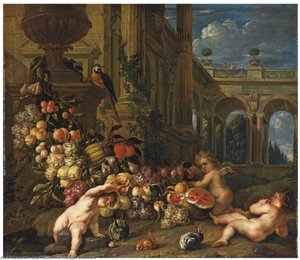
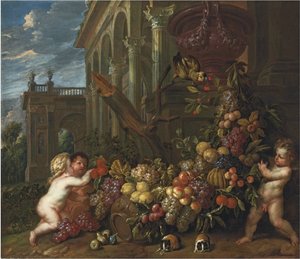
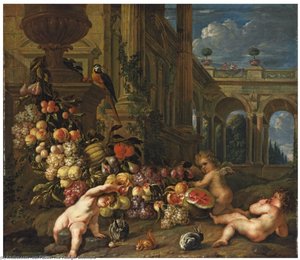
The trajectory of Gillemans’s career was marked by an extraordinary ability to blend the tangible with the allegorical. While he was a master of the pronkstillevens—those grand, ostentatious still lifes designed to showcase wealth and abundance—his true genius lay in his capacity for collaboration. He frequently worked alongside figure painters to create complex landscapes that breathed life into mythological and allegorical narratives. One of the most striking examples of this synergy is seen in works such as An architectural capriccio with putti around a swag of fruit, where the meticulous realism of his fruit and flora meets the whimsical, human element of cherubs and classical architecture. Through these collaborations, Gillemans elevated the still life from a mere study of objects to a sophisticated vehicle for storytelling, blending the physical world with the imaginative realms of myth.
A Mastery of Texture and Symbolism
To gaze upon a Gillemans composition is to experience a symphony of colors and textures. His brushwork possessed a remarkable ability to render the velvety skin of a peach, the translucent sheen of a grape, or the cool, hard surface of blue and white porcelain with equal conviction. He utilized chiaroscuro not merely for dramatic effect, but to sculpt volume and depth, allowing his subjects to emerge from the shadows with a startling, three-dimensional presence. His repertoire was vast, spanning flower and fruit arrangements, banquet scenes, and even hunting pieces, all unified by a meticulous attention to detail that celebrated the bounty of the natural world.
Beyond the surface beauty, Gillemans’s work is imbued with a layer of symbolic depth characteristic of the Baroque era. His compositions often functioned as meditations on abundance, prosperity, and the ephemeral nature of life. The careful arrangement of elements—a ripe fruit alongside a delicate blossom or an exotic bird—served to engage the viewer in a silent dialogue about the cycles of growth and decay. This ability to marry meticulous observation with imaginative symbolism ensured that his paintings were not only visual delights but also intellectual pursuits, inviting contemplation on the grandeur and fragility of existence.
Artistic Journey and Historical Significance
Gillemans’s professional life was as much a journey through Europe as it was an evolution of style. While Antwerp remained his spiritual and artistic home, his presence in Middelburg, London, and Amsterdam allowed him to absorb the diverse influences of the great European art centers. This mobility helped disseminate the Flemish tradition of still life across borders, cementing his reputation as a significant figure within the broader landscape of 17th-century art. His recognition by the Guild of Saint Luke early in his career served as a testament to his technical prowess and his standing among the elite craftsmen of his era.
The historical significance of Jan Pauwel Gillemans the Younger lies in his role as a bridge between the rigid traditions of his predecessors and the more expressive, narrative-driven compositions of the later Baroque period. He did not merely replicate the works of his father; he expanded the boundaries of the genre by integrating still life into larger, more complex allegorical landscapes. Today, his works remain cherished in prestigious collections worldwide, serving as enduring reminders of a time when art sought to capture the very essence of life’s most exquisite and fleeting moments.
jan pauwel the younger gillemans
1651 - 1704 , Belgium
Quick Facts
- Artistic Movement Or Style: Flemish Primitive Art
- Artists Or Movements Influenced By This Artist: ['Hans Memling']
- Artists Who Influenced This Artist: ['Joris van Son']
- Date Of Birth: September 3, 1651
- Full Name: Jan Pauwel Gillemans the Younger
- Nationality: Flemish
- Notable Artworks:
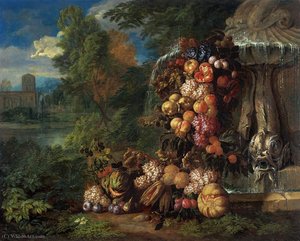
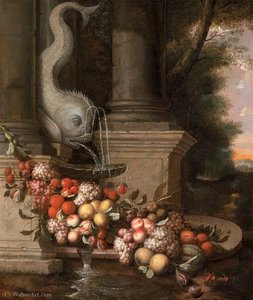
- Still life with fruit by a fountain in a landscape dated 1673 or 1678
- An architectural capriccio with putti around a swag of fruit
- Place Of Birth: Antwerp, Belgium