 Send
Send Share
Share
 Details

 Download
 Similars
 Diaporama
Joseph in Prison and the Pharaoh


 Read More
Hand Made Oil Reproduction
Hand-painted oil on canvas in your size and frame, made to order by our artists. ( Buy Print Buy Image)




































Pick from our preset sizes that match the artwork's original proportions.

You may enter your own dimensions to fit a specific frame or space. If your selected size does not match the original image's proportions, we will either crop the artwork or extend the painting with additional hand-painted elements. A digital mockup will be sent for your approval before production begins.
Please note that the on-screen preview does not reflect the actual cropping or extension. Only the mockup will accurately show the final composition.
While custom sizes are available, we recommend selecting a dimension from the predefined list to preserve the original proportions.
After order, ArtsDot.com team will email client for instructions and provide a mockup preview
Worldwide Delivery () in 3/4 weeks instead of standard 5 weeks. (24 August). No compromise on quality.

Free Worldwide Express Shipping

High-Quality Linen Canvas

Full Shipping Insurance

Customs Tax Refund Guarantee

True Color Matching Guarantee

60-Day Return Policy (Defects Only)

100% Money-Back Guarantee

Bulk Discount Offer
 Glass option is only available in size under 110 CM

Joseph in Prison and the Pharaoh
Reproduction Medium
Reproduction Size
-


Total Price
$ 263
Artwork Description
A Tapestry of Fate: The Narrative Grandeur of Joseph in Prison
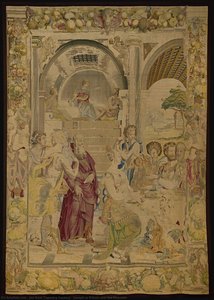
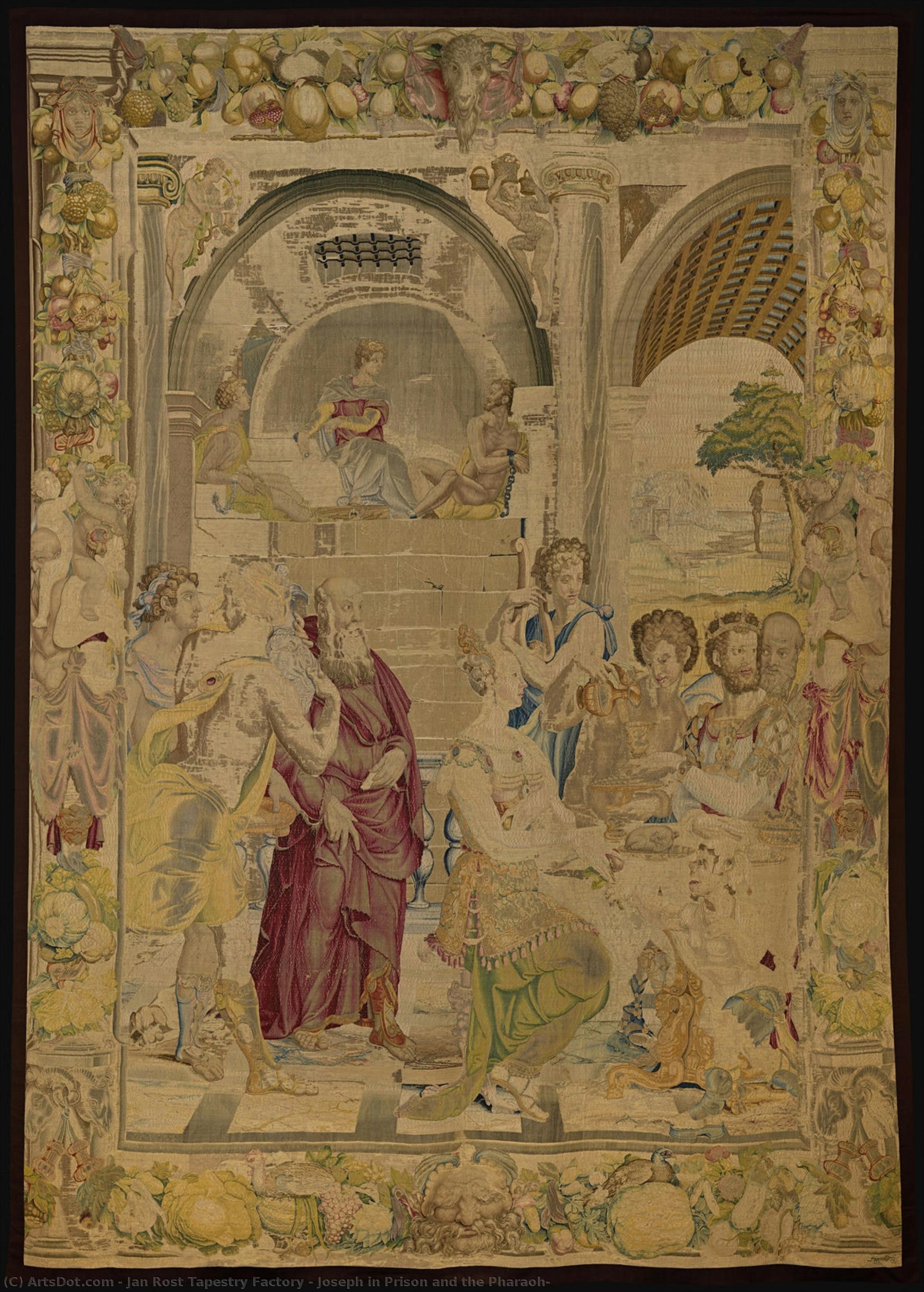
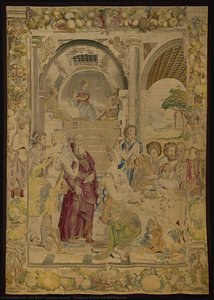
In the breathtaking tapestry Joseph in Prison and the Pharaoh, we are transported to a moment of profound biblical drama, where the threads of destiny weave together the fates of men and monarchs. Created in 1547 by the Jan Rost Tapestry Factory, this masterpiece serves as more than just a decorative textile; it is a window into a world of divine providence and human resilience. The scene unfolds within an opulent outdoor courtyard, where the heavy textures of brick walls meet the vibrant, flowing garments of the figures present. At the heart of this composition lies the figure of Joseph, draped in a regal purple robe that commands the viewer's attention, symbolizing both his current state of confinement and his inherent nobility. The interplay of light and shadow across the intricate weaves captures a sense of suspended animation, as if the very air of the courtyard is thick with the weight of the prophecy about to unfold.
The artistry of the Jan Rost Tapestry Factory shines through in the meticulous technical execution characteristic of the Flemish tradition. Each thread appears to pulse with life, utilizing a rich and sophisticated color palette that balances deep, earthy reds and lush greens with brilliant splashes of yellow and celestial blue. The weaver’s ability to render complex textures—from the heavy drape of royal silks to the organic scattered details of fruit like apples—demonates a mastery of the medium that was designed to dazzle the eyes of the Medici court. This level of detail is not merely ornamental; it serves to ground the biblical narrative in a tangible, sensory reality, making the historical and spiritual weight of the story feel immediate and visceral to the observer.
Beyond its visual splendor, the work carries deep symbolic resonance that continues to captivate collectors and historians alike. The presence of scattered apples and the varied postures of the onlookers—some kneeling in reverence, others standing in contemplative silence—suggest a layered dialogue between the earthly and the divine. For the modern interior designer or art enthusiast, this piece offers an unparalleled opportunity to introduce a sense of historical gravity and narrative depth into a space. A high-quality reproduction of this tapestry does not simply decorate a wall; it anchors a room with a legacy of Renaissance craftsmanship and the timeless, emotional power of a story about hope emerging from the darkest of prisons.
Related Artworks

Artist Biography
The Flemish Weaver Who Adorned the Renaissance: Jan Rost Tapestry Factory
Jan Rost, a name perhaps less celebrated than many of his contemporaries, nevertheless occupies a pivotal position in the history of tapestry weaving and the artistic exchange between Flanders and Italy during the 16th century. Born in Brussels around 1535, Rost wasn’t merely a craftsman; he was an innovator who brought Flemish technical mastery to the heart of the Italian Renaissance court, specifically into the workshops of the Medici family. His story is one of migration, adaptation, and the subtle but profound influence of artistic style across geographical boundaries.
Early Life and Training in Brussels
The Brussels of Rost’s youth was a thriving center for tapestry production, renowned throughout Europe for its intricate designs and luxurious materials. He received his training within this vibrant environment, absorbing the techniques that had been perfected over generations – the complex use of colored wools, silk, and even gold threads to create pictorial narratives of astonishing detail. The workshops were not simply places of technical instruction; they were incubators of artistic sensibility, where weavers learned to translate paintings into a different medium, understanding composition, color theory, and the nuances of storytelling. While details about his specific apprenticeship remain scarce, it’s clear that Rost emerged from this milieu with a firm grasp of Flemish realism and a keen eye for visual complexity. This foundation would prove crucial when he embarked on a new chapter in Florence.
Years at the Medici Manufactory: A Fusion of Styles
Around 1545, Rost made the significant move to Florence, entering the service of the Medici family and their tapestry manufactory. This was not an uncommon occurrence; skilled artisans were highly sought after by European courts eager to enhance their prestige through lavish displays of art and craftsmanship. However, Rost’s arrival marked a turning point for the Medici workshops. He brought with him not just technical expertise but also the distinctive Flemish aesthetic – characterized by meticulous detail, rich textures, and a naturalistic approach to depicting figures and landscapes. The manufactory was already producing tapestries, often based on designs by Italian masters, but Rost’s influence introduced a new level of realism and complexity. He worked alongside other artists, adapting existing compositions and creating entirely new designs, most notably a series illustrating scenes from the life of Joseph.
The Joseph Series: A Testament to Skill and Narrative Power
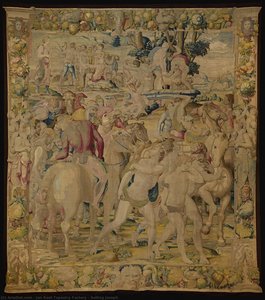
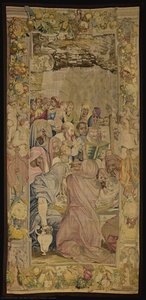
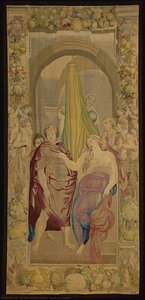
Rost's most celebrated achievement is undoubtedly his work on the Joseph series. These tapestries, commissioned by Cosimo I de’ Medici, depict episodes from the biblical story of Joseph – from his betrayal by his brothers to his rise to power in Egypt. What sets these works apart isn’t simply their technical brilliance—the vibrant colors, the intricate detailing of costumes and architecture, the skillful rendering of human anatomy—but also the way Rost translated the narrative into a visual form. He captured the drama and emotion of each scene with remarkable sensitivity, employing Flemish techniques to create a sense of depth and realism that was relatively uncommon in Italian tapestries of the time. Selling Joseph, Joseph in Prison and the Pharaoh, and Joseph takes Simeon hostage are particularly noteworthy examples, showcasing his ability to convey complex emotions through gesture, expression, and composition. The series wasn’t merely decorative; it served as a powerful visual statement of Medici power and piety.
Legacy and Historical Significance
Jan Rost Tapestry Factory's impact extends beyond the specific tapestries he created. He played a crucial role in bridging the artistic gap between Flanders and Italy, introducing Flemish techniques and aesthetics to a new audience and influencing the development of tapestry weaving in Florence. His work demonstrates the fluidity of artistic exchange during the Renaissance, where styles and ideas were constantly circulating across national boundaries. While his personal life remains somewhat obscure, his legacy is firmly etched into the fabric of art history – a testament to the skill, innovation, and enduring power of the Flemish weaver who adorned the Renaissance court with scenes of biblical grandeur.
Quick Facts
- Artistic Movement Or Style: Renaissance tapestry
- Date Of Birth: 1535
- Date Of Death: 1564
- Full Name: Jan Rost Tapestry Factory
- Nationality: Flemish
- Notable Artworks:
- Joseph takes Simeon hostage
- Selling Joseph
- Joseph in Prison and the Pharaoh
- Joseph and Potiphar
- Place Of Birth: Brussels, Belgium
Related Articles

Illuminating Faith: Biblical Narrative & Artistic Expression Through the Ages
Explore the rich history of biblical art from Giotto to the Renaissance masters with ArtsDot. Discover symbolism, techniques & enduring legacies. Museum-quality reproductions & expert insights.

Illuminating Faith: Biblical Scenes & Their Enduring Legacy in Art History
Explore the profound history of biblical art! Discover Renaissance masterpieces by Giotto & more. Uncover symbolism, artistic techniques, and lasting influence. Expert insights at ArtsDot.
Jacques Joseph Tissot: A Chronicle of Parisian Life & Narrative Evolution
Explore the captivating world of Jacques Joseph Tissot, a master painter of Belle Époque society. Discover his realism, Impressionistic style, and lasting influence on art history. Learn more at ArtsDot.

Joseph Henry Sharp: Capturing the Spirit of the Plains – Life, Art & Legacy
Explore the life & art of Joseph Henry Sharp, a founding member of the Taos Society of Artists renowned for his realistic depictions of Native American culture and Western landscapes. Discover his legacy with ArtsDot.

Sacred Narratives on Canvas: Exploring Biblical Art Across Centuries
Explore the rich history of biblical art from Giotto to the Renaissance masters. Discover symbolism, techniques & enduring legacies with ArtsDot – your source for museum-quality reproductions and expert art insights.