The Master of the Story of Joseph: A Pioneer of Genre Painting
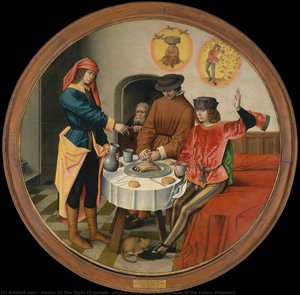
The Master of the Story of Joseph, whose true identity remains elusive despite extensive scholarly investigation, stands as a pivotal figure in the artistic landscape of early sixteenth-century Flanders. Active around 1470–1500, he emerged from the vibrant milieu of Brussels and Antwerp, where he honed his craft amidst a flourishing tradition of panel painting commissioned by wealthy families eager to adorn their homes with biblical narratives rendered in exquisite detail. While attribution remains contentious—scholars debate whether he was truly Luc van Leyden or Pieter Bruegel the Elder—his distinctive style—characterized by meticulous observation of contemporary life interwoven with symbolic representations of religious themes—established him as a forerunner of genre painting and profoundly impacted subsequent artistic developments.
- Early Life & Training: Precise biographical information about the Master is scarce, fueling speculation regarding his origins and formative influences. Evidence suggests he trained under Lucas van Leyden, whose workshop produced monumental altarpieces showcasing both religious iconography and realistic depictions of everyday scenes. This dual approach—a hallmark of the Flemish Renaissance—would become central to the Master’s artistic vision.
- Style & Technique: The Master's oeuvre is distinguished by a remarkable blend of realism and symbolism. He meticulously rendered fabrics, architectural details, and human figures with astonishing accuracy, capturing the nuances of texture and color that would inspire generations of artists. Simultaneously, he imbued his compositions with profound theological meaning, utilizing visual metaphors to convey moral lessons and spiritual truths. His palette favored muted hues—particularly browns and ochres—creating a harmonious atmosphere conducive to contemplation.
- Notable Works: Among the Master’s most celebrated paintings are the “Joseph Accused by Potiphar's Wife” and “St Joseph Chapel,” commissioned by Herzog Maximilian Franz von Bayern for his chapel in Schwerin, Germany. These monumental panels exemplify his mastery of perspective and dramatic storytelling, transporting viewers into vividly realized biblical settings. The “Joseph Accused” depicts a scene from Genesis with remarkable psychological depth, capturing the anguish of Joseph as he awaits judgment—a testament to the Master’s ability to convey emotion through visual representation.
- Influences: The Master's artistic sensibilities were undeniably shaped by Luc van Leyden and Pieter Bruegel the Elder, whose workshop fostered a spirit of experimentation and innovation. Like Bruegel, he embraced the genre painting tradition—depicting scenes from peasant life—demonstrating an uncommon interest in portraying the realities of ordinary people alongside sacred narratives.
- Legacy: The Master’s contribution to art history extends beyond his individual paintings. He championed a stylistic approach that combined meticulous observation with symbolic representation—a cornerstone of genre painting and a precursor to Baroque visual culture. His influence can be discerned in the works of subsequent Flemish artists, cementing his place as one of the most important figures in the artistic panorama of the early Renaissance.
Further Research: Extensive scholarly debate continues regarding the Master’s identity and stylistic affiliations. Ongoing investigations into provenance records and comparative analyses of paintings—particularly those attributed to Bruegel—promise to illuminate new facets of his life and artistic practice.