Early Life & Training: From Law to Luminosity
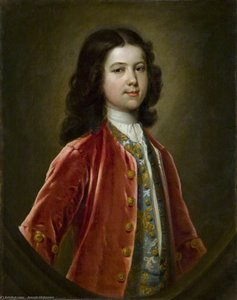
Joseph Highmore’s story is a fascinating departure from the typical trajectory of the dedicated artist. Born in 1709 into a London merchant family, young Joseph was initially steered toward a legal career – a pragmatic choice for the time. He dutifully embarked on clerkship, yet even amidst legal documents and court proceedings, his innate artistic inclination persisted. He attended drawing academies, notably that of Sir Godfrey Kneller, the dominant portraitist of the era, absorbing the established conventions of grand style. However, Highmore’s path wouldn't remain confined to imitation. His early work reveals a careful adaptation of Kneller’s techniques, but even then, a subtle shift towards realism and an emerging sensitivity to character began to surface. This period wasn’t merely about acquiring skill; it was the foundation upon which he would build a distinctly personal artistic voice – one that favored intimacy over ostentation.
The Rococo Embrace: Highmore’s Artistic Style & Influences
Rococo, less commonly Roccoco ( rə-KOH-koh, US also ROH-kə-KOH; French: [ʁɔkɔko] or [ʁokoko] ), also known as Late Baroque, is an exceptionally ornamental and dramatic style of architecture, art, and decoration which combines asymmetry, scrolling cu...
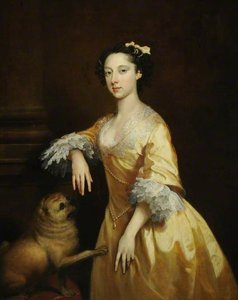
By the 1730s, a new aesthetic current was sweeping across Europe: the Rococo. Characterized by its delicate ornamentation, pastel palettes, and playful asymmetry, it represented a move away from the Baroque's dramatic intensity. Highmore readily absorbed these influences, particularly through exposure to French artists like Philippe Mercier and Hubert Gravelot who were active in London at the time. Yet, he didn’t simply replicate Rococo conventions; instead, he infused them with a uniquely English sensibility. His portraits became more elegant, lighter in tone, and imbued with a refined grace. However, what truly sets Highmore apart is his ability to balance this fashionable style with a remarkable directness – a quality that foreshadows the burgeoning spirit of British portraiture. He wasn’t merely painting surfaces; he was attempting to capture something of the sitter's inner life.
Conversation Pieces & Portraiture: Capturing Georgian Society
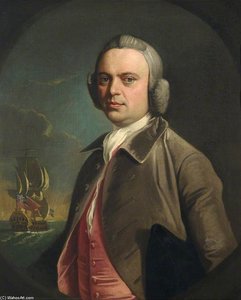 Rear Admiral Charles Fanshawe
Admire Joseph Highmore’s ‘Rear Admiral Charles Fanshawe,’ a captivating 18th-century portrait. Explore this Rococo masterpiece featuring a contemplative admiral & naval scene. Hand-painted reproduction available.
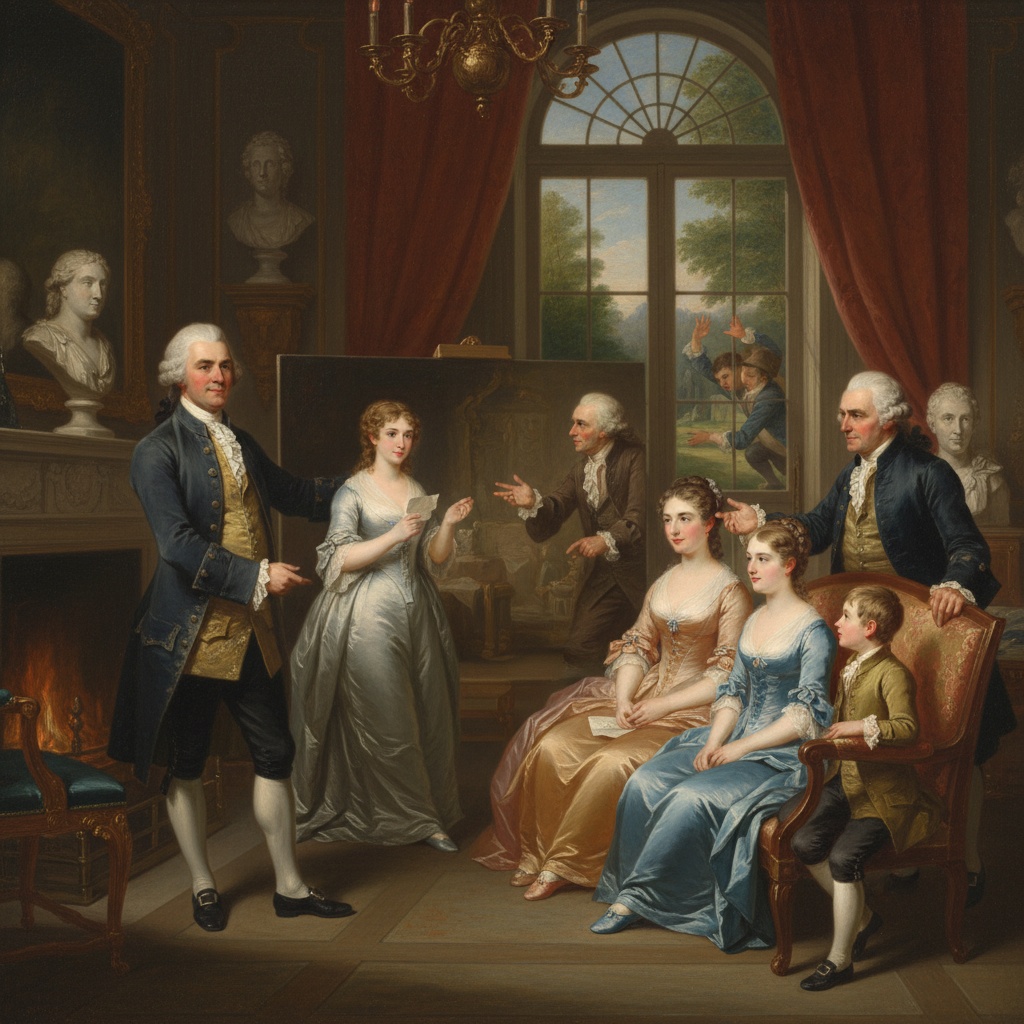
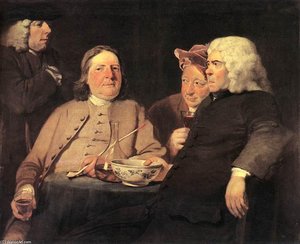
Highmore excelled in two primary genres: formal portraiture and the increasingly popular “conversation piece.” The latter, a distinctly English innovation, depicted groups of people engaged in everyday activities – often within a domestic setting. These weren’t grand historical narratives or idealized allegories; they were snapshots of Georgian life, offering glimpses into the social customs and familial bonds of the era. His skill lay in orchestrating these scenes with a naturalness that belied their careful composition. Consider his *Mr Oldham and Friends* (National Gallery, London), where a newly arrived figure disrupts a convivial gathering, creating a moment of lively interaction. The painting isn’t about power or status; it's about the subtle dynamics of friendship and social connection. His portraits, too, reflect this interest in character – they are less concerned with conveying wealth or authority than with revealing the personality of the sitter.
Illustrating Virtue: Highmore and Samuel Richardson's 'Pamela'
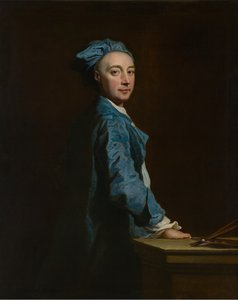 Joseph Highmore
Discover Joseph Highmore (1692-1780), an English Rococo painter celebrated for elegant portraits, captivating 'Pamela' illustrations & insightful conversation pieces reflecting Georgian society.
Perhaps one of the most significant chapters in Highmore’s career was his collaboration with the novelist Samuel Richardson. In 1743-4, he embarked on a series of twelve illustrations for Richardson’s groundbreaking epistolary novel, *Pamela, or Virtue Rewarded*. This commission proved pivotal, linking him with artists like Hogarth and Hayman as pioneers of British narrative painting. Highmore's illustrations weren’t simply decorative accompaniments to the text; they were carefully considered interpretations of key scenes, capturing the emotional nuances of Pamela’s plight. The series is notable for its psychological depth and its sympathetic portrayal of a young woman navigating a world fraught with social inequality and moral challenges. These images demonstrate Highmore's ability to translate literary narrative into compelling visual form, solidifying his reputation as a painter capable of both elegance and emotional resonance.
Beyond the Brush: Art Historical Writings & Legacy
Highmore’s contributions extended beyond painting itself. After retiring from active practice at the age of 70, he turned his attention to art historical scholarship, publishing insightful articles on topics ranging from Rubens' ceiling decorations to color theory and perspective. This demonstrates a deep intellectual curiosity and a desire to engage with the broader artistic discourse of his time. He wasn’t content simply *to* paint; he wanted to understand the principles that underpinned great art. While Highmore’s work fell somewhat out of favor in the 19th century, overshadowed by more flamboyant styles, it has undergone a significant reassessment in recent decades. Today, he is recognized as a key figure in the development of British Rococo and a sensitive observer of Georgian society – a painter who captured not just appearances but also the subtle complexities of human emotion.
Highmore Rediscovered: Appreciation of a Domestic Master
The renewed appreciation for Joseph Highmore stems from a growing recognition of his unique artistic voice. He wasn’t striving for grandiosity or dramatic effect; instead, he focused on capturing the quiet moments of everyday life with elegance and insight. His conversation pieces offer invaluable glimpses into Georgian social customs, while his portraits reveal a remarkable sensitivity to character. His illustrations for *Pamela* stand as testament to his ability to translate literary narrative into compelling visual form. For collectors seeking works that embody refinement, emotional depth, and a distinctly English sensibility, Highmore offers a captivating alternative to more celebrated – yet often less intimate – masters. At ArtsDot, we are proud to offer high-quality reproductions of his most iconic paintings, allowing you to bring the charm and sophistication of 18th-century Britain into your home.