

 Preview
 Send
Send Share
Share
 Details

 Download
 Similars
 X-Ray
X-Ray Diaporama
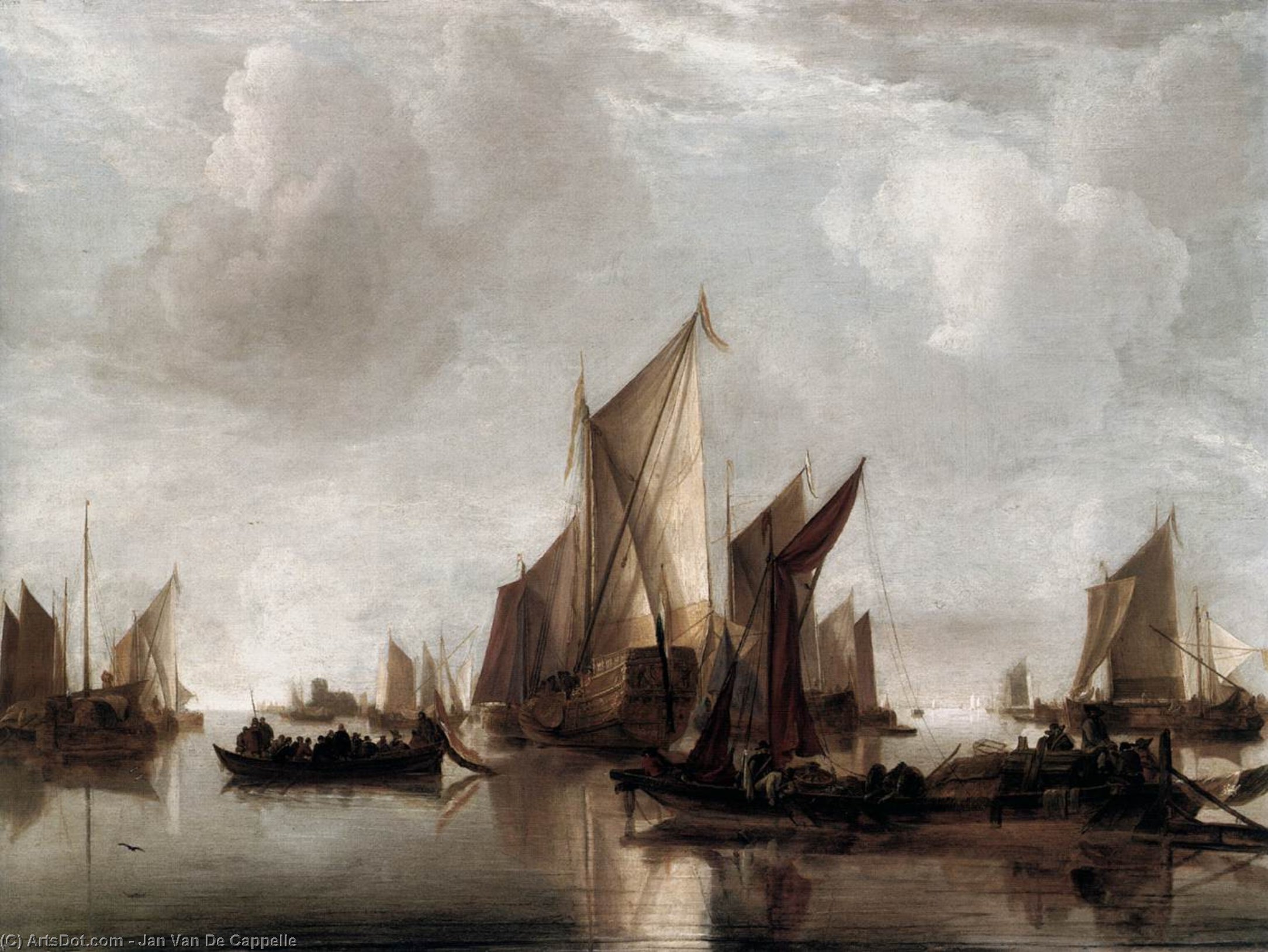
A State Yacht and Other Craft in Calm Water
 Oil On Canvas
- WallArt
- Dutch Golden Age
 1660
1660 70.0 x 92.0 cm
 Metropolitan Museum of Art
 Read More
Purchase a high-resolution, enhanced digital image, far superior to the online preview.
Each file is meticulously prepared by our in-house specialists using advanced tools and expert manual retouching. We ensure every image has exceptional clarity, precise color accuracy, and fine detail.
The final file is delivered via email within 72 hours, optimized for immediate use in professional, editorial, and print environments. This is the same quality trusted by top-tier design studios, publishers, and galleries.
Digital Image
Download a high-resolution file for personal display, printing, and creative projects. ( Buy Print Buy Hand Made Painting)
Included in Every Digital Image Order
Expert Digital Delivery, Guaranteed
When you choose ArtsDot.com, you're not just getting an image - you're receiving a professionally enhanced digital artwork, crafted with precision and backed by a satisfaction guarantee. Here's everything that comes with your order, automatically:

Fast Email Delivery
Your high-resolution digital image file will be emailed to you within 72 hours of ordering - ready for immediate use.

AI-Enhanced Digital File
Your artwork is professionally optimized using advanced AI tools and manual editing, ensuring maximum detail, clarity, and color accuracy.

Free Lifetime Re-Delivery
Accidentally deleted or lost your file? No worries - we'll resend it to you anytime, free of charge.

No Import Fees - Ever
Enjoy your artwork instantly with zero customs, duties, or delivery fees - digital downloads are always tax-free.

Color Accuracy Guarantee
We ensure your digital image reflects the original colors as closely as possible using professional tools and color management.

60-Day Satisfaction Guarantee
If you're not satisfied with your digital image, we'll revise it or refund 100% within 60 days - no questions asked.

100% Money-Back Guarantee
Not satisfied? Get a full refund within 60 days of receiving your digital file - no questions asked.

Bulk Order Discounts
Buy 3 images, save 10% - Buy 5, save 15% - Buy 10+, save 20%. Great for creative projects, galleries, and agencies.
Collectible Description
Jan van de Cappelle - A State Yacht and Other Craft in Calm Water
Jan van de Cappelle’s “A State Yacht and Other Craft in Calm Water,” painted circa 1660, stands as a quintessential example of Dutch Golden Age maritime art—a genre that captured the spirit of an era defined by burgeoning trade, exploration, and a profound fascination with the sea. More than just a depiction of ships at rest, this canvas embodies Cappelle’s masterful ability to convey tranquility and grandeur simultaneously, reflecting not only the visual beauty of the scene but also the intellectual currents of his time. It's a piece that speaks volumes about Dutch confidence and artistic ambition during the mid-17th century. ### Subject Matter & Composition The artwork centers around a tranquil estuary—likely the Scheldt—dominated by several sailing vessels engaged in maritime activity. Fishing boats, laden with nets and oarsmen, mingle with larger merchant ships, their sails billowing gently against an overcast sky. Cappelle eschews dramatic storms or turbulent waves, opting instead for a serene tableau that prioritizes atmospheric perspective and subtle tonal variations. This deliberate choice underscores the Dutch obsession with realism—not merely in terms of accurate representation but also in conveying the psychological impact of observing nature. The composition is carefully balanced, utilizing horizontal lines (representing the waterline) and vertical lines (dominating the sails) to establish stability and visual harmony. ### Artistic Style & Technique Cappelle’s style aligns closely with the prevailing aesthetic conventions of Dutch Golden Age painting—specifically the influence of Simon de Vlieger and Rembrandt. He employs meticulous brushwork, layering thin glazes of oil paint to build up texture and form, particularly noticeable in the sails and rigging. The artist's technique is characterized by a remarkable attention to detail, capturing the nuances of light and shadow with exceptional precision. Cappelle’s palette is muted—primarily browns, grays, and blues—creating an atmosphere of subdued grandeur that evokes the contemplative mood favored by artists of this period. This restrained color scheme contributes significantly to the painting's emotional resonance, conveying a sense of peace and contemplation. ### Historical Context & Symbolism “A State Yacht” emerged during a pivotal moment in Dutch history: immediately following the Treaty of Münster (1648), which ended decades of conflict with Spain. The painting served as a visual affirmation of Dutch prosperity and maritime dominance—a celebration of trade routes, naval prowess, and the nation’s newfound stability. Beyond its literal depiction of seafaring life, the artwork carries symbolic weight. The calm waters represent serenity and order, mirroring the aspirations for peace and harmony that permeated Dutch society at the time. Furthermore, Cappelle's focus on capturing atmospheric conditions—the diffuse light filtering through the clouds—reflects a broader intellectual interest in scientific observation and understanding the natural world. ### Emotional Impact & Legacy Ultimately, “A State Yacht” transcends mere visual representation; it communicates profound emotional depth. The painting’s stillness invites contemplation, prompting viewers to consider themes of tranquility, resilience, and the sublime beauty of nature. Cappelle's masterful execution—his ability to convey both realism and psychological nuance—solidifies his position as one of Holland’s most celebrated marine painters of the 17th century. It remains a testament to the artistic achievements of the Golden Age and continues to inspire admiration for its understated elegance and evocative atmosphere.Related Artworks



Artist Biography
The Mirror of Tranquility: The Life and Legacy of Jan van de Cappelle
Jan van de Cappelle stands as a singular, luminous figure within the pantheon of the Dutch Golden Age, an artist whose presence in the art historical canon is defined by a profound, meditative stillness. Unlike many of his contemporaries who produced vast quantities of work, Cappelle’s oeuvre remains remarkably small, yet each piece commands an extraordinary distinction. He was not merely a painter of the sea; he was a man of significant worldly stature, an industrial titan inextricably linked to the economic heartbeat of Amsterdam. As a successful figure in the textile industry and a collector of great taste, his life was a unique duality of commercial prowess and artistic sensitivity. This intersection of wealth and vision allowed him to cultivate a style that does not merely depict the maritime world but captures its very soul—a stillness that reflects both the surface of the water and the infinite heavens above.
Born in Amsterdam in 1624, Jan van de Cappelle followed an unconventional path toward artistic mastery. While many masters of his era were forged in the rigorous fires of formal guild training, Cappelle was largely self-taught, a fact that perhaps contributed to the singular, unburdened quality of his vision. His upbringing was steeped in the technical complexities of industry; his father, Franchoy van de Cappelle, operated a substantial dyeworks specializing in the production of crimson dye. This environment, demanding precision and an intimate understanding of color and chemistry, likely provided Jan with an invaluable foundation for his later explorations of light and atmosphere. While he may have been influenced by the stylistic sensibilities of Simon de Vlieger, whose compositions share a certain structural kinship with his own, Cappelle’s work eventually transcended mere influence to achieve a state of pure, atmospheric grace.
Mastery of Light and Atmospheric Perspective
The true genius of Jan van de Cappelle lies in his ability to manipulate the elements of air and water to create a sense of profound emotional depth. He is often celebrated as Holland’s outstanding marine painter of the 17th century, a title earned through his unparalleled mastery of atmospheric perspective. His technique is most famously realized in the way he mirrors sky formations onto calm, glass-like water surfaces. In works such as Ships at Anchor on a Quiet Sea, the viewer is not merely looking at a maritime scene but is invited into a moment of suspended animation. The subtle gradations of light and the meticulous rendering of clouds create a sense of immense space, where the boundary between the sea and the sky becomes beautifully blurred.
His artistic language draws inspiration from the realism of Willem van de Velde the Elder, yet it possesses a softness that is uniquely his own. Where others might focus on the chaotic energy of naval combat or the ruggedness of the storm, Cappelle sought the quietude found in the aftermath or the anticipation of movement. His compositions often feature:
- The interplay of light and shadow: Capturing the fleeting moments when sunlight pierces through cloud cover to illuminate a single vessel.
- Reflective surfaces: Using the water as a mirror to duplicate the majesty of the Dutch sky, creating a sense of symmetry and peace.
- Atmospheric nuance: A delicate handling of mist, haze, and clarity that gives his landscapes a palpable sense of temperature and humidity.
Historical Significance and Enduring Impact
The historical significance of Jan van de Cappelle extends beyond the aesthetic beauty of his canvases. He represents the pinnacle of the Dutch Golden Age's ability to find the extraordinary within the ordinary. Through his depictions of sailing boats, river scenes, and winter landscapes, he documented the maritime identity of a nation that was then the center of global commerce. Even in his more dynamic works, such as The State Barge Saluted by the Home Fleet, there remains an underlying sense of order and dignity that reflects the structured prosperity of his era.
Though his life ended in 1679, leaving behind a limited collection of masterpieces, his impact on the genre of marine art is immeasurable. He taught subsequent generations how to paint not just what is seen, but what is felt—the weight of the air, the stillness of the tide, and the quiet majesty of the horizon. Today, his works remain essential touchstones for anyone seeking to understand the delicate balance between man, nature, and the light that binds them together. His legacy is one of serenity, a lasting testament to an artist who found the infinite within the tranquil.
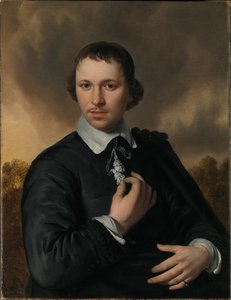
Jan van de Cappelle
1624 - 1679 , Netherlands
Quick Facts
- Artistic Movement Or Style: Golden Age
- Artists Or Movements Influenced By This Artist: ['Rembrandt']
- Artists Who Influenced This Artist:
- Simon de Vlieger
- Willem van de Velde the Elder
- Date Of Birth: Amsterdam, Netherlands (1624)
- Date Of Death: 1679
- Full Name: Jan van de Cappelle
- Nationality: Dutch
- Notable Artworks:
- Ships at Anchor on a Quiet Sea
- Vessels Moored off a Jetty
- A River Scene with Dutch Vessels Becalmed
- Place Of Birth: Amsterdam

