 Preview
 Send
Send Share
Share
 Details

 Download
 Similars
 X-Ray
X-Ray Diaporama
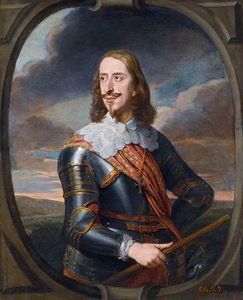
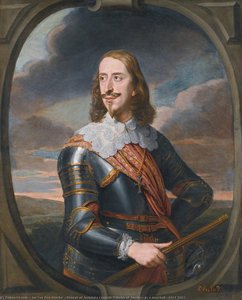
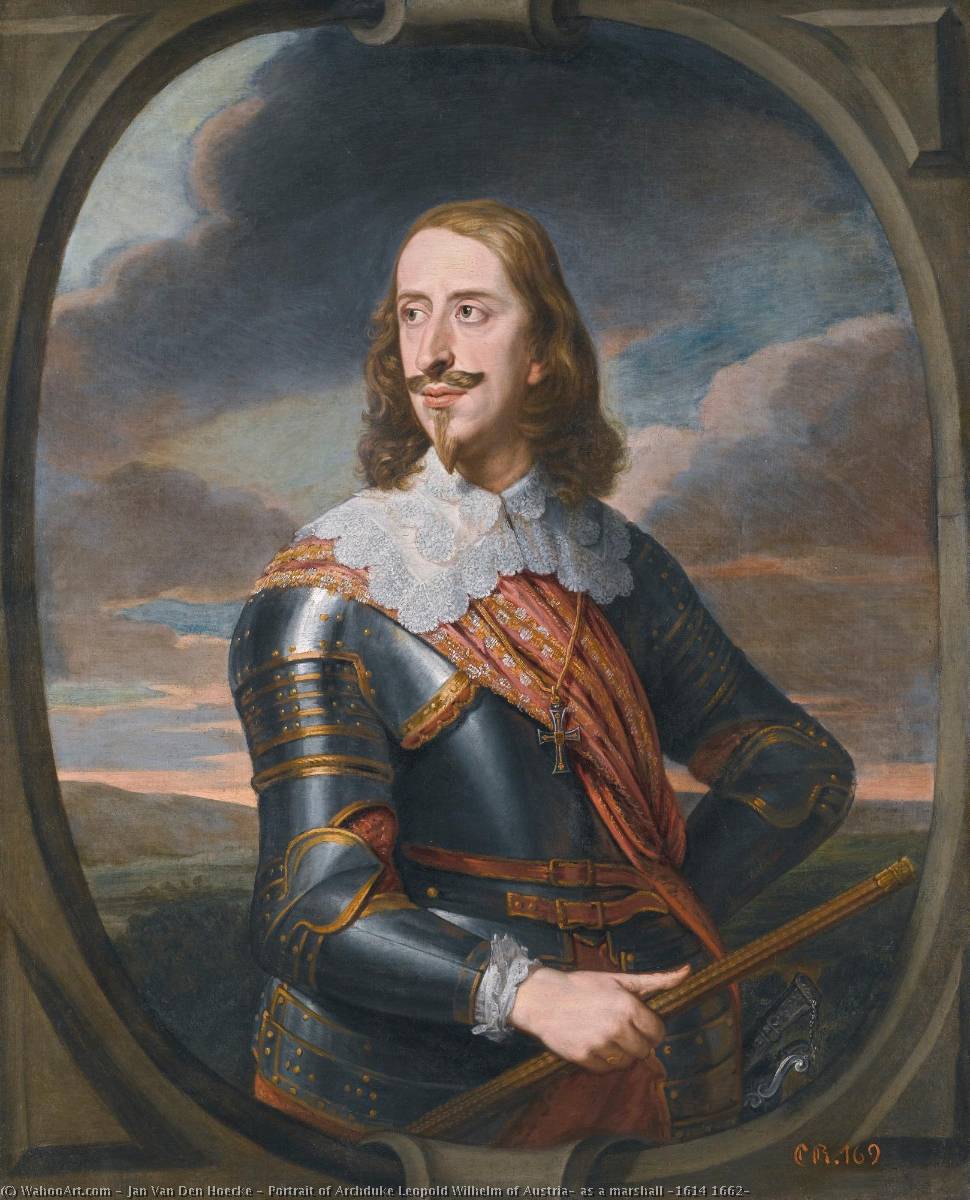
Portrait of Archduke Leopold Wilhelm of Austria, as a marshall (1614 1662)
 121.0 x 98.0 cm
 Read More
Hand Made Oil Reproduction
Hand-painted oil on canvas in your size and frame, made to order by our artists. ( Buy Print Buy Image)




































Pick from our preset sizes that match the artwork's original proportions.

You may enter your own dimensions to fit a specific frame or space. If your selected size does not match the original image's proportions, we will either crop the artwork or extend the painting with additional hand-painted elements. A digital mockup will be sent for your approval before production begins.
Please note that the on-screen preview does not reflect the actual cropping or extension. Only the mockup will accurately show the final composition.
While custom sizes are available, we recommend selecting a dimension from the predefined list to preserve the original proportions.
After order, ArtsDot.com team will email client for instructions and provide a mockup preview
Worldwide Delivery () in 3/4 weeks instead of standard 5 weeks. (3 September). No compromise on quality.

Free Worldwide Express Shipping

High-Quality Linen Canvas

Full Shipping Insurance

Customs Tax Refund Guarantee

True Color Matching Guarantee

60-Day Return Policy (Defects Only)

100% Money-Back Guarantee

Bulk Discount Offer
 Glass option is only available in size under 110 CM

Portrait of Archduke Leopold Wilhelm of Austria, as a marshall (1614 1662)
Reproduction Medium
Reproduction Size
-


Total Price
$ 263
Related Artworks








Artist Biography
The Radiant Legacy of Jan van den Hoecke
In the grand, sweeping tapestry of the Baroque era, certain names shine with an unparalleled brilliance, while others exist in the luminous glow cast by their more famous peers. Jan van den Hoecke (1s611–1651) belongs to that evocative second group—a master whose brushstrokes were instrumental in defining the visual splendor of the seventeenth century. Though often discussed in the shadow of the titan Peter Paul Rubens, Van den Hoecke was far more than a mere apprentice; he was a vital collaborator, a versatile draughtsman, and a painter of profound emotional depth who bridged the artistic worlds of Antwerp and Rome.
Born into an environment steeped in pigment and oil, Jan’s very identity was forged in the studios of Flanders. As the son of the respected painter Gaspar van den Hoecke, his early life was a continuous immersion in the traditions of the Antwerp School. This familial lineage provided him with a rigorous foundation, likely beginning with an apprenticeship under his father's watchful eye. Alongside his half-brother, Robert, Jan grew within a household where art was not merely a profession but a shared language. This early training instilled in him a technical precision that would later allow him to navigate the complex demands of both intimate portraiture and monumental, large-scale compositions.
A Partnership of Brilliance: The Rubens Connection
The trajectory of Van den Hoecke’s career reached its zenith during his transformative years within the studio of Peter Paul Rubens. From the mid-1 lack30s until the master's later years, Jan served as one of Rubens’ most trusted and capable assistants. This was not a period of mere imitation, but an era of intense creative synergy. Van den Hoecke did not simply execute sketches; he breathed life into the ambitious architectural visions of the age. One of his most significant achievements lies in his contribution to the breathtaking ceiling decorations for the banquet hall of Rubens’ Palazzo Bolognese in Rome, where his ability to blend Italian Classicism with Flemish vitality helped create a masterpiece of Baroque illusionism.
His work during this period reflects a sophisticated mastery of several key genres:
- History Painting: Where he utilized dramatic lighting and muscular, dynamic figures to narrate epic mythological and biblical tales.
- Allegorical Compositions: Using complex symbolism to convey political and philosophical truths through graceful, flowing forms.
- Portraiture: Capturing the dignity and character of the era's elite, from high-ranking clergy to the nobility of the Habsburg courts.
The Roman Sojourn and European Eminence
As his reputation expanded beyond the borders of Flanders, Van den Hoecke embarked on a decade-long residency in Rome. This period was crucial for his stylistic evolution, as he absorbed the classical elegance and sculptural clarity of the Italian masters. The light in his paintings began to take on a different quality—more refined, more balanced—reflecting the influence of the Roman landscape and the enduring legacy of antiquity. This cosmopolitan experience transformed him into a truly European artist, capable of speaking to the aesthetic sensibilities of diverse courts.
Following his time in Italy, Van den Hoecke’s talent led him to the prestigious service of the imperial courts in Vienna and Brussels. As a court painter, he was tasked with creating works that projected power, piety, and prestige. Whether designing intricate wall tapestries or executing delicate oil studies, his hand remained a symbol of excellence. Though his life was cut short in 1651, the historical significance of Jan van den Hoecke remains undeniable. He stands as a testament to the collaborative heart of the Baroque period—a painter who helped weave together the disparate threads of Flemish energy and Italian grace into a single, magnificent artistic legacy.
Jan van den Hoecke
1611 - 1651
Quick Facts
- Artistic Movement Or Style: Baroque
- Artists Or Movements Influenced By This Artist: ['Rubens']
- Artists Who Influenced This Artist: ['Peter Paul Rubens']
- Date Of Birth: 1611
- Date Of Death: 1651
- Full Name: Jan van den Hoecke
- Nationality: Flemish
- Notable Artworks:
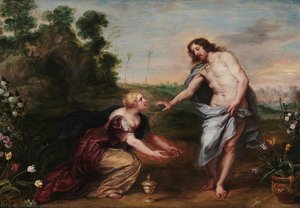
- Noli Me Tangere
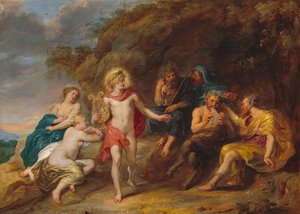
- The Judgment of Midas
- Portrait of Archduke Leopold Wilhelm
- Place Of Birth: Antwerp, Belgium