 Preview
 Send
Send Share
Share
 Details

 Download
 Similars
 X-Ray
X-Ray Diaporama
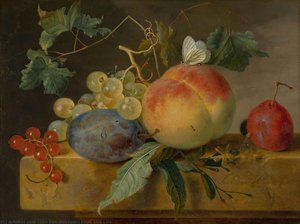
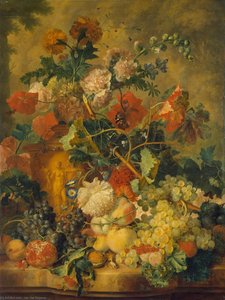
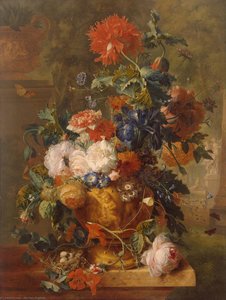
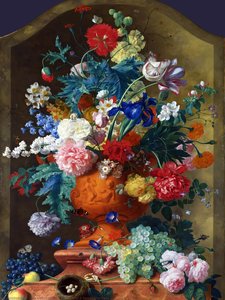
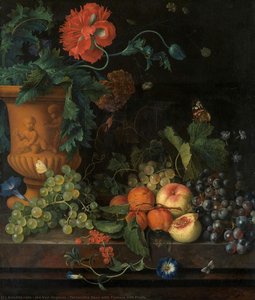
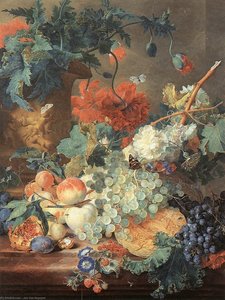
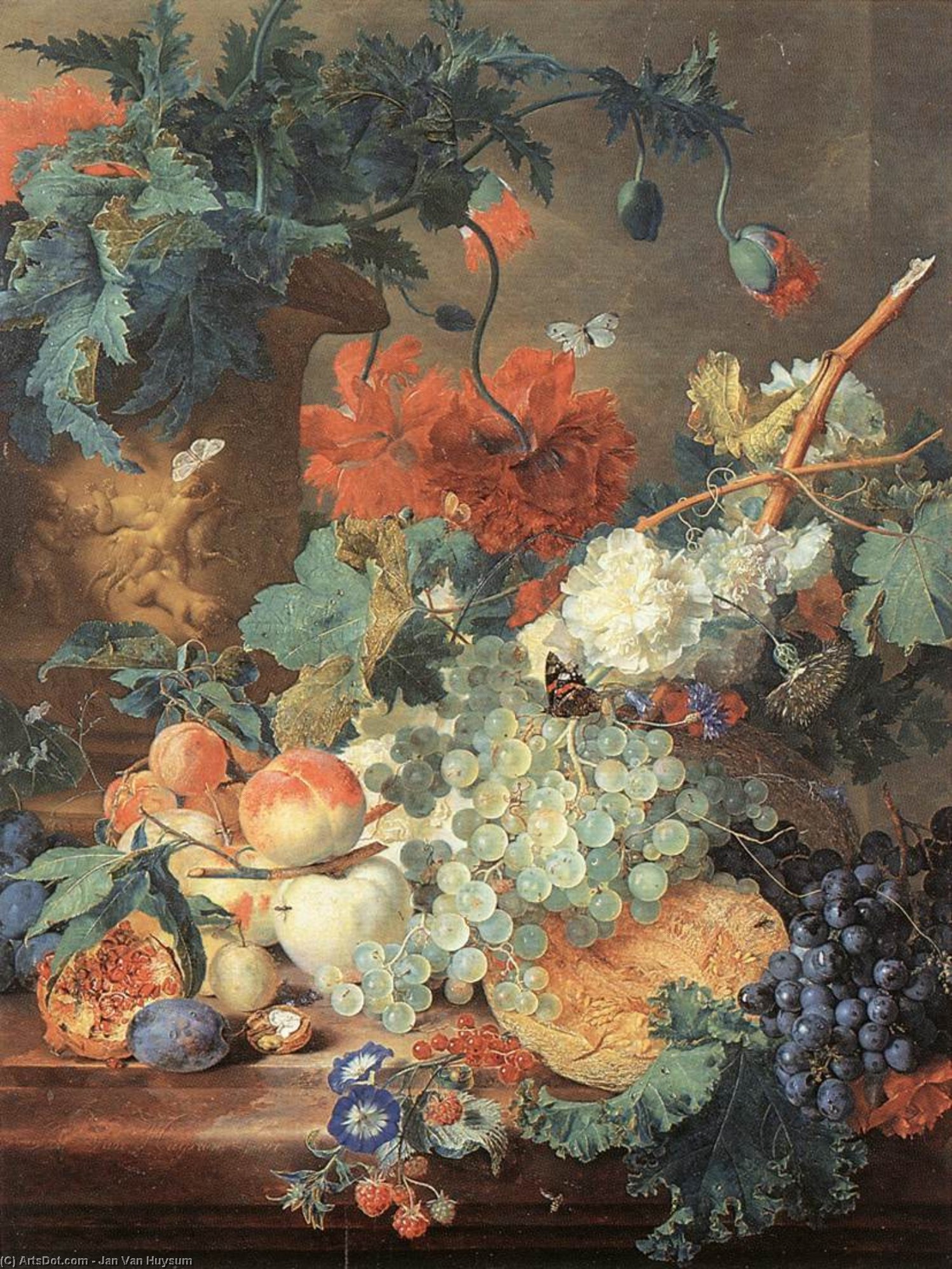
Fruit and Flowers
 Oil On Canvas
- WallArt
- Dutch Golden Age
 1720
1720- Late Medieval
 81.0 x 60.0 cm
 Wallace Collection
 Read More
Hand Made Oil Reproduction
Hand-painted oil on canvas in your size and frame, made to order by our artists. ( Buy Print Buy Image)




P118B $10

P118H $10

P118W $10

P438Z $10

P508JH $12

P508YH $12

P805H $10

P805Z $10

P919BZ $10

P919G $10

P919XJ $10

P959ZH $10

P968JZ $12

W106C $8

W218G $10

W218JH $8

W218Y $10

W307PJ $10

W316G $10

W316PJ $8

W316Y $10

W398PJ $8

W4111J $10

W500HY $15

W500JH $15

W692G $12

W849H $8

W940BG $15

W953PJ $8




Pick from our preset sizes that match the artwork's original proportions.

You may enter your own dimensions to fit a specific frame or space. If your selected size does not match the original image's proportions, we will either crop the artwork or extend the painting with additional hand-painted elements. A digital mockup will be sent for your approval before production begins.
Please note that the on-screen preview does not reflect the actual cropping or extension. Only the mockup will accurately show the final composition.
While custom sizes are available, we recommend selecting a dimension from the predefined list to preserve the original proportions.
After order, ArtsDot.com team will email client for instructions and provide a mockup preview
Worldwide Delivery () in 3/4 weeks instead of standard 5 weeks. (17 August). No compromise on quality.

Free Worldwide Express Shipping

High-Quality Linen Canvas

Full Shipping Insurance

Customs Tax Refund Guarantee

True Color Matching Guarantee

60-Day Return Policy (Defects Only)

100% Money-Back Guarantee

Bulk Discount Offer
 Glass option is only available in size under 110 CM

Fruit and Flowers
Reproduction Medium
Reproduction Size
-


Total Price
$ 263
Artwork Description
A Window Into Dutch Golden Age Brilliance: Jan van Huysum’s “Fruit and Flowers”
The world of still life painting often evokes images of meticulously arranged tables laden with delicacies – a testament to the opulence and abundance of 17th-century Dutch society. Yet, within this genre lies a profound depth, a subtle poetry in capturing the fleeting beauty of nature’s bounty. Jan van Huysum's “Fruit and Flowers,” painted around 1720, isn’t merely a depiction of a collection; it’s an immersive experience, a meticulously crafted illusion that invites the viewer to step into a world brimming with color, texture, and symbolic resonance. This particular piece, housed within the Wallace Collection in London, stands as a remarkable example of the artist's mastery – a testament to his dedication to realism and his profound understanding of light, form, and the very essence of beauty.
The Art of Illusion: Technique and Style
Van Huysum’s technique is nothing short of astonishing. He employed a masterful layering of thin glazes of oil paint, building up color and luminosity with painstaking precision. This approach, characteristic of the Dutch Golden Age, allowed him to achieve an unparalleled level of detail – from the velvety skin of a peach to the delicate veins of a leaf. Notice how he renders the textures: the smooth sheen of polished surfaces like the peaches contrasts sharply with the rougher bark of branches and the intricate details of foliage. The use of directional lighting, originating from an unseen source above and slightly to the left, dramatically enhances the three-dimensionality of the objects, casting deep shadows that add depth and realism. The composition itself is a carefully orchestrated dance of overlapping elements, creating a sense of overflowing richness and inviting the eye to explore every corner of the arrangement.
A Symphony of Symbolism: Fruit, Flowers, and Cherubs
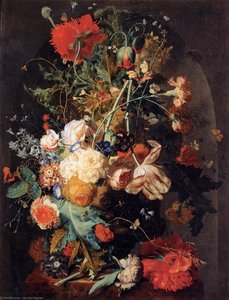
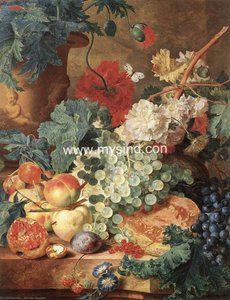
Beyond its technical brilliance, “Fruit and Flowers” is rich in symbolic meaning. The abundance of fruit – grapes, peaches, pumpkins – speaks directly to themes of prosperity, fertility, and the bounty of nature. The inclusion of flowers like poppies and lilies further amplifies this symbolism, each carrying its own specific associations: poppies representing beauty and passion, lilies symbolizing purity and innocence. But perhaps the most intriguing element is the subtle presence of a small cherub figure nestled amongst the arrangement. This detail, a nod to classical allusion, adds a layer of narrative complexity, hinting at themes of grace, harmony, and the connection between humanity and the natural world. The butterflies fluttering around the composition contribute to the overall sense of movement and vitality, suggesting the ephemeral nature of beauty itself.
A Legacy of Blossoms: Context and Artistic Influence
Jan van Huysum’s artistic lineage is deeply rooted in his family's legacy. His father, Justus van Huysum the Elder, was a respected flower painter, and his brothers, Jacob and Michiel, followed suit, establishing a tradition of botanical illustration that flourished within the Dutch Golden Age. Van Huysum himself wasn’t initially drawn to floral subjects; he experimented with landscapes early in his career. However, he quickly discovered his true calling in still life, mastering the art of rendering nature with breathtaking realism and an almost obsessive attention to detail. His work reflects a deep appreciation for the natural world, combined with a sophisticated understanding of artistic technique – a potent combination that cemented his place as one of the most celebrated flower painters of his time. The influence of artists like Caravaggio, known for his dramatic use of light and shadow, is subtly evident in Van Huysum’s compositions, adding to the overall sense of drama and intensity.
Today, reproductions of “Fruit and Flowers” offer a remarkable opportunity to bring this exquisite masterpiece into your home or office. Each hand-painted rendition captures the essence of Van Huysum's original work, faithfully recreating his meticulous detail, vibrant colors, and evocative atmosphere. It’s more than just a painting; it’s a window into a bygone era – a celebration of beauty, abundance, and the enduring power of art.
Related Artworks
Artist Biography
A Legacy of Blossoms: The Life and Art of Jan van Huysum
Jan van Huysum, a name synonymous with the exquisite flower paintings of the Dutch Golden Age, was born in Amsterdam on April 15, 1682. He wasn’t simply a painter of blooms; he was a master of illusion, capable of rendering petals and droplets with such breathtaking realism that viewers felt they could almost inhale their fragrance. Born into an artistic family—his father, Justus van Huysum the Elder, was also a respected flower painter, and his brothers Jacob and Michiel followed suit—Jan’s path seemed predetermined. However, he wasn't immediately drawn to floral subjects. Early in his career, he experimented with landscapes, described as “conventional and arcadian,” but it was within the delicate world of still life that his true genius blossomed.
The foundation of Van Huysum’s artistic education was laid by his father, a formative experience that instilled in him not only technical skill but also an understanding of the art market. Amsterdam during this period thrived as a center for commerce and culture, fostering a demand for luxurious and decorative paintings like those depicting lavish floral arrangements. This environment shaped Van Huysum’s approach; he wasn't merely replicating nature, but crafting idealized visions of beauty intended to delight and impress. His earliest dated work, completed in 1717 and now residing in the Louvre, already reveals a remarkable maturity and attention to detail, hinting at the mastery that was to come.
The Art of Detail: Technique and Style
What truly sets Van Huysum apart is his unparalleled technique. He employed smooth, glossy brushstrokes, building up layers of paint to create an almost enamel-like surface that enhanced the richness and vibrancy of his colors. But it wasn’t just about color; it was about light—the way it played across petals, illuminated water droplets clinging to leaves, and created a sense of depth and volume. He possessed an extraordinary eye for detail, meticulously capturing the textures of every flower, fruit, and leaf with astonishing precision. Stories circulated that he could paint details like ants and dew drops so realistically they were visible without magnification—a testament to his dedication and skill.
Van Huysum’s compositions are characterized by a refined elegance and balance. Unlike some of his contemporaries who favored crowded, overflowing arrangements, he consistently avoided imbalance or over-composition. His later works became more elaborate, certainly, but always maintained a sense of harmony and grace. He often incorporated elements of fantasy into his work, particularly in his landscapes which featured imaginary scenes with classical architectural details and motionless trees. These weren’t attempts at topographical accuracy, but rather evocative settings designed to showcase the beauty of the flowers they contained.
A Flourishing Reputation: Major Works and Legacy
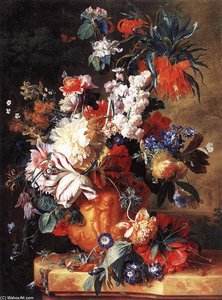
Throughout his lifetime, Jan van Huysum enjoyed considerable acclaim and financial success. His paintings were highly sought after by collectors, and he commanded high prices for his work. Today, his masterpieces can be found in prestigious museums around the world, including the Louvre in Paris, the National Gallery in London, and collections in Berlin and Amsterdam. Among his most celebrated works are Terracotta Vase with Flowers and Fruits, a stunning display of color and texture; Flowers and Fruits, showcasing his mastery of composition; and Bouquet of Flowers in an Urn, a testament to his ability to capture the ephemeral beauty of nature.
Van Huysum’s influence extended beyond his own time, inspiring generations of artists. Painters like Jan van Os and Johannes de Bosch clearly demonstrate his impact on subsequent floral still life traditions. He represents the pinnacle of Dutch Golden Age flower painting, a period defined by its meticulous observation of nature and its celebration of beauty. His legacy isn't simply about the numerous paintings he created, but also about the enduring appeal of his style—a style that continues to inspire artists and captivate audiences today. His work remains a powerful reminder of the artistry and skill required to transform fleeting moments of natural beauty into timeless works of art.
Family Connections & Artistic Lineage
- Justus van Huysum the Elder (1659–1716): Jan’s father, a prolific painter of flower pieces and decorative schemes.
- Jacob van Huysum (1688–1740): Jan's brother, also a notable artist specializing in botanical illustrations.
- Justus van Huysum the Younger (1685-1707): Another of Jan’s brothers who pursued painting but died young.
- Michiel van Huysum (1703–1777): A half-brother, also a flower painter.
- Francina Margaretha van Huysum: Jan’s daughter, who assisted him in his work and was herself a skilled flower painter.
The Van Huysum family represents a remarkable artistic lineage, contributing significantly to the rich tapestry of Dutch Golden Age painting. Jan, however, stands out as the most celebrated member, leaving an indelible mark on the history of art with his exquisite and enduring floral masterpieces.
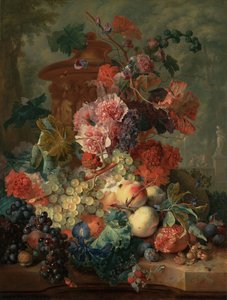
Jan van Huysum
1682 - 1749 , Netherlands
Quick Facts
- Artistic Movement Or Style: Dutch Golden Age, Still life
- Artists Or Movements Influenced By This Artist:
- Jan van Os
- Johannes de Bosch
- Artists Who Influenced This Artist: ['Justus van Huysum']
- Date Of Birth: April 15, 1682
- Date Of Death: February 8, 1749
- Full Name: Jan van Huysum
- Nationality: Dutch
- Notable Artworks:
- Terracotta Vase with Flowers
- Flowers and Fruits
- Bouquet of Flowers in an Urn
- Place Of Birth: Amsterdam, Netherlands
Related Articles
Van Gogh's Masterpieces: Explore 25 Iconic Paintings & Art for Your Home
Journey through Vincent van Gogh's 25 most iconic paintings! Explore 'Starry Night', 'Sunflowers,' and more—discover the stories, techniques & emotions behind these Post-Impressionist masterpieces. Find museum-quality art reproductions for your home at ArtsDot.com.

Dutch Masters: 10 Golden Age Paintings That Still Inspire |
Journey into the Dutch Golden Age! Explore 10 iconic paintings by Rembrandt, Vermeer & Hals. Discover the stories behind these Baroque masterpieces and find museum-quality art reproductions to elevate your home decor on .
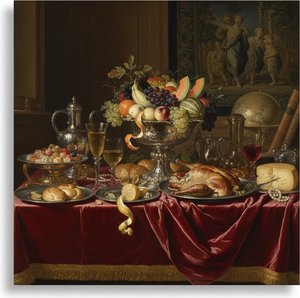
Abraham Hendricksz van Beyeren: Pioneering Dutch Still Life & the Banquet Tradition
Explore the captivating world of Dutch Golden Age still life with Abraham van Beyeren. Discover his innovative techniques, symbolic banquet scenes & lasting influence on art history. Learn about collecting these masterpieces.
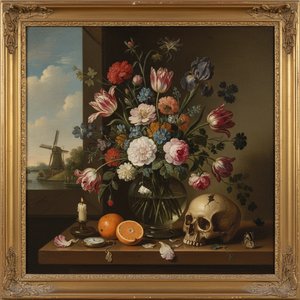
Jan Jansz Wijnants: A Study in Dutch Golden Age Still Life & Floral Transience
Explore the captivating world of Jan Wijnants and Dutch Golden Age still life painting. Discover symbolism, masterful techniques & lasting influence on floral art history. Learn more!

Rembrandt's Masterpieces: Explore 25 Iconic Paintings & Prints | ArtsDot
Journey through Rembrandt van Rijn's 25 most iconic paintings & etchings. Explore Dutch Golden Age masterpieces, dramatic chiaroscuro, and timeless portraits. Find museum-quality art reproductions to elevate your home decor on ArtsDot.com.