 Preview
 Send
Send Share
Share
 Details

 Download
 Similars
 X-Ray
X-Ray Diaporama
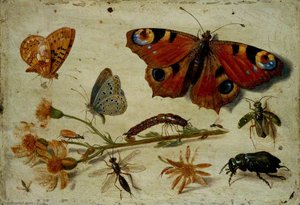
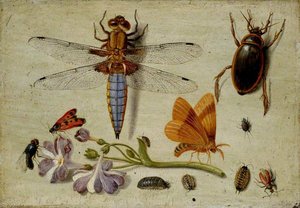
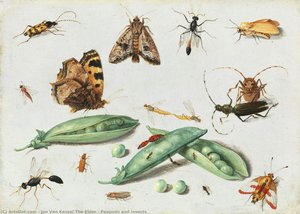
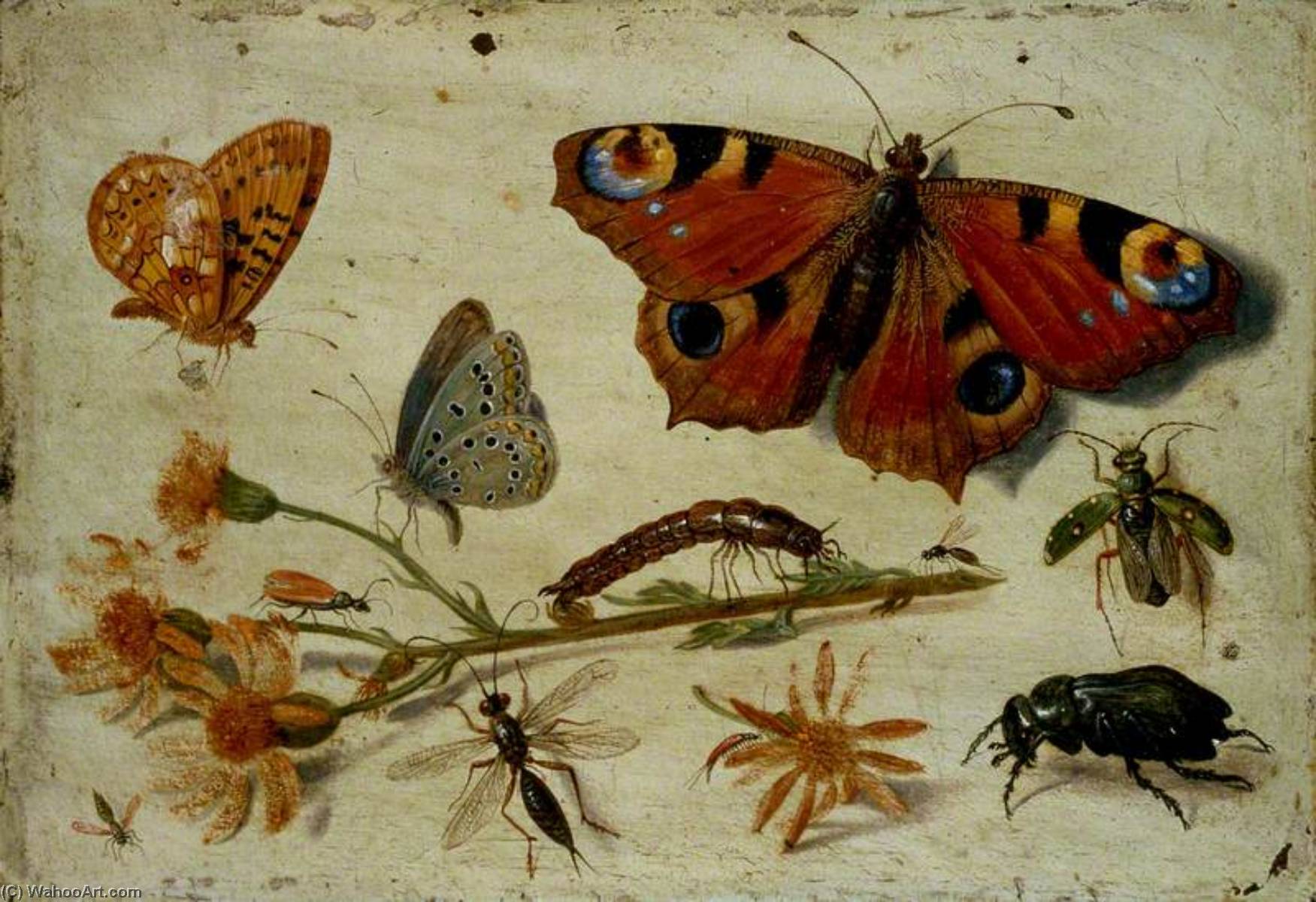
Three Butterflies, a Beetle and other Insects, with a Cutting of Ragwort
 Baroque
 1650
1650- Early Modern
 9.0 x 13.0 cm
 The Ashmolean Museum of Art And Archaeology
 Read More
Giclée / Art Print
Museum-quality giclée or canvas print with fast production and flexible finish options. ( Buy Hand Made Painting Buy Image)




P118B $10

P118H $10

P118W $10

P438Z $10

P508JH $12

P508YH $12

P805H $10

P805Z $10

P919BZ $10

P919G $10

P919XJ $10

P959ZH $10

P968JZ $12

W106C $8

W218G $10

W218JH $8

W218Y $10

W307PJ $10

W316G $10

W316PJ $8

W316Y $10

W398PJ $8

W4111J $10

W500HY $15

W500JH $15

W692G $12

W849H $8

W940BG $15

W953PJ $8




Pick from our preset sizes that match the artwork's original proportions.

You may enter your own dimensions to fit a specific frame or space. If your selected size does not match the original image's proportions, we will either crop the artwork or extend the image with a mirrored or solid-fill edge. A digital mockup will be sent for your approval before production begins.
Please note that the on-screen preview does not reflect the actual cropping or extension. Only the mockup will accurately show the final composition.
While custom sizes are available, we recommend selecting a dimension from the predefined list to preserve the original proportions.
Worldwide Delivery () in 2 weeks instead of standard 4/5 weeks. (24 August)

Free Worldwide Express Shipping

High-Quality Linen Canvas

Full Shipping Insurance

Customs Tax Refund Guarantee

True Color Matching Guarantee

60-Day Return Policy (Defects Only)

100% Money-Back Guarantee

Bulk Discount Offer
 Glass option is only available in size under 110 CM

Three Butterflies, a Beetle and other Insects, with a Cutting of Ragwort
Giclée / Art Print
Reproduction Size
-


Total Price
$ 63
Collectible Description
A Miniature Universe: The Delicate Majesty of Jan van Kessel the Elder
In the quiet intimacy of a 17th-century Flemish studio, there existed a profound fascination with the microscopic wonders of the natural world. Jan van Kessel the Elder, a master of meticulous observation, captured this curiosity in his breathtaking work, Three Butterflies, a Beetle and other Insects, with a Cutting of Ragwort. This painting is not merely a still life; it is a window into a hidden dimension, inviting the viewer to pause and witness the intricate architecture of life that often escapes the hurried human eye. Through his brush, the tiny movements of a beetle or the fragile translucency of a butterfly's wing are elevated to the level of high drama, transforming a small-scale composition into an expansive, breathing ecosystem.
The composition is a masterclass in balanced complexity. At the heart of the piece, three butterflies serve as luminous focal points, their wings acting as canvases of color and pattern that draw the eye inward. Surrounding them, a diverse cast of characters—beetles, grasshoppers, and other small invertebrates—populates the scene with a sense of lively movement. This insectoid ballet is anchored by the botanical presence of ragwort, whose delicate textures provide a soft, organic contrast to the chitinous armor of the beetles. The artist employs a technique characterized by extreme precision, where every vein in a leaf and every speckle on an insect's back is rendered with scientific accuracy, yet imbued with a painterly grace that prevents the work from feeling like a mere biological diagram.
To possess or display a reproduction of such a piece is to bring a sense of contemplative wonder into a modern interior. For the collector or the interior designer, this artwork offers a unique opportunity to introduce "micro-narratives" into a room. Its small scale—a mere 9 x 13 cm in its original form—makes it an exquisite jewel for a curated gallery wall or a sophisticated study. The painting’s ability to command attention through detail rather than sheer size allows it to integrate seamlessly into elegant, classical settings or provide a surprising, organic focal point within a minimalist contemporary space. It serves as a reminder of the beauty found in the small, the fleeting, and the overlooked.
Beyond its aesthetic allure, the work carries the weight of historical significance. As a descendant of the legendary Brueghel lineage, Jan van Kessel the Elder bridged the gap between the allegorical traditions of the Northern Renaissance and the burgeoning scientific spirit of the Age of Enlightenment. Each insect can be seen as a symbol of the divine order and the infinite complexity of creation. For those seeking to decorate with pieces that spark conversation and emotional resonance, this painting offers more than just decoration; it offers an invitation to rediscover the enchantment of the natural world, preserved forever in the timeless strokes of a Flemish master.
Related Artworks
Artist Biography
A Legacy of Miniature Wonders: The Life of Jan van Kessel the Elder
In the vibrant, bustling heart of seventeenth-century Antwerp, a period defined by both artistic splendor and scientific awakening, Jan van Kessel the Elder emerged as a master of the minute. Born in 1626 into one of the most illustrious artistic dynasties in Flemish history, Kessel was more than just a painter; he was a visual chronicler of the natural world. As the grandson of the legendary Jan Brueghel the Elder and the son of Hieronymus van Kessel the Younger, his very existence was woven into the fabric of the Northern Mannerist tradition. Yet, while he inherited a profound respect for the allegorical depth and lush landscapes of his forebears, Kessel sought to capture something far more intimate: the hidden, microscopic marvels that resided in the shadows of gardens and the delicate veins of flower petals.
His early training was a rigorous immersion into the Antwerp school, shaped by the disciplined observation required of a true blomschilder. By joining the Guild of Saint Luke in 1644, he formally committed himself to the art of botanical painting. This period of his life was marked by an extraordinary synthesis of artistic flair and scientific curiosity. Influenced by the works of masters like Daniel Seghers and Joris Hoefnagel, Kessel did not merely paint flowers; he studied them with the eye of a naturalist. His work became a bridge between the aesthetic beauty of the Baroque era and the burgeoning empirical spirit of the Scientific Revolution, turning the canvas into a window through which the wonders of entomology and botany could be examined by the curious minds of Europe.
The Art of Precision: Technique and Subject Matter
To gaze upon a true Kessel masterpiece is to enter a realm where scale disappears and detail reigns supreme. He was particularly renowned for his use of copper panels, a medium that provided a luminous, smooth surface capable of supporting his incredibly fine brushwork. This choice of support allowed him to achieve a level of brilliance and clarity that oil on canvas often struggled to match. On these gleaming surfaces, Kessel rendered the iridescent wings of butterflies, the translucent bodies of beetles, and the velvety textures of rose petals with such startling accuracy that his paintings often functioned as miniature encyclopedological studies.
His repertoire was as diverse as the natural world itself, ranging from:
- Exquisite Floral Still Lifes: Lavish bouquets and garlands that celebrated the ephemeral beauty of seasonal blooms.
- Entomological Studies: Meticulous depictions of insects, often arranged in compositions that mirrored the "cabinets of curiosities" so beloved by the era's collectors.
- Allegorical Compositions: Larger-scale works where he utilized animals and elements to represent complex themes such as the Four Continents or the Four Elements.
- Landscape and Marine Scenes: Occasional forays into river landscapes and maritime subjects that showcased his versatility beyond the microscopic.
There is a profound sense of wonder in his ability to manipulate nature through artifice. In his hands, a simple sprig of rosemary becomes a stage for a drama of tiny creatures, and a single butterfly becomes a jewel of light and color. This mastery of the miniature allowed his works to be highly prized by a sophisticated clientele, including wealthy merchants, nobles, and foreign luminaries who sought to possess these small, portable wonders within their private collections.
Historical Significance and Enduring Influence
The significance of Jan van Kessel the Elder extends far beyond the borders of Antwerp. He represents a pivotal moment in art history when the boundaries between the artist's studio and the scientist's laboratory began to blur. His ability to infuse scientific accuracy with aesthetic elegance helped define the Flemish Baroque style for a generation. Through his meticulous documentation of species, he contributed to the cultural zeitgeist of an age obsessed with discovery and the cataloging of the unknown.
Though his life was cut short in 1679, his influence persisted through his family and his enduring impact on the genre of still life. His descendants continued the family tradition, ensuring that the Kessel name remained synonymous with botanical excellence. Today, when we look at his works in institutions such as the National Gallery of Art, we do not merely see old paintings; we see the heartbeat of a century that dared to look closer, finding infinite complexity in the smallest of living things. He remains a testament to the idea that true greatness is often found not in the grand and sweeping gesture, but in the quiet, breathtaking precision of a single, perfectly rendered wing.
jan van kessel the elder
1626 - 1679
Quick Facts
- Artistic Movement Or Style: Baroque
- Artists Who Influenced This Artist:
- Jan Bruegel the Elder
- Simon de Vos
- Daniel Seghers
- Joris Hoefnagel
- Frans Snijders
- Date Of Birth: 1626
- Date Of Death: 1679
- Full Name: Jan van Kessel the Elder
- Nationality: Flemish
- Notable Artworks:
- Vanitas Still Life
- A river landscape with a windmill
- The Mockery of the Owl
- Place Of Birth: Antwerp
Related Articles
Fluttering Beauty: Elevate Your Interior with Exquisite Butterfly Artworks and Nature-Inspired Masterpieces
Discover the transformative power of butterfly art. From impressionist oil paintings to custom nature-inspired masterpieces, elevate your home with exquisite, hand-painted textures and vibrant colors designed to inspire serenity and elegance in every room.
Masterpieces of Boston: Explore 25 Iconic Artworks | ArtsDot
Journey through 25 iconic artworks at Boston's MFA! Explore masterpieces by Monet, Sargent, Van Gogh & more. Discover art history, techniques & find museum-quality reproductions for your home on ArtsDot.com.

Fast Global Shipping for Hotel Designers: Receive Framed Art in Just 3–4 Weeks (Unframed in 3 Weeks) – Cut Delivery Time from 5 to 3 Weeks
Discover how ArtsDot’s expert hand‑painted reproductions reach hotel designers in just 3–4 weeks—framed or unframed—cutting delivery from 5 to 3 weeks. Trust our global logistics, quality guarantee, and bespoke art consultation for flawless hospitality spaces.
Jan van Kessel the Elder: A Baroque Master of Floral Still Life & Miniature Portraiture
Discover the exquisite detail of Jan van Kessel the Elder's Baroque floral still lifes & captivating miniatures. Explore his artistic legacy, scientific precision, and lasting influence on 17th-century Flemish painting.
Francis Bacon's Masterpieces: Exploring 25 Iconic Paintings | ArtsDot
Delve into the haunting world of Francis Bacon with ArtsDot. Explore 25 iconic paintings, from his visceral portraits to powerful triptychs. Discover the stories behind these masterpieces & find museum-quality art reproductions for your home. Explore the full collection online!