

 Preview
 Send
Send Share
Share
 Details

 Download
 Similars
 X-Ray
X-Ray Diaporama
 Stats
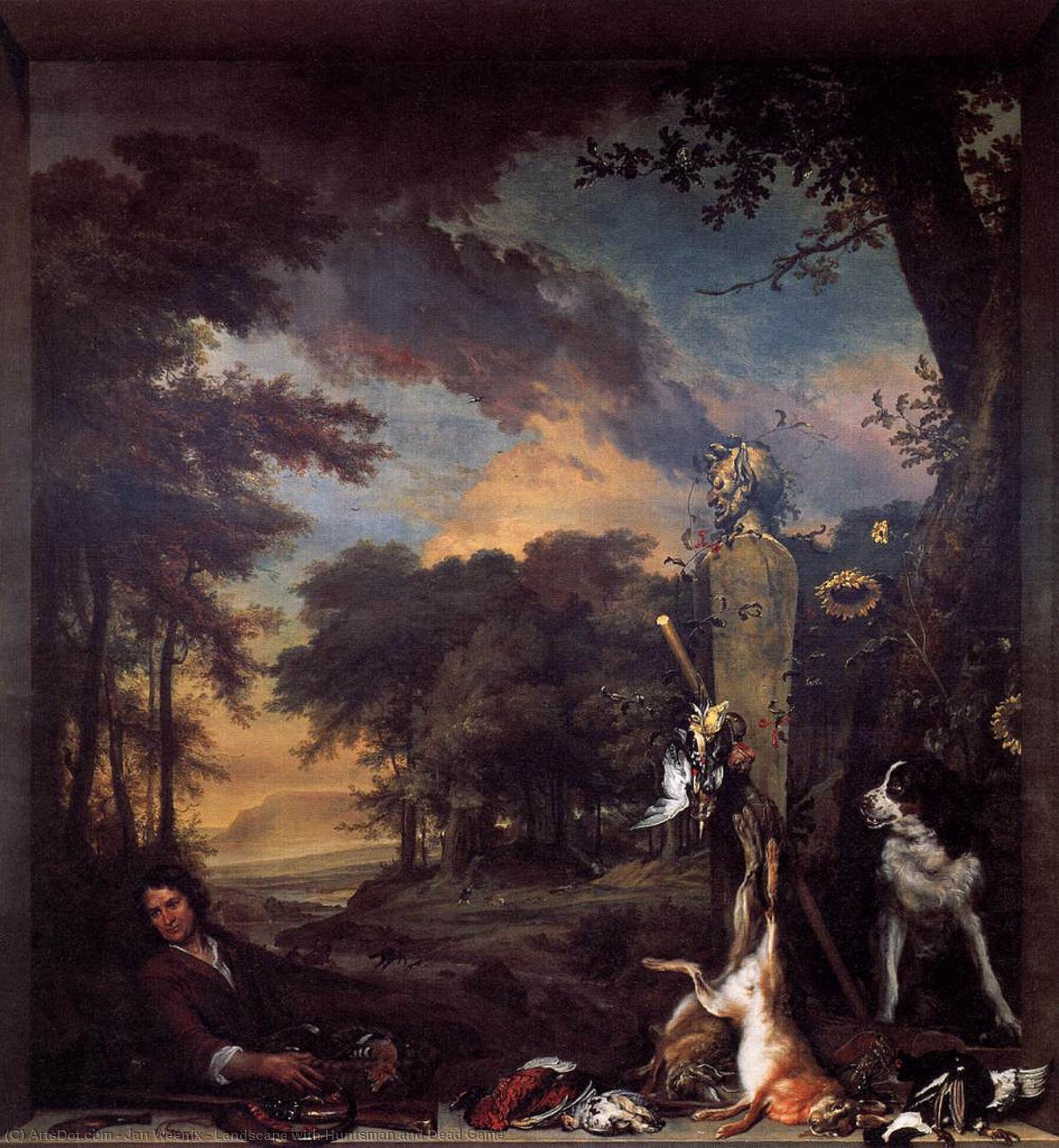
StatsLandscape with Huntsman and Dead Game
 Acrylic On Canvas
- WallArt
- Dutch Golden Age Realism
 1697
1697 344.0 x 323.0 cm
 National Gallery of Scotland
 Read More
Purchase a high-resolution, enhanced digital image, far superior to the online preview.
Each file is meticulously prepared by our in-house specialists using advanced tools and expert manual retouching. We ensure every image has exceptional clarity, precise color accuracy, and fine detail.
The final file is delivered via email within 72 hours, optimized for immediate use in professional, editorial, and print environments. This is the same quality trusted by top-tier design studios, publishers, and galleries.
Digital Image
Download a high-resolution file for personal display, printing, and creative projects. ( Switch to Print Buy Hand Made Painting)
Included in Every Digital Image Order
Expert Digital Delivery, Guaranteed
When you choose ArtsDot.com, you're not just getting an image - you're receiving a professionally enhanced digital artwork, crafted with precision and backed by a satisfaction guarantee. Here's everything that comes with your order, automatically:

Fast Email Delivery
Your high-resolution digital image file will be emailed to you within 72 hours of ordering - ready for immediate use.

AI-Enhanced Digital File
Your artwork is professionally optimized using advanced AI tools and manual editing, ensuring maximum detail, clarity, and color accuracy.

Free Lifetime Re-Delivery
Accidentally deleted or lost your file? No worries - we'll resend it to you anytime, free of charge.

No Import Fees - Ever
Enjoy your artwork instantly with zero customs, duties, or delivery fees - digital downloads are always tax-free.

Color Accuracy Guarantee
We ensure your digital image reflects the original colors as closely as possible using professional tools and color management.

100-Day Satisfaction Guarantee
If you're not satisfied with your digital image, we'll revise it or refund 100% within 100 days - no questions asked.

100% Money-Back Guarantee
Not satisfied? Get a full refund within 100 days of receiving your digital file - no questions asked.

Bulk Order Discounts
Buy 3 images, save 10% - Buy 5, save 15% - Buy 10+, save 20%. Great for creative projects, galleries, and agencies.
A Moment Frozen in Time: Jan Weenix’s “Landscape with Huntsman and Dead Game”
Jan Weenix's "Landscape with Huntsman and Dead Game," painted in 1697, is more than just a depiction of a hunting scene; it’s a meticulously crafted tableau that speaks volumes about the Dutch Golden Age’s fascination with nature, death, and the fleeting beauty of the natural world. Measuring an impressive 344 x 323 cm, this monumental canvas immediately commands attention, drawing the viewer into a carefully orchestrated composition brimming with detail and subtle symbolism. The painting offers a poignant meditation on mortality, skill, and the relationship between humanity and the wilderness – themes that resonated deeply within Dutch society during the late 17th century.
The Artist’s Legacy: Jan Weenix and the Dutch Realist Tradition
Born in Amsterdam in 1641, Jan Weenix was a pivotal figure in the development of Dutch realism. He apprenticed under his father, Jan Baptist Weenix, a renowned painter known for his masterful depictions of still lifes, particularly those featuring animal subjects. This familial connection provided Weenix with an unparalleled foundation in observing and rendering nature with astonishing accuracy. Unlike many artists who sought inspiration in Italy’s idealized landscapes, Weenix remained firmly rooted in the Dutch countryside, capturing its rugged beauty and inherent drama. His work reflects a commitment to portraying the world as he saw it – with all its imperfections and transient qualities – rather than imposing an artificial or romanticized vision.
A Study in Light and Shadow: Technique and Composition
Weenix’s technical prowess is immediately evident in the painting's masterful use of light and shadow. He employs a dramatic chiaroscuro technique, bathing the scene in pools of luminous light that contrast sharply with deep, enveloping shadows. This creates a sense of depth and volume, particularly noticeable in the rendering of the dead game – a stag and two hounds – which appear almost palpably real. The composition itself is carefully balanced, guiding the viewer’s eye through the landscape. The placement of the huntsman, positioned slightly off-center, draws attention to his posture and expression, while the scattered birds and distant trees contribute to the overall sense of spaciousness and tranquility. Note the subtle variations in brushstrokes; Weenix utilizes a broken technique, layering thin washes of paint to build up texture and create an illusion of atmospheric perspective.
Symbolism and Mortality: Unpacking the Scene’s Layers
Beyond its technical brilliance, “Landscape with Huntsman and Dead Game” is rich in symbolic meaning. The act of hunting itself held complex significance during this period, representing both skill and a brutal confrontation with nature. The dead game serves as a stark reminder of mortality – the fleeting nature of life and the inevitability of death. The huntsman’s posture, alert yet contemplative, suggests a recognition of this reality. The presence of the dogs, loyal companions in the pursuit, underscores the bond between humans and animals. Furthermore, the scattered birds throughout the scene can be interpreted as symbols of hope or resurrection – a visual echo of the cycle of life and death that permeates the natural world. The inclusion of a tree on the left side may represent strength and resilience, mirroring the enduring spirit of nature.
This painting offers a profound glimpse into the artistic sensibilities of 17th-century Holland, showcasing Weenix’s exceptional skill in capturing the essence of the landscape and imbuing his work with layers of symbolic meaning. A reproduction of “Landscape with Huntsman and Dead Game” is not merely an image; it's an invitation to contemplate the beauty and fragility of existence.
Related Artworks
Artist Biography
A Legacy of Dutch Realism: The Life and Art of Jan Weenix
Jan Weenix, born in Amsterdam in 1641, emerged from a lineage steeped in artistic tradition, inheriting a passion for painting from his father, the esteemed Jan Baptist Weenix. While precise details surrounding his early years remain somewhat elusive, it’s clear that young Jan received foundational training within his father's workshop, absorbing techniques crucial to depicting both still life and animal subjects—a hallmark of Dutch Golden Age artistry. This familial influence wasn’t merely technical; it instilled a deep appreciation for the meticulous observation of nature and a commitment to rendering its beauty with striking realism. The elder Weenix’s own artistic journey, including sojourns in Italy that infused his work with an Italianate sensibility, undoubtedly shaped Jan's developing aesthetic as well. Though initially overshadowed by his father’s reputation, Jan quickly distinguished himself, forging a unique path within the vibrant landscape of 17th-century Dutch painting.The Flourishing of a Baroque Style
Weenix’s artistic style blossomed during the height of the Baroque period, and it reflects the era's penchant for drama, rich detail, and dynamic composition. He wasn’t working in isolation; influences from contemporaries like Hendrick Cornelisz Vroom, renowned for his marine paintings, and potentially other animalier specialists such as Melchior de Hondecoeter and Gillis Claesz d'Hondecoeter, subtly informed his approach. However, Weenix synthesized these inspirations into a style distinctly his own. His canvases are characterized by an almost photographic precision in the rendering of textures—the sheen of feathers, the softness of fur, the delicate translucence of fruit – all achieved through masterful brushwork and a keen understanding of light and shadow. Chiaroscuro, the dramatic interplay between light and dark, is employed to create depth and visual interest, drawing the viewer into the scene with compelling realism. A vibrant color palette further enlivens his subjects, imbuing them with a sense of immediacy and vitality. He possessed an exceptional skill in arranging elements within the frame, creating balanced and harmonious compositions that are both visually appealing and narratively engaging.Masterpieces and Patronage
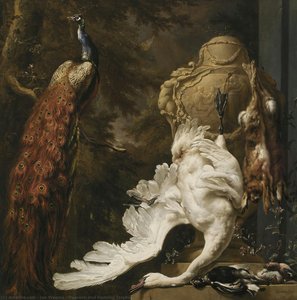
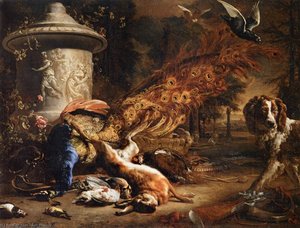
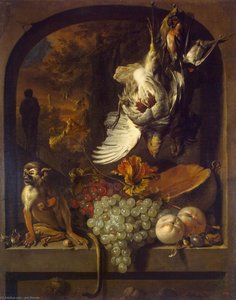
Throughout his career, Jan Weenix produced a substantial body of work celebrated for its technical brilliance and captivating subject matter. Paintings like Hunting and Fruit Still Life next to a Garden Vase (1714) exemplify his ability to seamlessly integrate diverse elements—game birds, luscious fruits, architectural details – into a complex and visually stunning arrangement. Still Life with a Hare and other Game (1697) showcases his mastery of animal anatomy and texture, capturing the lifelike quality of his subjects with remarkable accuracy. Even smaller works, such as A Seated Monkey (before 1685), reveal his talent for imbuing animals with personality and expressive character. This skill did not go unnoticed by prominent patrons. In 1702, Weenix received an invitation to the court of Johann Wilhelm, Elector Palatine, where he worked alongside other renowned artists, creating large-scale hunting scenes for Schloss Bensberg—a testament to his growing reputation and artistic prowess. These commissions provided him with both financial security and opportunities to further refine his skills.A Lasting Influence on Dutch Art
Jan Weenix played a pivotal role in popularizing hunting still lifes and game paintings during the Baroque period, elevating these genres beyond mere decoration. His works were highly sought after by collectors, contributing significantly to the development of Dutch artistic traditions. He didn’t simply replicate nature; he interpreted it through his unique lens, imbuing his paintings with a sense of realism, drama, and aesthetic beauty that resonated deeply with contemporary audiences. His legacy extends beyond his own creations; his daughter, Maria Weenix, continued the family tradition as a skilled flower painter, ensuring that the Weenix name remained synonymous with artistic excellence for generations to come. Today, Jan Weenix’s paintings are treasured in museums and private collections worldwide, continuing to inspire artists and captivate audiences with their masterful depictions of the natural world—a testament to his enduring contribution to the rich tapestry of Dutch art history.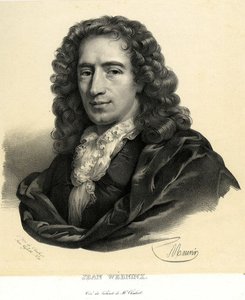
Jan Weenix
1641 - 1719 , Netherlands
Quick Facts
- Artistic Movement Or Style: Dutch Baroque
- Artists Or Movements Influenced By This Artist: ['Maria Weenix']
- Artists Who Influenced This Artist:
- Jan Baptist Weenix
- Hendrick Vroom
- Date Of Birth: 1641
- Date Of Death: 1719
- Full Name: Jan Weenix
- Nationality: Dutch
- Notable Artworks:
- Hunting and Fruit Still Life
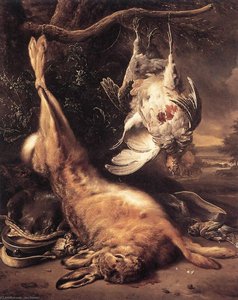
- Still Life with a Hare
- A Seated Monkey
- The White Peacock
- Place Of Birth: Amsterdam, Netherlands