 Preview
 Send
Send Share
Share
 Details

 Download
 Similars
 X-Ray
X-Ray Diaporama
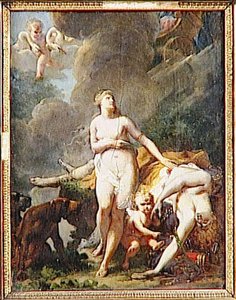
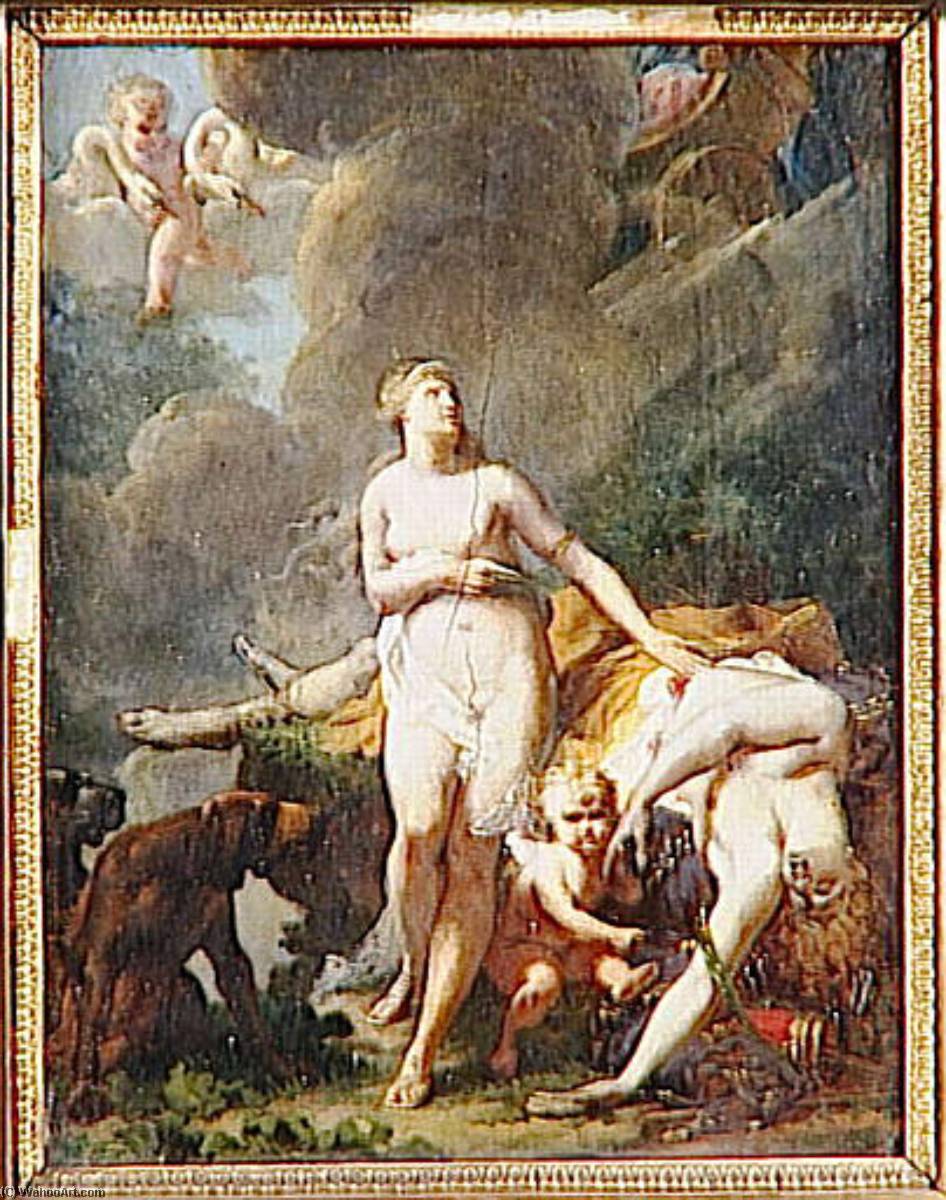
LA MORT D'ADONIS


 Read More
Hand Made Oil Reproduction
Hand-painted oil on canvas in your size and frame, made to order by our artists. ( Buy Print Buy Image)




P118B $10

P118H $10

P118W $10

P438Z $10

P508JH $12

P508YH $12

P805H $10

P805Z $10

P919BZ $10

P919G $10

P919XJ $10

P959ZH $10

P968JZ $12

W106C $8

W218G $10

W218JH $8

W218Y $10

W307PJ $10

W316G $10

W316PJ $8

W316Y $10

W398PJ $8

W4111J $10

W500HY $15

W500JH $15

W692G $12

W849H $8

W940BG $15

W953PJ $8




Pick from our preset sizes that match the artwork's original proportions.

You may enter your own dimensions to fit a specific frame or space. If your selected size does not match the original image's proportions, we will either crop the artwork or extend the painting with additional hand-painted elements. A digital mockup will be sent for your approval before production begins.
Please note that the on-screen preview does not reflect the actual cropping or extension. Only the mockup will accurately show the final composition.
While custom sizes are available, we recommend selecting a dimension from the predefined list to preserve the original proportions.
After order, ArtsDot.com team will email client for instructions and provide a mockup preview
Worldwide Delivery () in 3/4 weeks instead of standard 5 weeks. (17 August). No compromise on quality.

Free Worldwide Express Shipping

High-Quality Linen Canvas

Full Shipping Insurance

Customs Tax Refund Guarantee

True Color Matching Guarantee

60-Day Return Policy (Defects Only)

100% Money-Back Guarantee

Bulk Discount Offer
 Glass option is only available in size under 110 CM

LA MORT D'ADONIS
Reproduction Medium
Reproduction Size
-


Total Price
$ 338
Artwork Description
Jean-Baptiste Regnault’s “La Mort d’Adonis”: A Study in Melancholy Beauty
Jean-Baptiste Regnault's "La Mort d’Adonis," painted circa 1814, is not merely a depiction of death; it’s a profound meditation on loss, beauty, and the poignant intersection of mortal sorrow. This dramatic scene, rendered in oil on canvas with meticulous detail, draws heavily from classical mythology – specifically, the tragic tale of Adonis, slain by his brother Actaeon while bathing. Regnault masterfully captures the raw emotion of Venus’s grief as she surveys the lifeless form of her beloved, a tableau steeped in both exquisite beauty and undeniable despair.
The painting's composition immediately commands attention. A pyramidal structure anchors the scene, with Venus, draped in flowing crimson robes, positioned at its apex – a focal point radiating sorrow and vulnerability. Around her, figures are arranged in dynamic poses: attendants weeping, cherubs offering solace, and the fallen Adonis himself, his youthful beauty tragically extinguished. Diagonal lines created by limbs and drapery contribute to a sense of movement and unrest, mirroring the emotional turmoil within the scene. The rocky backdrop, rendered with subtle atmospheric perspective, grounds the drama while simultaneously emphasizing the desolate nature of loss.
Neoclassical Elegance and Romantic Intensity
“La Mort d’Adonis” firmly resides within the Neoclassical style, a movement that sought to revive the ideals of ancient Greece and Rome. Regnault adheres to this aesthetic through idealized forms, balanced compositions, and a clear sense of order – yet, beneath this surface elegance lies a palpable undercurrent of Romanticism. The heightened emotional intensity, the dramatic lighting, and the focus on individual suffering betray a sensitivity that transcends the rigid constraints of Neoclassicism. The artist’s use of light is particularly noteworthy; it's diffused and soft, casting gentle shadows that model the figures with an almost ethereal quality, enhancing the painting’s melancholic mood.
Regnault’s technique showcases a remarkable command of oil paint. Layered brushstrokes build up form and texture, creating a rich surface that invites close examination. The artist skillfully employs glazes to achieve subtle color transitions, particularly in the drapery and skin tones, lending them an almost luminous quality. The attention to detail is evident in every aspect – from the delicate folds of Venus’s robes to the intricate patterns on the cherubs' wings. This meticulous approach elevates the painting beyond a simple illustration of a myth; it becomes a testament to Regnault’s artistic skill and his ability to capture the essence of human emotion.
Symbolism and Emotional Resonance
Beyond its narrative content, “La Mort d’Adonis” is rich in symbolism. The slain Adonis represents not only physical death but also the loss of innocence and beauty. Venus's grief embodies a universal sorrow – the pain of separation, the fragility of love, and the inevitability of mortality. The weeping attendants symbolize compassion and empathy, while the cherubs offer a glimmer of hope amidst the darkness. The color palette—dominated by earthy browns, ochres, and muted greens—underscores the somber mood, punctuated by flashes of pale flesh tones that highlight the vulnerability of the figures.
The painting’s enduring power lies in its ability to evoke a profound emotional response. It is not simply a depiction of a tragic event; it's an exploration of the human condition – our capacity for both exquisite beauty and devastating sorrow. “La Mort d’Adonis” remains a poignant reminder of the ephemeral nature of life and the timelessness of grief, making it a captivating work of art that continues to resonate with viewers centuries after its creation.
Additional Research & Context
- Useful Links:
- Jean-Baptiste Regnault’s ‘La Mort d’Adonis’
- Jean-Baptiste Regnault Biography
- Yves de la Casinière (related composer)
Further Information: A detailed examination of the painting reveals a masterful blend of classical influences and Romantic sensibilities, solidifying Regnault’s position as a significant figure in 18th-century French art. The Christie's auction record (linked above) provides valuable insights into its historical value and provenance.
Related Artworks








Artist Biography
The Grandeur of Neoclassicism: The Life and Legacy of Jean-Baptiste Regnault
In the vibrant and turbulent landscape of late 18th-century French art, few figures commanded as much respect for their technical precision and classical grace as Jean-Baptiste Baron Regnault. Born in 1754, Regnault emerged during an era defined by a profound longing for the ideals of antiquity. While history often casts a spotlight on his contemporary and rival, Jacques-Louis David, Regnault carved out a distinct and luminous space within the Neoclassical movement. His work was not merely a reaction to the excesses of the Rococo, but a deliberate, poetic pursuit of harmony, balance, and the eternal beauty found in mythological and historical narratives.
Regnault’s artistic journey was one of rigorous discipline and academic excellence. His mastery of the human form and his ability to imbue flesh with a soft, ethereal glow were products of intense study. He navigated the prestigious corridors of the French art world, earning accolades that solidified his status among the elite. This period of his life was marked by a deep engagement with the classical tradition, drawing inspiration from the sculptural perfection of ancient Greece and Rome. His training allowed him to move beyond simple imitation, enabling him to infuse his compositions with a sense of movement and emotional resonance that felt both timeless and immediate.
A Mastery of Myth and Emotion
The true essence of Regnault’s genius lies in his ability to transform static mythological subjects into breathing, emotive dramas. He possessed a rare talent for capturing the tension between the divine and the mortal. In works such as La Mort d'Adonis, one can witness his profound command over the themes of mortality and beauty. The painting serves as a poignant study in tragedy, where the exquisite detail of the figures contrasts sharply with the heavy, somber atmosphere of loss. Regnault did not merely paint scenes; he staged emotional experiences, using light and shadow to guide the viewer through the psychological depths of his characters.
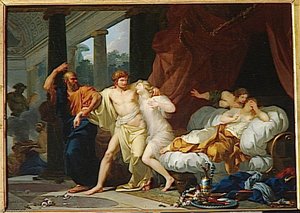
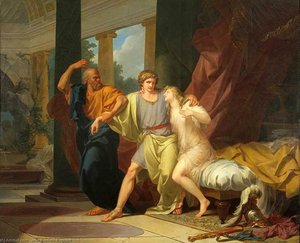
His repertoire was equally diverse, ranging from the intensely spiritual to the intellectually provocative. In The Descent from the Cross, Regnault utilizes a more dramatic, almost Baroque-inspired intensity to convey the profound grief and religious fervor of the scene. Here, the weight of the body and the visceral reality of the moment are rendered with a realism that commands reverence. Conversely, in works like Socrate Arrachant Alcibiade du Sein de la Volupté, he explores the intellectual struggles of the classical age. This piece showcases his ability to depict philosophical conflict through the interplay of light and shadow, illustrating the struggle between reason and temptation with masterful composition.
Historical Significance and Artistic Influence
Regnault’s importance extends far beyond his individual canvases; he was a pivotal figure in the evolution of French academic painting. As a teacher and a prominent member of the artistic community, his influence rippled through the next generation of painters, including artists like Guérin and Lorimier. His style—characterized by a certain softness and a more lyrical approach to Neoclassicism compared to David’s starker, more rigid compositions—offered an alternative vision of classical beauty that appealed to a wide range of sensibilities.
To understand the breadth of his contribution, one might consider the following pillars of his career:
- Technical Virtuosity: His unparalleled ability to render anatomical accuracy and delicate textures, particularly in skin and drapery.
- Narrative Depth: The capacity to weave complex allegorical meanings into historical and mythological scenes, making them accessible yet profound.
- Stylistic Versatility: A unique blend of Neoclassical order with a more fluid, emotive sensibility that bridged the gap between different artistic eras.
- Academic Legacy: His role in shaping the aesthetic standards of the French Academy and influencing the trajectory of 19th-century European art.
Though the tides of art history eventually shifted toward Romanticism and beyond, the works of Jean-Baptiste Regnault remain enduring testaments to an era of unparalleled elegance. His paintings continue to captivate modern audiences, offering a window into a world where the pursuit of perfection, the exploration of myth, and the celebration of human emotion were harmoniously intertwined.
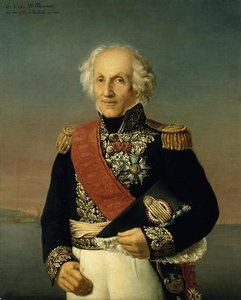
jean baptiste baron regnault
1754 - 1829
Quick Facts
- Artistic Movement Or Style: Landscape painting
- Artists Or Movements Influenced By This Artist: ["Gainsborough's manner"]
- Artists Who Influenced This Artist: ['Thomas Gainsborough']
- Date Of Birth: 1754
- Date Of Death: 1797
- Full Name: Gainsborough Dupont
- Nationality: British
- Notable Artworks:
- Wooded Landscape
- Riders and Packhorses
- Place Of Birth: Sudbury, Suffolk
Related Articles

Bronze Sculptures That Defined Art History | ArtsDot
Journey through art history with our Top 10 bronze sculptures! Explore masterpieces by Rodin, Michelangelo & more. Discover stories behind iconic statues and find museum-quality reproductions for your home decor at ArtsDot.com.

The Enduring Form: Exploring Themes & Techniques in Sculpture Across Historical Periods
Explore the rich history of sculpture from ancient masterpieces to contemporary innovations. Discover key techniques, influential artists & investment potential for discerning art collectors.
The Enduring Allure of Marble in Art History: From Classical Sculpture to Modern Abstraction
Explore the captivating history of marble sculpture from ancient Greece to modern art. Discover renowned artists like Canova & Michelangelo, carving techniques, and investment insights at ArtsDot.

Bronze Age to Modern Masters: 10 Sculptures That Redefined Art | ArtsDot
Journey through art history with 10 legendary bronze sculptures – from Michelangelo's David to Rodin’s Thinker. Explore the stories, techniques & timeless beauty of these masterpieces. Find museum-quality reproductions & elevate your home decor on ArtsDot.com.
The Enduring Form: Sculpture Across History, Technique & Emotional Resonance
Explore the rich history of sculpture with ArtsDot. Discover key techniques, influential artists & investment potential for discerning collectors. Expert insights into valuing and collecting timeless masterpieces.