 Preview
 Send
Send Share
Share
 Details

 Download
 Similars
 X-Ray
X-Ray Diaporama
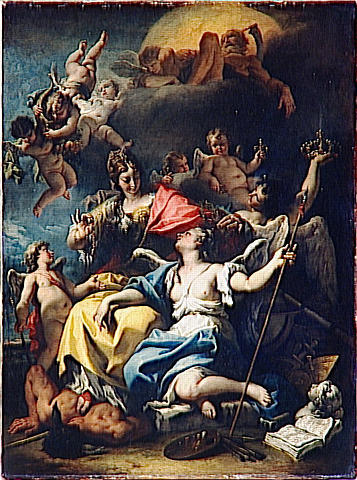
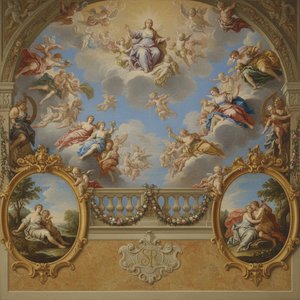
ALLEGORIE DE LA FRANCE, SOUS LA FIGURE DE MINERVE (LA SAGESSE) QUI FOULE AUX PIEDS L'IGNORANCE ET COURONNE LA VERTU GUERRIERE


 Read More
Hand Made Oil Reproduction
Hand-painted oil on canvas in your size and frame, made to order by our artists. ( Buy Print Buy Image)




P118B $10

P118H $10

P118W $10

P438Z $10

P508JH $12

P508YH $12

P805H $10

P805Z $10

P919BZ $10

P919G $10

P919XJ $10

P959ZH $10

P968JZ $12

W106C $8

W218G $10

W218JH $8

W218Y $10

W307PJ $10

W316G $10

W316PJ $8

W316Y $10

W398PJ $8

W4111J $10

W500HY $15

W500JH $15

W692G $12

W849H $8

W940BG $15

W953PJ $8




Pick from our preset sizes that match the artwork's original proportions.

You may enter your own dimensions to fit a specific frame or space. If your selected size does not match the original image's proportions, we will either crop the artwork or extend the painting with additional hand-painted elements. A digital mockup will be sent for your approval before production begins.
Please note that the on-screen preview does not reflect the actual cropping or extension. Only the mockup will accurately show the final composition.
While custom sizes are available, we recommend selecting a dimension from the predefined list to preserve the original proportions.
After order, ArtsDot.com team will email client for instructions and provide a mockup preview
Worldwide Delivery () in 3/4 weeks instead of standard 5 weeks. (17 August). No compromise on quality.

Free Worldwide Express Shipping

High-Quality Linen Canvas

Full Shipping Insurance

Customs Tax Refund Guarantee

True Color Matching Guarantee

60-Day Return Policy (Defects Only)

100% Money-Back Guarantee

Bulk Discount Offer
 Glass option is only available in size under 110 CM

ALLEGORIE DE LA FRANCE, SOUS LA FIGURE DE MINERVE (LA SAGESSE) QUI FOULE AUX PIEDS L'IGNORANCE ET COURONNE LA VERTU GUERRIERE
Reproduction Medium
Reproduction Size
-


Total Price
$ 263
Artwork Description
The Weight of Wisdom: Sebastiano Ricci’s Allegory of France
Sebastiano Ricci's "Allegorie de la France, Sous la Figure de Minerve," painted in 1718, is more than just a decorative fresco; it’s a potent visual argument for the burgeoning power and philosophical direction of Louis XIV’s France. This monumental work, now housed within the Louvre Museum, captures a pivotal moment – the assertion of reason and virtue against the encroaching darkness of ignorance – rendered with Ricci's signature blend of dramatic Baroque intensity and luminous Venetian light. The painting immediately commands attention, not merely for its scale but for the carefully orchestrated drama unfolding within its richly colored depths.
At first glance, the scene presents a complex allegorical tableau. Minerva, the Roman goddess of wisdom, stands triumphant at the center, her helmet ablaze with the sun – a direct reference to Louis XIV’s claim to divine right and his association with Apollo, the god of light and reason. She is not simply observing; she actively intervenes, wielding a staff to push back against a swirling vortex of darkness representing Ignorance. Beneath her feet lies a fallen figure, symbolizing the vanquished past, while a radiant figure crowned with laurels embodies Virtue, being bestowed upon by Minerva herself. The composition isn’t static; it's a dynamic struggle, a visual representation of France’s intellectual and political ascent.
A Venetian Master in the Heart of French Grandeur
Ricci, born in Belluno in 1659 and trained primarily in Venice, was a fascinating figure – an Italian artist who profoundly influenced the artistic landscape of France. His style, deeply rooted in the late Baroque traditions of Venice, is characterized by its dramatic use of light and shadow, rich color palettes, and dynamic compositions. He skillfully adapted these Venetian techniques to the demands of French courtly painting, creating works that were both visually stunning and politically charged. Ricci’s background as an uncle to Marco Ricci, a landscape painter, also subtly informs the work; even within this allegorical scene, there's a sense of depth and atmospheric perspective, hinting at the natural world beyond the immediate narrative.
The fresco was originally conceived as a “morceau de réception,” or piece for presentation to the Académie Royale de Peinture et de Sculpture in Paris. This suggests that Ricci intended it not just as a decorative commission but also as a demonstration of his artistic prowess and a subtle endorsement of the French monarchy’s values. The meticulous detail, from the folds of Minerva's robes to the expressions on the faces of the figures, speaks to Ricci’s mastery of technique and his commitment to creating works that were both visually impressive and intellectually stimulating.
Symbolism and the Language of Power
Beyond its immediate narrative, “Allegorie de la France” is laden with symbolic meaning. The choice of Minerva as the central figure is deliberate; she represents not just wisdom but also justice, strategic thinking, and the pursuit of knowledge – qualities highly valued by Louis XIV’s court. The sun emanating from her helmet symbolizes the enlightenment brought about by reason and the power of the French monarchy to illuminate Europe with its intellectual achievements. The swirling darkness beneath her feet is a potent visual metaphor for the chaos and uncertainty that characterized the era, while the crown bestowed upon Virtue signifies the rewards of moral rectitude. Even the positioning of the figures – Minerva elevated, Virtue grounded – reinforces the hierarchical structure of power within the French court.
A Legacy in Reproduction
Today, reproductions of “Allegorie de la France” continue to captivate viewers with their dramatic intensity and rich symbolism. The painting’s enduring appeal lies not only in its artistic merit but also in its reflection of a pivotal moment in European history – the rise of France as a dominant force on the continent. When commissioning a high-quality reproduction, consider the scale and framing options to best complement your space, allowing this powerful allegory to continue to resonate within your home or office.
Related Artworks
Artist Biography
biography of a vigorous and luminous painter
sebastiano ricci, an italian painter from belluno, was born on august 1, 1659, and passed away on may 15, 1734. he was a prominent figure in the late baroque school of venice, known for his grand manner fresco painting style.
early life and training
ricci's artistic journey began at a young age. in 1671, he was apprenticed to federico cervelli of venice. however, some sources claim that his first master was sebastiano mazzoni.
notable works and commissions
* bacchus and ariadne (national gallery, london, united kingdom), a painting showcasing ricci's mastery of the baroque style. * memorial to admiral sir clowdisley shovell (oil on canvas), a testament to his ability to capture the essence of a moment. * the decoration of the oratory of the madonna of the seraglio (1685-1687) in collaboration with ferdinando galli-bibiena, receiving a payment of 4,482 lira.
artistic style and influences
ricci's work was influenced by giovanni gioseffo dal sole's style during his time in bologna. his paintings often featured grand, luminous, and vigorous themes, making him a representative of the late baroque school of venice.
legacy and later life
ricci's artistic career was marked by periods of turmoil, including imprisonment and scandals. however, he continued to produce notable works, such as venus takes leave from adonis, which showcased his skill in capturing heavenly depictions. he ultimately accepted foreign patronage in london, working on a commission for lord burlington.
- view sebastiano ricci's artwork on ArtsDot.com
- explore more about the baroque school of venice and its influences on wikipedia
- discover other notable artists from the same period, such as luigi bonazza, on ArtsDot.com
important: this article is based on the available information from ArtsDot.com and may be subject to change as more data becomes available.
Sebastiano Ricci
1659 - 1734 , Italy
Quick Facts
- Artistic Movement Or Style: Late Baroque
- Artists Or Movements Influenced By This Artist: ['Marco Ricci']
- Artists Who Influenced This Artist: ['Giovanni Gioseffo dal Sole']
- Date Of Birth: August 1, 1659
- Date Of Death: May 15, 1734
- Full Name: Sebastiano Ricci
- Nationality: Italian
- Notable Artworks:
- Bacchus and Ariadne
- Venus takes leave
- Dream of Aesculapius
- Place Of Birth: Belluno, Italy
Related Articles
Sebastiano Ricci: Venetian Master of Baroque Illusionism & Rococo Grace
Explore the captivating world of Sebastiano Ricci, a leading Venetian Baroque painter renowned for his luminous frescoes & illusionistic masterpieces. Discover his life, techniques, and lasting influence on art history.

Baroque Drama: Bringing Opulence & Emotion into Contemporary Interiors
Explore the opulent world of Baroque interior design! Discover key elements, modern applications & how to bring dramatic elegance into your home with 's authentic reproductions.

The Dramatic Flourish: Exploring the Baroque Movement's Enduring Legacy in Art History
Explore the dramatic world of Baroque art! Discover iconic artists like Caravaggio & Rubens, defining techniques, and its lasting impact on art history. Expert insights for collectors & enthusiasts at ArtsDot.

Baroque Masterpieces: 10 Paintings That Defined an Era |
Journey through the drama & grandeur of Baroque art! Explore 10 masterpieces by Caravaggio, Rembrandt, Rubens & more. Discover stunning oil paintings, rich colors & timeless stories. Find museum-quality reproductions at .

The Visceral Stage: Exploring Dramatic Narratives & Emotional Intensity in Baroque Art
Explore the dramatic world of Baroque art! Discover iconic masters like Caravaggio & Rembrandt, their techniques, and the movement's lasting impact. Expert insights for collectors & enthusiasts at ArtsDot.