 Preview
 Send
Send Share
Share
 Details

 Download
 Similars
 X-Ray
X-Ray Diaporama
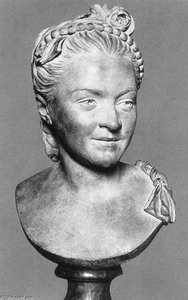
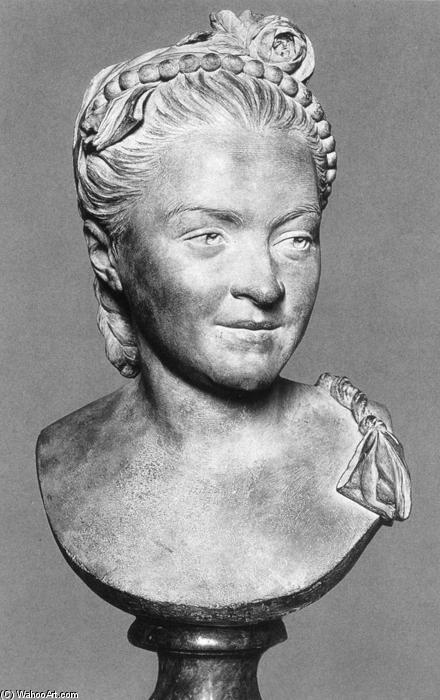
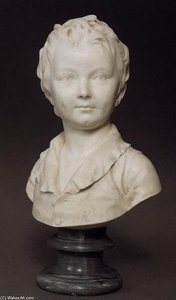
Madame Favart


 Read More
Giclée / Art Print
Museum-quality giclée or canvas print with fast production and flexible finish options. ( Buy Hand Made Painting Buy Image)




P118B $10

P118H $10

P118W $10

P438Z $10

P508JH $12

P508YH $12

P805H $10

P805Z $10

P919BZ $10

P919G $10

P919XJ $10

P959ZH $10

P968JZ $12

W106C $8

W218G $10

W218JH $8

W218Y $10

W307PJ $10

W316G $10

W316PJ $8

W316Y $10

W398PJ $8

W4111J $10

W500HY $15

W500JH $15

W692G $12

W849H $8

W940BG $15

W953PJ $8




Pick from our preset sizes that match the artwork's original proportions.

You may enter your own dimensions to fit a specific frame or space. If your selected size does not match the original image's proportions, we will either crop the artwork or extend the image with a mirrored or solid-fill edge. A digital mockup will be sent for your approval before production begins.
Please note that the on-screen preview does not reflect the actual cropping or extension. Only the mockup will accurately show the final composition.
While custom sizes are available, we recommend selecting a dimension from the predefined list to preserve the original proportions.
Worldwide Delivery () in 2 weeks instead of standard 4/5 weeks. (23 August)

Free Worldwide Express Shipping

High-Quality Linen Canvas

Full Shipping Insurance

Customs Tax Refund Guarantee

True Color Matching Guarantee

60-Day Return Policy (Defects Only)

100% Money-Back Guarantee

Bulk Discount Offer
 Glass option is only available in size under 110 CM

Madame Favart
Giclée / Art Print
Reproduction Size
-


Total Price
$ 63
Collectible Description
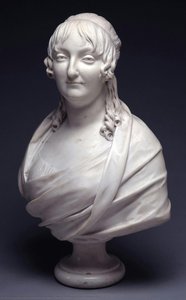
A Portrait of Elegance Amidst Rococo Excess: Jean Baptiste Defernez’s Madame Favart
Jean Baptiste Defernez (1729 – 1783) remains a figure shrouded in relative obscurity compared to his contemporaries, yet his contribution to French sculpture during the Rococo era holds considerable artistic merit. Born in Paris, Defernez’s early life offers scant biographical detail—he began his apprenticeship at the Sèvres porcelain factory, gaining invaluable experience in modeling and gilding techniques that would inform his later work. This formative period instilled a meticulous attention to detail and mastery of materials – skills crucial for creating remarkably expressive portrait busts. Early Training & Craftsmanship: His years at Sèvres honed his sculpting prowess, equipping him with the technical precision demanded by capturing human likeness with remarkable accuracy. The factory’s focus on surface decoration—particularly gilding—provided a foundational understanding of textural richness and visual impact that would translate seamlessly into his subsequent commissions. Service to Royalty: Defernez’s patronage by the Duc d'Orléans brought him into contact with influential circles and secured prestigious commissions for ambitious sculptural projects, notably gilded lead statue groups depicting children at the Palais Royal. These undertakings showcased not only his artistic skill but also his ability to navigate the complexities of aristocratic society and secure recognition from the highest echelons of power. Unlike many artists of his time who succumbed to the flamboyant excesses of Rococo ornamentation, Defernez pursued a path characterized by restraint and intellectual depth—a deliberate choice that distinguishes him as a sculptor deeply rooted in classical ideals. This stylistic preference is powerfully evident in “Madame Favart,” a portrait bust executed with unwavering dedication to form and expression. The Sculpture Itself: The piece depicts Madame Favart, an actress celebrated for her dramatic performances during the 18th century. Defernez’s masterful technique—primarily carving marble—allowed him to achieve astonishing anatomical realism while maintaining a sense of idealized beauty consistent with Neoclassical principles. The sculptor meticulously rendered every contour of the face and torso, capturing subtle nuances of emotion that convey both dignity and melancholy. Notice the delicate curls of her hair, painstakingly sculpted to emulate the texture of silk or ribbon – a testament to Defernez’s commitment to conveying tactile sensations through visual representation. Historical Context & Symbolism: “Madame Favart” emerged during a period marked by significant artistic upheaval—the Rococo style was gradually yielding to the more austere aesthetic championed by Neoclassicism. This stylistic shift reflected broader societal anxieties about frivolity and decadence, prompting artists like Defernez to embrace classical forms as symbols of virtue and reason. The bust’s solemn gaze invites contemplation on themes of beauty, intellect, and perhaps the ephemeral nature of fame—elements that resonate powerfully across centuries. Emotional Impact: Viewing “Madame Favart” evokes a feeling of quiet grandeur – an appreciation for artistic excellence tempered by sensitivity to human emotion. Defernez's ability to distill complex psychological states into a single sculpted form underscores the enduring power of art to communicate profound truths about the human condition. It stands as a poignant reminder that true beauty lies not merely in surface ornamentation but in the depth and integrity of character—qualities embodied perfectly by Madame Favart herself. Concluding Thoughts: Jean Baptiste Defernez’s “Madame Favart” transcends mere portraiture; it is an embodiment of Neoclassical ideals, meticulously crafted with unparalleled skill and imbued with symbolic resonance. Its enduring appeal testifies to the artist's profound understanding of both artistic technique and human psychology—a legacy that continues to inspire admiration and contemplation today.Related Artworks
Artist Biography
A Quiet Genius Amidst Rococo Excess
Jean Baptiste Defernez (1729 – 1783) remains a figure shrouded in relative obscurity compared to his contemporaries, yet his contribution to French sculpture during the Rococo era holds considerable artistic merit. Born in Paris, Defernez’s early life offers scant biographical detail—he began his apprenticeship at the Sèvres porcelain factory, gaining invaluable experience in modeling and gilding techniques that would inform his later work.
- Early Training & Craftsmanship: His formative years at Sèvres instilled a meticulous attention to detail and mastery of materials – skills crucial for creating remarkably expressive portrait busts.
- Service to Royalty: Defernez’s patronage by the Duc d'Orléans brought him into contact with influential circles and secured commissions for ambitious sculptural projects, notably gilded lead statue groups depicting children at the Palais Royal.
Unlike many artists of his time who sought acclaim within the Académie royale de peinture et de sculpture, Defernez opted for a path less traveled—he established a school for sculpture and drawing in Paris, nurturing the talent of Louis Jean Jacques Durameau, whose own artistic endeavors would later gain recognition.
A Style Defined by Authenticity
Despite lacking official commissions and facing criticism regarding his stylistic choices during Defernez’s lifetime—considered somewhat unfashionable by prevailing tastes—his oeuvre possesses a distinctive character. Art historians like Michael Levey have noted that Defernez's portrait busts eschewed the idealized conventions of Rococo art, favoring instead “honest, unidealized, quite free from gallant flattery.” This approach aligns closely with the stylistic sensibilities of Jean Baptiste Greuze, demonstrating a profound understanding of psychological realism.
- Greuze’s Influence: Defernez's portraits captured subtle nuances of emotion and character—a deliberate departure from the polished surfaces favored by many sculptors of his era.
- Psychological Depth: Levey’s observation underscores Defernez’s commitment to portraying subjects with unflinching honesty, prioritizing psychological truth over superficial beauty.
Notable Works & Legacy
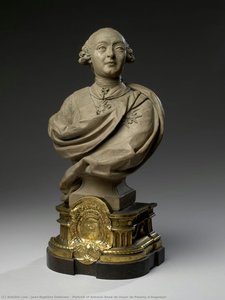
Among Defernez's most celebrated pieces are portraits of Antoine René de Voyer d’Argenson and Madame Favart—works that exemplify his signature style. These busts showcase remarkable likenesses combined with expressive facial expressions conveying inner thoughts and feelings.
- Antoine René de Voyer d’Argenson: Defernez's depiction of Argenson captures the statesman’s dignified composure alongside hints of melancholy—a testament to his ability to convey complex psychological states.
- Madame Favart: Similarly, Madame Favart’s portrait embodies grace and vulnerability, reflecting Defernez’s masterful technique in capturing subtle nuances of emotion.
A Rediscovery Through Art Historical Analysis
Although Defernez did not achieve widespread fame during his lifetime, recent scholarship has revived interest in his work, recognizing its significance within the broader context of Rococo sculpture. His uncompromising realism—a reaction against the prevailing artistic trends—continues to resonate with contemporary viewers and art critics alike.
- Michael Levey’s Assessment: Levey's analysis highlights Defernez’s stylistic independence and his contribution to a more psychologically nuanced tradition of portraiture.
- Contemporary Relevance: Defernez’s focus on honest representation—a principle that aligns with the values of modern art—underscores his enduring artistic legacy.
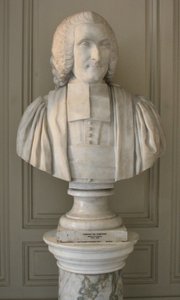
jean baptiste defernex
1729 - 1783 , France
Quick Facts
- Artistic Movement Or Style: Portrait Bust
- Artists Or Movements Influenced By This Artist: ['Classical Sculpture']
- Artists Who Influenced This Artist: ['Jean Baptiste Greuze']
- Date Of Birth: Paris, France (1729)
- Date Of Death: 1783
- Full Name: Jean Baptiste Defernex
- Nationality: French
- Notable Artworks:
- Portrait of Antoine-René de Voyer de Paulmy d’Argenson
- Madame Favart
- Place Of Birth: Paris
Related Articles
The Enduring Allure of Marble in Art History: From Classical Sculpture to Modern Abstraction
Explore the captivating history of marble sculpture from ancient Greece to modern art. Discover renowned artists like Canova & Michelangelo, carving techniques, and investment insights at ArtsDot.

Bronze Sculptures That Defined Art History | ArtsDot
Journey through art history with our Top 10 bronze sculptures! Explore masterpieces by Rodin, Michelangelo & more. Discover stories behind iconic statues and find museum-quality reproductions for your home decor at ArtsDot.com.

Jean-Baptiste Carpeaux: Sculpting Passion & Controversy in 19th-Century France
Explore the passionate life & controversial works of Jean-Baptiste Carpeaux, a leading French sculptor of the Second Empire. Discover his realism, iconic sculptures like 'Ugolino,' and lasting legacy as a precursor to Rodin.

The Enduring Form: Exploring Themes & Techniques in Sculpture Across Historical Periods
Explore the rich history of sculpture from ancient masterpieces to contemporary innovations. Discover key techniques, influential artists & investment potential for discerning art collectors.
The Enduring Form: Sculpture Across History, Technique & Emotional Resonance
Explore the rich history of sculpture with ArtsDot. Discover key techniques, influential artists & investment potential for discerning collectors. Expert insights into valuing and collecting timeless masterpieces.