 Preview
 Send
Send Share
Share
 Details

 Download
 Similars
 X-Ray
X-Ray Diaporama
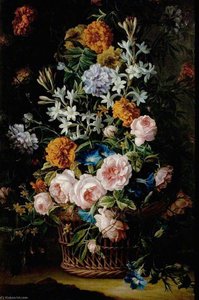
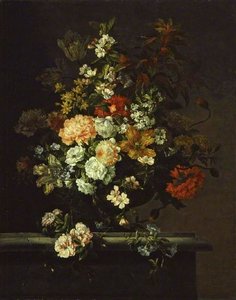
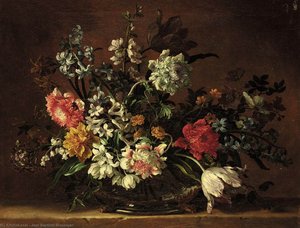
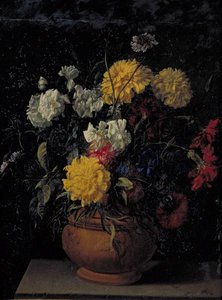
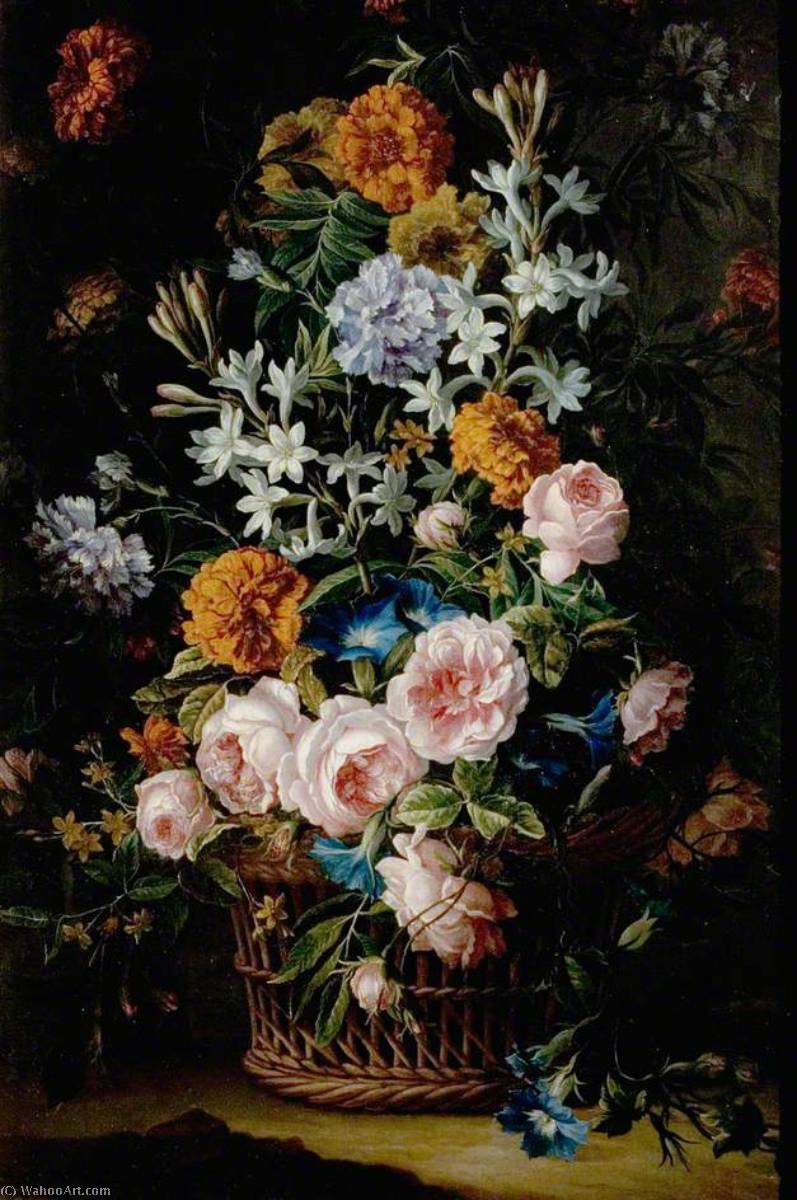
Flowers in a Basket
 Oil On Canvas
- WallArt
- Baroque
 81.0 x 55.0 cm
 Nottingham Castle Museum And Art Gallery
 Read More
Hand Made Oil Reproduction
Hand-painted oil on canvas in your size and frame, made to order by our artists. ( Buy Print Buy Image)




P118B $10

P118H $10

P118W $10

P438Z $10

P508JH $12

P508YH $12

P805H $10

P805Z $10

P919BZ $10

P919G $10

P919XJ $10

P959ZH $10

P968JZ $12

W106C $8

W218G $10

W218JH $8

W218Y $10

W307PJ $10

W316G $10

W316PJ $8

W316Y $10

W398PJ $8

W4111J $10

W500HY $15

W500JH $15

W692G $12

W849H $8

W940BG $15

W953PJ $8




Pick from our preset sizes that match the artwork's original proportions.

You may enter your own dimensions to fit a specific frame or space. If your selected size does not match the original image's proportions, we will either crop the artwork or extend the painting with additional hand-painted elements. A digital mockup will be sent for your approval before production begins.
Please note that the on-screen preview does not reflect the actual cropping or extension. Only the mockup will accurately show the final composition.
While custom sizes are available, we recommend selecting a dimension from the predefined list to preserve the original proportions.
After order, ArtsDot.com team will email client for instructions and provide a mockup preview
Worldwide Delivery () in 3/4 weeks instead of standard 5 weeks. (23 August). No compromise on quality.

Free Worldwide Express Shipping

High-Quality Linen Canvas

Full Shipping Insurance

Customs Tax Refund Guarantee

True Color Matching Guarantee

60-Day Return Policy (Defects Only)

100% Money-Back Guarantee

Bulk Discount Offer
 Glass option is only available in size under 110 CM

Flowers in a Basket
Reproduction Medium
Reproduction Size
-


Total Price
$ 263
Artwork Description
A Symphony of Blooms: Unveiling Monnoyer’s ‘Flowers in a Basket’
Jean-Baptiste Monnoyer's “Flowers in a Basket” isn’t merely a still life; it’s a meticulously crafted window into the opulent world of 17th-century French aristocratic interiors. Painted circa 1691, this work embodies the height of Dutch Golden Age painting, a period renowned for its dramatic lighting, intricate detail, and profound appreciation for the beauty of nature – particularly when rendered with such exquisite precision. The piece immediately captivates with its vibrant palette: a riot of crimson roses, delicate pink lilies, sunny yellow daffodils, and the cool blues and whites of forget-me-nots and hyacinths spill forth from a woven wicker basket. But it’s more than just a colorful display; Monnoyer masterfully employs chiaroscuro – the dramatic contrast between light and shadow – to imbue the scene with a palpable sense of depth and volume. The dark, almost velvety background serves as an arresting stage for the floral explosion, drawing our eye to each individual bloom and highlighting their textures with astonishing realism.
The Baroque Brushstroke: Technique and Artistic Influence
Monnoyer’s technique is a testament to his training within the prestigious Gobelins and Beauvais tapestry workshops. He was deeply influenced by Charles Le Brun, the leading painter of the era, and this influence manifests in the painting's rich layering of thin glazes – a hallmark of Baroque art. These translucent layers build up color gradually, creating an astonishing luminosity and depth that seems to emanate from within the canvas itself. Notice how he renders the petals: not with flat, uniform colors, but with subtle variations in tone and texture, capturing their velvety softness and delicate sheen. The basket’s weave is rendered with a remarkable attention to detail, showcasing the artist's understanding of form and structure. The composition itself adheres closely to Baroque principles – a balanced arrangement of elements, a sense of grandeur, and an emphasis on theatrical lighting. It’s a deliberate choice that elevates the floral display beyond a simple decorative piece, transforming it into a captivating spectacle.
Symbolism in Abundance: Flowers as Language
While seemingly straightforward, “Flowers in a Basket” is rich with symbolic meaning, reflecting the prevailing aesthetic values of the time. The profusion of flowers – roses representing love and beauty, lilies symbolizing purity and innocence, and tulips signifying wealth and prosperity – collectively speaks to an ideal of luxurious abundance. The basket itself, often associated with domesticity and nurturing, suggests a connection between nature and the home. Some scholars interpret the arrangement as a subtle commentary on the fleeting nature of beauty—a poignant reminder that even the most exquisite blooms eventually fade. The inclusion of specific flowers like forget-me-nots, traditionally linked to remembrance, adds another layer of emotional resonance.
A Legacy in Reproduction: Bringing Monnoyer’s Vision to Life
Today, ArtsDot offers meticulously crafted hand-painted reproductions of “Flowers in a Basket,” allowing art lovers worldwide to experience the beauty and artistry of this iconic masterpiece. Each reproduction is created by skilled artisans who painstakingly replicate Monnoyer's techniques – from the delicate layering of glazes to the masterful use of chiaroscuro – ensuring an authentic representation of the original painting. These reproductions are not merely copies; they are vibrant, enduring tributes to a timeless work of art. Whether adorning a grand salon or a cozy corner, “Flowers in a Basket” continues to evoke a sense of wonder and delight, transporting viewers back to the opulent world of 17th-century France.
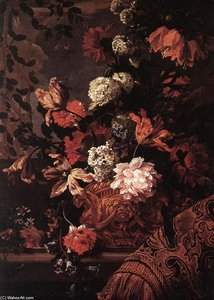
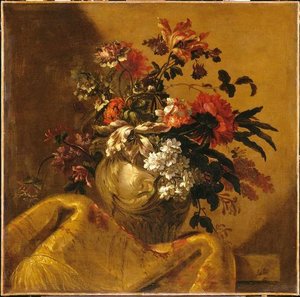
Related Artworks
Artist Biography
A Life in Blooms: The World of Jean-Baptiste Monnoyer
Born in Lille, France, in 1636, Jean-Baptiste Monnoyer emerged as a pivotal figure bridging the worlds of floral still life and decorative arts during the Baroque period. His journey began not amidst fields of wildflowers, but within the structured environment of artistic apprenticeship, relocating to Paris by 1650 where he first contributed to the elaborate decorations of the Hôtel Lambert. This early exposure to grand commissions foreshadowed a career deeply intertwined with royal patronage and opulent design. Monnoyer’s talent quickly drew the attention of Charles Le Brun, the preeminent painter of the era, who employed him in decorating prestigious residences like the Château de Marly and the Grand Dauphin's château at Meudon. These formative experiences instilled within him a refined aesthetic sensibility and access to influential circles that would shape his artistic trajectory. He wasn’t merely painting flowers; he was crafting elements for a world of regal splendor, learning to translate nature’s beauty into designs fit for kings.From Royal Palaces to Tapestry Halls
Monnoyer's specialization in flower pieces blossomed during his time with Le Brun and culminated in his acceptance into the Académie Royale de Peinture et de Sculpture in 1665, a testament to his growing reputation. However, it was his involvement with the Gobelins and Beauvais tapestry workshops that truly cemented his legacy. He wasn’t simply creating paintings; he was designing *patterns* for an industry. His role extended beyond artistic expression to encompass practical application – crafting detailed cartoons, or preliminary designs, for fruit and flower motifs destined to be woven into lavish tapestries. These weren't isolated artworks but integral components of grand decorative schemes, adorning the walls of palaces and aristocratic homes. The celebrated suite “The Emperor of China,” a testament to the era’s fascination with exoticism, stands as a prime example of his ability to translate floral elegance into large-scale, immersive works of art. His designs weren't merely illustrative; they were structural elements defining the aesthetic character of entire rooms.A Transatlantic Career: England and Enduring Influence
The late 1680s marked a significant shift in Monnoyer’s career, as political and religious tensions in France prompted his relocation to England in 1690 at the invitation of Ralph Montagu. This move wasn't a retreat but an expansion of his artistic horizons. For nearly a decade, he dedicated himself to creating over fifty panels of fruit and flowers for Montagu House (the future British Museum) and other prominent estates like Boughton House in Northamptonshire. These commissions demonstrate not only his adaptability to English tastes but also the enduring demand for his distinctive style – vibrant colors, meticulous detail, and an overall sense of opulent abundance. He successfully navigated a new cultural landscape while maintaining the hallmarks of his artistic identity. This period solidified his reputation as a master of decorative painting, sought after by England’s elite.Legacy in Paint and Print
Jean-Baptiste Monnoyer's influence extended far beyond the walls of palaces and estates. His publication, *Le Livre de toutes sortes de fleurs d'après nature* (The Book of All Kinds of Flowers According to Nature), proved particularly impactful. This meticulously detailed collection of engravings disseminated his floral designs widely, becoming an invaluable resource for decorative designers for decades to come. The accuracy with which he rendered each bloom wasn’t merely aesthetic; it was a contribution to botanical understanding and a source of inspiration for countless artisans. Even the poet Wallace Stevens acknowledged Monnoyer's enduring presence, referencing *Livre de toutes sortes de fleurs d'après nature* in his poem “Esthétique du Mal,” demonstrating the work’s lasting cultural resonance. Monnoyer is remembered not only as a master of floral still life and tapestry design but also as an artist who skillfully bridged French and English artistic traditions, leaving behind a legacy that continues to bloom centuries later. His ability to capture the ephemeral beauty of flowers—and transform it into enduring works of art—ensures his place among the most celebrated decorative painters of the Baroque era. His work remains a testament to the power of nature’s artistry and the skill of those who seek to replicate its splendor.
jean baptiste monnoyer
1636 - 1699 , France
Quick Facts
- Artistic Movement Or Style: Baroque
- Artists Or Movements Influenced By This Artist:
- Decorative arts
- Tapestry makers
- Artists Who Influenced This Artist: ['Charles Le Brun']
- Date Of Birth: 1636
- Date Of Death: 1699
- Full Name: Jean-Baptiste Monnoyer
- Nationality: Franco-Flemish
- Notable Artworks:
- Vases et Fleurs
- Flowers
- An Urn with Flowers
- Place Of Birth: Lille, France
Related Articles

Dutch Masters: 10 Golden Age Paintings That Still Inspire |
Journey into the Dutch Golden Age! Explore 10 iconic paintings by Rembrandt, Vermeer & Hals. Discover the stories behind these Baroque masterpieces and find museum-quality art reproductions to elevate your home decor on .
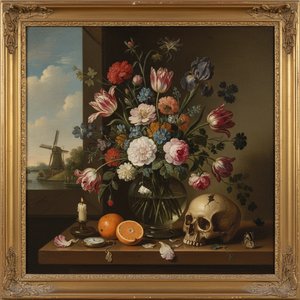
Jan Jansz Wijnants: A Study in Dutch Golden Age Still Life & Floral Transience
Explore the captivating world of Jan Wijnants and Dutch Golden Age still life painting. Discover symbolism, masterful techniques & lasting influence on floral art history. Learn more!

Golden Age Reflections: Dutch Baroque Painting & Cultural Innovation
Explore the Dutch Golden Age of painting! Discover key artists like Vermeer & ter Borch, their innovative techniques, and the rich cultural context behind these Baroque masterpieces. Learn about collecting & appreciating this iconic art period.
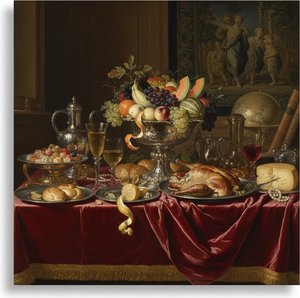
Abraham Hendricksz van Beyeren: Pioneering Dutch Still Life & the Banquet Tradition
Explore the captivating world of Dutch Golden Age still life with Abraham van Beyeren. Discover his innovative techniques, symbolic banquet scenes & lasting influence on art history. Learn about collecting these masterpieces.

Illuminating Innovation: Exploring the Dutch Golden Age of Painting
Explore the Dutch Golden Age of painting with ArtsDot. Discover Rembrandt, Vermeer & other Masters. Learn about key characteristics, iconic artworks, and lasting influence. Expert insights for collectors & enthusiasts.