 Send
Send Share
Share
 Details

 Download
 Similars
 Diaporama
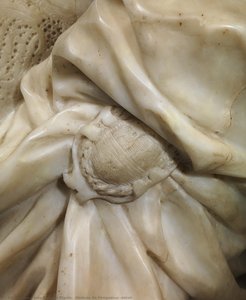
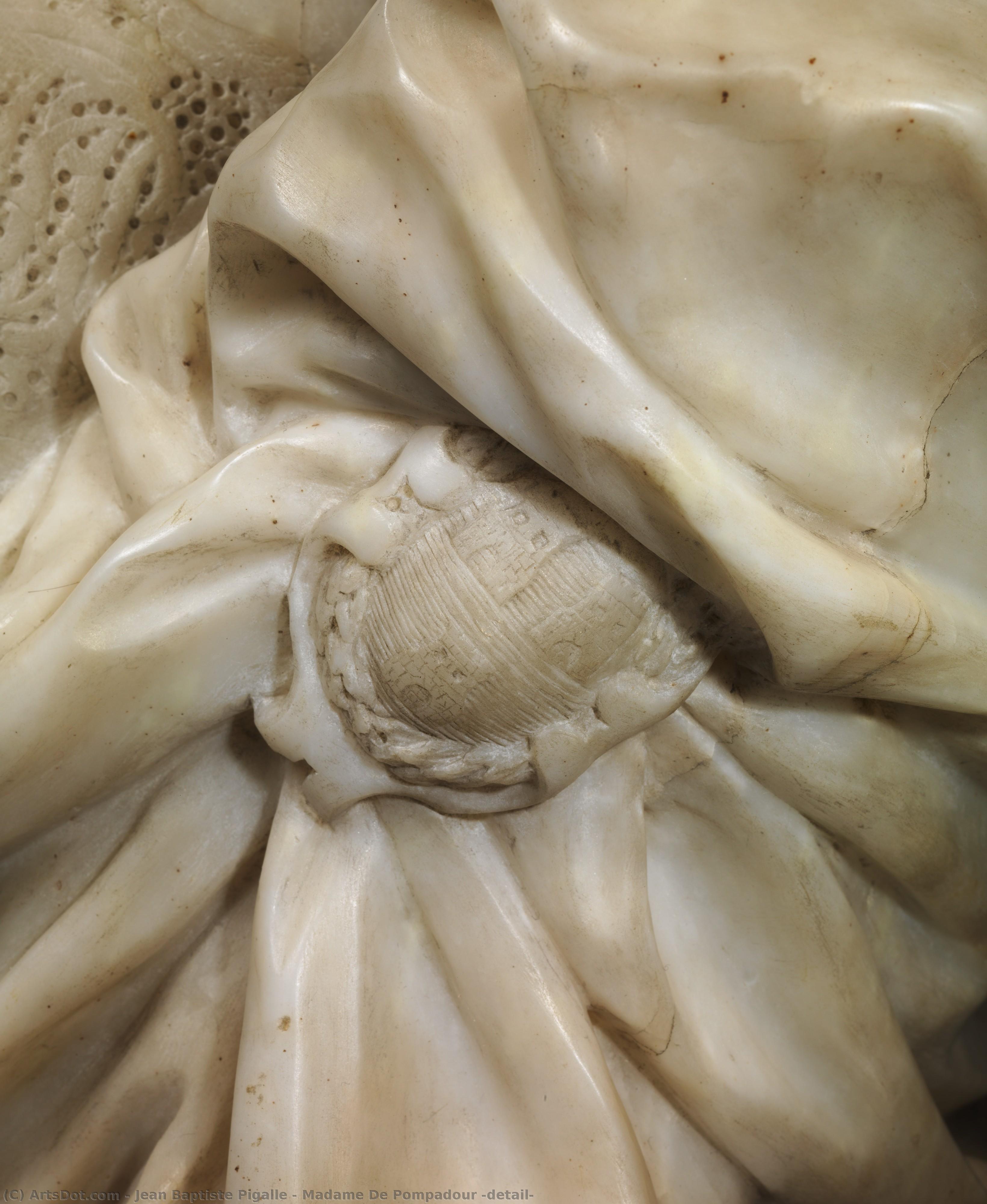
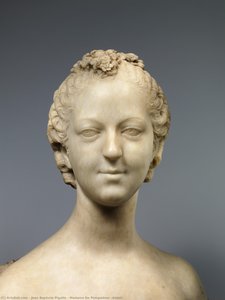
Madame De Pompadour (detail)


 Read More
Giclée / Art Print
Museum-quality giclée or canvas print with fast production and flexible finish options. ( Buy Hand Made Painting Buy Image)




































Pick from our preset sizes that match the artwork's original proportions.

You may enter your own dimensions to fit a specific frame or space. If your selected size does not match the original image's proportions, we will either crop the artwork or extend the image with a mirrored or solid-fill edge. A digital mockup will be sent for your approval before production begins.
Please note that the on-screen preview does not reflect the actual cropping or extension. Only the mockup will accurately show the final composition.
While custom sizes are available, we recommend selecting a dimension from the predefined list to preserve the original proportions.
Worldwide Delivery () in 2 weeks instead of standard 4/5 weeks. (25 August)

Free Worldwide Express Shipping

High-Quality Linen Canvas

Full Shipping Insurance

Customs Tax Refund Guarantee

True Color Matching Guarantee

60-Day Return Policy (Defects Only)

100% Money-Back Guarantee

Bulk Discount Offer
 Glass option is only available in size under 110 CM

Madame De Pompadour (detail)
Giclée / Art Print
Reproduction Size
-


Total Price
$ 63
Collectible Description
A Vision in Marble: The Luminous Grace of Madame de Pompadour
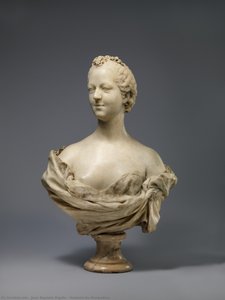
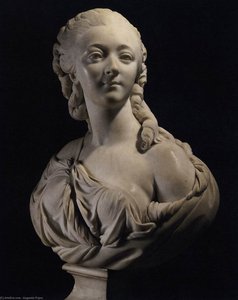
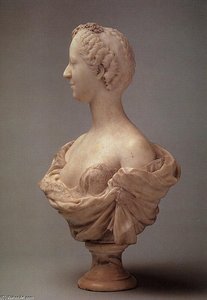
To gaze upon Jean-Baptiste Pigalle’s 1751 masterpiece, Madame De Pompadour (detail), is to step directly into the gilded, whispered secrets of the French Rococo court. This exquisite marble sculpture does not merely present a likeness; it captures the very soul of an era defined by unparalleled sophistication and intellectual brilliance. As the eye wanders over the smooth, polished contours of the subject's face, one encounters more than stone—one meets the serene authority of Jeanne Antoinette Poisson, the legendary Marquise de Pompadour. Pigalle has achieved a feat of artistic alchemy, distilling the regal grace of Louis XV’s most influential figure into a singular, breathtaking form that seems to breathe with a quiet, luminous vitality.
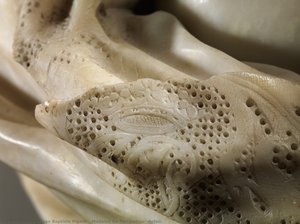
The technical mastery displayed in this work is nothing short of extraordinary, serving as a profound inspiration for those who appreciate the intersection of fine art and meticulous craftsmanship. Pigalle, a sculptor who masterfully bridged the gap between the dramatic flourishes of the Baroque and the emerging clarity of Neoclassicism, utilized the prestigious Carrara marble to create a surface that mimics the palpable softness of human skin. Through a painstaking process of chiseling, grinding, and polishing, he captured subtle nuances of light and shadow, allowing the stone to glow with an inner warmth. Every delicate curve of the cheek and every precise detail of the intricate hairstyle speaks to a dedication to anatomical realism, tempered by the Rococo penchant for idealized, ethereal beauty.
The Spirit of the Rococo: Elegance and Emotion
Beyond its physical perfection, this portrait serves as a captivating window into the opulent world of 18th-century France. The Rococo style is celebrated for its fascination with ornamentation, asymmetry, and a profound connection to nature—elements that Pigalle weaves seamlessly into the marble. In this detail, we see the essence of aristocratic poise; the subject’s expression, caught in a moment of gentle engagement, suggests a confidence that was both fashionable and deeply personal. For the discerning collector or interior designer, such a piece offers more than decoration; it provides a focal point of historical weight and classical elegance, capable of infusing a contemporary space with a sense of timeless grandeur.
The emotional impact of the sculpture lies in its ability to transcend the boundaries of time. While the subject was a figure of immense political and cultural power, Pigalle renders her with a vulnerability and grace that remains universally relatable. The interplay between the cool, hard medium of marble and the soft, inviting imagery of the portrait creates a captivating tension that draws the viewer into a silent dialogue with history. Whether displayed in a sunlit gallery or as a centerpiece in a curated study, this reproduction of Pigalle’s genius stands as a testament to the enduring allure of beauty, making it an essential acquisition for those seeking to surround themselves with the echoes of artistic greatness.
Related Artworks



Artist Biography
A Bridge Between Worlds: The Sculptural Legacy of Jean-Baptiste Pigalle
Born in Tournus, France, in 1714, Jean-Baptiste Pigalle emerged as a pivotal figure in the transition between the exuberant drama of the Baroque and the emerging clarity of Neoclassicism. His life unfolded against a backdrop of shifting artistic tastes, and his work beautifully embodies this evolution. Initially discouraged from pursuing art by his carpenter father, young Pigalle’s innate talent was recognized by a Lyonnaise artist named Grondon, who successfully advocated for his formal training. This mentorship proved crucial, laying the foundation for a career that would see him navigate the complexities of the French artistic landscape and ultimately leave an indelible mark on sculptural history. He honed his skills in Lyon before moving to Paris, immersing himself in the study of live models at the Royal Academy – though his early efforts weren’t universally acclaimed, hinting at the independent spirit that would define his trajectory.Early Successes and the Italian Sojourn
Pigalle's initial recognition came with pieces like Le père de famille expliquant la bible à ses enfants and Aveugle trompé, works demonstrating a keen understanding of human emotion and narrative. The support of influential connoisseur La Live de Jully further propelled his career, culminating in his acceptance into the Academy with the presentation of Aveugle trompé in 1755. However, a period of study in Italy with Abbot Louis Gougenot proved somewhat disruptive to his artistic development. While intended to broaden his horizons, the Italian influence arguably led him astray from his natural stylistic inclinations, prompting a temporary departure from the uniquely expressive qualities that would come to characterize his mature work. This experience served as a valuable lesson, reinforcing the importance of staying true to his own artistic vision.The Zenith of Creativity and Controversial Recognition
The years between 1759 and 1765 represent the peak of Pigalle’s creative output. During this period, he produced some of his most celebrated sculptures, including La jeune fille qui pleure son oiseau mort, a poignant depiction of grief; La bonne mère, embodying maternal virtue; and Le mauvais fils puni and La malédiction paternelle, both housed in the Louvre, which powerfully convey themes of morality and consequence. Yet, his ambition extended beyond purely sculptural endeavors. Pigalle aspired to be recognized as a historical painter, submitting “Sévère et Caracalla” for consideration by the Academy. This attempt was met with harsh criticism, sparking a public dispute that drew the ire of philosopher Denis Diderot, who famously condemned Pigalle’s defensive response. This controversy underscores the challenges faced by artists seeking to transcend traditional boundaries and forge new paths within the rigid structures of the French art world.Master of Portraiture, Allegory, and Monumental Sculpture
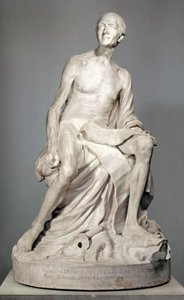
Pigalle excelled in a diverse range of sculptural forms. He became renowned for his penetrating portrait sculptures, capturing the likenesses – and often the personalities – of prominent figures like Voltaire, whose nude statue caused considerable scandal due to its unconventional depiction of the philosopher. He also demonstrated a remarkable talent for allegorical sculpture, creating works for Madame de Pompadour that skillfully blended mythological themes with idealized beauty. Beyond these intimate forms, Pigalle proved adept at monumental sculpture, crafting emotionally resonant tombs for Comte d'Harcourt and Marshal Saxe – grand testaments to his ability to create lasting memorials. His style evolved over time, seamlessly blending the dynamic energy of the Baroque with the clarity and order of Neoclassicism. He was celebrated for his meticulous attention to detail, expressive poses, and masterful rendering of human anatomy.A Lasting Legacy
Jean-Baptiste Pigalle occupies a crucial position in French sculptural history as a transitional figure who bridged two distinct artistic eras. His work profoundly influenced subsequent generations of sculptors, contributing significantly to the development of Neoclassical aesthetics while retaining a uniquely expressive quality rooted in Baroque sensibilities. Though he faced challenges and controversies throughout his career, Pigalle left behind a substantial body of work that continues to inspire admiration for its artistry and historical importance. Perhaps the most enduring testament to his name is the “Pigalle” district in Paris, a vibrant neighborhood forever linked to the legacy of this remarkable sculptor. His ability to capture both physical likeness and emotional depth ensures his place among the masters of French art.
Jean-Baptiste Pigalle
1725 - 1805 , France
Quick Facts
- Artistic Movement Or Style: Baroque & Neoclassical
- Artists Or Movements Influenced By This Artist: Neoclassical sculptors
- Date Of Birth: 1725
- Date Of Death: 1805
- Full Name: Jean-Baptiste Pigalle
- Nationality: French
- Notable Artworks:
- Thomas-Aignan Desfriches
- Mme de Pompadour as the Goddess
- Autumn
- Voltaire (Nude Statue)
- Place Of Birth: Tournus, France
Related Articles

Goya's Masterpieces: Explore 25 Iconic Paintings & Art Prints | ArtsDot
Delve into the world of Francisco Goya with ArtsDot. Explore 25 iconic paintings – from 'The Third of May' to his haunting Black Paintings. Discover the stories, techniques & emotions behind these Spanish masterpieces. Find museum-quality art reproductions for your home at ArtsDot.com!
The Enduring Allure of Marble in Art History: From Classical Sculpture to Modern Abstraction
Explore the captivating history of marble sculpture from ancient Greece to modern art. Discover renowned artists like Canova & Michelangelo, carving techniques, and investment insights at ArtsDot.

Bronze Sculptures That Defined Art History | ArtsDot
Journey through art history with our Top 10 bronze sculptures! Explore masterpieces by Rodin, Michelangelo & more. Discover stories behind iconic statues and find museum-quality reproductions for your home decor at ArtsDot.com.

The Enduring Form: Exploring Themes & Techniques in Sculpture Across Historical Periods
Explore the rich history of sculpture from ancient masterpieces to contemporary innovations. Discover key techniques, influential artists & investment potential for discerning art collectors.
Maurice Quentin de La Tour: Light, Shadow & the Rococo Portrait
Explore the captivating world of Maurice Quentin de La Tour, a master of Rococo portraiture. Discover his innovative pastel techniques, intimate depictions of French aristocracy, and lasting artistic legacy. Learn more at ArtsDot.