 Send
Send Share
Share
 Details

 Download
 Similars
 Diaporama
Self-Portrait


 Read More
Hand Made Oil Reproduction
Hand-painted oil on canvas in your size and frame, made to order by our artists. ( Buy Print Buy Image)




































Pick from our preset sizes that match the artwork's original proportions.

You may enter your own dimensions to fit a specific frame or space. If your selected size does not match the original image's proportions, we will either crop the artwork or extend the painting with additional hand-painted elements. A digital mockup will be sent for your approval before production begins.
Please note that the on-screen preview does not reflect the actual cropping or extension. Only the mockup will accurately show the final composition.
While custom sizes are available, we recommend selecting a dimension from the predefined list to preserve the original proportions.
After order, ArtsDot.com team will email client for instructions and provide a mockup preview
Worldwide Delivery () in 3/4 weeks instead of standard 5 weeks. (16 August). No compromise on quality.

Free Worldwide Express Shipping

High-Quality Linen Canvas

Full Shipping Insurance

Customs Tax Refund Guarantee

True Color Matching Guarantee

60-Day Return Policy (Defects Only)

100% Money-Back Guarantee

Bulk Discount Offer
 Glass option is only available in size under 110 CM

Self-Portrait
Reproduction Medium
Reproduction Size
-


Total Price
$ 263
Artwork Description
A Portrait of Dignified Reflection: Jean-Baptiste Pigalle’s “Self-Portrait”
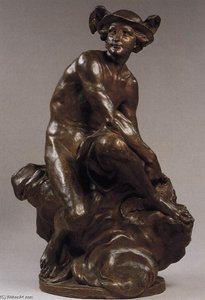
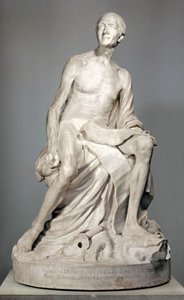
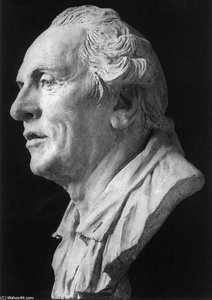
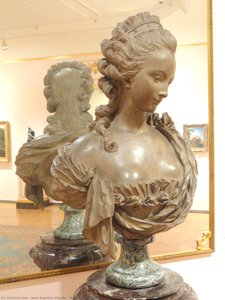
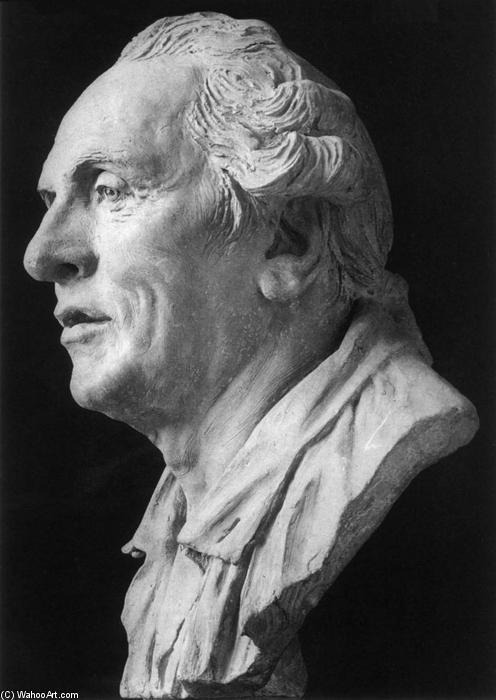
The photograph captures a striking monochrome depiction of Jean-Baptiste Pigalle's sculpture, "Self-Portrait," a testament to the burgeoning Neoclassical aesthetic and a poignant glimpse into the artist’s personal vision. Executed in 1777, this piece transcends mere representation; it embodies the intellectual currents shaping eighteenth-century France and speaks volumes about artistic ambition and contemplative introspection.The Sculpture's Essence: Form and Light
Pigalle’s masterful craftsmanship is immediately evident in the sculpture’s meticulous detailing—a deliberate choice reflecting the stylistic principles of his time. Constructed primarily from plaster or marble (the exact material remains undisclosed), the bust presents a powerfully expressive face, positioned in profile to convey an aura of solemn composure. The artist skillfully employs chiaroscuro – dramatic contrasts between light and shadow – directing illumination upwards and slightly forward to sculpturally delineate the contours of the head, hair, and clothing folds. These lines aren’t merely descriptive; they actively contribute to the sculpture's three-dimensional impact, guiding the viewer’s gaze and emphasizing the solidity of the form. The rough texture of the material itself underscores the physicality of artistic creation and hints at the laborious process involved in transforming raw material into enduring art.Neoclassical Influence: Echoes of Antiquity
“Self-Portrait” firmly establishes Pigalle within the broader context of Neoclassicism, a movement that sought inspiration from the idealized forms and rational ideals of ancient Greece and Rome. Unlike the exuberant ornamentation characteristic of Rococo—the style championed by Marie Suzann Roslin and Jean Baptiste Pater—this sculpture prioritizes clarity, restraint, and anatomical accuracy. The pose itself mirrors classical sculptures depicting philosophers and statesmen, conveying an image of intellectual seriousness and moral virtue. This deliberate allusion to antiquity underscores Pigalle’s commitment to upholding humanist values and elevating art beyond mere decorative indulgence.Symbolism Beyond Appearance: Wisdom and Experience
Beyond its formal qualities, “Self-Portrait” carries subtle symbolic weight. The dignified expression—a gaze directed inward—suggests contemplation and a profound awareness of selfhood. It speaks to the artist’s desire to portray not just his likeness but also his inner life, reflecting the humanist preoccupation with understanding human nature that permeated intellectual circles during Pigalle's era. This introspective quality aligns perfectly with Debret’s exploration of Brazilian identity through art—a shared fascination for capturing the essence of individual experience within a larger historical narrative.A Legacy Preserved: Reproduction and Artistic Appreciation
ArtsDot offers exceptional reproductions of Jean-Baptiste Pigalle’s “Self-Portrait,” allowing collectors and enthusiasts alike to immerse themselves in the beauty and intellectual depth of this iconic sculpture. Each print is meticulously crafted using archival inks on premium canvas, ensuring that its timeless elegance remains faithfully reproduced for generations to come—a celebration of artistic heritage and a conduit for inspiring appreciation across cultures.Related Artworks

Artist Biography
A Bridge Between Worlds: The Sculptural Legacy of Jean-Baptiste Pigalle
Born in Tournus, France, in 1714, Jean-Baptiste Pigalle emerged as a pivotal figure in the transition between the exuberant drama of the Baroque and the emerging clarity of Neoclassicism. His life unfolded against a backdrop of shifting artistic tastes, and his work beautifully embodies this evolution. Initially discouraged from pursuing art by his carpenter father, young Pigalle’s innate talent was recognized by a Lyonnaise artist named Grondon, who successfully advocated for his formal training. This mentorship proved crucial, laying the foundation for a career that would see him navigate the complexities of the French artistic landscape and ultimately leave an indelible mark on sculptural history. He honed his skills in Lyon before moving to Paris, immersing himself in the study of live models at the Royal Academy – though his early efforts weren’t universally acclaimed, hinting at the independent spirit that would define his trajectory.Early Successes and the Italian Sojourn
Pigalle's initial recognition came with pieces like Le père de famille expliquant la bible à ses enfants and Aveugle trompé, works demonstrating a keen understanding of human emotion and narrative. The support of influential connoisseur La Live de Jully further propelled his career, culminating in his acceptance into the Academy with the presentation of Aveugle trompé in 1755. However, a period of study in Italy with Abbot Louis Gougenot proved somewhat disruptive to his artistic development. While intended to broaden his horizons, the Italian influence arguably led him astray from his natural stylistic inclinations, prompting a temporary departure from the uniquely expressive qualities that would come to characterize his mature work. This experience served as a valuable lesson, reinforcing the importance of staying true to his own artistic vision.The Zenith of Creativity and Controversial Recognition
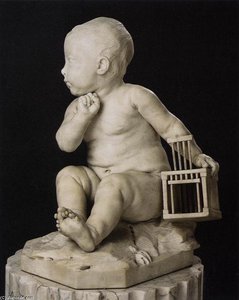
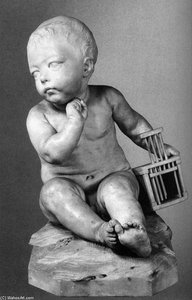
The years between 1759 and 1765 represent the peak of Pigalle’s creative output. During this period, he produced some of his most celebrated sculptures, including La jeune fille qui pleure son oiseau mort, a poignant depiction of grief; La bonne mère, embodying maternal virtue; and Le mauvais fils puni and La malédiction paternelle, both housed in the Louvre, which powerfully convey themes of morality and consequence. Yet, his ambition extended beyond purely sculptural endeavors. Pigalle aspired to be recognized as a historical painter, submitting “Sévère et Caracalla” for consideration by the Academy. This attempt was met with harsh criticism, sparking a public dispute that drew the ire of philosopher Denis Diderot, who famously condemned Pigalle’s defensive response. This controversy underscores the challenges faced by artists seeking to transcend traditional boundaries and forge new paths within the rigid structures of the French art world.Master of Portraiture, Allegory, and Monumental Sculpture
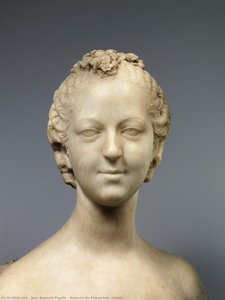
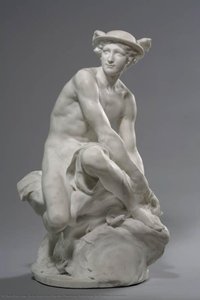
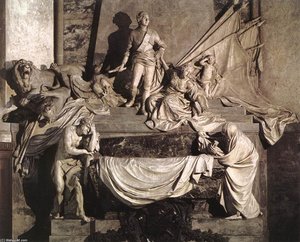
Pigalle excelled in a diverse range of sculptural forms. He became renowned for his penetrating portrait sculptures, capturing the likenesses – and often the personalities – of prominent figures like Voltaire, whose nude statue caused considerable scandal due to its unconventional depiction of the philosopher. He also demonstrated a remarkable talent for allegorical sculpture, creating works for Madame de Pompadour that skillfully blended mythological themes with idealized beauty. Beyond these intimate forms, Pigalle proved adept at monumental sculpture, crafting emotionally resonant tombs for Comte d'Harcourt and Marshal Saxe – grand testaments to his ability to create lasting memorials. His style evolved over time, seamlessly blending the dynamic energy of the Baroque with the clarity and order of Neoclassicism. He was celebrated for his meticulous attention to detail, expressive poses, and masterful rendering of human anatomy.A Lasting Legacy
Jean-Baptiste Pigalle occupies a crucial position in French sculptural history as a transitional figure who bridged two distinct artistic eras. His work profoundly influenced subsequent generations of sculptors, contributing significantly to the development of Neoclassical aesthetics while retaining a uniquely expressive quality rooted in Baroque sensibilities. Though he faced challenges and controversies throughout his career, Pigalle left behind a substantial body of work that continues to inspire admiration for its artistry and historical importance. Perhaps the most enduring testament to his name is the “Pigalle” district in Paris, a vibrant neighborhood forever linked to the legacy of this remarkable sculptor. His ability to capture both physical likeness and emotional depth ensures his place among the masters of French art.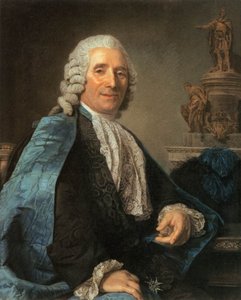
Jean-Baptiste Pigalle
1725 - 1805 , France
Quick Facts
- Artistic Movement Or Style: Baroque & Neoclassical
- Artists Or Movements Influenced By This Artist: Neoclassical sculptors
- Date Of Birth: 1725
- Date Of Death: 1805
- Full Name: Jean-Baptiste Pigalle
- Nationality: French
- Notable Artworks:
- Thomas-Aignan Desfriches
- Mme de Pompadour as the Goddess
- Autumn
- Voltaire (Nude Statue)
- Place Of Birth: Tournus, France
Related Articles

The Subtleties of Shade: Exploring Black, White & Gray Abstraction in Modern Interior Design
Explore the power of black, white & gray abstraction in modern interior design. Discover how minimalist art impacts spatial perception & creates sophisticated hotel spaces. Expert insights for designers.
Jean-Baptiste Pater: Rococo Charm & Ephemeral Beauty of 18th-Century France
Explore the captivating world of Jean-Baptiste Pater, a master of Rococo painting. Discover his elegant *fête galante* scenes and shimmering portraits – a glimpse into 18th-century French aristocracy. Learn about his legacy & find high-quality reproductions.

Jean-Baptiste Debret: Witnessing Brazil’s Emergence Through Art & Identity
Explore the captivating art of Jean-Baptiste Debret, a key witness to Brazil’s imperial era. Discover his iconic portraits, historical scenes & insightful depictions of Brazilian life. Learn about his legacy and find museum-quality reproductions at ArtsDot.
Jean-Baptiste Greuze: Morality, Sentiment & the Rise of Genre Painting
Explore the life & art of Jean-Baptiste Greuze, a pivotal French Rococo painter renowned for his emotionally resonant genre scenes and moral lessons. Discover his legacy & impact on 18th-century art history.

Chromatic Absence: Exploring the Aesthetic Power of Black & White Art
Explore the captivating world of monochrome art! Discover its rich history, influential artists like Malevich & Klein, and profound emotional impact. Expert insights for collectors & design enthusiasts.