 Preview
 Send
Send Share
Share
 Details

 Download
 Similars
 X-Ray
X-Ray Diaporama
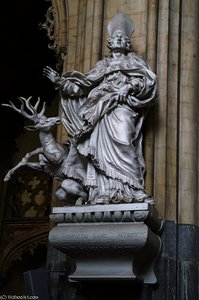
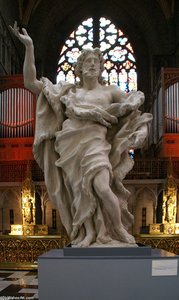
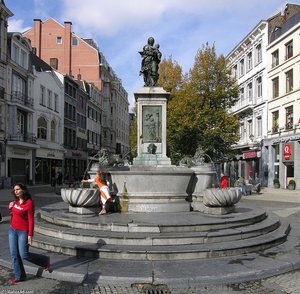
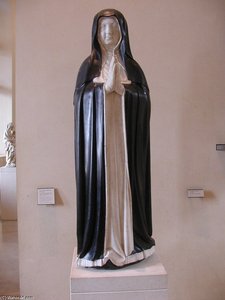
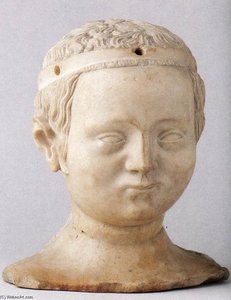
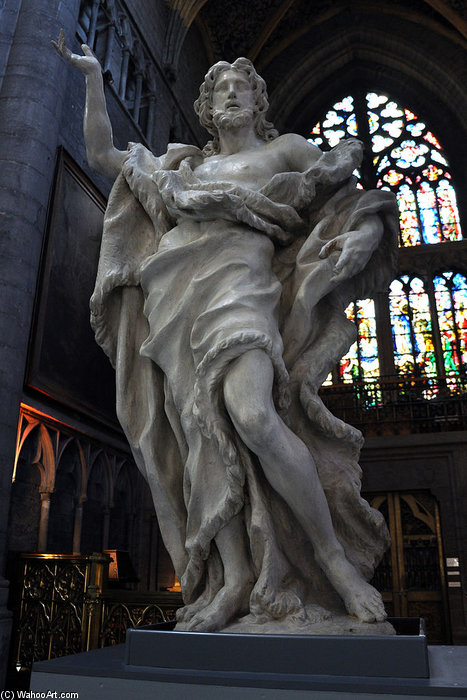
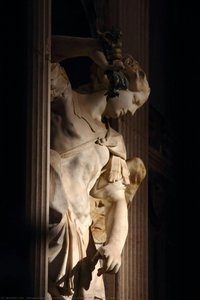
Cathedrale Saint-paul De Liege

 Read More
Hand Made Oil Reproduction
Hand-painted oil on canvas in your size and frame, made to order by our artists. ( Buy Print Buy Image)




































Pick from our preset sizes that match the artwork's original proportions.

You may enter your own dimensions to fit a specific frame or space. If your selected size does not match the original image's proportions, we will either crop the artwork or extend the painting with additional hand-painted elements. A digital mockup will be sent for your approval before production begins.
Please note that the on-screen preview does not reflect the actual cropping or extension. Only the mockup will accurately show the final composition.
While custom sizes are available, we recommend selecting a dimension from the predefined list to preserve the original proportions.
After order, ArtsDot.com team will email client for instructions and provide a mockup preview
Worldwide Delivery () in 3/4 weeks instead of standard 5 weeks. (22 August). No compromise on quality.

Free Worldwide Express Shipping

High-Quality Linen Canvas

Full Shipping Insurance

Customs Tax Refund Guarantee

True Color Matching Guarantee

60-Day Return Policy (Defects Only)

100% Money-Back Guarantee

Bulk Discount Offer
 Glass option is only available in size under 110 CM

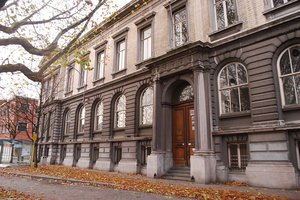
Cathedrale Saint-paul De Liege
Reproduction Medium
Reproduction Size
-


Total Price
$ 263
Related Artworks
Artist Biography
Jean de Liège: A Flemish Sculptor Shaping Medieval France
Jean de Liège (c. 1330 – 1381) remains an enigmatic figure in the history of art, largely obscured by the shadows of his time and overshadowed by more prominent contemporaries. Despite the scarcity of biographical details—primarily gleaned from inventories of his surviving sculptures—scholarly research has painstakingly reconstructed a portrait of a remarkably prolific artist who exerted considerable influence on the artistic landscape of 14th-century Flanders and France. His legacy endures not merely in the grandeur of monumental tombs but also in the delicate beauty of intimate devotional figures, cementing his place as one of the foremost sculptors of his era.
Information concerning Jean de Liège’s origins is fragmentary. He was born around 1330 in Lille, a city then part of the Duchy of Brabant—a region renowned for its burgeoning artistic tradition. Little is known about his family or formal education, suggesting that he honed his craft through apprenticeship under established sculptors, likely absorbing techniques and stylistic conventions prevalent in Lille’s workshops. The prevailing consensus among historians posits that Jean's formative years were spent mastering the art of carving stone—a skill indispensable for creating funerary monuments and ecclesiastical decorations—skills which would define his artistic output throughout his career.
Mastery of Stone and Royal Commissions
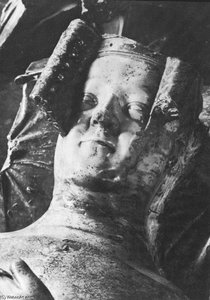
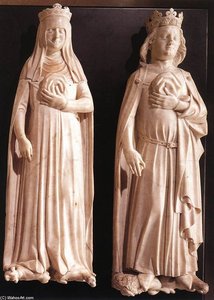
Jean de Liège’s fame ascended dramatically with the commission to sculpt the tomb of Queen Philippa of Hainault, wife of Edward III, for Westminster Abbey in London. Completed around 1366, this monumental undertaking represents a pivotal moment in Jean’s artistic trajectory and stands as arguably his most celebrated achievement. The tomb—a complex sculptural ensemble featuring a reclining effigy of Philippa flanked by attendants—demonstrates Jean's mastery of naturalism and the ability to convey both royal dignity and profound stillness.
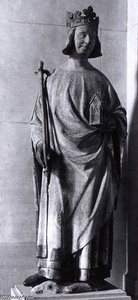
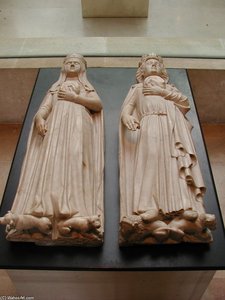
His talent for funerary sculpture earned him the patronage of the highest levels of French royalty. His hands shaped the very memory of the Valois dynasty, as evidenced by his work on the tomb of the heart of Charles V for the Rouen Cathedral in 1368, and the poignant tomb of the entrails of Charles IV and Jeanne d'Évreux for the Maubuisson Abbey, a piece that now resides in the prestigious halls of The Louvre. Beyond these grand monuments, Jean’s skill extended to portraiture; the Louvre also preserves his striking portraits of Charles V and Joanna of Bourbon from 1365, which showcase his ability to capture character through the medium of stone.
Devotional Elegance and Artistic Legacy
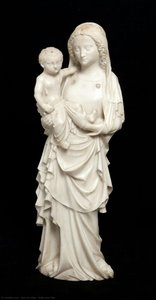
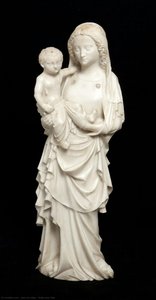
While his monumental tombs provided a sense of permanence to the deceased, Jean de Liège also excelled in creating smaller, more intimate works that breathed life into religious devotion. One such masterpiece is the Virgin and Child, often referred to as the "Virgin of the Baker." Carved from marble with superb handling of the mantle's folds, this work originally featured traces of gold and precious stones. The sculpture exhibits the elongated proportions and tender, affectionate relationship between mother and child that characterized the expansion of the Marian cult in the late fourteenth century.
The breadth of his influence can be seen across various religious themes, including:
- The Annunciation: A work demonstrating his ability to capture divine interaction.
- Gésine Notre-Dame: A testament to his skill in ecclesiastical decoration.
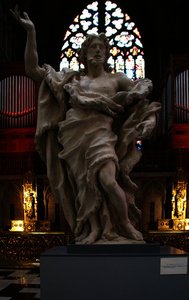
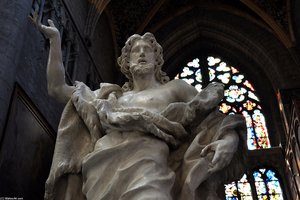
- St. John the Evangelist: A piece attributed to his workshop or manner, showcasing the stylistic hallmarks of his era.
Though much of his work has been lost to time—including several recumbent figures at Saint-Denis—the surviving fragments of Jean de Liège's oeuvre allow us to glimpse a master who bridged the gap between the rigid traditions of the early Middle Ages and the burgeoning naturalism of the late Gothic period. His ability to manipulate marble and stone to evoke both the weight of mortality and the lightness of divine grace ensures his enduring significance in the annals of European sculpture.
jean de liège
1330 - 1381 , France
Quick Facts
- Artistic Movement Or Style: Early Netherlandish Sculpture
- Artists Or Movements Influenced By This Artist: ['Rococo Portraiture']
- Artists Who Influenced This Artist: ['André Beauneveu']
- Date Of Death: 1381
- Full Name: Jean de Liège
- Nationality: Franco-Netherlandish
- Notable Artworks:
- Tomb of Philippa of Hainault
- Heart of Charles V Tomb
- Tomb of Charles IV and Jeanne d'Évreux
- Place Of Birth: Liege, France
Related Articles
The Enduring Allure of Marble in Art History: From Classical Sculpture to Modern Abstraction
Explore the captivating history of marble sculpture from ancient Greece to modern art. Discover renowned artists like Canova & Michelangelo, carving techniques, and investment insights at ArtsDot.

Bronze Sculptures That Defined Art History | ArtsDot
Journey through art history with our Top 10 bronze sculptures! Explore masterpieces by Rodin, Michelangelo & more. Discover stories behind iconic statues and find museum-quality reproductions for your home decor at ArtsDot.com.

Goya's Masterpieces: Explore 25 Iconic Paintings & Art Prints | ArtsDot
Delve into the world of Francisco Goya with ArtsDot. Explore 25 iconic paintings – from 'The Third of May' to his haunting Black Paintings. Discover the stories, techniques & emotions behind these Spanish masterpieces. Find museum-quality art reproductions for your home at ArtsDot.com!

The Enduring Form: Exploring Themes & Techniques in Sculpture Across Historical Periods
Explore the rich history of sculpture from ancient masterpieces to contemporary innovations. Discover key techniques, influential artists & investment potential for discerning art collectors.
The Enduring Form: Sculpture Across History, Technique & Emotional Resonance
Explore the rich history of sculpture with ArtsDot. Discover key techniques, influential artists & investment potential for discerning collectors. Expert insights into valuing and collecting timeless masterpieces.