 Preview
 Send
Send Share
Share
 Details

 Download
 Similars
 X-Ray
X-Ray Diaporama
Altarpiece, scenes from the Life of the Virgin
 Renaissance
 1500
1500- Renaissance
 286.0 x 312.0 cm
 Machado de Castro National Museum
 Read More
Hand Made Oil Reproduction
Hand-painted oil on canvas in your size and frame, made to order by our artists. ( Buy Print Buy Image)




P118B $10

P118H $10

P118W $10

P438Z $10

P508JH $12

P508YH $12

P805H $10

P805Z $10

P919BZ $10

P919G $10

P919XJ $10

P959ZH $10

P968JZ $12

W106C $8

W218G $10

W218JH $8

W218Y $10

W307PJ $10

W316G $10

W316PJ $8

W316Y $10

W398PJ $8

W4111J $10

W500HY $15

W500JH $15

W692G $12

W849H $8

W940BG $15

W953PJ $8




Pick from our preset sizes that match the artwork's original proportions.

You may enter your own dimensions to fit a specific frame or space. If your selected size does not match the original image's proportions, we will either crop the artwork or extend the painting with additional hand-painted elements. A digital mockup will be sent for your approval before production begins.
Please note that the on-screen preview does not reflect the actual cropping or extension. Only the mockup will accurately show the final composition.
While custom sizes are available, we recommend selecting a dimension from the predefined list to preserve the original proportions.
After order, ArtsDot.com team will email client for instructions and provide a mockup preview
Worldwide Delivery () in 3/4 weeks instead of standard 5 weeks. (30 August). No compromise on quality.

Free Worldwide Express Shipping

High-Quality Linen Canvas

Full Shipping Insurance

Customs Tax Refund Guarantee

True Color Matching Guarantee

60-Day Return Policy (Defects Only)

100% Money-Back Guarantee

Bulk Discount Offer
 Glass option is only available in size under 110 CM

Altarpiece, scenes from the Life of the Virgin
Reproduction Medium
Reproduction Size
-


Total Price
$ 263
A Celestial Narrative in Paint and Devotion
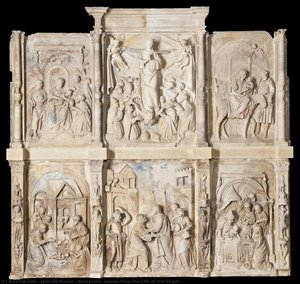
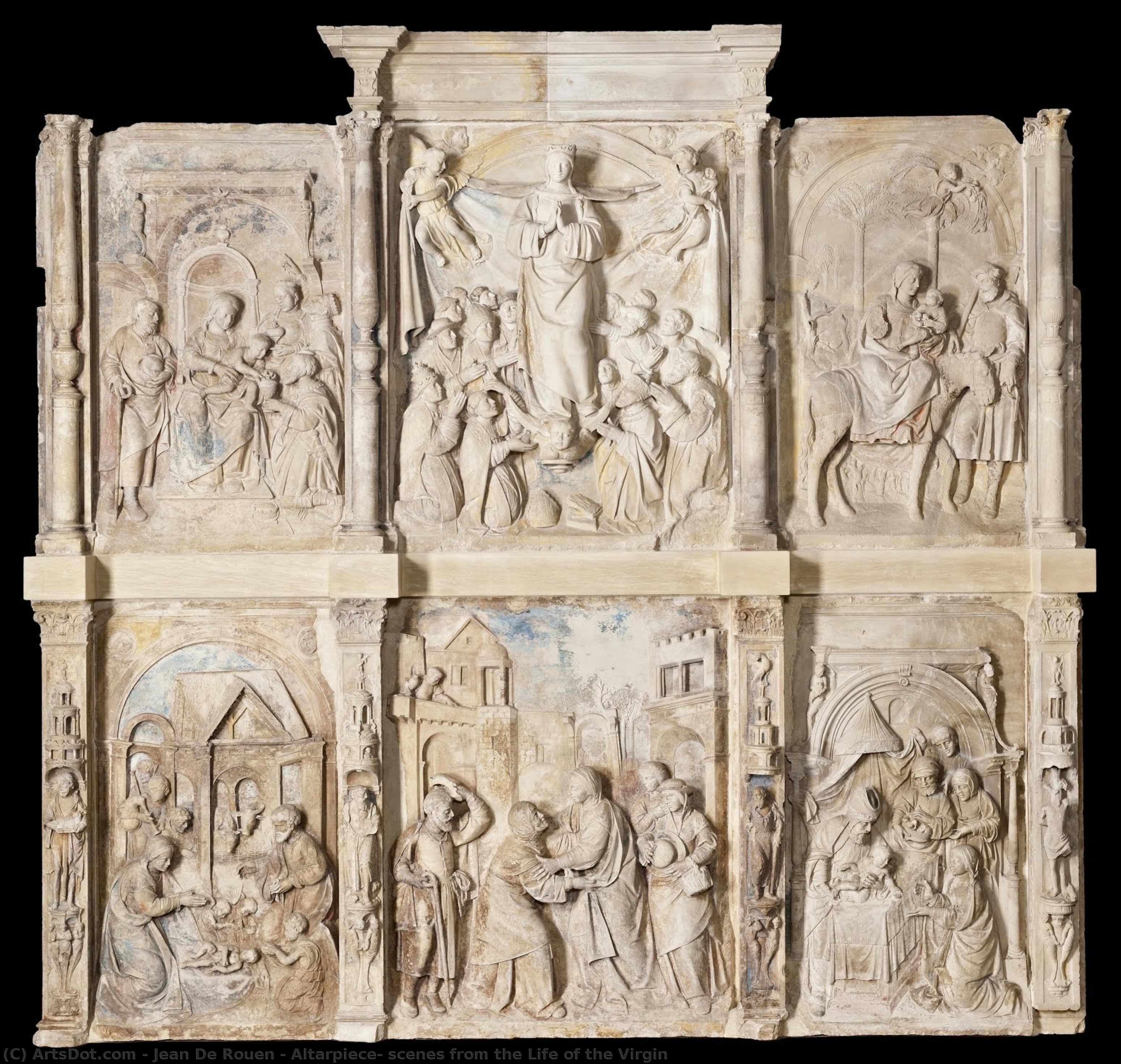
In the grand tapestry of Renaissance art, few works capture the profound intersection of human emotion and divine grace as exquisitely as the Altarpiece, scenes from the Life of the Virgin. Created around 1500 by the master Jean de Rouen, this monumental work serves as a window into a sacred era, where every brushstroke was an act of prayer. The composition is a breathtakingly intricate assembly of narrative fragments, guiding the viewer through the most pivotal moments of the Virgin Mary’s earthly journey. At its heart lies the triumphant Coronation of the Virgin, a scene of celestial splendor where angels descend to crown her, symbolizing her ultimate exaltation. This central glory is surrounded by a rhythmic dance of figures—men and women caught in moments of quiet contemplation or profound interaction—creating a sense of a living, breathing community united by faith.
The sheer scale of the piece, measuring an imposing 286 x 312 cm, demands attention, yet it is the meticulous detail that holds the soul. Jean de Rouen, a master who bridged the gap between French sculptural precision and the burgeoning Renaissance ideals in Portugal, utilizes a technique that breathes life into every element. One might find themselves lost in the delicate rendering of a book resting near the bottom corner or the subtle glint of light upon a cup positioned to the side. These small, earthly objects serve as anchors for the divine narrative, grounding the supernatural events in a tangible, relatable reality. The artist’s ability to manipulate depth and perspective allows certain figures to press forward toward the viewer, while others recede into a soft, atmospheric distance, creating a layered, theatrical experience that enveloply the observer.
The Legacy of a Renaissance Master
To behold this altarpiece is to witness the transition of an entire epoch. Jean de Rouen was not merely a painter; he was an architect of emotion and space. Having honed his skills in the rich artistic traditions of Rouen, France, his arrival in Portugal marked a transformative moment for the Iberian Peninsula's aesthetic landscape. He brought with him the sophisticated sculptural sensibilities of the late Gothic period, seamlessly blending them with the new, humanist values of the Renaissance. This stylistic synthesis is evident in the way the figures possess both a monumental, statuesque presence and a tender, human vulnerability.
For the discerning collector or interior designer, this artwork offers more than just visual beauty; it offers a profound sense of history and prestige. A high-quality reproduction of this altarpiece serves as a commanding focal point in any sophisticated space, whether it be a grand library, a formal dining hall, or a curated gallery wall. The piece evokes an atmosphere of timelessness and intellectual depth, inviting conversation and reflection. It is an investment in the enduring power of storytelling through art—a way to bring the light of the Renaissance into the modern home, surrounding oneself with the elegance, complexity, and spiritual resonance of a bygone golden age.
Related Artworks

Artist Biography
Jean de Rouen: A Renaissance Master in Portugal
Early Life and Origins
Born in Rouen, France, around 1500, Jean de Rouen (also known as João de Ruão or Joao de Ruao) remains a somewhat enigmatic figure. Details of his early life and training are scarce, but it is understood he honed his skills as both a sculptor and an architect within the French artistic tradition before embarking on a pivotal journey to Portugal.
Arrival in Portugal and Artistic Development
Between 1527 and 1528, Jean de Rouen arrived in Portugal, a period marking a turning point not only for his career but also for the artistic landscape of the country. Portugal at this time was transitioning from late Gothic styles towards Renaissance ideals. De Rouen played a crucial role in solidifying and disseminating these new aesthetic principles.
- Introducing Renaissance Values: He brought with him a deep understanding of Renaissance sculpture and architectural concepts, which were relatively novel to Portugal at the time.
- Adaptation and Innovation: While firmly rooted in Renaissance principles, de Rouen’s work wasn't merely imitative. He skillfully adapted these styles to suit Portuguese tastes and materials, creating a unique synthesis.
Notable Works and Achievements
Jean de Rouen’s legacy is primarily defined by two significant projects:
- Retábulo-mor of the Sé Cathedral da Guarda: This monumental altarpiece, considered a cornerstone of Portuguese Renaissance art, showcases his exceptional sculptural talent and mastery of composition. It's a complex work demonstrating detailed carving and narrative storytelling.
- Jardim da Manga (Coimbra): Located behind the Santa Cruz Monastery in Coimbra, this Renaissance garden with its intricate fountains is a testament to de Rouen’s architectural versatility. The Jardim da Manga exemplifies the integration of sculpture, water features, and landscaping.
Influences and Artistic Style
While specific influences are difficult to pinpoint due to limited documentation, it's likely that Jean de Rouen was familiar with the works of Italian Renaissance masters through exposure in France. His style is characterized by:
- Classical Proportions: A strong adherence to classical ideals of beauty and anatomical accuracy.
- Detailed Ornamentation: Intricate carvings and decorative elements, reflecting the Renaissance emphasis on embellishment.
- Narrative Depth: His sculptures often tell stories or depict religious scenes with a high degree of emotional expression.
Historical Significance and Legacy
Jean de Rouen’s impact on Portuguese art is undeniable. He wasn't simply an artist working *in* Portugal; he was instrumental in shaping the direction of Portuguese Renaissance art. His work helped to establish a new aesthetic standard, influencing generations of Portuguese sculptors and architects. Though not as widely celebrated internationally as some of his contemporaries, within Portugal, João de Ruão is recognized as a pivotal figure who bridged artistic traditions and left an enduring mark on the nation’s cultural heritage.
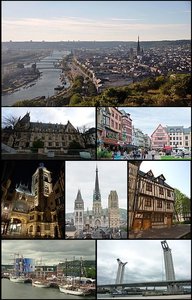
jean de rouen
1500 - 1580 , France
Quick Facts
- Birth Date: 1500
- Birth Place: Rouen, France
- Death Date: 1580
- Influenced: Portuguese art and architecture
- Movement: Renaissance
- Name: Jean de Rouen
- Nationality: French
- Notable Works: Retábulo-mor of the Sé Cathedral da Guarda, Jardim da Manga
Related Articles

Goya's Masterpieces: Explore 25 Iconic Paintings & Art Prints | ArtsDot
Delve into the world of Francisco Goya with ArtsDot. Explore 25 iconic paintings – from 'The Third of May' to his haunting Black Paintings. Discover the stories, techniques & emotions behind these Spanish masterpieces. Find museum-quality art reproductions for your home at ArtsDot.com!

About Us
Discover our story! We bring world-class art into your life through expert curation, personalized creations, and free previews. Trusted by individuals and businesses since 2000.
Maurice Quentin de La Tour: Light, Shadow & the Rococo Portrait
Explore the captivating world of Maurice Quentin de La Tour, a master of Rococo portraiture. Discover his innovative pastel techniques, intimate depictions of French aristocracy, and lasting artistic legacy. Learn more at ArtsDot.
Pieter de Hooch: Illuminating Dutch Domestic Life & Golden Age Charm
Explore the captivating world of Pieter de Hooch, a master of Dutch Golden Age painting. Discover his innovative use of light, intimate domestic scenes, and lasting influence on art history. Learn more at ArtsDot.
Águeda Ruiz de la Prada: A Study of Eclecticism & Emotional Resonance in Contemporary Spanish Painting
Discover the vibrant world of Ágatha Ruiz de la Prada, a leading figure in contemporary Spanish art. Explore her eclectic style, emotional depth & legacy – a must-read for discerning collectors.