 Preview
 Send
Send Share
Share
 Details

 Download
 Similars
 X-Ray
X-Ray Diaporama
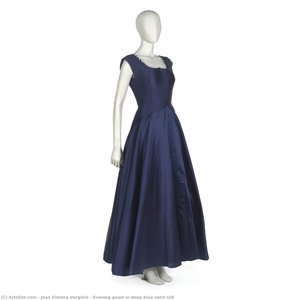
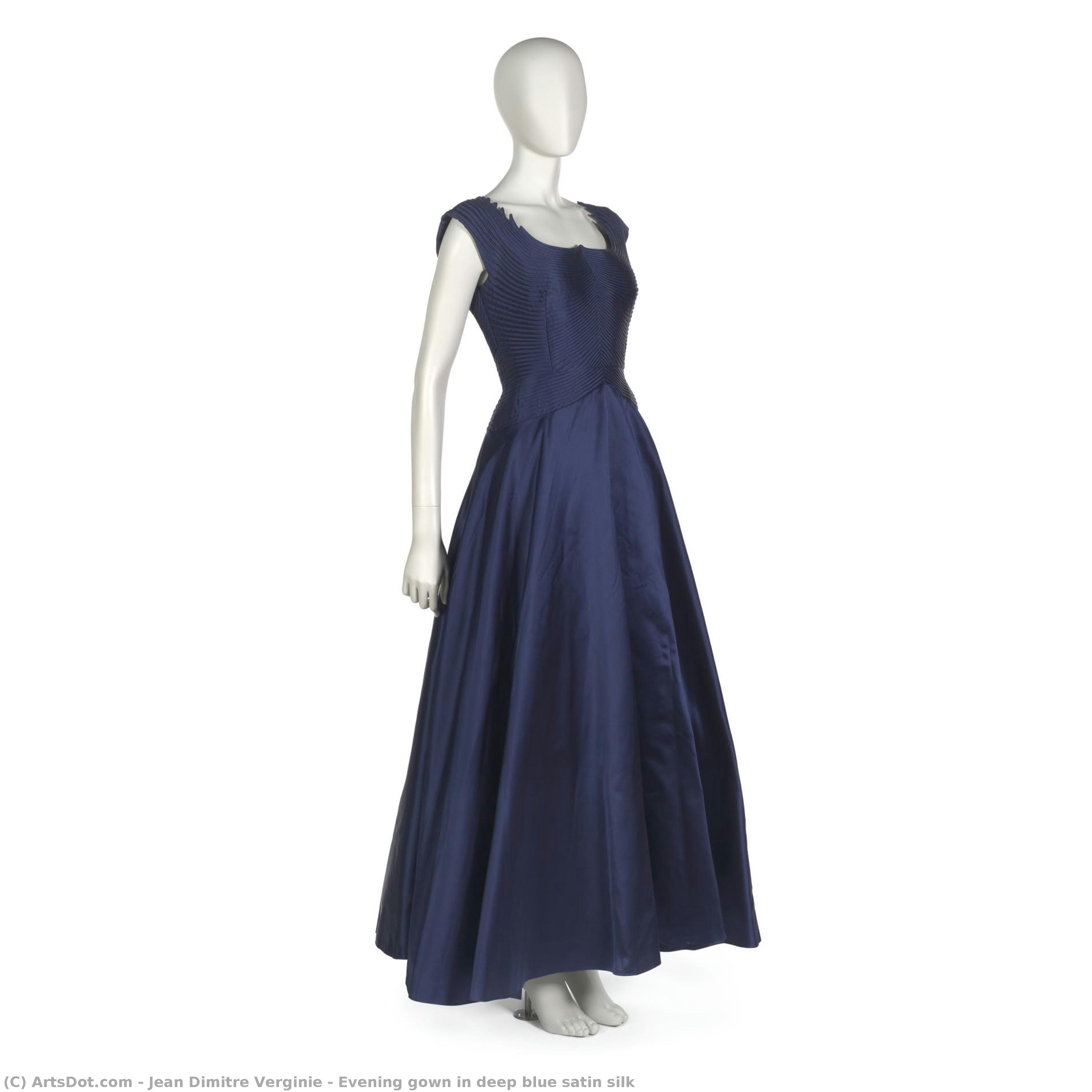
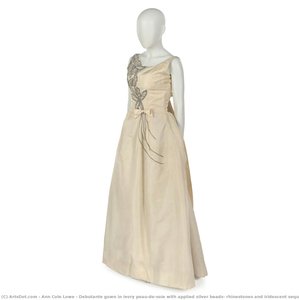
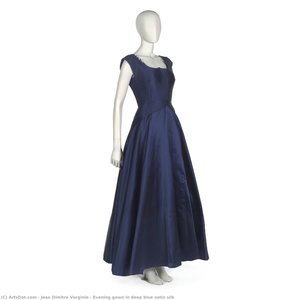
Evening gown in deep blue satin silk


 Read More
Hand Made Oil Reproduction
Hand-painted oil on canvas in your size and frame, made to order by our artists. ( Buy Print Buy Image)




P118B $10

P118H $10

P118W $10

P438Z $10

P508JH $12

P508YH $12

P805H $10

P805Z $10

P919BZ $10

P919G $10

P919XJ $10

P959ZH $10

P968JZ $12

W106C $8

W218G $10

W218JH $8

W218Y $10

W307PJ $10

W316G $10

W316PJ $8

W316Y $10

W398PJ $8

W4111J $10

W500HY $15

W500JH $15

W692G $12

W849H $8

W940BG $15

W953PJ $8




Pick from our preset sizes that match the artwork's original proportions.

You may enter your own dimensions to fit a specific frame or space. If your selected size does not match the original image's proportions, we will either crop the artwork or extend the painting with additional hand-painted elements. A digital mockup will be sent for your approval before production begins.
Please note that the on-screen preview does not reflect the actual cropping or extension. Only the mockup will accurately show the final composition.
While custom sizes are available, we recommend selecting a dimension from the predefined list to preserve the original proportions.
After order, ArtsDot.com team will email client for instructions and provide a mockup preview
Worldwide Delivery () in 3/4 weeks instead of standard 5 weeks. (21 August). No compromise on quality.

Free Worldwide Express Shipping

High-Quality Linen Canvas

Full Shipping Insurance

Customs Tax Refund Guarantee

True Color Matching Guarantee

60-Day Return Policy (Defects Only)

100% Money-Back Guarantee

Bulk Discount Offer
 Glass option is only available in size under 110 CM

Evening gown in deep blue satin silk
Reproduction Medium
Reproduction Size
-


Total Price
$ 263
Artwork Description
A Visionary Blend: Jean Dessès and the Echoes of Ancient Egypt in Evening Gowns
Jean Dessès (August 6, 1904 – August 2, 1970) stands as a singular figure in the annals of French couture—a designer who seamlessly blended influences from his Greek heritage with the opulent aesthetics of ancient Egypt to craft gowns that captivated royalty and cemented his place as a pioneer of vintage fashion. Born Jean Dimitre Verginie in Alexandria, Egypt, to Greek parents, Dessès initially pursued legal studies but swiftly abandoned them for the allure of Parisian ateliers, ultimately establishing Maison Dessès in 1937—a salon that would become synonymous with elegance and innovation. His artistic journey was profoundly shaped by a fascination with both Grecian mythology and Egyptian symbolism, resulting in designs that transcended mere fashion trends and resonated with deeper cultural narratives.The Genesis of Style: Dual Inspirations
Dessès’ formative years were steeped in the traditions of Alexandria's Greek Orthodox community, exposing him to intricate textiles and decorative arts—patterns reminiscent of classical drapery and ornamentation. Simultaneously, his fascination with Egyptian art and mythology fueled a desire to translate these visual motifs into wearable garments. This dual inspiration would become the bedrock of his distinctive style; he sought to capture the grandeur of Grecian robes alongside the majesty of Egyptian splendor, creating gowns that evoked timeless beauty and conveying narratives rooted in ancient history. The meticulous selection of fabrics—primarily satin silk—further emphasized this fusion of cultures, mirroring the luxurious materials favored by pharaohs and emperors alike.Technique and Craftsmanship: Mastering Drape and Texture
Dessès’ approach to couture was characterized by unparalleled precision and artistry. He championed a revival of vintage fashion trends in the 1990s, securing appearances by celebrities like Naomi Campbell and Renée Zellweger at prestigious events. His creations—particularly a lemon yellow gown worn by Zellweger—demonstrated his enduring influence on contemporary style. Maison Dessès’ reputation rested upon its mastery of draping chiffon and mousseline into breathtaking evening gowns that embodied the elegance of bygone eras. The incorporation of trapunto channels—creating textured surfaces resembling hieroglyphic carvings—added another layer of visual complexity, reflecting Dessès' commitment to elevating craftsmanship beyond conventional standards.Royal Clientele and Enduring Legacy
Dessès’ designs gained considerable acclaim among European royalty and movie stars alike. He specialized in creating draped evening gowns in chiffon and mousseline based on early Greek and Egypt robes . Dessès was a popular designer in European royalty and movie stars . His creations—particularly a lemon yellow gown worn by Zellweger—demonstrated his enduring influence on contemporary style. The meticulous attention to detail—from the subtle peak center front of the neckline to the graceful curvature toward shoulders—underscored Dessès’ dedication to achieving perfection, mirroring the artistic standards upheld during ancient Egyptian art and architecture.A Boutique Reflection: Continuing Artistic Spirit
In 1963, seeking respite from declining health, Dessès retreated to Greece where he established a small boutique—a continuation of his creative spirit and a tangible reminder of his artistic journey. He passed away peacefully in Athens in 1970, leaving behind an indelible mark on the history of fashion. Maison Dessès’ legacy extends beyond individual gowns; it represents a celebration of timeless elegance and a testament to Dessès' unwavering belief in the transformative power of art—a vision that continues to inspire designers and collectors worldwide.Related Artworks
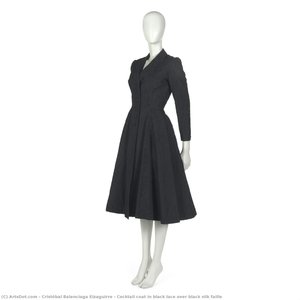
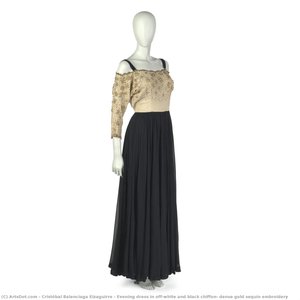
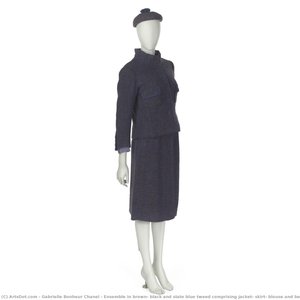
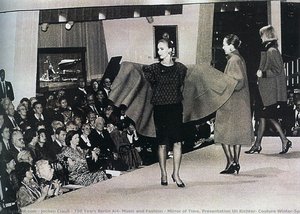

Artist Biography
The Architect of Ethereal Elegance
In the golden era of Parisian haute couture, few names whispered of as much romance and historical grandeur as Jean Dessès. Born Jean Dimitre Verginie in 1904 amidst the cosmopolitan splendor of Alexandria, Egypt, his very identity was a tapestry of cultural richness. Raised within the Greek Orthodox community, his early years were steeped in the intricate textures and decorative arts of his heritage. While he initially sought a path through the rigorous study of law, the siren call of the Parisian ateliers proved irresistible. By 1925, he had abandoned the courtroom for the atelier of Madame Jane, beginning a transformative apprenticeship that would eventually lead to the establishment of his own legendary house, Maison Dessès, in 1937.
Dessès possessed a rare, visionary ability to bridge the gap between the ancient world and modern glamour. His designs were never merely garments; they were wearable echoes of antiquity. He drew profound inspiration from the majestic silhouettes of Egyptian mythology and the fluid, sculptural grace of Grecian drapery. This dual fascination allowed him to manipulate fabrics like chiffon, mousseline, and satin silk into breathtaking evening gowns that seemed to possess a life of their own. To wear a Dessès creation was to drape oneself in the dignity of a pharaoh or the ethereal beauty of a goddess, making him a pioneer of a style that felt both timeless and avant-garde.
A Legacy Woven in Silk and Royalty
The ascent of Maison Dessès marked a period where fashion became an art form of unparalleled sophistication. As a master of drape and texture, Dessès’ technical prowess was matched only by his eye for dramatic flair. His studio served as a crucible of talent; notably, the legendary Valentino once worked under his guidance, inheriting a shared passion for the dramatic, elegant ball gown. His craftsmanship was characterized by an almost sculptural precision, using fabric manipulation to create silhouettes that commanded attention in the most prestigious salons of Europe.
The true testament to his genius lay in his illustrious clientele, a roster of women who defined the elegance of the mid-20th century. His designs graced the shoulders of royalty and high society, including:
- The Queen and Royal Princesses of Greece, most notably designing the wedding gown for Princess Sophia.
- The Duchess Windsor, a symbol of international style and intrigue.
- Athina Livanos, the celebrated socialite and wife of Aristotle Onassis.
- Elsa Maxwell, the legendary hostess and tastemaker.
Beyond the runway, Dessès was an astute entrepreneur who understood the expanding reach of fashion. He launched a diffusion line in America during the 1950s and introduced a range of perfumes and silk scarf designs, ensuring that the essence of his aesthetic could be shared far beyond the exclusive confines of Avenue Matignon. Though his couture house eventually closed in 1960, his influence endured through his freelance work in Greece and the enduring revival of his vintage aesthetic in later decades. Jean Dessès remains a singular figure—a designer who did not just follow trends, but instead resurrected the splendor of the past to clothe the icons of the present.
jean dimitre verginie
1904 - 1970 , Egypt
Quick Facts
- Artistic Movement Or Style: Glamorous vintage fashion
- Artists Or Movements Influenced By This Artist:
- Valentino
- Guy Laroche
- Artists Who Influenced This Artist:
- Greek robes
- Egyptian robes
- Date Of Birth: August 6, 1904
- Date Of Death: August 2, 1970
- Full Name: Jean Dessès
- Nationality: Greek Egyptian
- Notable Artworks:
- Evening Dress
- Evening gown in deep blue satin silk
- Two-piece Red Evening Dress
- Place Of Birth: Alexandria, Egypt
Related Articles
Cristóbal Balenciaga: Deconstructing Haute Couture's Architectural Legacy
Explore the revolutionary world of Cristóbal Balenciaga, the 'couturier's couturier'. Discover his architectural designs, lasting influence on haute couture, and guide to collecting rare pieces. A connoisseur’s resource.
Gianfranco Ferré: Deconstructing Haute Couture – A Legacy of Architectural Form
Explore the revolutionary world of Gianfranco Ferré, 'the architect of fashion.' Discover his architectural approach to haute couture, iconic Dior designs, and lasting influence on luxury style. A deep dive for collectors & enthusiasts.
Draped Narratives: Fashion as Symbol & Subject in Historical Art
Explore the fascinating history of fashion as a symbol of power & status in art! Discover masterpieces from Gainsborough to Tissot and learn how clothing shaped societal narratives. Find museum-quality reproductions at ArtsDot.
Echoes of Time: Nostalgia, Technique & Cultural Significance in Vintage Paintings
Explore the captivating world of vintage paintings! Discover key styles, cultural significance & collecting tips from art experts at ArtsDot. Find authentic reproductions and elevate your home décor.
Mariano Fortuny: A Fusion of Art, Fashion & Design – Exploring a Venetian Innovator's Legacy
Explore the captivating world of Mariano Fortuny – artist, designer & innovator. Discover his revolutionary textiles, iconic Delphos gown, and lasting influence on art, fashion & interiors. A collector's guide to a Venetian master.