

 Preview
 Send
Send Share
Share
 Details

 Download
 Similars
 X-Ray
X-Ray Diaporama
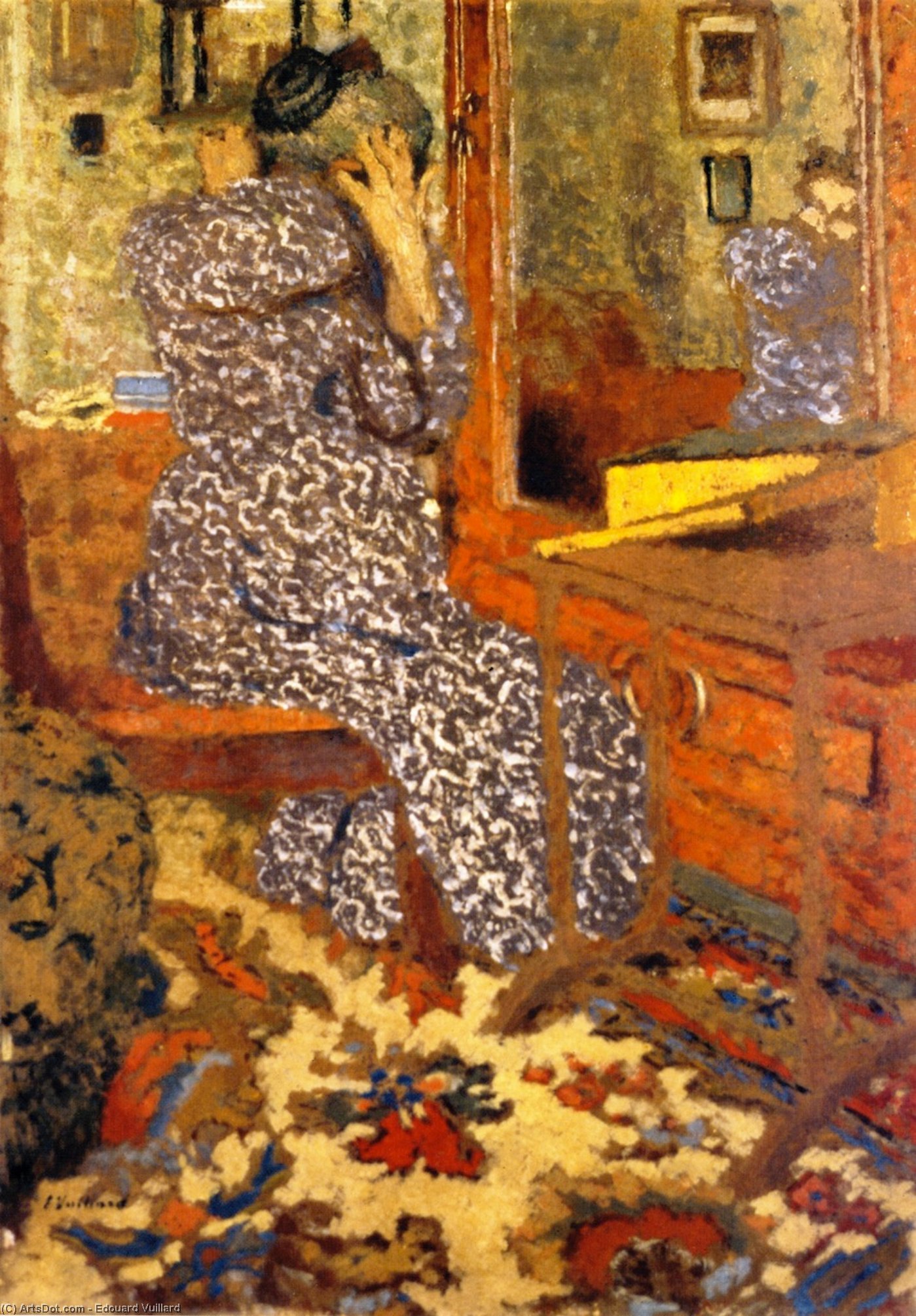
Woman Arranging Her Hair (also known as Mme Vuillard in front of the Mirror)


 Read More
Purchase a high-resolution, enhanced digital image, far superior to the online preview.
Each file is meticulously prepared by our in-house specialists using advanced tools and expert manual retouching. We ensure every image has exceptional clarity, precise color accuracy, and fine detail.
The final file is delivered via email within 72 hours, optimized for immediate use in professional, editorial, and print environments. This is the same quality trusted by top-tier design studios, publishers, and galleries.
Digital Image
Download a high-resolution file for personal display, printing, and creative projects. ( Buy Print Buy Hand Made Painting)
Included in Every Digital Image Order
Expert Digital Delivery, Guaranteed
When you choose ArtsDot.com, you're not just getting an image - you're receiving a professionally enhanced digital artwork, crafted with precision and backed by a satisfaction guarantee. Here's everything that comes with your order, automatically:

Fast Email Delivery
Your high-resolution digital image file will be emailed to you within 72 hours of ordering - ready for immediate use.

AI-Enhanced Digital File
Your artwork is professionally optimized using advanced AI tools and manual editing, ensuring maximum detail, clarity, and color accuracy.

Free Lifetime Re-Delivery
Accidentally deleted or lost your file? No worries - we'll resend it to you anytime, free of charge.

No Import Fees - Ever
Enjoy your artwork instantly with zero customs, duties, or delivery fees - digital downloads are always tax-free.

Color Accuracy Guarantee
We ensure your digital image reflects the original colors as closely as possible using professional tools and color management.

60-Day Satisfaction Guarantee
If you're not satisfied with your digital image, we'll revise it or refund 100% within 60 days - no questions asked.

100% Money-Back Guarantee
Not satisfied? Get a full refund within 60 days of receiving your digital file - no questions asked.

Bulk Order Discounts
Buy 3 images, save 10% - Buy 5, save 15% - Buy 10+, save 20%. Great for creative projects, galleries, and agencies.
A Moment Frozen in Pastel Dreams: Exploring Jean Vuillard’s “Woman Arranging Her Hair”
Jean-Édouard Vuillard's "Woman Arranging Her Hair," painted in 1900, stands as a quintessential example of Les Nabis’ groundbreaking aesthetic—a visual exploration of interior space and color that continues to resonate with audiences today. This deceptively simple portrait transcends mere representation; it delves into the psychological landscape of its subject and embodies the movement's core principles.The Style and Technique: Flattened Planes and Harmonious Color
Vuillard’s signature style is instantly recognizable through his masterful manipulation of color and form. Rejecting Impressionism’s focus on capturing fleeting light, Vuillard embraced a deliberate flatness—a technique heavily influenced by Japanese prints—to create an illusionistic space devoid of traditional perspective. The artist eschewed sharp outlines, opting instead for soft edges that blend seamlessly together, blurring the boundaries between subject and background. This flattening effect isn't merely stylistic; it’s a conscious decision to prioritize color harmony over realistic depiction. Vuillard employed pastel shades—primarily muted pinks, yellows, and blues—to imbue the scene with an ethereal glow, capturing not just what is seen but also how it feels. The subtle gradations of color contribute significantly to the painting's tranquil atmosphere.Historical Context: Les Nabis and the Dawn of Modern Art
“Woman Arranging Her Hair” emerged during a pivotal moment in artistic history—the burgeoning years of Les Nabis, a collective founded by Vuillard, Maurice Denis, and Frédéric Skinner. This group challenged the conventions of academic art, advocating for a more subjective and expressive approach. They sought inspiration from Symbolism, rejecting naturalistic representation in favor of conveying emotion and spiritual ideas through color and form. The influence of Japanese prints is palpable; the flattened planes of color and simplified shapes mirror the aesthetic principles prevalent in Edo-period Japan. This stylistic convergence signaled a decisive break from artistic traditions and paved the way for movements like Cubism and Fauvism, establishing Vuillard as a pioneer of modern art.Symbolism Within Simplicity: Reflection and Inner Consciousness
Beyond its formal innovations, “Woman Arranging Her Hair” is rich in symbolic undertones. The mirror reflects not only the woman’s physical appearance but also her inner state—a contemplation of self and identity. The act of arranging hair itself can be interpreted as a ritualistic gesture, representing care for oneself and an attempt to impose order on the complexities of life. The carefully positioned books suggest intellectual pursuits and a desire for knowledge. Vuillard's deliberate use of color—particularly the dominant pink—evokes feelings of tenderness, serenity, and perhaps even melancholy. These subtle nuances elevate the painting beyond a mere portrait into a meditation on human experience.Emotional Impact: Tranquility and Intimacy
The overall emotional impact of “Woman Arranging Her Hair” is one of profound tranquility and intimacy. The muted palette and soft brushstrokes create an atmosphere of quiet contemplation, inviting viewers to immerse themselves in the scene’s serene beauty. Vuillard's ability to capture a fleeting moment—the woman absorbed in her task—communicates a sense of vulnerability and honesty. It’s a painting that speaks to the viewer on a visceral level, conveying not just what is seen but also how it feels to be present within this carefully constructed interior space. The artwork continues to captivate audiences with its understated elegance and enduring exploration of human psychology.Related Artworks

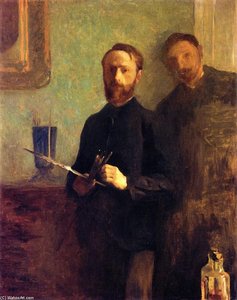
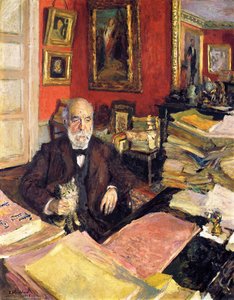
Artist Biography
**early life and artistic beginnings**
jean-édouard vuillard, a french painter, decorative artist, and printmaker, was born on november 11, 1868, in cuiseaux, france. his life's work would later become a cornerstone of the avant-garde artistic group les nabis, alongside fellow visionaries like maurice denis and édouard vuillard. this collective would revolutionize the art world with their innovative approach to color and form.**the nabis movement and its influence**
as a prominent member of les nabis, vuillard's paintings assembled areas of pure color, influenced by japanese prints. his interior scenes explored the spatial effects of flattened planes of color, pattern, and form. this approach would later influence the development of cubism, fauvism, and abstract art.- les nabis, a group of young french artists active in paris from 1888 until 1900, played a large part in the transition from impressionism and academic art to abstract art, symbolism, and the other early movements of modernism.
- their philosophy was based upon the philosophy of positivism, and the writings of auguste comte and hippolyte taine.
**vuillard's later work and legacy**
after 1900, when les nabis disbanded, vuillard adopted a more realistic style, approaching landscapes and interiors with greater detail and vivid colors. in the 1920s and 1930s, he painted portraits of prominent figures in french industry and the arts in their familiar settings. **key works and exhibitions:**- jean-édouard vuillard's paintings can be found in various museums, including the musée de la révolution française (france), which boasts a rich collection of artworks, documents, and objects related to the revolutionary period.
- some of his notable works include "la patrie en danger" by guillaume lethière and "jean de la barre" by jean clouet, which depict a young man condemned to death for blasphemy during the ancien régime.
- vuillard's later work, such as his portraits of french industry and arts figures, can be seen in various galleries, including those at intimism art movement and jean-édouard vuillard's page on ArtsDot.
**conclusion**
jean-édouard vuillard's enigmatic world, characterized by its innovative use of color and form, has left an indelible mark on the art world. as a pioneer of modernism, his work continues to inspire artists and influence various artistic movements. discover more about intimism art movement and explore jean-édouard vuillard's works on ArtsDot.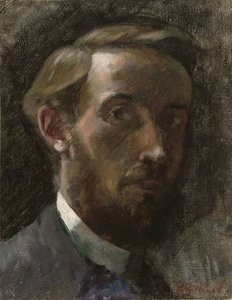
jean-édouard vuillard
1868 - 1940 , France
Quick Facts
- Artistic Movement Or Style: Nabis
- Artists Or Movements Influenced By This Artist:
- Cubism
- Fauvism
- Artists Who Influenced This Artist: ['Paul Gauguin']
- Date Of Birth: November 11, 1868
- Date Of Death: June 21, 1940
- Full Name: Jean-Édouard Vuillard
- Nationality: French
- Notable Artworks:
- Woman Sweeping
- Sunlit Interior
- Place Of Birth: Cuiseaux, France

