 Preview
 Send
Send Share
Share
 Details

 Download
 Similars
 X-Ray
X-Ray Diaporama
 Stats
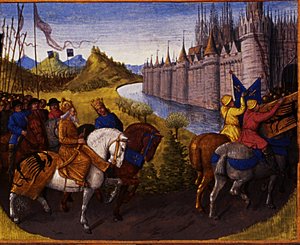
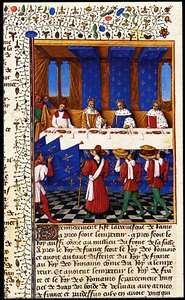
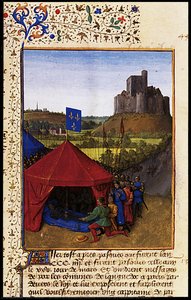
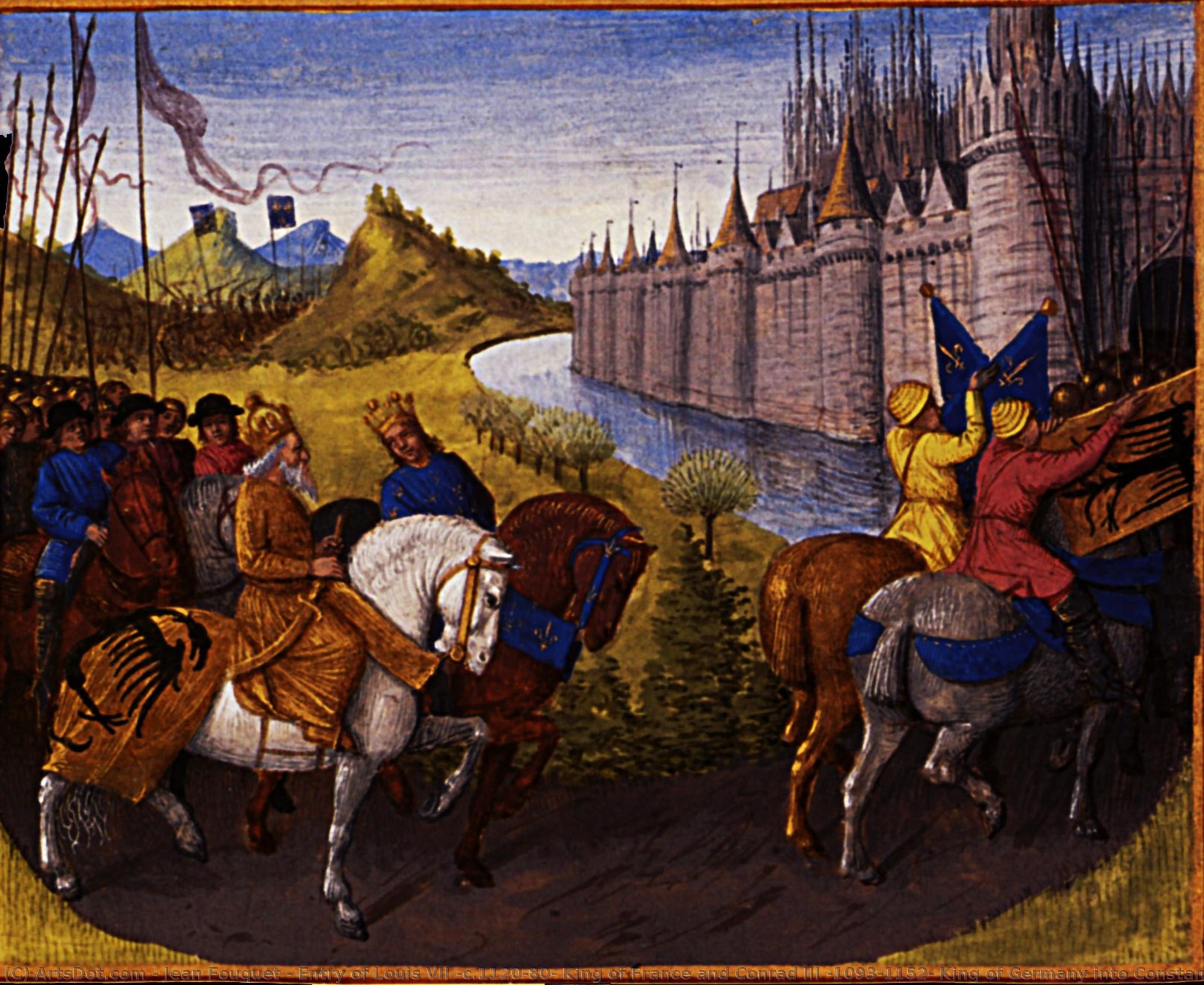
StatsEntry of Louis VII (c.1120-80) King of France and Conrad III (1093-1152) King of Germany into Constantinople during the Crusades, 1147-49


 Read More
Giclée / Art Print
Museum-quality giclée or canvas print with fast production and flexible finish options. ( Buy Hand Made Painting Switch to Digital Image)




P118B $10

P118H $10

P118W $10

P438Z $10

P508JH $12

P508YH $12

P805H $10

P805Z $10

P919BZ $10

P919G $10

P919XJ $10

P959ZH $10

P968JZ $12

W106C $8

W218G $10

W218JH $8

W218Y $10

W307PJ $10

W316G $10

W316PJ $8

W316Y $10

W398PJ $8

W4111J $10

W500HY $15

W500JH $15

W692G $12

W849H $8

W940BG $15

W953PJ $8




Pick from our preset sizes that match the artwork's original proportions.

You may enter your own dimensions to fit a specific frame or space. If your selected size does not match the original image's proportions, we will either crop the artwork or extend the image with a mirrored or solid-fill edge. A digital mockup will be sent for your approval before production begins.
Please note that the on-screen preview does not reflect the actual cropping or extension. Only the mockup will accurately show the final composition.
While custom sizes are available, we recommend selecting a dimension from the predefined list to preserve the original proportions.
Worldwide Delivery () in 2 weeks instead of standard 4/5 weeks. (10 September)

Free Worldwide Express Shipping

High-Quality Linen Canvas

Full Shipping Insurance

Customs Tax Refund Guarantee

True Color Matching Guarantee

100-Day Return Policy (Defects Only)

100% Money-Back Guarantee

Bulk Discount Offer
 Glass option is only available in size under 110 CM

Entry of Louis VII (c.1120-80) King of France and Conrad III (1093-1152) King of Germany into Constantinople during the Crusades, 1147-49
Giclée / Art Print
Reproduction Size
-


Total Price
$ 63
A Chronicle in Color: Jean Fouquet’s Depiction of a Royal Pilgrimage
Jean Fouquet's “Entry of Louis VII (c.1120-80) King of France and Conrad III (1093-1152) King of Germany into Constantinople during the Crusades, 1147-49” is not merely a historical illustration; it’s a vibrant snapshot of ambition, power, and the fraught realities of medieval diplomacy. Painted around 1447-1448, this remarkable work transcends its subject matter to become a testament to Fouquet's unique artistic vision – a synthesis of burgeoning Italian Renaissance ideals with the enduring traditions of French manuscript illumination.
The scene unfolds within a meticulously rendered landscape, dominated by rolling hills and a winding river that guides the procession towards Constantinople. The city itself, a formidable fortress shimmering in the distance, embodies both promise and peril. At the heart of the composition stand King Louis VII and King Conrad III, figures of imposing stature and regal bearing, mounted on magnificent steeds. Their attire – rich fabrics, elaborate headdresses, and gleaming armor – speaks volumes about their status and the immense resources invested in this diplomatic mission. The surrounding entourage—soldiers, attendants, and heralds—further emphasizes the gravity of the occasion, a carefully orchestrated display of royal authority.
The Language of Detail: Fouquet’s Innovative Technique
Fouquet's mastery lies not just in his ability to capture grand historical events but also in his innovative approach to technique. Executed on vellum – a high-quality animal skin favored for illuminated manuscripts – the painting showcases a remarkable level of detail, characteristic of the artist’s distinctive style. Notice the subtle gradations of color achieved through layering thin washes of tempera paint, creating a luminous and almost tactile quality. The flattened perspective, a hallmark of medieval manuscript art, is skillfully employed to prioritize clarity and narrative flow, guiding the viewer's eye along the procession.
Furthermore, Fouquet’s use of line is particularly noteworthy. Angular lines define the sharp edges of castle walls, shields, and banners, contrasting with the more rounded forms of horses and human figures. This deliberate juxtaposition creates a dynamic tension within the composition, emphasizing both the strength of military power and the inherent humanity of the participants. The artist's meticulous attention to detail extends to the rendering of textures – from the rough surfaces of armor to the flowing drapery of the royal garments – adding layers of visual richness.
A Window into a Turbulent Era: Historical Context
The “Entry of Louis VII and Conrad III” is deeply rooted in the political landscape of 15th-century Europe. The Second Crusade, which culminated in the siege of Constantinople, was a period marked by shifting alliances, religious fervor, and profound geopolitical instability. This particular journey represented an attempt to secure a fragile peace between France and Germany – a precarious balance threatened by territorial disputes and dynastic rivalries. The painting therefore serves as a visual record of this complex diplomatic endeavor, capturing the atmosphere of both anticipation and uncertainty.
Fouquet’s work also reflects the broader cultural currents shaping European art at the time. The artist's exposure to Italian Renaissance influences – particularly the works of Fra Angelico and Filarete – is evident in his use of color, perspective, and portraiture. Yet, he skillfully integrates these new elements with established French traditions, forging a uniquely personal style that would profoundly influence subsequent generations of artists.
Symbolism and Emotional Resonance
Beyond its historical significance, the painting resonates with powerful symbolic meaning. The journey itself represents a quest for glory, power, and ultimately, peace. The imposing fortress of Constantinople symbolizes both opportunity and danger – a gateway to new territories and a potential source of conflict. The figures of Louis VII and Conrad III embody the weight of responsibility they bear as rulers, tasked with safeguarding their kingdoms and navigating the treacherous currents of international politics.
Ultimately, “Entry of Louis VII” is a captivating work that invites viewers to contemplate not only the events depicted but also the broader themes of power, diplomacy, and the enduring human desire for stability in a world often defined by conflict.
Related Artworks

Artist Biography
A Bridge Between Worlds: The Art of Jean Fouquet
Jean Fouquet, born around 1420 in Tours, France, occupies a pivotal and often debated position in the history of French painting. He wasn’t merely an artist of transition; he was a dynamic force who synthesized the waning elegance of Gothic traditions with the burgeoning innovations of the Italian Renaissance, forging a uniquely French visual language that would influence generations. While details surrounding his early life remain somewhat elusive—scholarly consensus has shifted away from earlier assumptions of apprenticeship under the Bedford Master towards a possible grounding in the workshop of the Jouvenal Master in Nantes—the impact of his artistic journey is undeniable. Fouquet’s story isn't simply one of stylistic evolution, but of deliberate engagement with the changing cultural currents of 15th-century Europe.Italian Echoes and French Refinement
A defining moment in Fouquet’s development was his sojourn to Italy between 1445 and 1447. This wasn't a passive observation; it was an immersive experience that fundamentally altered his artistic approach. In Rome, he encountered the works of artists like Fra Angelico and Filarete, absorbing their mastery of perspective, clarity of form, and naturalistic representation—qualities that were beginning to define the Quattrocento style. However, Fouquet didn’t simply replicate these Italian innovations. He filtered them through his own artistic sensibility, blending them with the intricate detail, rich color palettes, and decorative flourishes characteristic of late Gothic art. This fusion resulted in a style that was both strikingly modern and deeply rooted in French tradition. He brought back not just techniques but an understanding of how art could serve as a powerful tool for conveying status, piety, and political legitimacy—a lesson he would skillfully apply throughout his career.Masterpieces of Courtly Life and Spiritual Devotion
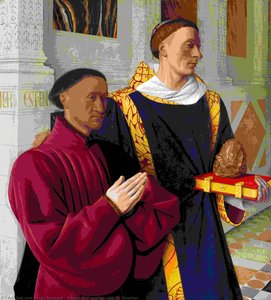
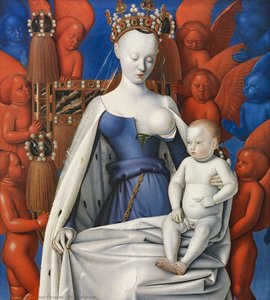
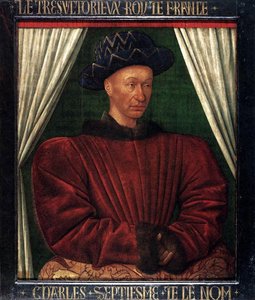
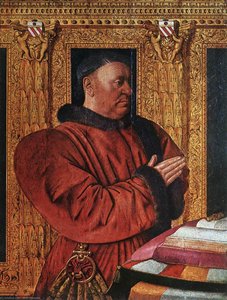
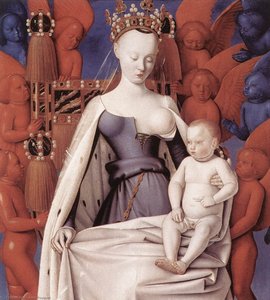
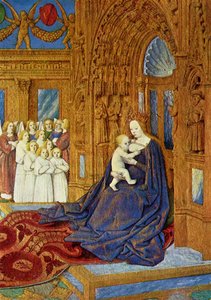
Fouquet’s artistic output was closely intertwined with the patronage of the French court, serving Charles VII, Étienne Chevalier, Guillaume Jouvenel des Ursins, and later Louis XI. This connection is vividly illustrated in some of his most celebrated works. The Melun Diptych, created around 1450, stands as a testament to his skill. The left panel portrays Étienne Chevalier alongside his patron saint, St. Stephen, while the right panel presents a hauntingly beautiful Virgin and Child surrounded by angels—a composition widely believed to be a portrait of Agnès Sorel, Charles VII’s mistress. The diptych isn't merely a religious image; it is a carefully constructed statement about power, piety, and social standing. Similarly, Charles VII as One of the Three Magi offers one of the few surviving portraits of the king, cleverly embedding royal representation within a narrative steeped in symbolic meaning. Fouquet’s illustrations for the Grandes Chroniques de France, undertaken between 1455 and 1460, provide invaluable insights into 15th-century French court life and military events, showcasing his ability to depict scenes of grandeur and action with meticulous detail. And finally, the exquisitely rendered miniatures within the Hours of Étienne Chevalier, completed in 1461, demonstrate his unparalleled expertise in this delicate art form.A Legacy of Innovation and Elegance
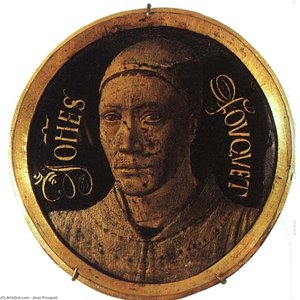
Beyond his panel paintings and manuscript illuminations, Fouquet is credited with pioneering the portrait miniature—a remarkably detailed portrait painted on a small scale, offering both portability and intimacy. This innovation would prove immensely popular, influencing artists for centuries to come. His meticulous attention to detail, elegant compositions, and subtle psychological insights into his subjects set him apart from his contemporaries. He wasn’t simply recording appearances; he was capturing character, emotion, and the essence of his sitters. Jean Fouquet's historical significance lies in his ability to synthesize disparate artistic influences into a cohesive and uniquely French style. He laid the groundwork for subsequent generations of artists, establishing a new aesthetic that blended Gothic refinement with Renaissance naturalism. He remains a pivotal figure in art history—a master who bridged worlds and left behind a legacy of enduring beauty and innovation.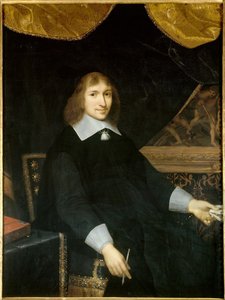
Jean Fouquet
1420 - 1481 , France
Quick Facts
- Artistic Movement Or Style: Early Renaissance
- Artists Or Movements Influenced By This Artist: ['French Renaissance art']
- Artists Who Influenced This Artist:
- Fra Angelico
- Filarete
- Date Of Birth: c. 1420
- Date Of Death: 1481
- Full Name: Jean Fouquet
- Nationality: French
- Notable Artworks:
- Melun Diptych
- Charles VII as Magi
- Hours of Étienne Chevalier
- Place Of Birth: Tours, France
Related Articles

High Medieval Art: 10 Masterpieces That Shaped an Era | ArtsDot
Journey through High Medieval Art! Explore 10 iconic masterpieces – from Giotto's frescoes to stunning Gothic cathedrals. Discover the stories behind these timeless paintings, sculptures & illuminated manuscripts. Find museum-quality art reproductions at ArtsDot.com.
Edmund Dulac: A Master of Golden Age Illustration – Exploring Myth, Symbolism & Art Nouveau Legacy
Explore the captivating world of Edmund Dulac, a master of Golden Age illustration! Discover his enchanting fairy tales, Art Nouveau style, and lasting influence on art & design. Learn about *The Rubaiyat* and more.
The Refined Aesthetic of Victorian Illustration: A Study in Narrative & Technique
Explore the captivating world of Victorian illustration! Discover Pre-Raphaelite influences, key artists like Rossetti & Stephens, and the era's rich narrative detail. A deep dive for art enthusiasts.

Angelo Chiacchio: A Mid-Century American Illustration Master & the Rise of Commercial Art
Explore the captivating world of Angelo Chiacchio, a master of mid-century American illustration. Discover his evolution, signature style, and lasting impact on commercial art & design. Learn about his legacy at the Museum of American Illustration.
Kay Rasmus Nielsen: A Golden Age Illustrator's Enchanting Legacy of Symbolism & Narrative
Explore the captivating world of Kay Rasmus Nielsen, a celebrated Golden Age illustrator renowned for his Art Nouveau fairy tale art & Disney contributions. Discover his unique style, enduring legacy, and how to collect his enchanting works.