 Send
Send Share
Share
 Details

 Download
 Similars
 Diaporama
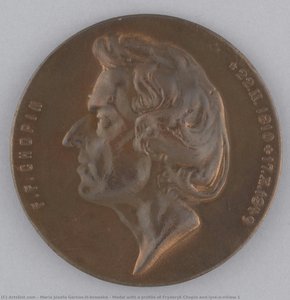
Medallion with a profile of Chopin


 Read More
Giclée / Art Print
Museum-quality giclée or canvas print with fast production and flexible finish options. ( Buy Hand Made Painting Buy Image)




































Pick from our preset sizes that match the artwork's original proportions.

You may enter your own dimensions to fit a specific frame or space. If your selected size does not match the original image's proportions, we will either crop the artwork or extend the image with a mirrored or solid-fill edge. A digital mockup will be sent for your approval before production begins.
Please note that the on-screen preview does not reflect the actual cropping or extension. Only the mockup will accurately show the final composition.
While custom sizes are available, we recommend selecting a dimension from the predefined list to preserve the original proportions.
Worldwide Delivery () in 2 weeks instead of standard 4/5 weeks. (1 September)

Free Worldwide Express Shipping

High-Quality Linen Canvas

Full Shipping Insurance

Customs Tax Refund Guarantee

True Color Matching Guarantee

60-Day Return Policy (Defects Only)

100% Money-Back Guarantee

Bulk Discount Offer
 Glass option is only available in size under 110 CM

Medallion with a profile of Chopin
Giclée / Art Print
Reproduction Size
-


Total Price
$ 63
The Enduring Dignity of Chopin: Bovy’s Medallic Masterpiece
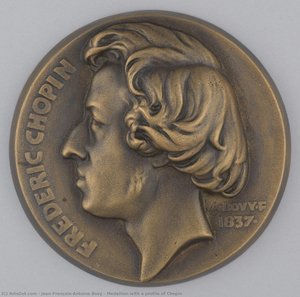
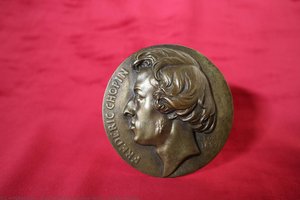
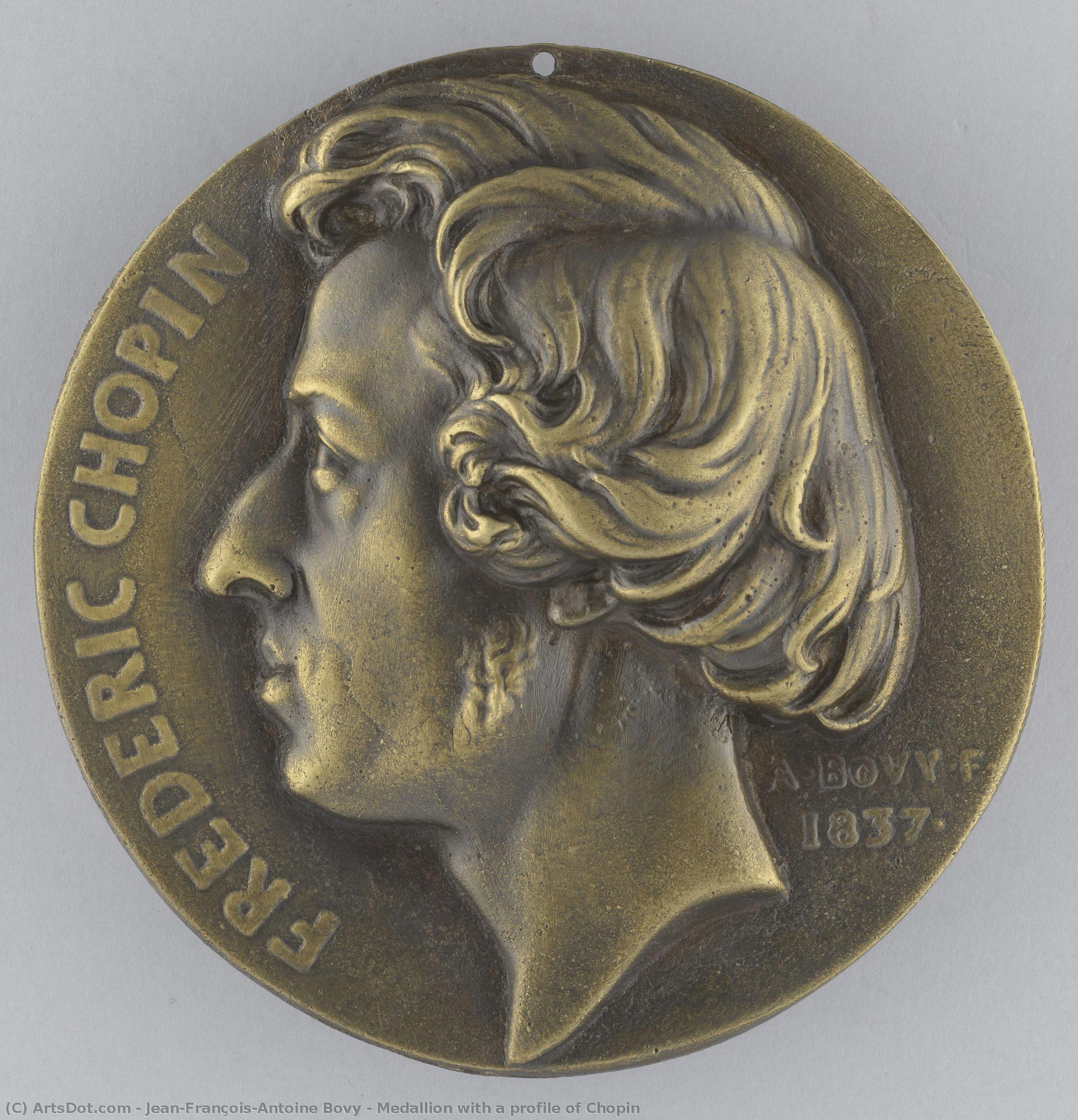
Jean-François-Antoine Bovy's "Medallion with a profile of Chopin" is more than just a portrait; it’s a carefully constructed testament to the composer’s legacy and a remarkable example of 19th-century medallic art. Crafted in bronze, this relief sculpture captures Frédéric Chopin not merely as a musician, but as an embodiment of refined intellect and artistic grace. The piece immediately draws the eye with its meticulous detailing – every line etched into the metal speaks to Bovy’s dedication to realism and his profound understanding of capturing human form. It's a work that invites quiet contemplation, offering a glimpse into the soul of a musical genius.
- Subject Matter: A striking profile portrait of Frédéric Chopin, renowned for his contributions to piano music and Polish nationalism.
- Style: Firmly rooted in Neoclassicism, reflecting a revival of interest in classical art and ideals during the 19th century. The style emphasizes order, balance, and idealized beauty.
- Material: Bronze – chosen for its ability to retain fine detail, durability, and the potential for achieving a rich, lustrous surface finish.
Technique and Craftsmanship: A Testament to Skill
Bovy’s mastery lies in his technical execution. The relief sculpture is executed with remarkable precision, utilizing the subtle nuances of shading and modeling to create a convincing three-dimensional effect on a flat surface. The artist skillfully employs lines to define the contours of Chopin's face – the sharp angles of his brow, the delicate curve of his lips, and the flowing strands of his hair—all rendered with an almost photographic realism. The texture of the bronze itself is meticulously depicted, simulating the sheen and subtle variations in color that would naturally occur with this material. The process likely involved a combination of direct casting techniques and meticulous polishing to achieve the desired finish. It’s clear that Bovy approached his work with painstaking attention to detail, reflecting a deep respect for both his subject and his craft.
Further research confirms that Bovy's background in punch engraving—a technique vital for producing coinage and decorative medallions—provided him with an invaluable foundation in precision and design. This early training undoubtedly informed his approach to sculpting, allowing him to translate intricate designs into tangible forms with remarkable accuracy.
Historical Context and Symbolic Resonance
Created during the mid-19th century, this medallion reflects a broader cultural fascination with classical antiquity and its ideals of beauty, reason, and civic virtue. Chopin himself was a figure of immense national pride in Poland, which at the time was under Russian rule. Portraits like this served not only as artistic tributes but also as powerful symbols of cultural identity and resistance. The dignified portrayal of Chopin embodies respect for his musical genius and his role as a champion of Polish culture. The choice of bronze—a metal associated with permanence and authority—further reinforces the medallion’s symbolic weight, suggesting that Chopin's legacy will endure through time.
Emotional Impact and Artistic Legacy
Beyond its technical brilliance and historical significance, “Medallion with a profile of Chopin” possesses a profound emotional resonance. The sculpture invites viewers to contemplate the quiet intensity of the composer’s spirit, his dedication to his art, and his enduring contribution to Western music. It's a work that transcends mere representation, capturing something essential about the human experience—the pursuit of beauty, the expression of emotion, and the power of artistic creation. Reproductions of this piece offer a tangible connection to a pivotal moment in musical history and a testament to the skill and vision of Jean-François-Antoine Bovy.
Related Artworks
Artist Biography
The Precision of a Legacy: The Life and Art of Jean-François-Antoine Bovy
In the delicate intersection of metallurgy and fine art, few names resonate with as much technical mastery and historical grace as Jean-François-Antoine Bovy. Born in Geneva in 1795, Bovy was a child of craftsmanship, emerging from a lineage where the precision of the jeweler met the vision of the artist. His father, Jean-Samuel Brypton, a renowned Genevan jeweler-mécanicien, provided the foundational workshop that would become Bovy’s first classroom. It was here, amidst the rhythmic strike of the punch and the meticulous engraving of precious metals, that the young artist developed an unparalleled eye for detail—a skill that would later allow him to immortalize the faces of history in bronze and gold.
Bovy’s journey from a Swiss apprentice to a celebrated figure of the French medallic school is a testament to his relentless pursuit of excellence. Seeking to expand his horizons beyond the intricate work of gems and coins, he traveled to Paris in the 1820s. This period of immersion was transformative; under the tutelage of the legendary neoclassical sculptor James Pradier, Bovy transitioned from the miniature precision of engraving to the grander, more fluid language of sculptural modeling. This duality—the ability to command both the microscopic detail of a medallion and the sweeping elegance of a relief—became the hallmark of his mature style, blending classical idealism with a profound sense of individual character.
A Master of the Medallion: Capturing the Soul in Metal
The true brilliance of Bovy’s oeuvre lies in his prolific output of medallic art, a medium that requires an artist to compress an entire personality into a small, circular canvas. He possessed a rare ability to translate the essence of his subjects through subtle textures and dignified profiles. His work was not merely decorative; it was a form of historical preservation. Through his hands, the likenesses of the era's most influential figures were cast in enduring metal, ensuring their legacies would withstand the erosion of time.
Among his most evocative works is the Medallion with a profile of Chopin, a piece that exemplifies his neoclassical prowess. In this relief, one can sense the composer’s very soul through the meticulous rendering of his features, capturing a sense of musical melancholy and dignity. His talent extended to commemorating significant political and social milestones, such as his celebrated medal on the Building of Railways, which earned him the prestigious Legion of Honour in 1843. Whether depicting the intellectual rigor of François Arago or the civic pride of Swiss federalism, Bovy’s work served as a bridge between the ephemeral moment and eternal memory.
Historical Significance and Artistic Triumph
Bovy’s career was marked by a series of monumental achievements that solidified his standing in both the French and Swiss artistic landscapes. His technical virtuosity led to significant commissions from the Swiss government, which entrusted him with the execution of dies for federal coinage—a task requiring absolute mathematical and aesthetic perfection. This responsibility underscored the trust placed in his ability to marry utility with high art.
As he matured, Bovy’s reputation grew to rival the greatest masters of the French medallic school, such as Dupré and Varin. His life was a continuous dialogue between two worlds: the meticulous, disciplined tradition of Geneva and the expressive, neoclassical grandeur of Paris. Even as he became a naturalized Frenchman to pursue the highest honors in engraving, his heart remained tethered to his Swiss heritage. Today, the works of Jean-François-Antoine Bovy stand as more than mere artifacts; they are windows into the 19th century, reflecting a period where art, industry, and identity were forged together in the heat of the sculptor's furnace.
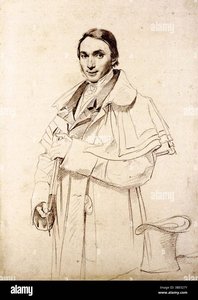
jean-françois-antoine bovy
1795 - 1877 , Switzerland
Quick Facts
- Artistic Movement Or Style: Medallic Art
- Artists Or Movements Influenced By This Artist: ['Neoclassicism']
- Artists Who Influenced This Artist: ['James Pradier']
- Date Of Birth: Geneva, Switzerland (1795)
- Date Of Death: 1877
- Full Name: Jean-François-Antoine Bovy
- Nationality: Swiss
- Notable Artworks: ["Jean-François-Antoine Bovy's Medallion with Chopin"]
- Place Of Birth: Geneva
Related Articles

Bronze Age to Modern Masters: 10 Sculptures That Redefined Art | ArtsDot
Journey through art history with 10 legendary bronze sculptures – from Michelangelo's David to Rodin’s Thinker. Explore the stories, techniques & timeless beauty of these masterpieces. Find museum-quality reproductions & elevate your home decor on ArtsDot.com.

Bronze Sculptures That Defined Art History | ArtsDot
Journey through art history with our Top 10 bronze sculptures! Explore masterpieces by Rodin, Michelangelo & more. Discover stories behind iconic statues and find museum-quality reproductions for your home decor at ArtsDot.com.

The Enduring Legacy of Bronze: A Historical & Artistic Exploration for the Collector
Explore the rich history & enduring appeal of bronze sculpture with expert insights for collectors at ArtsDot. Learn about casting techniques, iconic artists, collecting tips & contemporary interpretations.
The Enduring Legacy of Bronze: History, Technique & Artistic Expression for the Collector
Explore the rich history & enduring appeal of bronze sculpture with expert insights for collectors at ArtsDot. Learn about casting techniques, iconic artists, and collecting tips.
The Enduring Legacy of Bronze Sculpture: A Collector's Guide to Form & Cultural Significance
Explore the rich history & enduring appeal of bronze sculpture with expert insights for collectors at ArtsDot. Learn about casting techniques, iconic artists, and collecting tips to build a discerning art collection.