 Preview
 Send
Send Share
Share
 Details

 Download
 Similars
 X-Ray
X-Ray Diaporama
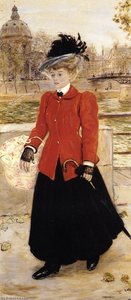
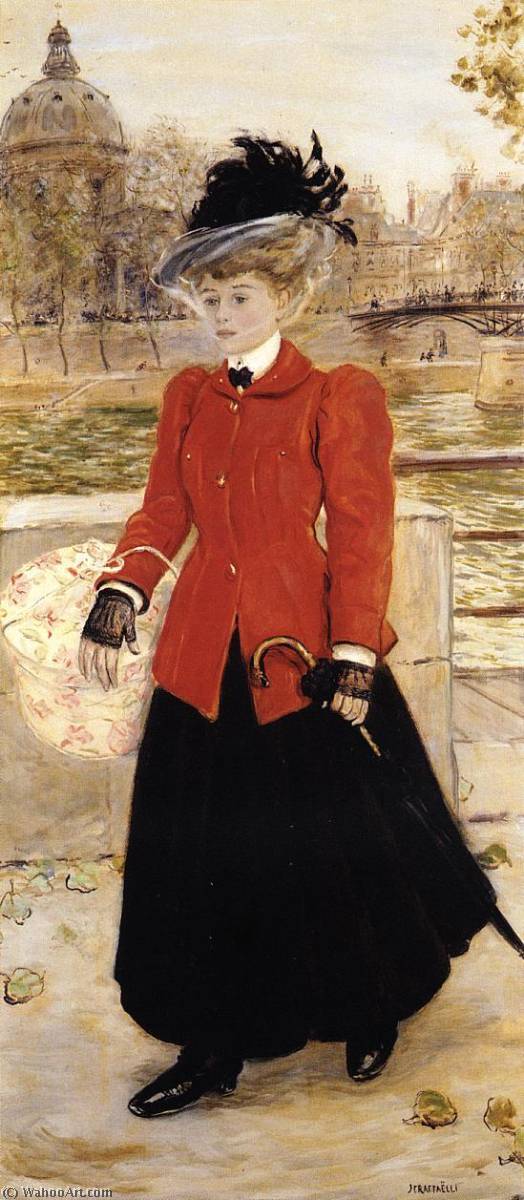
L'Apprentie
 Oil On Canvas
- WallArt
- Contemporary Realism
 1907
1907 207.0 x 103.0 cm
 Musée Des Beaux
 Read More
Hand Made Oil Reproduction
Hand-painted oil on canvas in your size and frame, made to order by our artists. ( Buy Print Buy Image)




P118B $10

P118H $10

P118W $10

P438Z $10

P508JH $12

P508YH $12

P805H $10

P805Z $10

P919BZ $10

P919G $10

P919XJ $10

P959ZH $10

P968JZ $12

W106C $8

W218G $10

W218JH $8

W218Y $10

W307PJ $10

W316G $10

W316PJ $8

W316Y $10

W398PJ $8

W4111J $10

W500HY $15

W500JH $15

W692G $12

W849H $8

W940BG $15

W953PJ $8




Pick from our preset sizes that match the artwork's original proportions.

You may enter your own dimensions to fit a specific frame or space. If your selected size does not match the original image's proportions, we will either crop the artwork or extend the painting with additional hand-painted elements. A digital mockup will be sent for your approval before production begins.
Please note that the on-screen preview does not reflect the actual cropping or extension. Only the mockup will accurately show the final composition.
While custom sizes are available, we recommend selecting a dimension from the predefined list to preserve the original proportions.
After order, ArtsDot.com team will email client for instructions and provide a mockup preview
Worldwide Delivery () in 3/4 weeks instead of standard 5 weeks. (16 August). No compromise on quality.

Free Worldwide Express Shipping

High-Quality Linen Canvas

Full Shipping Insurance

Customs Tax Refund Guarantee

True Color Matching Guarantee

60-Day Return Policy (Defects Only)

100% Money-Back Guarantee

Bulk Discount Offer
 Glass option is only available in size under 110 CM

L'Apprentie
Reproduction Medium
Reproduction Size
-


Total Price
$ 263
Artwork Description
Jean-François Raffaëlli’s “L’Apprentie”: A Window into Parisian Life
“L’Apprentie,” painted in 1907 by Jean-François Raffaëlli, is more than just a portrait; it's a meticulously rendered snapshot of early 20th-century Paris and a poignant exploration of apprenticeship and aspiration. The painting depicts a young woman, likely a seamstress or apprentice artisan, standing thoughtfully amidst a subtly suggested park setting. Her attire – a vibrant red jacket with bold black trim, a flowing black skirt, and a dramatic feathered hat – immediately draws the eye, while her focused gaze and the open book in her hand invite us to contemplate her inner world.
Raffaëlli’s artistic philosophy, termed “caractérisme,” prioritized capturing the unique character of his subjects. He wasn't interested in idealized beauty or grand narratives; instead, he sought to portray individuals with unflinching honesty, revealing their personalities through subtle details – the way she holds her parasol, the slight furrow of her brow, the worn texture of her gloves. This commitment to realism is evident in every brushstroke, from the delicate rendering of the fabric’s folds to the atmospheric quality of the distant landscape.
A Master of Realism: Raffaëlli's Artistic Journey
Jean-François Raffaëlli (1850 – 1924) emerged as a significant figure bridging the waning influence of Academic painting with the burgeoning realism and impressionism of his time. Initially drawn to music and theatre, he discovered his passion for art in 1870, receiving brief training at the École des Beaux-Arts in Paris under Jean-Léon Gérôme. However, Raffaëlli quickly established his own distinct style, rejecting the rigid conventions of academic painting in favor of a more direct and observational approach.
His early career was marked by acceptance into the Salon, showcasing landscapes that demonstrated his burgeoning talent. Crucially, he deliberately distanced himself from purely decorative styles, instead focusing on portraying everyday people and their lives with remarkable detail and psychological depth. This dedication to capturing authentic human experience cemented his place as a key figure in French realism.
Symbolism and the Narrative of Apprenticeship
The painting’s title, “L’Apprentie,” immediately establishes a central theme: apprenticeship. The young woman isn't simply posing; she embodies the process of learning and growth. The book she holds – likely a manual or instructional text – symbolizes her dedication to mastering a craft, suggesting a future filled with skill and potential. The park setting, though somewhat muted in detail, provides a sense of tranquility and possibility, hinting at the broader world awaiting her.
Furthermore, the red jacket, a bold and assertive color, could represent ambition or perhaps even defiance – a young woman stepping into a traditionally male-dominated profession. The parasol, a practical yet elegant accessory, speaks to both preparedness and a certain grace. Raffaëlli masterfully uses these seemingly simple details to construct a layered narrative of aspiration and the challenges faced by women in early 20th-century France.
A Timeless Masterpiece: Reproduction and Legacy
"L’Apprentie" is currently housed at the Musée des Beaux Arts de Pau, France, and its enduring appeal lies not only in Raffaëlli's technical skill but also in his ability to evoke a sense of empathy and understanding. Today, ArtsDot offers meticulously crafted reproductions that faithfully capture the painting’s original beauty and emotional resonance. These high-quality prints are ideal for adding a touch of timeless elegance to any interior space, serving as a reminder of Raffaëlli's profound insights into the human condition.
Whether you appreciate art history, seek inspiration for your home décor, or simply admire exceptional craftsmanship, “L’Apprentie” remains a captivating work that continues to resonate with viewers across generations. Explore our collection and bring this remarkable painting into your world.
Related Artworks
Artist Biography
Jean-François Raffaëlli: A Life in Realism
Born on April 20, 1850, in Paris, France, Jean-François Raffaëlli was a pivotal figure bridging Realism and Impressionism. Of Tuscan descent through his paternal grandparents, he carved a unique path as a painter, sculptor, and printmaker, deeply invested in portraying the lives of ordinary people.
Early Life and Training
Before dedicating himself to art, Raffaëlli explored interests in music and theatre. He began his painting career in 1870, quickly gaining recognition with an exhibited landscape at the Salon that same year. His formal artistic training was brief but impactful – three months under Jean-Léon Gérôme at the École des Beaux-Arts in Paris. However, he soon diverged from traditional academic styles to forge his own distinctive approach.
Artistic Style and Influences
Raffaëlli’s style is characterized by a profound commitment to realism, which he termed “caractérisme.” This theory emphasized meticulous observation of individuals within their social context. He sought not merely to depict appearances but to capture the essence of human experience. While influenced by Gérôme's technical skill, Raffaëlli found champions in influential critics like J.-K. Huysmans and Edgar Degas, who recognized his unique vision.
Artistic Development & Major Works
Initially focused on costume pictures, Raffaëlli’s work underwent a significant shift in 1876. He began to depict the lives of peasants, workers, and marginalized individuals – particularly ragpickers – in the suburbs of Paris. This focus reflected his interest in social commentary and the human condition.
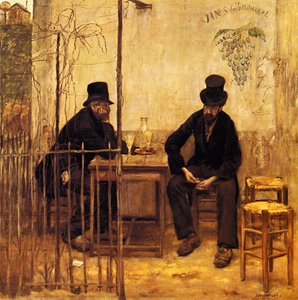
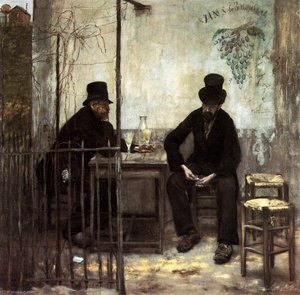
- Les buveurs d'absinthe (The Absinthe Drinkers) - 1881: Perhaps his most famous work, originally titled *Les déclassés*, this painting offered a stark portrayal of societal alienation and is now housed in the California Palace of Legion of Honor.
- At the Caster's (1886): This piece exemplifies his focus on everyday life and is part of the collection at the Musée des Beaux-Arts in Lyon.
Exhibitions & Recognition
Raffaëlli participated in the Impressionist exhibitions of 1880 and 1881, invited by Degas despite not being strictly an Impressionist himself. This inclusion sparked debate within the group, as Monet resented the broadening scope of the exhibition. He received the Légion d'honneur in 1889, marking a significant milestone in his career.
Later Life and Legacy
Following his recognition, Raffaëlli shifted his focus to city scenes, continuing to explore themes of urban life and social dynamics. He also experimented with sculpture (though few examples survive today) and color printmaking in his later years. He passed away on February 11, 1924, leaving behind a body of work that continues to resonate for its honest portrayal of Parisian society.
Historical Significance
Jean-François Raffaëlli’s contribution lies in his ability to blend Realist principles with an empathetic understanding of human experience. His “caractérisme” offered a nuanced approach to social observation, influencing subsequent generations of artists interested in depicting the complexities of modern life. He remains a significant figure in 19th-century French art, bridging the gap between academic tradition and the emerging avant-garde.
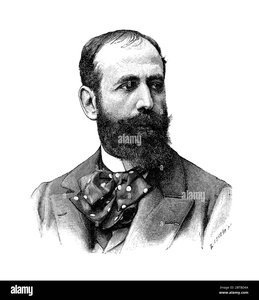
jean-françois raffaelli
1850 - 1924 , France
Quick Facts
- Birth Date: April 20, 1850
- Birth Place: Paris, France
- Death Date: February 11, 1924
- Influenced: None, 'influenced by': 'Jean-Léon Gérôme', 'movement': 'Realism, Impressionism', 'name': 'Jean-François Raffaëlli', 'nationality': 'French', 'notable works':
Related Articles
Romantic Realism's Finest: 10 Masterpieces for Your Home | ArtsDot
Explore 10 defining masterpieces of Romantic Realism! Discover Courbet, Millet & Daumier's powerful paintings—capturing emotion and social realities. Find museum-quality reproductions for your home at ArtsDot.com.
Jean-François Millet: Realism, Rural Life & the Poetic Depiction of Labor
Explore the life & work of Jean-François Millet, a founder of Realism. Discover his poignant depictions of rural France, iconic paintings like 'The Angelus,' and lasting influence on art history. Learn more at ArtsDot.

Oil on Canvas: A Historical & Technical Exploration of a Timeless Artistic Medium
Explore the rich history & enduring techniques of oil painting on canvas. Discover the science behind its longevity, conservation practices, and contemporary relevance. Expert insights for art enthusiasts.

The Enduring Legacy of Oil on Canvas: Technique, History & Aesthetic Impact
Explore the rich history & techniques of oil painting – from Renaissance masters to Impressionism. Discover pigments, layering methods, and why this timeless medium endures. Expert insights for artists & art enthusiasts.
Realism's Masters: 10 Artworks That Capture Life's Essence | ArtsDot
Explore 10 iconic realism artworks by Courbet, Millet & more! Discover the stories behind these masterpieces of 19th-century painting. Find museum-quality art reproductions and elevate your home decor with ArtsDot.com.