

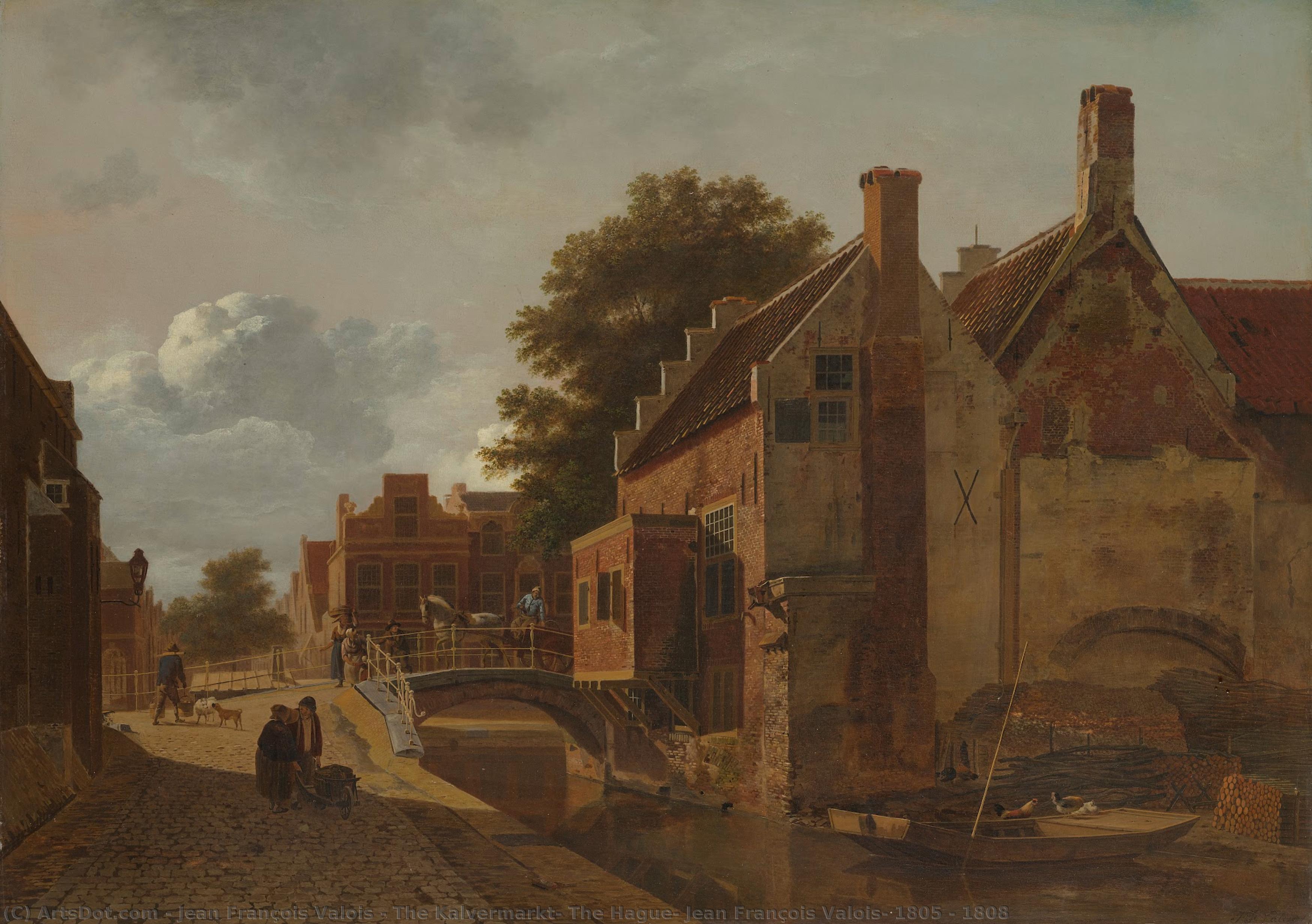
 Preview
 Send
Send Share
Share
 Details

 Download
 Similars
 X-Ray
X-Ray Diaporama
 Stats
StatsThe Kalvermarkt, The Hague, Jean François Valois, 1805 - 1808
 1808
1808 45.0 x 62.0 cm
 Read More
Purchase a high-resolution, enhanced digital image, far superior to the online preview.
Each file is meticulously prepared by our in-house specialists using advanced tools and expert manual retouching. We ensure every image has exceptional clarity, precise color accuracy, and fine detail.
The final file is delivered via email within 72 hours, optimized for immediate use in professional, editorial, and print environments. This is the same quality trusted by top-tier design studios, publishers, and galleries.
Digital Image
Download a high-resolution file for personal display, printing, and creative projects. ( Switch to Print Buy Hand Made Painting)
Included in Every Digital Image Order
Expert Digital Delivery, Guaranteed
When you choose ArtsDot.com, you're not just getting an image - you're receiving a professionally enhanced digital artwork, crafted with precision and backed by a satisfaction guarantee. Here's everything that comes with your order, automatically:

Fast Email Delivery
Your high-resolution digital image file will be emailed to you within 72 hours of ordering - ready for immediate use.

AI-Enhanced Digital File
Your artwork is professionally optimized using advanced AI tools and manual editing, ensuring maximum detail, clarity, and color accuracy.

Free Lifetime Re-Delivery
Accidentally deleted or lost your file? No worries - we'll resend it to you anytime, free of charge.

No Import Fees - Ever
Enjoy your artwork instantly with zero customs, duties, or delivery fees - digital downloads are always tax-free.

Color Accuracy Guarantee
We ensure your digital image reflects the original colors as closely as possible using professional tools and color management.

100-Day Satisfaction Guarantee
If you're not satisfied with your digital image, we'll revise it or refund 100% within 100 days - no questions asked.

100% Money-Back Guarantee
Not satisfied? Get a full refund within 100 days of receiving your digital file - no questions asked.

Bulk Order Discounts
Buy 3 images, save 10% - Buy 5, save 15% - Buy 10+, save 20%. Great for creative projects, galleries, and agencies.
Related Artworks









Artist Biography
Rembrandt Peale: A Pioneer of American Portraiture
Rembrandt Peale, born near present-day Richboro, Pennsylvania in February 22, 1778, and passing away on October 3, 1860, stands as a pivotal figure in the early development of American portrait painting. More than simply a recorder of likenesses, Peale was a dedicated scholar, museum curator, and influential educator who profoundly shaped the artistic landscape of his nation. His career spanned over seven decades, witnessing and contributing to the burgeoning cultural identity of the United States during a period of immense transformation. Initially influenced by his father, Charles Willson Peale – himself a renowned artist and naturalist – Rembrandt inherited not only technical skills but also a deep-seated passion for observation and documentation. This foundation would prove crucial as he navigated the evolving artistic currents of the late 18th and early 19th centuries.- Early Life and Artistic Training: Peale’s childhood was immersed in art, with his father providing a rigorous education encompassing drawing, painting, and scientific study. He began sketching at age eight, producing a remarkably mature self-portrait at thirteen – a piece that continues to be studied for its technical skill and expressive quality. This early dedication demonstrated an innate talent and a commitment to mastering the craft of portraiture.
- Influence of French Neoclassicism: Following a sojourn in Paris during his early thirties, Peale was deeply impacted by the prevailing artistic trends of the time, particularly the elegance and precision of French neoclassicism. This exposure informed his approach to composition, technique, and subject matter, resulting in portraits that exuded a sense of formality and intellectual gravitas.
- Family Legacy: Rembrandt’s life was inextricably linked to that of his siblings – Raphael, Rubens, and Titian Peale – all accomplished artists who furthered the family's artistic legacy. Their collaborative efforts extended beyond individual works, encompassing shared projects such as group portraits and museum exhibitions.
A Career Defined by Portraits and Museums
Peale’s career unfolded across several distinct phases, each marked by significant achievements and evolving artistic interests. Initially, he focused primarily on portraiture, quickly establishing himself as a sought-after artist among the prominent figures of his day. He produced numerous likenesses of leading politicians, businessmen, and intellectuals, capturing their personalities with remarkable accuracy and detail. His portraits were not merely representations of appearance; they aimed to convey character, status, and intellectual pursuits.- Notable Commissions: Peale’s most celebrated commissions included portraits of George Washington (particularly the iconic “Patriae Pater”), Thomas Jefferson, John Marshall, and Charles Pinckney – figures who would shape the destiny of the young nation. These works cemented his reputation as a leading portraitist and secured his place in American art history.
- Court of Death: Perhaps his most ambitious undertaking was "Court of Death" (1820), a monumental group portrait depicting prominent figures from Pennsylvania society arranged around a symbolic representation of death. This complex and emotionally charged work demonstrated Peale’s ability to synthesize artistic skill with historical and cultural commentary.
- Museum Curator: Beyond his painting career, Peale played a crucial role in the development of American museums. He served as curator of the Philadelphia Museum (later the Franklin Institute) from 1812 until his death, transforming it into one of the nation’s first and most influential scientific and artistic institutions.
Technique and Style
Peale's style evolved considerably throughout his career, reflecting both his adherence to classical principles and his growing engagement with contemporary trends. Initially influenced by the formal elegance of French neoclassicism, he gradually incorporated elements of realism and dramatic lighting into his work. His portraits are characterized by meticulous attention to detail, precise rendering of textures and fabrics, and a subtle use of color. He was particularly adept at capturing the nuances of facial expression, conveying a sense of psychological depth and individual character.- Neoclassical Influence: Peale’s early works demonstrate a clear debt to the conventions of neoclassical portraiture – balanced compositions, idealized forms, and restrained colors.
- Realist Tendencies: As he matured as an artist, Peale began to incorporate elements of realism into his portraits, paying closer attention to the details of clothing, accessories, and the surrounding environment.
- Dramatic Lighting: He skillfully employed dramatic lighting techniques to create a sense of mood and highlight key features of his subjects’ faces.
Legacy and Historical Significance
Rembrandt Peale's contributions extend far beyond his individual artistic achievements. As a museum curator, he played a vital role in fostering public interest in art and science, laying the foundation for the development of American cultural institutions. His portraits provide invaluable insights into the personalities and aspirations of leading figures from the late 18th and early 19th centuries, offering a window into the social and political landscape of early America. Furthermore, his dedication to education and mentorship influenced generations of artists who followed in his footsteps. Peale’s legacy as a pioneering portraitist and museum advocate remains firmly established within the annals of American art history.
jean françois valois
1778 - 1853 , Suriname
Quick Facts
- Artistic Movement Or Style: Neoclassicism
- Artists Or Movements Influenced By This Artist:
- John Varley
- William Hazlitt
- Artists Who Influenced This Artist:
- Charles Willson Peale
- Rembrandt Harmenszoon van Rijn
- Date Of Birth: Feb 22, 1778
- Date Of Death: Oct 3, 1860
- Full Name: Rembrandt Peale
- Nationality: American
- Notable Artworks:
- Court of Death
- George Washington, Patriae Pater
- Rubens Peale with a Geranium
- Place Of Birth: Near present-day Richboro, PA