

 Preview
 Send
Send Share
Share
 Details

 Download
 Similars
 X-Ray
X-Ray Diaporama
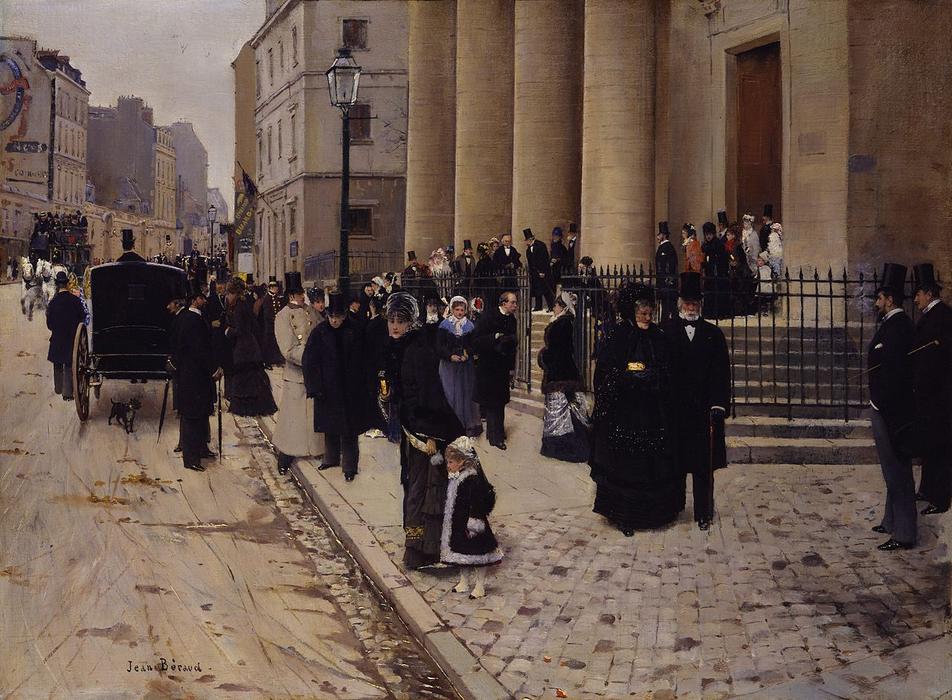
The Church of Saint Philippe du Roule


 Read More
Purchase a high-resolution, enhanced digital image, far superior to the online preview.
Each file is meticulously prepared by our in-house specialists using advanced tools and expert manual retouching. We ensure every image has exceptional clarity, precise color accuracy, and fine detail.
The final file is delivered via email within 72 hours, optimized for immediate use in professional, editorial, and print environments. This is the same quality trusted by top-tier design studios, publishers, and galleries.
Digital Image
Download a high-resolution file for personal display, printing, and creative projects. ( Buy Print Buy Hand Made Painting)
Included in Every Digital Image Order
Expert Digital Delivery, Guaranteed
When you choose ArtsDot.com, you're not just getting an image - you're receiving a professionally enhanced digital artwork, crafted with precision and backed by a satisfaction guarantee. Here's everything that comes with your order, automatically:

Fast Email Delivery
Your high-resolution digital image file will be emailed to you within 72 hours of ordering - ready for immediate use.

AI-Enhanced Digital File
Your artwork is professionally optimized using advanced AI tools and manual editing, ensuring maximum detail, clarity, and color accuracy.

Free Lifetime Re-Delivery
Accidentally deleted or lost your file? No worries - we'll resend it to you anytime, free of charge.

No Import Fees - Ever
Enjoy your artwork instantly with zero customs, duties, or delivery fees - digital downloads are always tax-free.

Color Accuracy Guarantee
We ensure your digital image reflects the original colors as closely as possible using professional tools and color management.

60-Day Satisfaction Guarantee
If you're not satisfied with your digital image, we'll revise it or refund 100% within 60 days - no questions asked.

100% Money-Back Guarantee
Not satisfied? Get a full refund within 60 days of receiving your digital file - no questions asked.

Bulk Order Discounts
Buy 3 images, save 10% - Buy 5, save 15% - Buy 10+, save 20%. Great for creative projects, galleries, and agencies.
The Church of Saint Philippe du Roule: A Parisian Snapshot Frozen in Impressionistic Light
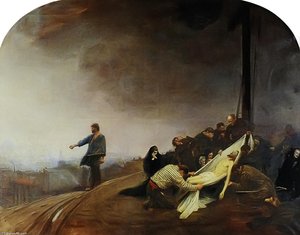
Jean-Georges Béraud’s “The Church of Saint Philippe du Roule” isn't merely a depiction of a building; it’s an exquisitely rendered slice of life—a vibrant tableau capturing the bustling energy of Paris during its Belle Époque heyday. Painted around 1885, this monochrome masterpiece transcends simple observation, embodying Béraud’s masterful synthesis of academic precision and Impressionistic sensitivity. The photograph showcases a busy city street scene dominated by horse-drawn carriages and pedestrians, transporting viewers back to an era defined by elegance and progress.Style & Technique: Bridging Tradition and Innovation
Béraud skillfully navigated the artistic currents of his time, inheriting the legacy of Courbet’s revolutionary realism while simultaneously embracing the transformative influence of Impressionism. Unlike many artists of his generation who solely pursued fleeting impressions, Béraud meticulously blended tonal gradations—a technique honed through years of disciplined study—to achieve a remarkable level of atmospheric depth. The subdued palette – predominantly shades of grey and brown – prioritizes capturing the nuances of light and shadow, mirroring the Impressionists’ obsession with portraying the ephemeral qualities of nature. This careful attention to detail distinguishes Béraud's work from more purely expressive endeavors, grounding it in a solid foundation of classical training.Historical Context: Paris at the Dawn of Modernity
The painting speaks volumes about the social and cultural landscape of late Victorian France. Saint Philippe du Roule Church stands as a testament to Parisian architectural grandeur—a symbol of faith and civic pride during a period marked by rapid industrialization and urbanization. The scene depicted captures the everyday life of Parisians – merchants, travelers, and residents alike – engaged in their daily routines amidst carriages and bustling commerce. It reflects the optimism and dynamism characteristic of the Belle Époque, an era celebrated for its artistic achievements and intellectual ferment. Béraud’s portrayal serves as a poignant reminder of a bygone world, imbued with both beauty and social commentary.Symbolism & Emotional Resonance: Beyond Mere Representation
While seemingly straightforward in its composition, “The Church of Saint Philippe du Roule” possesses subtle symbolic undertones. The church itself represents spiritual solace and stability amidst the turbulent currents of urban change—a visual anchor grounding the viewer in a timeless ideal. Furthermore, Béraud’s masterful use of tonal harmony evokes feelings of tranquility and contemplation, inviting viewers to appreciate the quiet dignity of Parisian life. The photograph's muted colors contribute to this emotional impact, fostering a sense of nostalgia for an era characterized by refined sensibilities and artistic excellence.A Reproduction Worth Admiring
ArtsDot.com offers exceptional reproductions of Jean-Georges Béraud’s “The Church of Saint Philippe du Roule,” allowing art enthusiasts to experience the artist's vision firsthand. Each print is meticulously crafted using archival inks on premium canvas, guaranteeing vibrant colors and enduring quality—a faithful reflection of the original masterpiece. Bring a touch of Belle Époque Parisian charm into your home or office and immerse yourself in the captivating beauty of Impressionistic light.Related Artworks
Artist Biography
The Gilded Lens of the Belle Époque
To step into a canvas by Jean-Georges Béraud is to be transported to the heart of a Paris that breathed with an incomparable elegance and restless energy. Born in 1849, the artist—originally known as Séverin Louis Stein—was a child of transition, coming of age during a period when the city was being physically and culturally reimagined. While some historical accounts trace his earliest beginnings to Saint Petersburg, where his father worked as a sculptor, it was the vibrant, cobblestone streets of Paris that ultimately shaped his soul and his brush. His early life was marked by the profound shifts of the late 19th century, including the interruption of his legal studies by the Franco-Prussian War, an event that likely sharpened his eye for the fleeting, precious moments of stability found within urban splendor.
Béraud’s artistic lineage is a fascinating study in duality. Under the mentorship of masters like Gustave Courbet and Léon Bonnat, he mastered the rigorous discipline of academic precision, yet he could not resist the luminous, atmospheric pull of the Impressionist movement. This tension between meticulous detail and the ephemeral play of light became his signature. He did not merely paint scenes; he captured the very pulse of the Belle Époque. Whether it was the shimmering reflections on the banks of the Seine or the sophisticated bustle of the Champs-Élysées, Béraud possessed a rare ability to render the textures of modern life—the silk of a gown, the steam from a café, and the golden glow of gaslight—with an almost cinematic clarity.
A Chronicler of Parisian Splendor
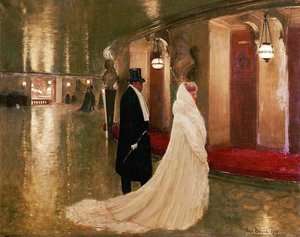
The true genius of Béraud lies in his role as a visual historian of the Parisian night and day. His oeuvre serves as a window into the social hierarchies and leisure activities of a bygone era. He found profound inspiration in the city's most iconic landmarks, turning the Champs-Élysées, the Montmartre district, and the opulent Paris Opera into stages for his dramatic compositions. In works such as An Elegant Couple Entering a Box at the Paris Opera, one can sense the hushed anticipation and the weight of social ritual, rendered with an exquisite attention to the opulence of the setting.
Beyond the grand boulevards, Béraud possessed a deep affection for the intimate corners of urban existence. He was a master of the "genre" scene, finding beauty in the mundane yet elevated:
- The Café Culture: In masterpieces like La brasserie, he captures the convivial spirit and the sensory richness of Parisian social hubs.
- Urban Motion: His paintings such as On the boulevard evoke the rhythmic movement of crowds and carriages, bathed in the soft, transformative light of the afternoon sun.
- Theatrical Grandeur: Through depictions like Outside the Vaudeville Theatre, he highlights the intersection of public life and the allure of performance.
Legacy and Artistic Significance
As the 19th century gave way to the 20th, Béraud’s work remained a steadfast anchor for the aesthetic values of his time. While newer, more radical movements began to deconstruct form entirely, Béraud continued to refine his ability to convey psychological depth through gesture and gaze. His portraits were never mere likenesses; they were studies in character, capturing the subtle nuances of the intellectuals, artists, and socialites who defined the French cultural landscape. He sought to capture not just what Paris looked like, but how it felt—the dynamism, the sophistication, and the underlying complexities of a society at its zenith.
Today, the works of Jean-Georges Béraud stand as essential artifacts of art history. They offer more than just aesthetic pleasure; they provide a nostalgic, yet technically masterful, window into the soul of France. His legacy is found in every brushstroke that celebrates the light of the Belle Époque, reminding us of a time when art and urban life were inextricably linked in a dance of elegance and light. Through his eyes, we continue to witness the eternal, shimmering magic of Paris.
jean georges béraud
1849 - 1936 , France
Quick Facts
- Artistic Movement Or Style: Impressionism
- Artists Or Movements Influenced By This Artist: ['Charles François Jalabert']
- Artists Who Influenced This Artist: ['Georges Stein']
- Date Of Birth: 1849
- Date Of Death: 1936
- Full Name: Jean Georges Béraud
- Nationality: French
- Notable Artworks:
- An Elegant Couple
- La brasserie
- On the boulevard
- Place Of Birth: Paris, France

