 Preview
 Send
Send Share
Share
 Details

 Download
 Similars
 X-Ray
X-Ray Diaporama
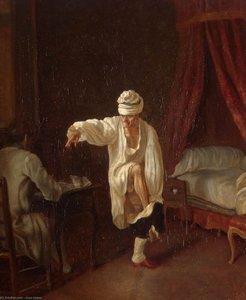
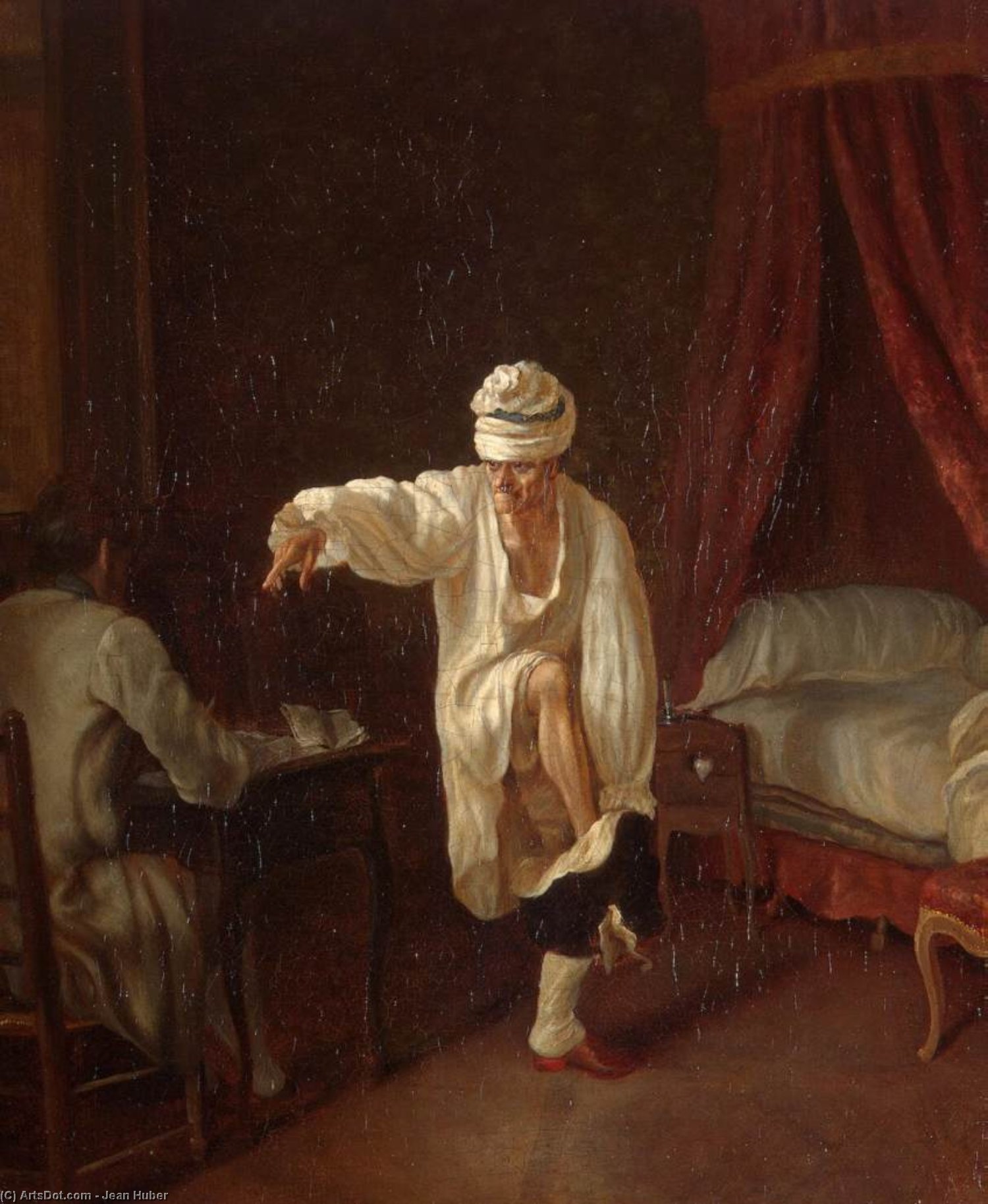
Voltaire's Morning
 Oil On Canvas
- WallArt
- Rococo Silhouette
 1750
1750 53.0 x 45.0 cm
 Hermitage Museum
 Read More
Hand Made Oil Reproduction
Hand-painted oil on canvas in your size and frame, made to order by our artists. ( Buy Print Buy Image)




P118B $10

P118H $10

P118W $10

P438Z $10

P508JH $12

P508YH $12

P805H $10

P805Z $10

P919BZ $10

P919G $10

P919XJ $10

P959ZH $10

P968JZ $12

W106C $8

W218G $10

W218JH $8

W218Y $10

W307PJ $10

W316G $10

W316PJ $8

W316Y $10

W398PJ $8

W4111J $10

W500HY $15

W500JH $15

W692G $12

W849H $8

W940BG $15

W953PJ $8




Pick from our preset sizes that match the artwork's original proportions.

You may enter your own dimensions to fit a specific frame or space. If your selected size does not match the original image's proportions, we will either crop the artwork or extend the painting with additional hand-painted elements. A digital mockup will be sent for your approval before production begins.
Please note that the on-screen preview does not reflect the actual cropping or extension. Only the mockup will accurately show the final composition.
While custom sizes are available, we recommend selecting a dimension from the predefined list to preserve the original proportions.
After order, ArtsDot.com team will email client for instructions and provide a mockup preview
Worldwide Delivery () in 3/4 weeks instead of standard 5 weeks. (16 August). No compromise on quality.

Free Worldwide Express Shipping

High-Quality Linen Canvas

Full Shipping Insurance

Customs Tax Refund Guarantee

True Color Matching Guarantee

60-Day Return Policy (Defects Only)

100% Money-Back Guarantee

Bulk Discount Offer
 Glass option is only available in size under 110 CM

Voltaire's Morning
Reproduction Medium
Reproduction Size
-


Total Price
$ 263
Artwork Description
The Genesis of a Silhouette: Jean Huber and Voltaire’s Circle
Jean Huber’s “Voltaire’s Morning” isn’t merely a portrait; it’s a window into the intellectual heart of 18th-century Geneva. Painted between 1750 and 1775, this intimate scene captures a pivotal moment in the life of Voltaire – the renowned philosopher, writer, and champion of reason. Huber, a Swiss artist deeply embedded within Voltaire's inner circle at Ferney, skillfully employed the burgeoning art form of silhouette painting to create an image that transcends simple likeness. The technique itself—cutting paper into intricate profiles—was revolutionary, offering a unique approach to capturing form and personality. It was a method favored by Huber due to his increasing blindness, allowing him to rely on observation and memory rather than direct sight.
Huber’s connection with Voltaire wasn't merely professional; it was profoundly personal. The artist became a trusted companion, sharing intellectual discourse and contributing significantly to the atmosphere of philosophical debate that permeated Ferney. The painting reflects this close relationship – Voltaire is depicted not as an imposing figure of authority, but as a man engaged in quiet contemplation within his familiar surroundings. This intimate portrayal contrasts sharply with the often-formalized portraits of the era, revealing Huber’s deliberate intention to capture the essence of Voltaire's character rather than simply his appearance.
A Room Defined by Light and Thought
The composition of “Voltaire’s Morning” is meticulously crafted. The scene unfolds within a modestly furnished bedroom – a bed draped in crimson, a chair positioned for reading, and a dining table bearing the remnants of a recent meal. These details aren't arbitrary; they speak to Voltaire’s lifestyle and intellectual pursuits. The red bedding suggests warmth and comfort, while the book hints at his constant engagement with ideas. The inclusion of a cup on the table subtly implies conversation and shared moments of reflection – a scene ripe with philosophical exchange.
The lighting is particularly noteworthy. It’s diffused and soft, casting gentle shadows that enhance the sense of intimacy and tranquility. Huber masterfully uses chiaroscuro—the dramatic contrast between light and dark—to draw attention to Voltaire's figure, emphasizing his thoughtful expression. The careful arrangement of objects within the room creates a balanced composition, reflecting the artist’s keen eye for detail and his understanding of visual harmony.
Symbolism in Silhouette: A Portrait of Reason
Beyond its technical brilliance, “Voltaire’s Morning” is laden with symbolic meaning. The silhouette technique itself represents the power of reason to illuminate the world – a core tenet of Voltaire's philosophy. The stark black outline against the lighter background symbolizes the clarity and precision of thought, contrasting with the complexities and ambiguities of the external world. Furthermore, the inclusion of the book suggests the importance of knowledge and learning in shaping human understanding.
Voltaire’s posture—leaning slightly forward, his hand resting on a table—conveys a sense of intellectual curiosity and engagement. He is not simply observing; he is actively involved in the process of contemplation. The presence of the other figure, seemingly engrossed in reading, reinforces this theme of shared inquiry and intellectual dialogue. Huber’s portrait isn't just a likeness; it’s an embodiment of Voltaire’s philosophical ideals.
A Legacy Preserved: Reproduction and Artistic Resonance
Reproductions of “Voltaire’s Morning” offer art enthusiasts a unique opportunity to experience the artistry and intellectual depth of this remarkable work. ArtsDot's meticulous reproductions capture the nuances of Huber’s technique, faithfully recreating the subtle details and atmospheric qualities of the original painting. This piece serves as a powerful reminder of the enduring legacy of Voltaire and the pivotal role that artists like Jean Huber played in shaping the cultural landscape of the Enlightenment.
Related Artworks

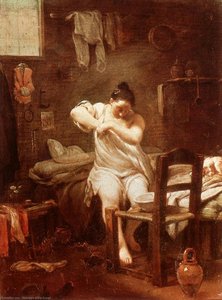
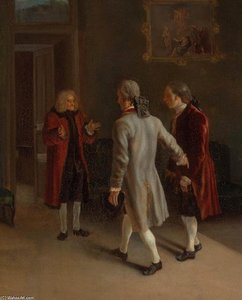
Artist Biography
The Versatile Visionary of the Enlightenment
In the vibrant intellectual landscape of the 18th century, few figures embodied the spirit of the Enlightenment quite like Jean Huber. Born in Geneva, a city steeped in both scientific rigor and artistic refinement, Huber was far more than a mere painter; he was a polymath whose creative reach extended into the realms of literature, satire, and even military service. His life, spanning from 1744 to 1786, was a tapestry woven with threads of precision and whimsy. While his early years were shaped by the disciplined atmosphere of Swiss heritage, his artistic soul sought the freedom found in movement, light, and the delicate edges of shadow. This duality—the soldier’s discipline meeting the artist’s curiosity—allowed him to capture the world with an unparalleled eye for both the grand and the minute.
Huber’s journey was deeply intertwined with the great thinkers of his era, most notably the philosopher Voltaire. This connection provided more than just social prestige; it offered a window into the burgeoning cultural shifts of Europe. Through his interactions with the intellectual elite, Huber’s work began to reflect the era's fascination with naturalism and social commentary. His ability to blend the observational accuracy required for scientific study with the biting wit of caricature made him a unique voice in an age of profound transformation. Whether he was documenting the anatomy of a creature or sketching a satirical portrait of a contemporary, Huber’s hand remained guided by a profound respect for the truth of his subject.
Mastery of Form and the Silhouette Revolution
The true hallmark of Huber’s artistic legacy lies in his revolutionary approach to portraiture and his mastery of the silhouette. Before the advent of photography, the silhouette offered a captivating way to capture the essence of a human profile through stark, elegant contrast. Huber did not merely practice this technique; he championed it, elevating it from a simple craft to a sophisticated art form. By stripping away the distractions of color and complex shading, he focused the viewer's attention on the pure geometry of the face and the evocative power of the outline. This minimalist approach required an extraordinary level of precision, as every curve and contour had to be perfectly rendered to convey character and emotion.
Beyond the delicate profiles that defined his portraiture, Huber possessed a remarkable talent for capturing the raw energy of the natural world. His studies of animals and hunting scenes were characterized by a profound sensitivity to texture and motion. He had an uncanny ability to render the sheen of a horse's coat or the tension in a predator's muscles, utilizing subtle gradations of light that hinted at the sfumato techniques of the Old Masters. His work often felt alive, as if the viewer had stumbled upon a fleeting moment in the wild. This mastery of detail was complemented by his skill in caricature, where he used his keen observational powers to create satirical works that poked fun at the social hierarchies and eccentricities of 18th-century life.
A Lasting Legacy in Swiss Art
The significance of Jean Huber extends far beyond the borders of Switzerland. He remains a pivotal figure in the history of European art, representing a bridge between the classical traditions of the past and the modern, observational styles that would emerge in the centuries to follow. His contributions can be summarized through several key artistic milestones:
- Innovation in Portraiture: The popularization and refinement of the silhouette as a legitimate and expressive medium for capturing human likeness.
- Naturalistic Excellence: A profound contribution to animalier art, blending scientific accuracy with aesthetic beauty.
- Social Commentary: The use of caricature and satire to engage with the political and social dialogues of the Enlightenment.
- Technical Versatility: An extraordinary range of skills encompassing painting, drawing, and illustrative work that captured both the monumental and the miniature.
Today, when we look upon the works of Huber, we see more than just historical artifacts; we see the pulse of an era. His ability to find beauty in a simple shadow and humor in a sharp line continues to inspire those who appreciate the intersection of art and intellect. He remains a testament to the idea that an artist can be both a meticulous observer of nature and a daring commentator on the human condition, leaving behind a legacy that is as much about the light he captured as the shadows he defined.
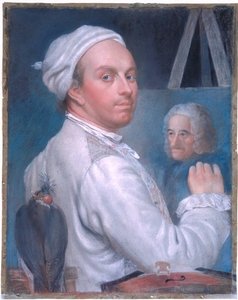
Jean Huber
1944 - 1786 , Switzerland
Quick Facts
- Artistic Movement Or Style: Silhouette Art
- Artists Or Movements Influenced By This Artist: ['']
- Artists Who Influenced This Artist: ['']
- Date Of Birth: February 13, 1721
- Date Of Death: August 21, 1786
- Full Name: Jean Huber
- Nationality: Swiss
- Notable Artworks:
- Voltaire Narrating a Fable
- Voltaire's Morning
- Young philosopher
- Place Of Birth: Geneva, Switzerland
Related Articles

The Enduring Legacy of Oil on Canvas: Technique, History & Aesthetic Impact
Explore the rich history & techniques of oil painting – from Renaissance masters to Impressionism. Discover pigments, layering methods, and why this timeless medium endures. Expert insights for artists & art enthusiasts.

Oil on Canvas: A Historical & Technical Exploration of a Timeless Artistic Medium
Explore the rich history & enduring techniques of oil painting on canvas. Discover the science behind its longevity, conservation practices, and contemporary relevance. Expert insights for art enthusiasts.

The Enduring Legacy of Oil on Canvas: Technique, History & Contemporary Practice
Explore the rich history & enduring techniques of oil painting on canvas. Discover the science behind its longevity, conservation practices, and contemporary relevance. Expert insights for art enthusiasts.
Oil on Canvas Masters: 10 Paintings That Redefined Art History |
Journey through art history with our guide to 10 legendary oil on canvas masterpieces! Explore iconic works by Van Gogh, Monet & Rembrandt. Find museum-quality reproductions and elevate your home decor at . Discover all masterpieces online.

The Enduring Power of Painting: A Historical & Contemporary Exploration of Form and Emotion
Explore the rich history & enduring techniques of oil painting with ArtsDot. Discover masterpieces, learn about art collecting, and find authentic handmade reproductions crafted by skilled artists.