

 Preview
 Send
Send Share
Share
 Details

 Download
 Similars
 X-Ray
X-Ray Diaporama
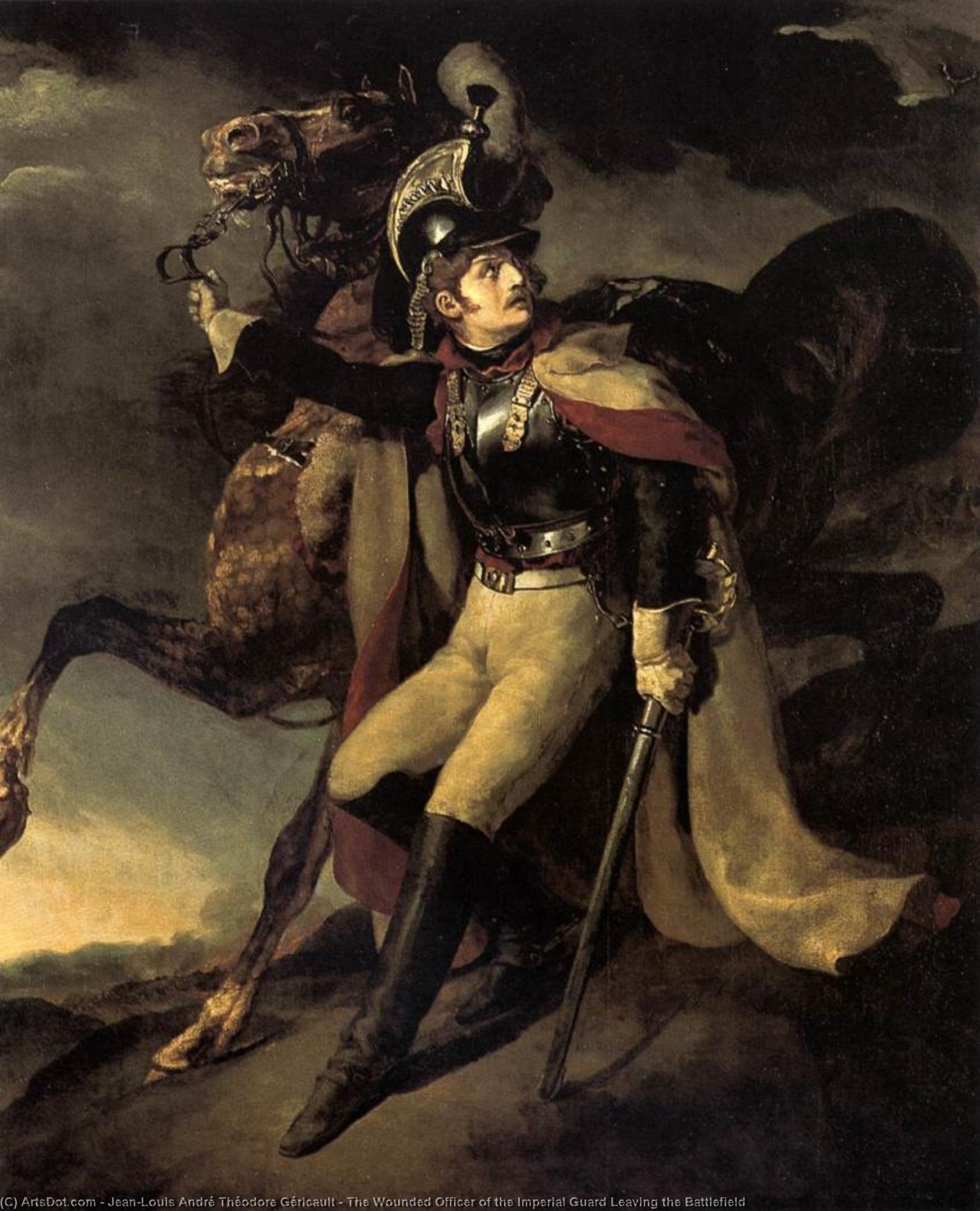
The Wounded Officer of the Imperial Guard Leaving the Battlefield
 Oil On Canvas
- WallArt
- Romanticism
 1814
1814- 19th Century
 358.0 x 294.0 cm
 The Louvre
 Read More
Purchase a high-resolution, enhanced digital image, far superior to the online preview.
Each file is meticulously prepared by our in-house specialists using advanced tools and expert manual retouching. We ensure every image has exceptional clarity, precise color accuracy, and fine detail.
The final file is delivered via email within 72 hours, optimized for immediate use in professional, editorial, and print environments. This is the same quality trusted by top-tier design studios, publishers, and galleries.
Digital Image
Download a high-resolution file for personal display, printing, and creative projects. ( Buy Print Buy Hand Made Painting)
Included in Every Digital Image Order
Expert Digital Delivery, Guaranteed
When you choose ArtsDot.com, you're not just getting an image - you're receiving a professionally enhanced digital artwork, crafted with precision and backed by a satisfaction guarantee. Here's everything that comes with your order, automatically:

Fast Email Delivery
Your high-resolution digital image file will be emailed to you within 72 hours of ordering - ready for immediate use.

AI-Enhanced Digital File
Your artwork is professionally optimized using advanced AI tools and manual editing, ensuring maximum detail, clarity, and color accuracy.

Free Lifetime Re-Delivery
Accidentally deleted or lost your file? No worries - we'll resend it to you anytime, free of charge.

No Import Fees - Ever
Enjoy your artwork instantly with zero customs, duties, or delivery fees - digital downloads are always tax-free.

Color Accuracy Guarantee
We ensure your digital image reflects the original colors as closely as possible using professional tools and color management.

60-Day Satisfaction Guarantee
If you're not satisfied with your digital image, we'll revise it or refund 100% within 60 days - no questions asked.

100% Money-Back Guarantee
Not satisfied? Get a full refund within 60 days of receiving your digital file - no questions asked.

Bulk Order Discounts
Buy 3 images, save 10% - Buy 5, save 15% - Buy 10+, save 20%. Great for creative projects, galleries, and agencies.
A Vision of Defeat and Resilience: Examining Théodore Géricault’s “The Wounded Officer of the Imperial Guard Leaving the Battlefield”
Jean-Louis André Théodore Géricault's "The Wounded Officer of the Imperial Guard Leaving the Battlefield," completed in 1814, stands as a monumental testament to Romantic fervor and a poignant reflection on France’s tumultuous era. More than just a depiction of military heroism—though undeniably imbued with it—the painting delves into profound psychological complexities and utilizes masterful technique to convey an overwhelming sense of despair tempered by unwavering determination. Exhibited at the Salon of 1814, its reception was fraught with controversy, prompting Géricault himself to contemplate destruction, highlighting the artist’s conviction in his work's uncompromising honesty.Subject Matter and Composition: A Moment Frozen in Time
The scene portrays a soldier—a commanding officer—struggling to maintain control of his horse as it bucks violently beneath him. He is visibly wounded, clutching at the reins with desperate effort, gazing upwards towards a sky choked with ominous clouds. This isn’t merely a battlefield tableau; it's an encapsulation of France’s defeat in Napoleon’s final campaign—the Hundred Days—a moment captured with unflinching realism and imbued with symbolic significance. Géricault deliberately eschewed idealized grandeur, opting instead for a gritty portrayal that mirrored the anxieties of his time. The horse itself is positioned prominently on the left side of the canvas, dominating the visual space and symbolizing both power and instability – mirroring the nation’s predicament.Style and Technique: Romantic Drama Embodied
Géricault's artistic style firmly anchors itself within the Romantic movement, prioritizing emotional intensity over rational representation. He employs dramatic chiaroscuro—the interplay of light and shadow—to heighten the sense of urgency and convey the palpable suffering of the officer. The artist meticulously studied anatomy and musculature, painstakingly recreating the physicality of the horse and soldier with astonishing accuracy. Furthermore, Géricault utilized a pyramidal composition, drawing the viewer’s eye upwards towards the turbulent sky, reinforcing the feeling of impending doom yet simultaneously suggesting an aspiration for transcendence. His brushstrokes are bold and expressive, conveying movement and emotion with visceral immediacy.Historical Context: Napoleon's Fall and Artistic Response
The painting emerged from the immediate aftermath of Napoleon’s downfall, marking a decisive turning point in European history. The Salon of 1814 witnessed a fervent debate regarding artistic merit and national identity—a discussion fueled by disillusionment with imperial ambition and yearning for moral fortitude. Géricault's decision to depict defeat wasn’t merely an aesthetic choice; it was a deliberate act of defiance against the prevailing sentiment of optimism. He sought to capture not just what had happened but also *how* it felt – the crushing weight of loss, the agonizing struggle for survival, and ultimately, the unwavering hope for renewal.Symbolism: Beyond Representation—A Reflection of Spirit
The upward gaze of the officer is arguably the painting’s most potent symbol. It represents France's yearning for spiritual solace amidst devastation, a refusal to succumb entirely to despair. The dark clouds overhead symbolize not only meteorological conditions but also the pervasive gloom of defeat and uncertainty. Yet, the officer’s grip on the reins signifies resilience—a determination to persevere despite overwhelming odds—a visual embodiment of the Romantic ideal of heroic struggle. Géricault's masterful use of color contributes to this symbolic resonance; muted tones dominate the canvas, reflecting the bleakness of the battlefield while highlighting the officer’s luminous face – a beacon of courage and unwavering spirit.Emotional Impact: A Powerful Meditation on Suffering and Hope
“The Wounded Officer” transcends mere visual depiction; it compels viewers to confront uncomfortable truths about human vulnerability and fortitude. The painting evokes profound empathy for the wounded soldier, prompting contemplation on themes of sacrifice, perseverance, and the enduring power of the human spirit. Its unsettling realism—coupled with Géricault’s masterful technique—creates an immersive experience that lingers long after viewing, cementing its place as a cornerstone of Romantic art and a timeless meditation on the complexities of human emotion.Related Artworks
Artist Biography
A Life Forged in Romantic Fire
Jean-Louis André Théodore Géricault, a name that resonates with the burgeoning spirit of French Romanticism, was born into a world poised on the brink of dramatic change. Arriving in Rouen, France, in 1791, his early life unfolded amidst the echoes of revolution and the rising tide of Napoleonic ambition. Though inheriting a comfortable existence through his family’s legal and business ventures – including a tobacco enterprise – Géricault's destiny lay not in law or commerce but within the realm of artistic expression. His initial training under Carle Vernet, a master of English sporting art, instilled in him a keen eye for anatomy and movement, particularly evident in his depictions of horses. However, it was his subsequent studies with Pierre-Narcisse Guérin that provided a foundation in classical composition, though Géricault’s restless spirit soon led him to seek knowledge independently within the hallowed halls of the Louvre.
The Louvre as Academy: A Dialogue with Masters
From 1810 to 1815, the Louvre became Géricault's true academy. He immersed himself in the works of the Old Masters – Rubens, Titian, Velázquez, and Rembrandt – not merely copying their techniques but engaging in a profound dialogue with their artistic philosophies. This period was crucial in shaping his distinctive style, characterized by dramatic chiaroscuro, dynamic compositions, and an intense emotionality that set him apart from his contemporaries. He wasn’t simply replicating; he was absorbing the essence of these masters, internalizing their approaches to light, shadow, and human form. This self-directed education fostered a unique artistic voice, one that would soon challenge the prevailing Neoclassical conventions. His early works, like The Charging Chasseur (1812), already hinted at this emerging sensibility, showcasing a boldness of execution and a fascination with movement reminiscent of Rubens’ energetic canvases. He continued to explore equestrian themes, honing his skills in depicting the power and grace of horses – a subject that would remain a recurring motif throughout his career.
The Raft of the Medusa: A Monument to Human Suffering
Géricault's name is inextricably linked with The Raft of the Medusa (1818-1819), a monumental canvas that transcends mere historical depiction and becomes a searing indictment of human fallibility and societal injustice. Inspired by the harrowing true story of the shipwreck of the French frigate Méduse in 1816, where negligence and incompetence led to unimaginable suffering for its passengers, the painting is a visceral portrayal of desperation, hope, and despair. Géricault undertook meticulous research, interviewing survivors, studying corpses at hospitals, and even constructing a scale model of the raft itself to ensure accuracy. The resulting work is not simply a depiction of tragedy; it’s an immersive experience that confronts viewers with the raw reality of human suffering. The composition, built around two pyramidal structures – one representing despair and death, the other embodying hope and potential rescue – creates a dynamic tension that draws the eye across the canvas. The Raft of the Medusa was controversial upon its exhibition at the Salon of 1819, sparking political debate and solidifying Géricault’s reputation as a daring and unconventional artist. The painting's impact extended beyond the art world, becoming a symbol of governmental incompetence and human resilience in the face of unimaginable hardship.
Beyond Tragedy: Military Themes and Artistic Legacy
While The Raft of the Medusa remains his most celebrated achievement, Géricault's artistic output extended beyond this singular masterpiece. He continually returned to military themes, evident in works like Wounded Cuirassier (1814) and The Derby of Epsom (1821), demonstrating a fascination with drama and expressive force. These paintings reveal his continued exploration of human emotion under duress, often focusing on the physical and psychological toll of conflict. He also ventured into portraiture and lithography, further expanding his artistic repertoire. Sadly, Géricault’s life was cut short by illness at the age of 32 in 1824, following years of suffering from riding accidents and a chronic tubercular infection. His premature death robbed the art world of a prodigious talent, but his influence on subsequent generations of artists – particularly Eugène Delacroix – was profound. He is remembered as a pioneer of Romanticism, an artist who dared to confront difficult truths and imbue his work with a powerful emotional resonance that continues to captivate audiences today. His bronze figure reclines, brush in hand, on his tomb at Père Lachaise Cemetery in Paris, above a low-relief panel depicting the harrowing scene from The Raft of the Medusa, a fitting tribute to an artist who dedicated his life to capturing the complexities and contradictions of the human condition.
Key Characteristics & Influences
- Romanticism: Géricault is considered one of the first French Romantic painters, moving away from Neoclassical ideals towards emotional intensity and dramatic expression.
- Dramatic Composition: His paintings are known for their dynamic compositions, often utilizing diagonal lines and contrasting light and shadow to create a sense of movement and tension.
- Realism & Research: Géricault was committed to realism, conducting extensive research – including studying corpses and interviewing survivors – to ensure the accuracy and emotional impact of his work.
- Influence of Old Masters: He drew inspiration from Baroque masters like Rubens, Titian, and Velázquez, adopting their techniques for dramatic lighting and expressive brushwork.
- Focus on Human Suffering: His art often depicts scenes of tragedy, despair, and the darker aspects of human experience, reflecting a Romantic fascination with intense emotions.
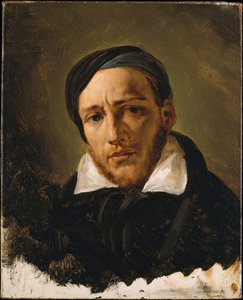
Théodore Géricault
1791 - 1824 , France
Quick Facts
- Artistic Movement Or Style: Romanticism
- Artists Or Movements Influenced By This Artist: ['Eugène Delacroix']
- Artists Who Influenced This Artist:
- Rubens
- Titian
- Velázquez
- Rembrandt
- Date Of Birth: 1791
- Date Of Death: 1824
- Full Name: Jean-Louis André Théodore Géricault
- Nationality: French
- Notable Artworks:
- Raft of the Medusa
- Wounded Cuirassier
- The Derby of Epsom
- Place Of Birth: Rouen, France

