 Preview
 Send
Send Share
Share
 Details

 Download
 Similars
 X-Ray
X-Ray Diaporama
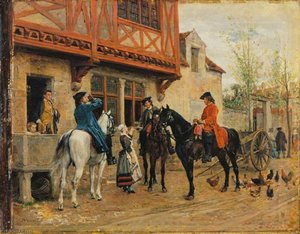
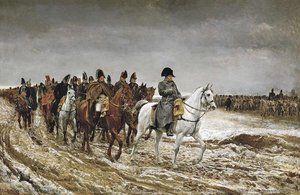
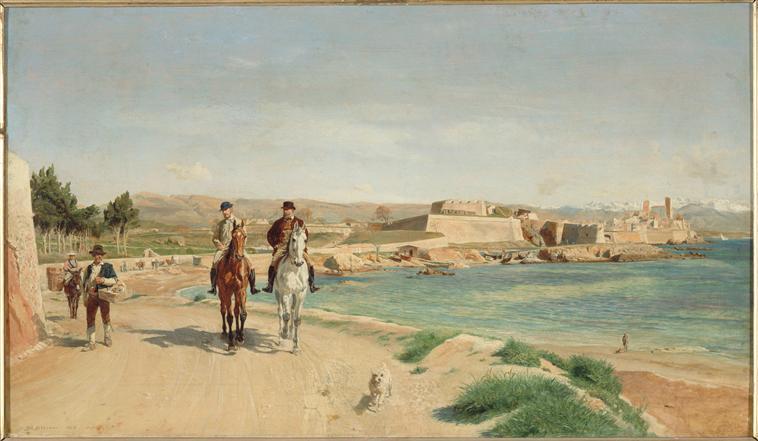
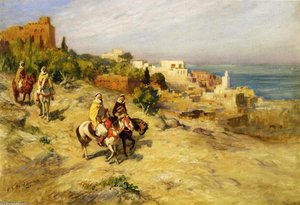
Antibes. The Horse Ride


 Read More
Hand Made Oil Reproduction
Hand-painted oil on canvas in your size and frame, made to order by our artists. ( Buy Print Buy Image)




P118B $10

P118H $10

P118W $10

P438Z $10

P508JH $12

P508YH $12

P805H $10

P805Z $10

P919BZ $10

P919G $10

P919XJ $10

P959ZH $10

P968JZ $12

W106C $8

W218G $10

W218JH $8

W218Y $10

W307PJ $10

W316G $10

W316PJ $8

W316Y $10

W398PJ $8

W4111J $10

W500HY $15

W500JH $15

W692G $12

W849H $8

W940BG $15

W953PJ $8




Pick from our preset sizes that match the artwork's original proportions.

You may enter your own dimensions to fit a specific frame or space. If your selected size does not match the original image's proportions, we will either crop the artwork or extend the painting with additional hand-painted elements. A digital mockup will be sent for your approval before production begins.
Please note that the on-screen preview does not reflect the actual cropping or extension. Only the mockup will accurately show the final composition.
While custom sizes are available, we recommend selecting a dimension from the predefined list to preserve the original proportions.
After order, ArtsDot.com team will email client for instructions and provide a mockup preview
Worldwide Delivery () in 3/4 weeks instead of standard 5 weeks. (24 August). No compromise on quality.

Free Worldwide Express Shipping

High-Quality Linen Canvas

Full Shipping Insurance

Customs Tax Refund Guarantee

True Color Matching Guarantee

60-Day Return Policy (Defects Only)

100% Money-Back Guarantee

Bulk Discount Offer
 Glass option is only available in size under 110 CM

Antibes. The Horse Ride
Reproduction Medium
Reproduction Size
-


Total Price
$ 313
Artwork Description
A Moment Frozen in Time: Ernest Meissonier’s “Antibes. The Horse Ride”
Ernest Meissonier's "Antibes. The Horse Ride," painted in 1868, isn’t merely a landscape; it’s a meticulously crafted tableau vivant – a captured moment of leisurely elegance against the backdrop of the French Riviera. This oil-on-canvas masterpiece, currently residing within the Musée d'Orsay in Paris, offers a rare glimpse into the world of 19th-century leisure and the artistic prowess of a master of realism. Meissonier, deeply influenced by the Dutch masters like Gabriel Metsu, dedicated his career to depicting intimate scenes of everyday life with an almost obsessive attention to detail, earning him the moniker “the French Metsu.” “Antibes” exemplifies this approach, inviting us into a scene brimming with quiet sophistication and a palpable sense of timeless beauty.Composition and Technique: A Symphony of Precision
The painting’s composition is remarkably balanced, drawing the eye towards the central group of horse riders while simultaneously establishing a clear visual pathway through the landscape. The path itself, delineated with sharp linear perspective, guides us from the left foreground into the heart of the scene, anchoring the viewer within this idyllic setting. Meissonier's technique is nothing short of astonishing – a testament to his dedication and painstaking labor. He employs fine lines with incredible precision to define the folds of clothing, the manes of the horses, and even the architectural details of the distant fortress. The brushstrokes are remarkably subtle, creating an illusion of depth and texture that feels incredibly tactile. The artist’s mastery lies in rendering a sense of weightlessness and fluidity, capturing the effortless grace of the riders and their steeds. Notice how he uses atmospheric perspective – the gradual lightening and blurring of details in the distance – to convincingly portray the vastness of the coastal landscape.Color Palette and Light: A Muted Elegance
The color palette is deliberately restrained, dominated by earthy tones—browns, tans, greens, and blues—that evoke the natural beauty of the Mediterranean coast. This muted approach isn’t a sign of weakness; rather, it serves to heighten the sense of realism and tranquility. Subtle highlights catch the sunlight on the figures and the rolling hills, adding warmth and dimension without overwhelming the overall atmosphere. The lighting is soft and diffused, suggesting an overcast day or perhaps the hazy light of early morning or late afternoon – a quality that contributes significantly to the painting’s serene mood. It's a carefully considered choice, avoiding dramatic contrasts and instead favoring a gentle, almost melancholic beauty.Symbolism and Emotional Resonance: A Glimpse into Victorian Leisure
Beyond its technical brilliance, “Antibes” offers a fascinating window into the social customs of the mid-19th century. The scene depicts a leisurely horse ride along the coast – a popular pastime for the wealthy elite of the era. The riders themselves represent a certain level of privilege and leisure, embodying the ideals of Victorian society. While overtly symbolic elements are minimal, the painting evokes feelings of nostalgia, tranquility, and appreciation for the simple pleasures of life. There’s an undeniable sense of timelessness about the scene – it feels as if we've stepped back into a bygone era, witnessing a moment of quiet beauty that transcends time. The fortress in the background subtly hints at the region’s history and strategic importance, grounding the idyllic scene within a broader context.Historical Context and Legacy: A Masterpiece Preserved
Painted during the Second Empire under Napoleon III, “Antibes” reflects the era's fascination with historical narratives and romantic landscapes. Meissonier’s meticulous realism was highly valued by the royal court, and his works were frequently commissioned for grand displays of artistic skill. Today, "Antibes" stands as a testament to Meissonier’s enduring legacy – a remarkable example of 19th-century French painting that continues to captivate viewers with its exquisite detail, serene beauty, and evocative atmosphere. Reproductions of this iconic work offer an accessible way to experience the artistry and historical context of one of France's most celebrated painters.Related Artworks
Artist Biography
A Master of Miniature Realism: The Life and Art of Jean-Louis Ernest Meissonier
Jean-Louis Ernest Meissonier, a name synonymous with meticulous detail and historical narrative in 19th-century French painting, emerged as a pivotal figure bridging the gap between academic tradition and a burgeoning realism. Born in Lyon in 1815, his path to artistic renown was initially met with familial resistance. His father envisioned a career in business for young Ernest, yet the allure of art proved too strong to ignore. At seventeen, he secured permission to pursue his passion, embarking on a journey that would establish him as one of France’s most celebrated and financially successful artists. Early training under Léon Cogniet provided a foundational grounding, but it was through diligent study of the Dutch masters at the Louvre – painters like Gabriel Metsu and Gerard Douw – that Meissonier truly discovered his artistic voice. These masters, renowned for their intimate scenes of bourgeois life rendered with astonishing precision, profoundly influenced his developing style, inspiring a dedication to detail that would become his hallmark.From Genre Scenes to Grand Historical Narratives
Meissonier’s breakthrough arrived in 1831 with *Les Bourgeois Flamands* (Dutch Burghers), exhibited at the Salon. This work immediately signaled his unique talent – a capacity for recreating scenes of everyday life, or historical vignettes, with an almost microscopic level of accuracy. He wasn't merely depicting objects; he was meticulously reconstructing worlds, capturing textures, light, and atmosphere with breathtaking fidelity. This early success allowed him to refine his technique, producing a series of captivating genre paintings like *The Game of Chess* (1841) and *The Young Man Playing the 'Cello* (1842). These works weren’t simply exercises in technical skill; they were insightful observations of human character and social interaction. However, Meissonier's ambitions extended beyond intimate genre scenes. The political upheavals of 1848, during which he served with the National Guard, deeply impacted him, fueling a desire to address larger historical themes. This shift culminated in monumental works like *The Emperor at Solferino*, a departure from his earlier style that showcased his ability to handle complex compositions and grand narratives while retaining his signature precision.A Technique Defined by Patience and Precision
What truly set Meissonier apart was not simply what he painted, but *how* he painted. His technique was legendary for its painstaking detail. He wasn’t content with broad brushstrokes or impressionistic effects; each element within his compositions was rendered with meticulous care, built up layer upon layer to achieve a remarkable sense of realism. He undertook exhaustive research, meticulously studying costumes, weaponry, and architectural details to ensure historical accuracy. This dedication extended to the natural world as well – he famously studied horses extensively, analyzing their anatomy and movement to depict them convincingly in his battle scenes. Some critics even suggested that his work bordered on obsession, but it was precisely this unwavering commitment to detail that captivated audiences and established his reputation. John Ruskin, the influential English art critic, famously examined Meissonier’s paintings under a magnifying glass, marveling at the artist's “manual dexterity and eye for fascinating minutiae.”Legacy and Lasting Influence
By the latter half of the 19th century, Jean-Louis Ernest Meissonier had become one of France’s most celebrated artists. His works commanded exorbitant prices, allowing him to acquire a magnificent estate in Poissy, complete with dedicated studios designed to facilitate his meticulous process. He was lauded for his technical mastery and his ability to bring history to life with unparalleled realism. While some critics questioned the limited range of his subject matter – often focusing on military scenes or historical recreations – there is no denying his profound influence on subsequent generations of artists. His dedication to detail, his commitment to historical accuracy, and his masterful technique continue to inspire painters today. Museums worldwide, including the Musée d'Orsay in Paris and the National Gallery of Art in Washington D.C., proudly display his works, ensuring that his legacy endures as a testament to the power of patience, precision, and artistic vision. To explore more of Meissonier’s art, visit ArtsDot.com or the Musée d'Orsay website.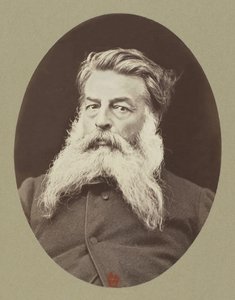
Jean-Louis Ernest Meissonier
1815 - 1891 , France
Quick Facts
- Artistic Movement Or Style: Academic art
- Artists Who Influenced This Artist: ['Dutch Masters']
- Date Of Birth: February 21, 1815
- Date Of Death: January 31, 1891
- Full Name: Jean-Louis Ernest Meissonier
- Nationality: French
- Notable Artworks:
- Les bourgeois flamands
- The Game of Chess
- Halt at an inn
- The brawl
- Emperor at Solferino
- Place Of Birth: Lyon, France
Related Articles
Romantic Realism's Finest: 10 Masterpieces for Your Home | ArtsDot
Explore 10 defining masterpieces of Romantic Realism! Discover Courbet, Millet & Daumier's powerful paintings—capturing emotion and social realities. Find museum-quality reproductions for your home at ArtsDot.com.
Jean-Louis Ernest Meissonier: Realism, Historical Narrative & Artistic Perfection
Explore the world of Jean-Louis Ernest Meissonier, a master of French Realism renowned for his meticulously detailed historical & military scenes. Discover his iconic artworks and lasting legacy.
The Poetic Truth of Observation: Exploring 19th-Century Realism in Painting
Explore the captivating world of 19th-century Realism! Discover key artists like Courbet & Millet, masterpieces, and the powerful social commentary behind this influential art movement. Expert insights at ArtsDot.
The Evocative Embrace of Reality: Exploring Romantic Realism in 19th-Century Painting
Explore the captivating world of Romantic Realism! Discover key artists like Courbet & Millet, masterpieces, and the social context behind this influential art movement. Expert insights for collectors at ArtsDot.
Historical Realism: A Pursuit of Truthful Representation in 19th-Century Art
Explore the captivating world of 19th-century Realism! Discover key artists like Courbet, groundbreaking techniques & the social context behind this influential art movement. Expert insights at ArtsDot.